
.webp)

A sales training LMS is a platform that trains sales reps on the offer, on selling techniques and on the company's sales method. It then measures what they can actually do in front of a customer, and it has to work between two meetings, not only in a classroom.
The need is huge. In France, 3 million people work in sales and trade occupations, on average over the 2016-2020 period (France Travail, Éclairages et Synthèses no. 74, December 2022, based on the Insee Labour Force Survey).
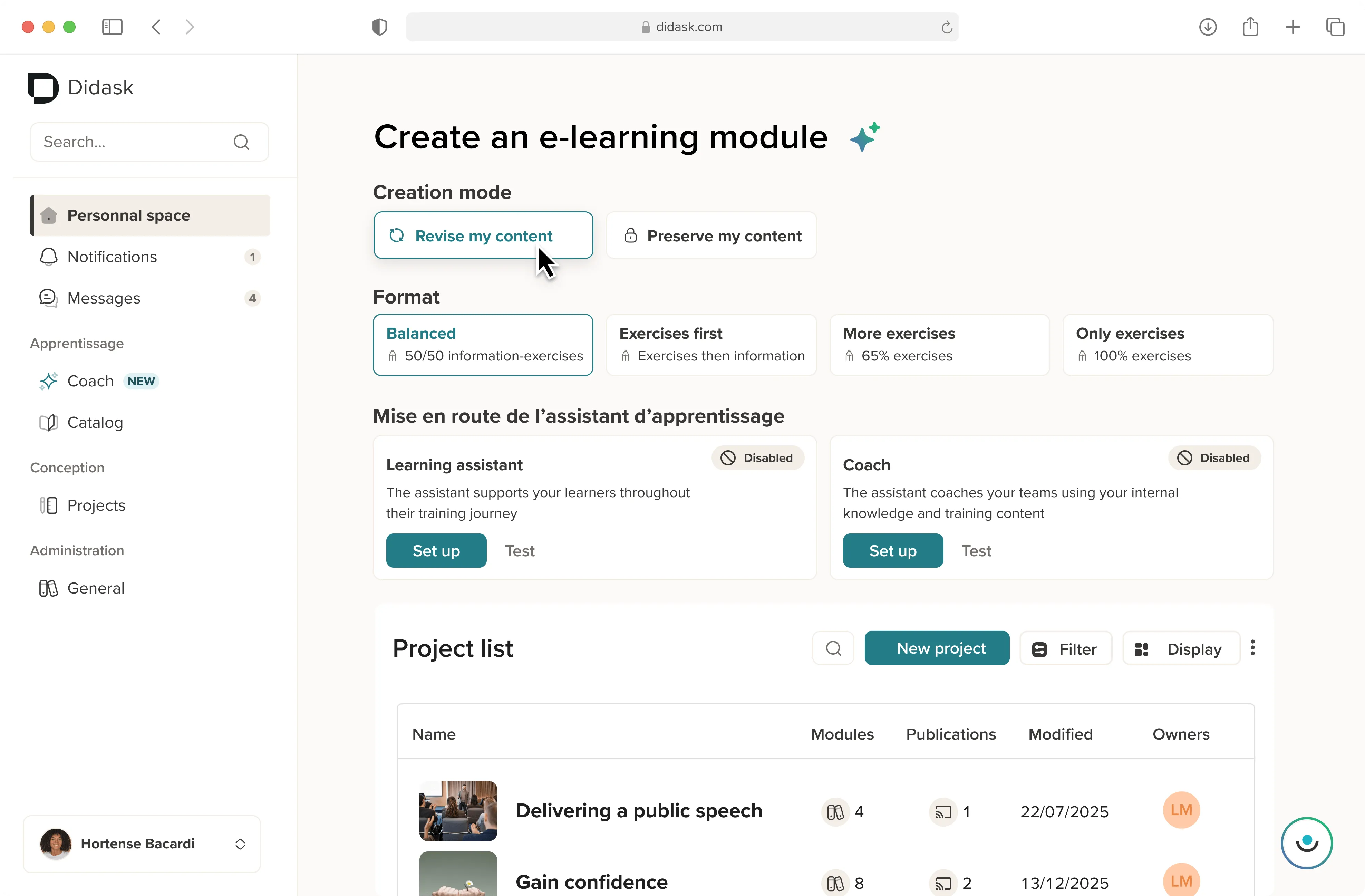
Didask is a French all-in-one learning platform built on cognitive science. It turns existing sales materials into interactive role-play scenarios, then supports each rep inside their work tools, CRM included, with Didask Coaching.
What are the 7 best LMS platforms for sales team training in 2026?
The seven platforms selected are Didask, Docebo, Mindtickle, 360Learning, Rise Up, iSpring LMS and LumApps Learning. The first three best cover the full cycle of a sales force: creating the training, practising, then supporting reps in the field.
Our method, and what it is worth
Didask publishes this comparison and ranks itself first. Each platform is assessed against the seven criteria detailed below, using publicly verifiable information collected on 15 October 2026 from vendor documentation.
We distinguish a feature documented in a help centre from a promise on a sales page. When information could not be found, we say it is not publicly documented, never that it does not exist.
Ratings collected from Capterra France on 15 October 2026.
1. Didask
A French all-in-one learning platform built on cognitive science, which builds learning paths from the company's existing documents.
What it brings to sales training. The AI design engine turns a product sheet, a sales pitch or a launch deck into a path of role-play scenarios. Reps practise objections, negotiation and closing before they face the customer.
Strengths
- Didask Training cuts course design time by 50 to 65% (Didask measurement across 2,237 courses, October 2025). Your product experts train the sales force themselves, with no instructional designer.
- Paths are tailored by role and by segment on a shared foundation: one message for everyone, cases adapted to each job.
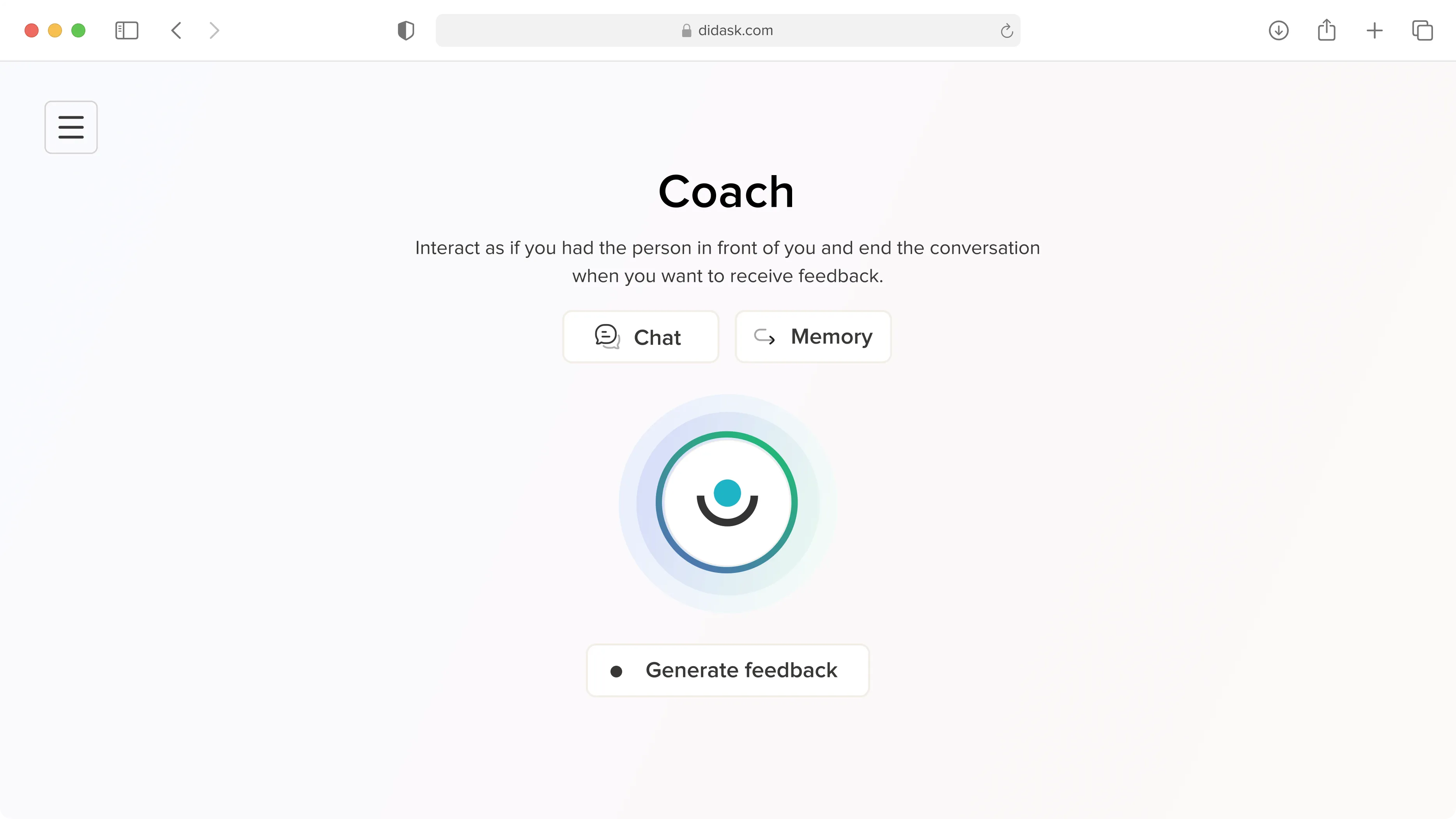
- Didask Coaching supports each rep inside their work tools, CRM included. 84% of its users find its answers consistently relevant and contextualised (Didask measurement across 410 learners, November 2025).
- SCORM Connect delivers the full Didask experience inside the LMS already in place, for networks that have one.
- Results by skill and by module, exportable to be cross-referenced with your sales metrics.
The right choice if your offer is technical, changes often, and your reps too often fall back on price because they do not master the value.
.webp)
They train their sales teams with Didask
Canal+ International · Ternois Fermetures · ENGIE · Valrhona · Amundi · BestDrive
2. Docebo
A vendor founded in 2005, based in Toronto, focused on large enterprises.
What it brings to sales training. An enterprise LMS that brings every function together on one platform, sales teams included.
Strengths
- AI roleplay against an avatar, by video, voice or chat, with a weighted scoring grid of up to five criteria. Paid add-on that consumes AI credits.
- Go.Learn mobile app, with course downloads and offline progress tracking.
The right choice if you are a large company that wants a single LMS for every function, sales teams included.
3. Mindtickle
A revenue enablement platform founded in 2011, based in Pune and San Francisco, specialised in sales readiness.
What it brings to sales training. A platform dedicated to sales readiness, deployed alongside the company's LMS. No public help centre was found: the points below come from the vendor's pages.
Strengths
- AI role-plays: a simulated buyer raises objections, scoring is automatic and certification is triggered by thresholds set by the administrator.
- Readiness Index: a skills score per rep, compared with a reference profile defined by the company.
The right choice if your sales organisation is structured and already has an LMS for the rest of the company.
4. 360Learning
An LMS founded in 2013 in Paris, where internal experts create and run the courses.
What it brings to sales training. A collaborative model where top reps and managers design and assess the content themselves.
Strengths
- Documented "video pitch" question: the rep records their pitch or demo, up to 15 minutes, then a reviewer scores it and comments on it.
- AI course creation from a PDF, a Word document or a presentation.
- Mobile app with courses and paths downloadable for offline use.
The right choice if you want your sales managers to assess pitches themselves, with a public entry price.
5. Rise Up
A French LMS that claims more than 5 million learners.
What it brings to sales training. A platform that combines AI course creation with an AI coach, on an already large learner base.
Strengths
- AI course creation from a document, a link or a prompt, with automatic translation.
- Forge AI coach, launched in June 2026 and available to all Rise Up customers according to the vendor.
The right choice if you are looking for a French general-purpose LMS, already deployed at scale, for all your teams.
6. iSpring LMS
Formerly iSpring Learn, renamed in November 2025, an LMS paired with the iSpring Suite authoring tool.
What it brings to sales training. Fast deployment, a built-in authoring tool and public pricing.
Strengths
- Dialogue simulations to practise objection handling, built with iSpring Suite.
- Mobile apps with offline learning, included in every plan.
- Public price per user active in the month: $6.91 for 100 users, $3.97 for 500.
The right choice if you are an SME or mid-sized company that wants to equip its sales force quickly, with a predictable budget.
7. LumApps Learning
Formerly Teach on Mars, a platform founded in Nice in 2013 and acquired by LumApps at the end of 2023, which built it into its suite for frontline teams.
What it brings to sales training. Gamified mobile microlearning, designed for salespeople who have neither a desk nor a computer.
Strengths
- Games documented in the help centre, still published under the Teach on Mars name: head-to-head quizzes, challenges, scores, badges and leaderboards, on the Pro and Enterprise plans.
- Offline mode on mobile and tablet, useful for reps in areas without coverage.
- Multilingual web authoring tool, and connection to a CRM or HRIS as an Enterprise option.
The right choice if you train a large network of in-store or field salespeople, and engagement is your first hurdle. For that specific case, see also our comparison of LMS platforms to train your retail teams.
Why does training a sales team require a specific platform?
Because sales reps learn under three constraints that a general-purpose LMS ignores: little time away from the field, fast forgetting of anything not practised, and an offer to defend against competitors. Most LMS platforms assume the opposite: dedicated time, a captive audience and stable content.
Training time is taken from selling time. Every half-day in a classroom is a half-day without meetings. Training has to fit into a few minutes, between two visits, which explains the rise of blended learning in sales training.
Reps are already overwhelmed. 72% of B2B sellers feel overwhelmed by the number of skills their job requires. Overwhelmed sellers are 45% less likely to attain quota (Gartner, September 2024, 1,026 B2B sellers surveyed, geography not stated).
Michael Katz, Senior Director, Research in the Gartner Sales Practice, puts it this way: "Sellers are overwhelmed by the number of skills they perceive as necessary for success." Adding modules solves nothing: you need to target the skills that matter for each sales profile (SDR, AE, AM).
The learning platform is only one piece of the system. It sits within a broader sales enablement approach, which equips reps before, during and after the sale.
Why do your reps forget what they learned in training?
Because rereading does little for memory, while testing yourself anchors it durably. This is the testing effect: retrieving information from memory strengthens it more than reading it again.
Henry Roediger and Jeffrey Karpicke, researchers at Washington University in St. Louis, measured it. One week later, students tested on a text recalled 56% of its ideas, against 42% for those who had reread it (Psychological Science, 2006). The study covers American students, not salespeople, but the mechanism is general.
In sales, spacing out sessions produces a comparable effect. With 64 bank employees, Simone Kauffeld and Nale Lehmann-Willenbrock (Technische Universität Braunschweig) found that spaced sales training improves transfer quality and sales metrics compared with massed training (Journal of European Industrial Training, 2010).
A platform that only delivers content therefore trains people to forget. Require retrieval questions, spaced reviews and feedback on every mistake, in the form of microlearning available in the field.
Why does product knowledge fail to reach the field?
Because it stays locked in technical sheets and in the heads of a few experts, who have no time to design training. Without mastering the value of the offer, reps defend the only argument they know: price.
At a B2B distributor of professional hygiene products, 200 field reps spread across 12 subsidiaries have to differentiate products close to those of competitors. With Didask, a 10-minute module is created there in about one hour, from existing product sheets.
At a building industry manufacturer that trained its technical sales reps on a new product range with Didask, sales of that range rose by 19% in value and 8% in volume after the rollout. The increase coincides with the training, though other factors cannot be ruled out.
Designing effective sales force training therefore starts with this production bottleneck. If every new module takes weeks, training will always be one range behind the catalogue.
How do you integrate an LMS with your CRM?
There are three levels of integration: syncing accounts and results, recommending training from an opportunity, then supporting reps while they prepare a meeting. The CRM is not just another delivery channel: it is the best training trigger you have.
- Sync. Users and enrolments flow from the CRM to the LMS, and training results come back to the rep's record. This is the most common integration, often sold as an add-on.
- Recommend. The platform reads the opportunity, its industry or its stage, and suggests the matching module.
- Support. Reps ask an assistant from their work tool and get an answer drawn from the company's approved content. This is the logic of sales training in the flow of work.
Didask Coaching integrates with the company's work tools, including the CRM. One month after rollout, 56.1% of its users turn to it several times a week (Didask measurement across 410 learners, October 2025).
At a network of sales advisers who need to know 2,500 care homes for older people, the Didask knowledge assistant gives 93% relevant answers. This rate was measured through structured tests run with 8 managers.
This third level extends managers' sales coaching without replacing it. It answers everyday questions, and frees managers for field observation and debriefs.
To check during the demo
Which objects are synced, in which direction and how often? On which edition of your CRM? Is the connector included or billed as an add-on? Several platforms in the panel require a higher edition or a paid module.
How do you choose an LMS to train your sales teams?
Seven criteria are enough to compare platforms, and the first is the time between your sales pitch and a deployed practice scenario. It decides whether training keeps pace with your launches and with new objections.
- Time from existing material to deployed practice. How many hours from your product sheet, your pitch or your launch deck? Ask for the demo on your own documents.
- Practice, not just content. Role-play scenarios on discovery, objections and negotiation, with feedback on every mistake. Check which selling techniques the platform lets reps practise, and whether assessment is automatic, human or both.
- Paths by role and by segment. A shared foundation for everyone, then cases specific to the SDR, the account manager or the key account. This is what lets you roll out a common sales method without making every situation the same.
- Field use. Short modules, mobile access, and offline mode if your reps spend a lot of time on the road. Our guide to mobile learning in the enterprise details what to check.
- Level of CRM integration. Sync, recommend or support: which of the three levels, on which edition, included or as an add-on?
- Onboarding and continuous training in the same tool. The platform must structure the first weeks, then reactivate what was learned for months. Our comparison of LMS platforms for onboarding covers that first stage.
- Skill-based, exportable measurement. Results by skill, by team and by site, exportable to be cross-referenced with your sales KPIs.
.png)
Three questions to ask during the demo
1. "Turn our pitch into a role-play on our most frequent objection, in front of me."
2. "Show me what a rep sees in our CRM just before a meeting."
3. "Which metric will tell me, in three months, that my reps handle this objection better?"
What results can you expect from an LMS for your sales teams?
The best-documented results concern training time, success by skill and reps' ability to adapt. According to Gartner, tactical flexibility increases the likelihood of quota attainment by 3.4 times (Gartner, September 2024, 1,026 B2B sellers).
Gartner defines tactical flexibility as "the ability to adjust, adapt and innovate on sales approaches". This figure measures a skill, not the effect of a platform, and does not describe the French market. It shows what training should develop: adapting to the situation, rather than reciting a script.
Less classroom time, more people trained. At Ternois Fermetures, a joinery manufacturer with 38 branches, training on the quoting software went from 4 days in the classroom to 1 day, plus 2 hours of e-learning. Classroom time fell by 50%, saving €10,200 excl. VAT over the year (published case study).
Product updates that actually land. At the same customer, the number of people trained rose by 34% between 2023 and 2024. On the quoting software update module, the success rate went from 46% to 92%.
A sales network trained remotely. Canal+ International uses Didask to train salespeople across Africa, French overseas territories and Asia. 500 learners from 12 countries took a six-module path, a little under an hour of content (published case study).
The same customer approach across 20 centres. At ENGIE France Retail, 2,500 advisers across 20 customer service centres, internal and outsourced, follow the same paths. 60 training projects were created in 6 months, with satisfaction at 8.5/10, and ENGIE scored 16.72/20 in the Élu Service Client de l'Année ranking (published case study).
A day in the field given back to every new hire. In a network of independent business developers in the solar sector, initial training went from 14 hours in the classroom to 7 hours of e-learning.
What Didask has measured. Didask Training cuts the time learners spend in training by 60 to 75%, with the same learning scope (Didask measurement across 993 learners, March 2025). For a sales rep, every hour saved is an hour given back to the field.
.png)
What Canal+ and Ternois Fermetures say
"Participants appreciate the touch of fun and creativity, even on complex content, and it has allowed us to effectively train our sales teams on a new strategy."
Virginie Rochard, Head of Training for the Sales Department, Canal+ International
"To support the company's growth, we moved our training offer towards e-learning."
Blandine Mametz, Training Officer, Ternois Fermetures
Why doesn't the completion rate prove that a rep can sell?
Because a rep can complete the objection-handling module and lose the sale at the first real objection. Completion measures content consumption, not skill.
What to measure instead: success by skill, the gap between entry and exit assessments, and the share of the team actually trained. Then cross-reference these results with a metric tracked by team, such as conversion rate, average deal size or cycle length.
Compare teams already trained with teams not yet trained, over the same period. Without this control group, a rise in sales may come from the market, a promotion or a new product. Our method to build a sales training programme details this approach.
The best test is still your own: give each vendor your pitch and your most costly objection, and see what your reps would do with it the very next week.
.webp)
.webp)
.webp)



.webp)

.png)