


Sales people don't have time to wait for the next training session to make progress. Between two client meetings, in the face of an unexpected objection or before a delicate negotiation, they need immediate and contextualized answers. Workflow training transforms one-off learning into continuous support, directly integrated into real professional situations.
Traditional sales training: why sales teams are stagnant
The traditional sales training model is based on group sessions, often several weeks away from the field. Teams meet for two or three days to acquire new sales techniques, then return to their activities without reinforcement or support.
The Ebbinghaus Oblivion Curve reveals a disturbing reality: without reinforcement, 70% of the knowledge acquired disappears in 24 hours. An intensive three-day training course loses most of its impact even before the first application. Training investments are being diluted in oblivion, with no measurable return on performance.
The lack of personalization worsens this phenomenon. The B2B seller in energy does not have the same needs as that of retail or SaaS. However, they receive the same generic content, which is rarely transposable to their reality on the ground.
Business Workflow: Identifying Critical Learning Moments
The sales cycle includes micro-moments where salespeople make decisions that are decisive for conversion. These moments concentrate most of the skills and information needs. Each phase of the business process raises specific challenges that require an immediate and contextualized response.
.webp)
Key insight
High-impact learning moments in the sales cycle:
Each of these moments represents an opportunity to embed skills through immediate practice.
Before the appointment: commercial preparation with the coach
The quality of the preparation largely determines the outcome of a commercial interview. Instant access to sector information allows salespeople to consult in a few seconds the trends of their prospect's market and the specific challenges of their sector. This contextual knowledge positions the seller as a credible expert.
Arguments adapted to the customer profile amplify efficiency. Rather than reciting a generic pitch, the salesperson has language elements adapted to the size of the company and the strategic priorities of the interlocutor. This personalization significantly increases the conversion rate.
During the interview: real-time support
The downtime in the sales cycle offers valuable access windows: between meetings, during a trip, after an email exchange. A salesperson who has just received an unexpected objection can immediately look for ways to respond to it, without depending on the availability of his manager.
This autonomy accelerates sales cycles and reinforces the commitment of teams. Sales people make informed decisions without waiting for hierarchical validation.
After the sale: anchoring through personalized feedback
Immediate and personalized feedback turns every interaction into a lesson. Rather than waiting for a weekly collective debriefing, the salesperson receives precise feedback on his performance. This feedback identifies the key moments of the interview and suggests concrete areas for improvement, turning each appointment into a learning opportunity.
Continuous learning vs one-off training: what cognitive science reveals
Cognitive science demonstrate that human learning works through spaced repetition and contextual reinforcement. Spaced learning produces up to 200% greater retention than a single session of the same length. Ten fifteen-minute modules exceed one day of intensive training.
The Bloom's 2 Sigma problem reveals the impact of personalized feedback. Learners receiving individualized support progress two standard deviations above those following standard group instruction. Applied to sales, coaching adapted to the profile of each salesperson multiplies the effectiveness compared to collective sessions.
Integrating training into the daily life of salespeople: 5 levers of efficiency
Immediate accessibility: eliminating the friction of accessing knowledge
The time spent looking for information determines the adoption of a resource. The conversational interface transforms research into dialogue: the salesperson asks his question in natural language and gets a structured answer in a few seconds. A salesperson who saves ten minutes of research per day saves nearly one hour per week.
Contextualization: responses adapted to the sector and to the customer profile
Personalized support takes into account the sector of activity, the size of the company and the maturity of the prospect. This immediate relevance increases applicability.
Microlearning training: progress in short iterations
The microlearning fits into agenda constraints by fragmenting learning into sessions of five to fifteen minutes. A salesperson who trains ten minutes a day for two weeks remembers more than after an intensive two-hour training session. This repetition transforms the response into an automatic mechanism that can be mobilized spontaneously in front of the customer.
Formative feedback: turning every interaction into a lesson
Formative feedback identifies exactly what worked and what can be improved, with actionable suggestions. Immediacy makes it possible to anchor the lesson while the experience remains fresh in the memory. AI is transforming the way train your salespeople allowing learning by trial and error, where the salesperson gradually develops his capacity for self-assessment and adjusts his practice independently.
Measuring progress: managing skills development
Continuous monitoring reveals the evolution of each salesperson: success rate in simulations, response time to objections, quality of the arguments produced. This data makes it possible to adjust training priorities in real time and to value the progress made.
Didask Coaching: the AI companion for sales teams
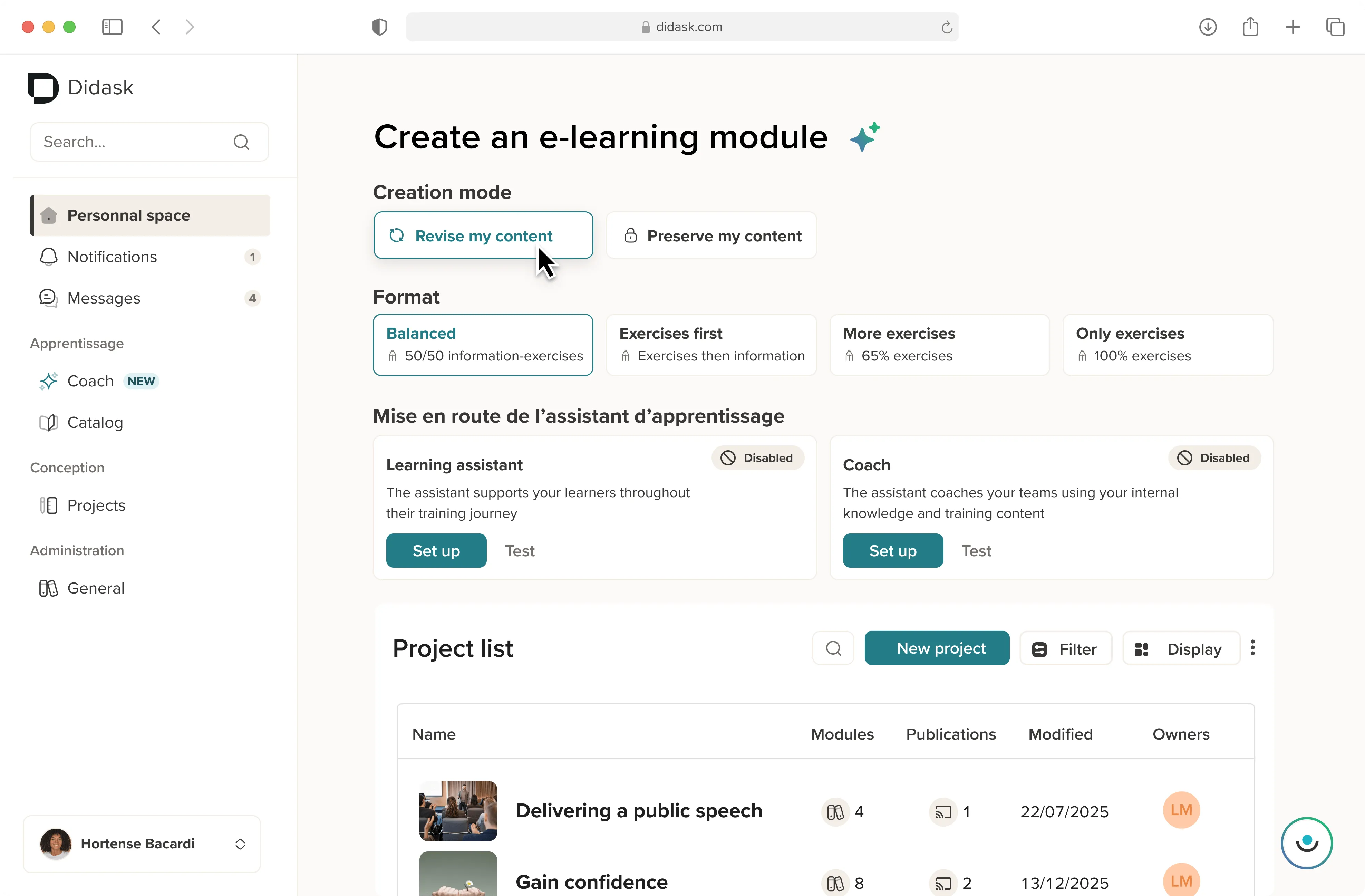
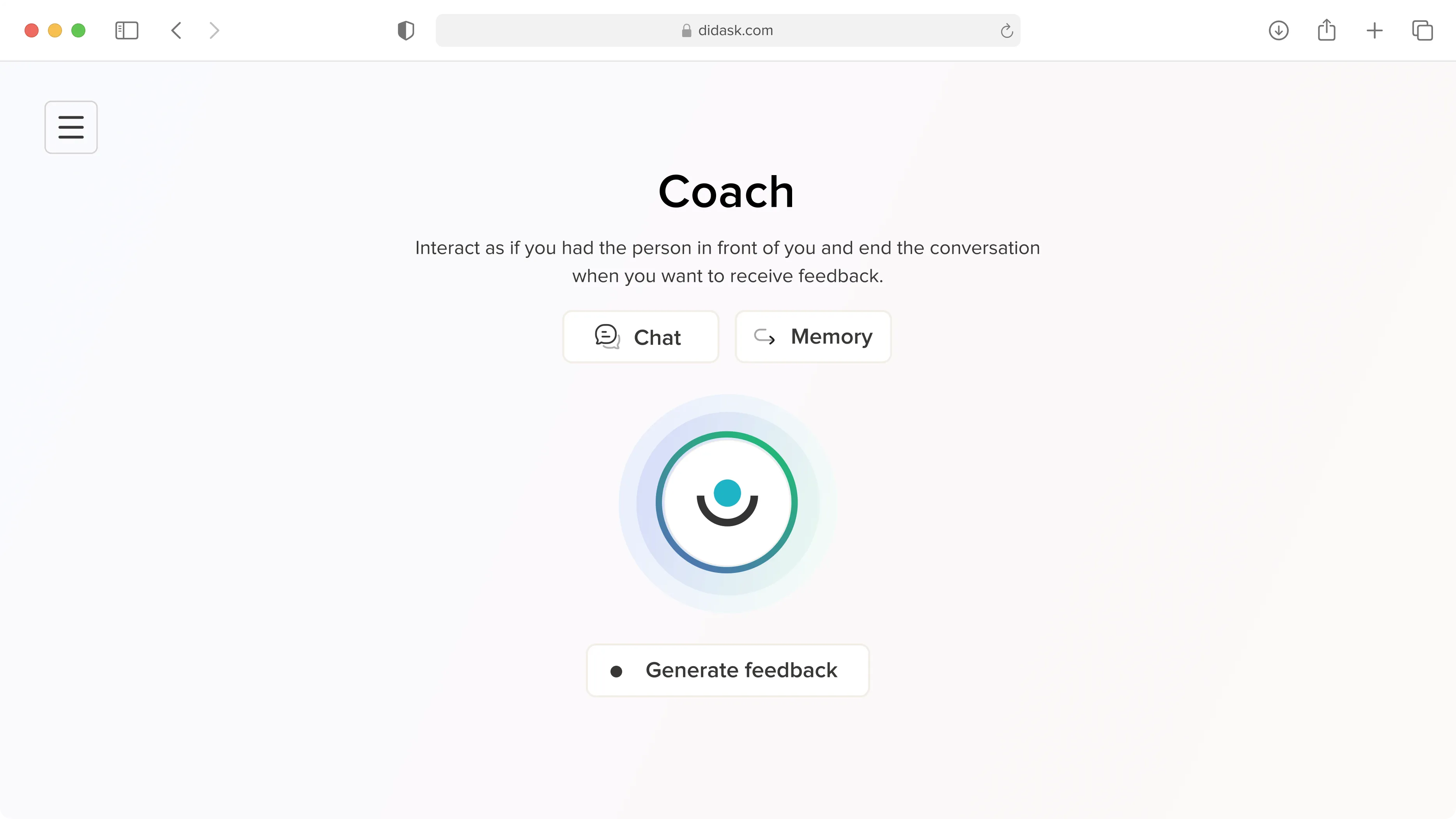
Didask Coaching brings learning into the workflow through artificial intelligence. This solution supports salespeople on a daily basis, available 24/7 to answer their questions, train them on complex situations and guide them in their progress.
The AI assistant integrates the five levers of efficiency: immediate accessibility, contextual personalization, adaptive micro-learning exercises, immediate feedback, detailed monitoring of skills development. The difference with a traditional LMS is the proactive support that suggests relevant exercises and values progress.
Just-in-time support to prepare for each appointment
A salesperson can interview Didask Coaching thirty minutes before an appointment to obtain context, approach angles and appropriate arguments. This increased preparation transforms the quality of interviews and facilitates the establishment of relationships of trust.
Simulation and training: practice before performing
Didask Coaching offers personalized scenarios according to identified needs. After each simulation, the assistant analyzes the response and suggests specific improvements. The salesperson can replay the situation until he masters the technique, building the skill before the real confrontation.
Searchable knowledge base: find information in seconds
Didask Coaching intelligently indexes all internal documentation and makes it accessible in natural language. The assistant extracts relevant elements from multiple documents and synthesizes them in a structured manner. This autonomy reduces dependence on managers and frees up time for strategic support.
Setting up learning in the flow: where do you start?
Deploying a training program into the workflow requires a structured approach to ensure team buy-in and quickly demonstrate added value.
Start by diagnosing field needs: ask salespeople about their points of friction. Then map out the three to five critical moments where immediate support would generate the most impact. Focus your efforts on these points rather than wanting to cover everything at once.
The choice of tools should focus on simplicity of use. A complex solution that requires a significant learning curve will never be adopted. The interface should be intuitive, mobile, and accessible in seconds.
Support for change is a prerequisite for success. Present the approach as supporting performance. Involve commercial ambassadors who will demonstrate concrete benefits. Define impact indicators from the start: closing rate, length of the sales cycle, time spent looking for information.
.webp)
Mistakes to avoid
Don't deploy without a pilot: testing with a small team first allows you to identify necessary adjustments. Don't overlook initial training even for a simple tool. Don't measure participation alone: the key indicator remains the impact on sales performance.
Workflow learning does not replace traditional training: it extends it and makes it operational. By allowing salespeople to progress at the exact moment they need to, this approach turns every customer interaction into a development opportunity. With solutions like Didask Coaching, skills development becomes a continuous process, rooted in reality, and directly measurable on business results.
.webp)
.webp)
.webp)



.webp)

.png)