OUR USAGES
Hospitality and catering
Your seasonal staff are all arriving at the same time.
Your restaurant LMS needs to get them up to speed before the first shift.
You are responsible for training at one or more establishments, using paper binders and photocopies passed down from season to season, with no one dedicated to the task full-time. Didask designs the curriculum for you: you provide your existing materials, and artificial intelligence structures the learning path.









SOLUTIONS
What's holding back training
in the restaurant and hotel industry
Your current daily reality
WITH DIDASK
Your materials are outdated.
Paper binders, photocopies reused from one season to the next, presentations sent by email: none of this is engaging.
Your binders become interactive learning paths.
50% to 65% less time spent creating each training course.
2,237 courses · October 2025
2,237 courses · October 2025
PERSONALIZED LEARNING
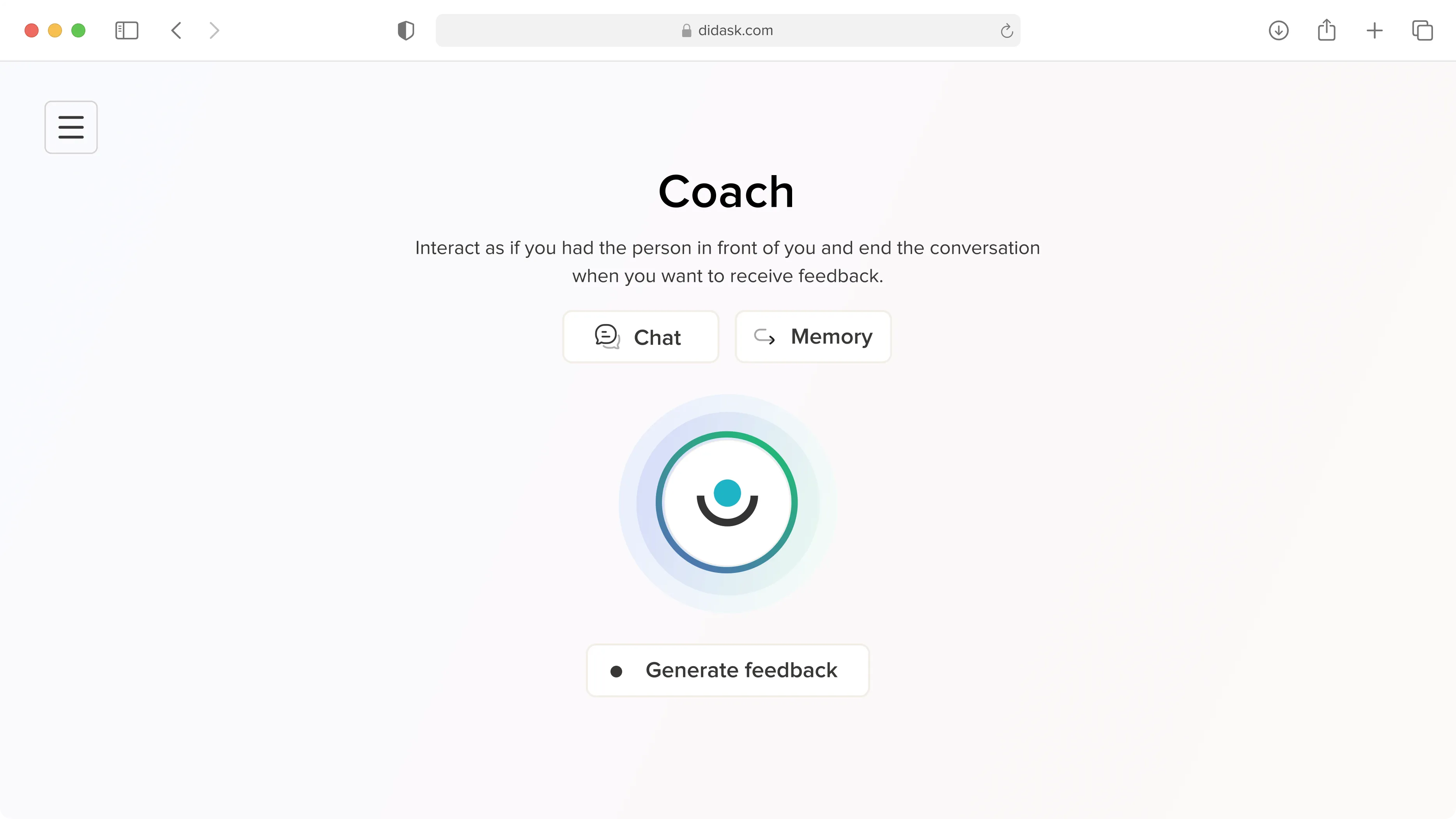
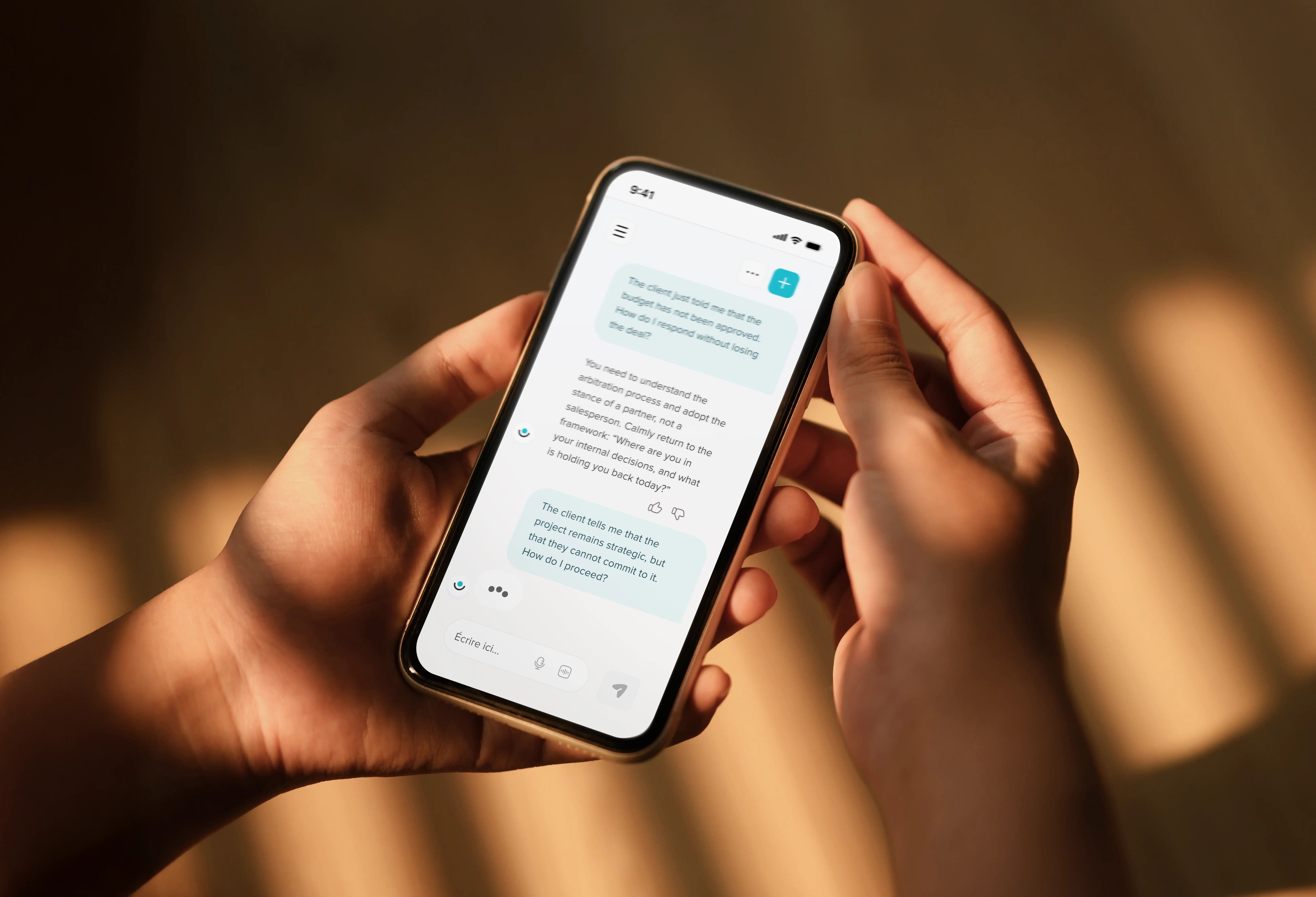
Personalized tutoring that learns from every learner, extends support after the session, and asks the right questions to reinforce key concepts at the right time.
Turnover never stops.
Dozens of seasonal workers arrive at once, need to be operational in a few days, and in-person training can't keep up with that pace.
Every wave of new hires triggers their own onboarding path.
By role, without waiting for an in-person session.
APPLIED PRACTICE
Targeted prompts that appear exactly when the need arises in daily work, guiding users to the most relevant training modules.
You are on your own with this.
No training team, no digital design expertise, and a backlog that never shrinks.
You are producing content on your own, without any prior expertise.
83% of our designers had never created a module before and are now fully autonomous.
8,704 learners · June 2023
8,704 learners · June 2023
FOCUSED ESSENTIALS
Interactions integrated into the workflow that deliver the right concept in seconds, without adding to the learner's daily workload.
No one is finishing your modules.
True/false quizzes and linear paths: frontline teams lose focus, and completion rates plummet.
Your teams train on their phones, between shifts.
In 10 to 15-minute sessions.
993 learners · March 2025.
993 learners · March 2025.
FOCUSED ESSENTIALS
Interactions integrated into the workflow that deliver the right concept in seconds, without adding to the learner's daily workload.
Every establishment has its own processes.
Multi-brand, multi-site, franchises: adapting every training program site by site causes production time to skyrocket.
FOCUSED ESSENTIALS
Interactions integrated into the workflow that deliver the right concept in seconds, without adding to the learner's daily workload.
A common foundation, with local adaptation.
A group catalog, with a sub-space for each establishment or brand.
FOR YOU
A head waiter behind every new recruit. Without mobilizing a single one.
In 1984, Benjamin Bloom identified a gap that has never been disproven: a learner receiving one-on-one guidance with personalized feedback reaches a level of mastery unattainable in group training. Two standard deviations—this is the 2 Sigma Problem.
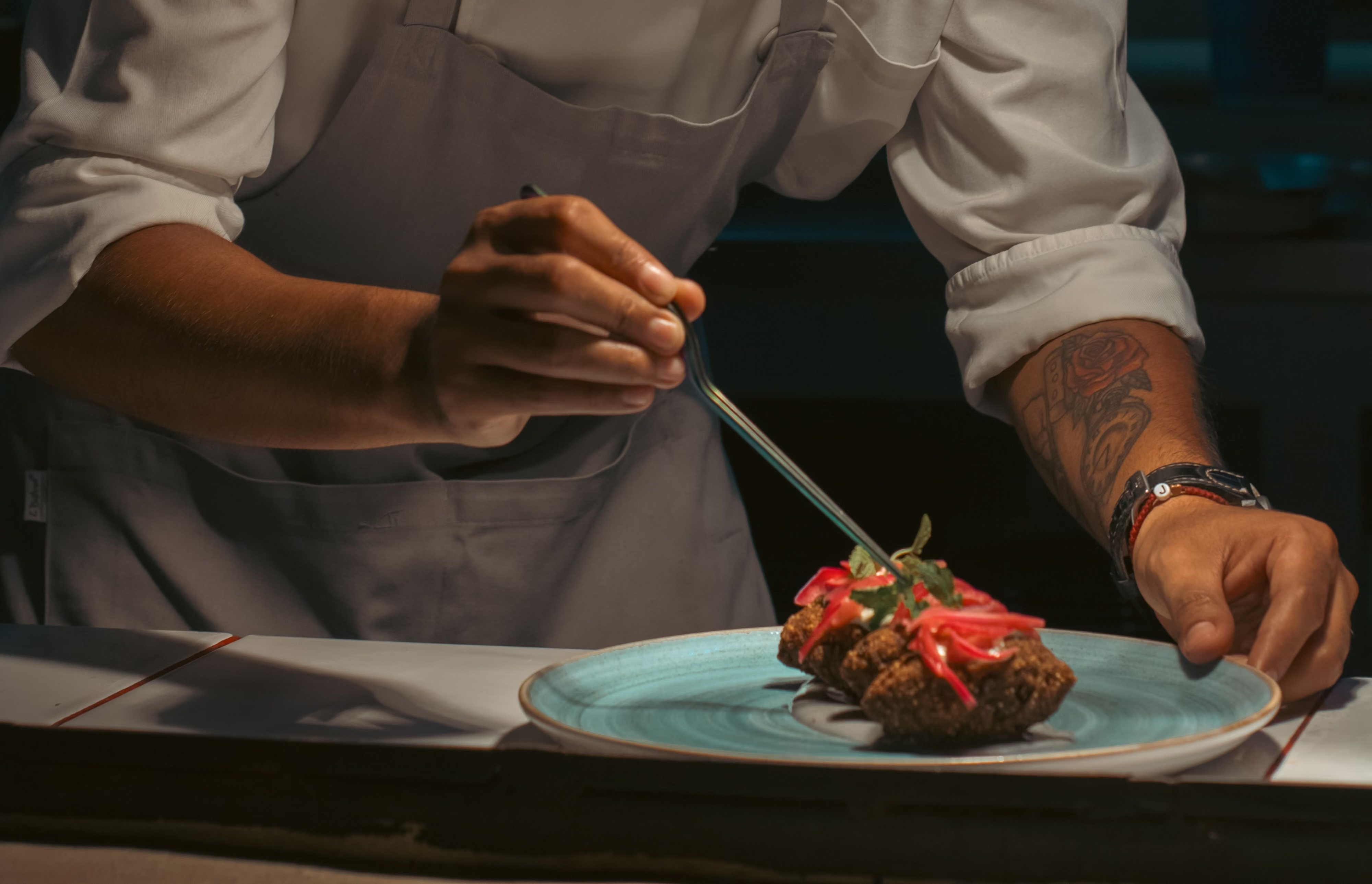
The restaurant industry understands this better than anyone. The chef correcting a technique as it happens, the head waiter guiding a runner through their first service: this is one-on-one tutoring, and it costs valuable production time during peak season. Didask makes this scalable using cognitive science: the learning path adjusts to each individual's actual level, corrects errors the moment they occur, and revisits concepts at the right intervals for long-term retention. The Didask Coaching offer extends this tutoring into the workflow, answering questions exactly when they arise on the floor.
"Most platforms use AI to produce content faster. Didask uses it to make learning more effective. This isn't productivity AI; it's pedagogical AI rooted in cognitive science."
The restaurant industry understands this better than anyone. The chef correcting a technique as it happens, the head waiter guiding a runner through their first service: this is one-on-one tutoring, and it costs valuable production time during peak season. Didask makes this scalable using cognitive science: the learning path adjusts to each individual's actual level, corrects errors the moment they occur, and revisits concepts at the right intervals for long-term retention. The Didask Coaching offer extends this tutoring into the workflow, answering questions exactly when they arise on the floor.
"Most platforms use AI to produce content faster. Didask uses it to make learning more effective. This isn't productivity AI; it's pedagogical AI rooted in cognitive science."

THE PLATFORM
Three answers to operational hurdles
Your binders already exist. They are your raw material.
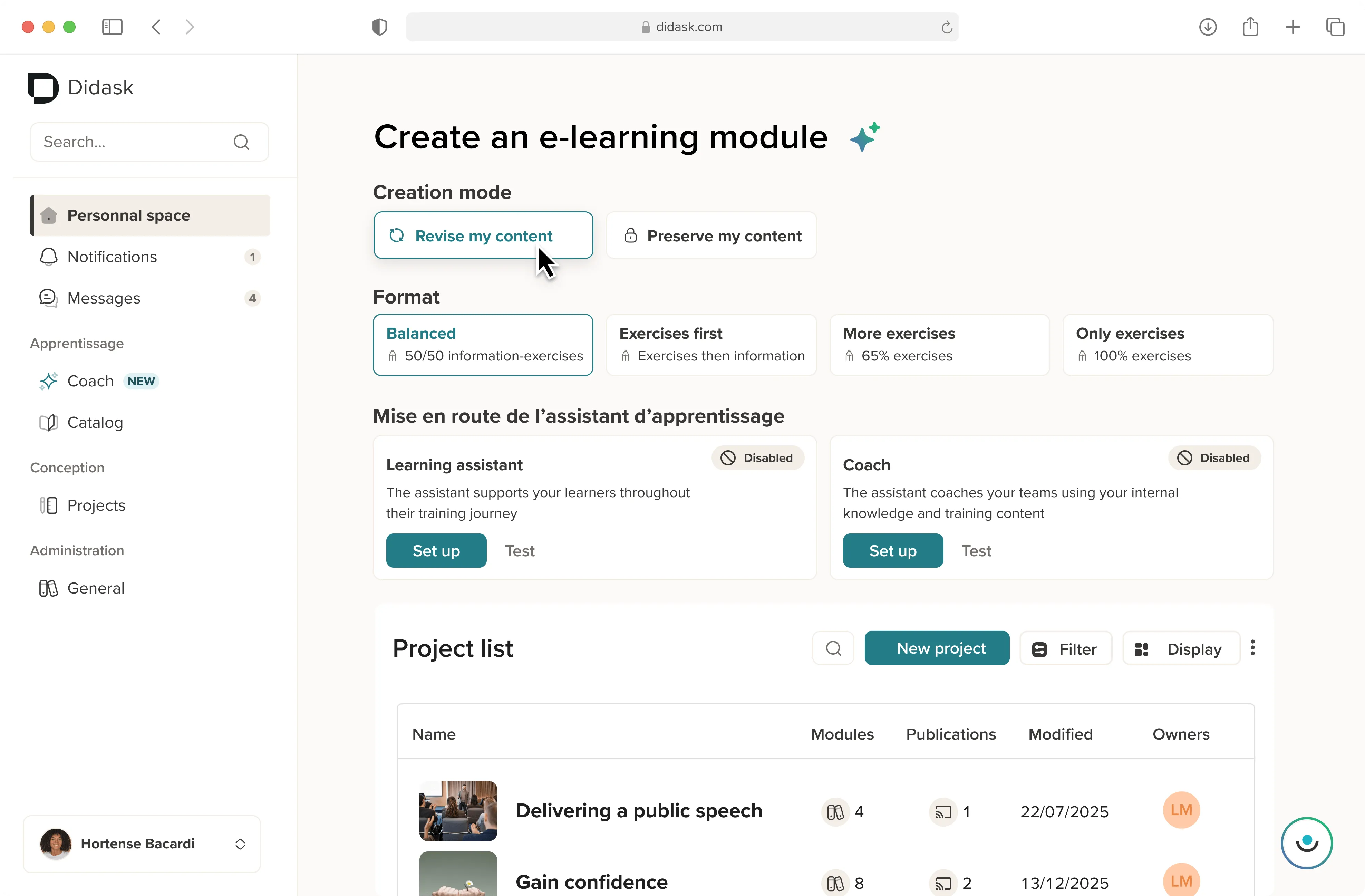
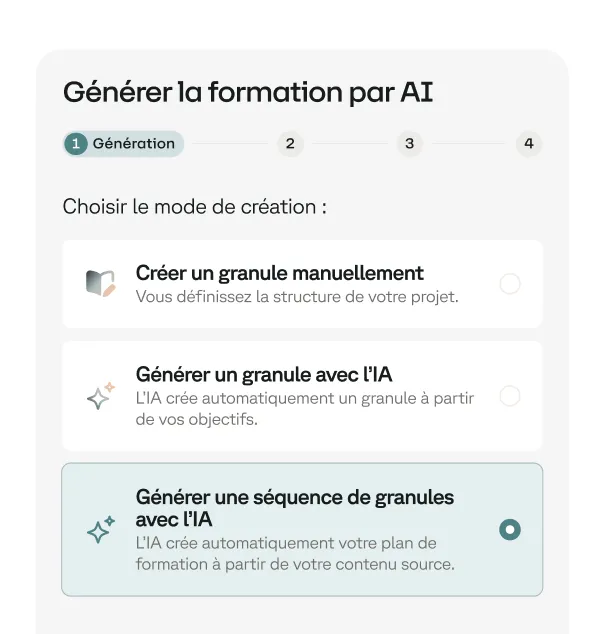
Upload what you already have: welcome manuals, technical sheets, hygiene procedures, presentations, videos. The AI-powered authoring tool turns them into structured courses, featuring scenarios based on your actual operations. You review, adjust, and publish.
When the menu changes or a process evolves, you can update the module in a few clicks instead of recreating the material for every existing version.
When the menu changes or a process evolves, you can update the module in a few clicks instead of recreating the material for every existing version.
3
x faster
At One Business School, an apprenticeship training center with a catalog covering hospitality and catering: modules created 3 times faster, 1,100 modules produced in less than a year, and production costs cut in half.

Your teams train on their phones, between shifts.
Training is accessible online via any smartphone or tablet browser: no apps to install, no professional email address required. Access is granted via employee ID, code, or SSO, in 10 to 15-minute micro-sessions.
Onboarding paths are ready by role—front of house, kitchen, reception, housekeeping—and are triggered automatically upon arrival, with automated enrollment from your HRIS.
Onboarding paths are ready by role—front of house, kitchen, reception, housekeeping—and are triggered automatically upon arrival, with automated enrollment from your HRIS.
-60
up to -75%
in training time for equivalent content: your teams get back to work faster.
993 learners · March 2025
.webp)
Hygiene, food safety, customer service: formats that teams actually finish.
Learning through error replaces the true/false quiz. Employees are faced with real-world situations—a broken cold chain, an allergen, an unhappy customer—and receive feedback the moment they make a mistake. Integrated audio makes the courses accessible to those less comfortable with reading.
You can then track progress by establishment, department, or job role, with PDF or CSV exports available for your internal audits.
You can then track progress by establishment, department, or job role, with PDF or CSV exports available for your internal audits.

5.6
/6
For a food safety program designed with Didask by a food safety analysis and consulting firm: NPS of 63, learning effectiveness of 5.6/6, and boredom score of 1.8/6.
Didask client · food safety program
.webp)
THE CHALLENGES
The 5 major challenges faced by healthcare professionals
RESULTS
of designers are autonomous without prior instructional design experience
83
%
83
%
reduction in training time for equivalent content
−60 to −75
%
−60 to −75
%
say the training is useful in their actual work
94
%
94
%
TESTIMONIES
How our customers turn learning
into measurable impact
A high-end villa and concierge operator
Around 200 permanent staff, as many seasonal workers, and up to 75 new hires per month at peak times. Before Didask, onboarding relied on a nearly hundred-page welcome manual, at least half of which was irrelevant to the person reading it.
The system now has 204 registered learners and 1,676 completed modules, with paths tailored to specific roles—sales, concierge, operations—and a dedicated space for each office across four countries.
Around 200 permanent staff, as many seasonal workers, and up to 75 new hires per month at peak times. Before Didask, onboarding relied on a nearly hundred-page welcome manual, at least half of which was irrelevant to the person reading it.
The system now has 204 registered learners and 1,676 completed modules, with paths tailored to specific roles—sales, concierge, operations—and a dedicated space for each office across four countries.
Modules completed
+1676
Countries
4

SECURITY
Enterprise-grade security
Built into every layer, protected end-to-end
DATA SECURITY
Isolated hosting, end-to-end encryption, and zero outbound data flow — ensuring your data never leaves your controlled environment.
IP PROTECTION
Your content, raw or generated, remains 100% yours. No reuse, no training, no retention by AI models, ever.
COMPLIANCE
Strict GDPR alignment and full adherence to data-governance standards throughout the entire lifecycle of your data.
SAFE AI GENERATION
A hybrid architecture and cognitive guardrails that minimize hallucinations and deliver consistently reliable, high-precision outputs.
FAQs
What is a restaurant LMS and how does it differ from a standard LMS?
Definition — Restaurant LMS: a training platform that makes seasonal staff operational before their first shift, can be accessed on a phone between rushes, and tracks hygiene training for each location.
An LMS — learning management system — hosts your content, delivers it to the relevant teams, and tracks their progress. This is the general definition, valid in all sectors; it is also referred to as an LMS platform or learning platform.
What changes in the restaurant and hospitality industry is that training must fit into the gaps between service tasks and restart with every wave of recruitment.
An LMS — learning management system — hosts your content, delivers it to the relevant teams, and tracks their progress. This is the general definition, valid in all sectors; it is also referred to as an LMS platform or learning platform.
What changes in the restaurant and hospitality industry is that training must fit into the gaps between service tasks and restart with every wave of recruitment.
Can you manage HACCP training and food safety with an LMS?
Yes for the theoretical part: HACCP principles, the cold chain, allergens, cleaning, and disinfection are delivered in short paths, tracked, and archived, with reporting by location and by employee.
Two limitations to keep in mind: An LMS does not replace mandatory in-person certification training when required, and it does not issue regulatory certificates on your behalf: it provides proof of completion and training results, but the compliance of the program remains your responsibility.
On a food safety program designed with Didask by a food safety analysis and consulting firm, learners gave an NPS of 63, a pedagogical effectiveness score of 5.6/6, and a boredom score of 1.8/6.
Two limitations to keep in mind: An LMS does not replace mandatory in-person certification training when required, and it does not issue regulatory certificates on your behalf: it provides proof of completion and training results, but the compliance of the program remains your responsibility.
On a food safety program designed with Didask by a food safety analysis and consulting firm, learners gave an NPS of 63, a pedagogical effectiveness score of 5.6/6, and a boredom score of 1.8/6.
Can staff train on their phones, and is there an offline mode?
Training is accessible online via a smartphone or tablet browser: no app to install, no professional email required, and access via employee ID, code, or SSO.
However, let’s be clear: Didask does not offer an offline mode. Before making that a deal-breaker, verify that connectivity is truly your issue—in most establishments, break rooms and offices have Wi-Fi coverage, and the real bottleneck lies elsewhere: the lack of individual accounts and the sharing of devices.
The priority criterion to evaluate is therefore the identification method. This is what determines the first-login rate, far more than an offline mode.
However, let’s be clear: Didask does not offer an offline mode. Before making that a deal-breaker, verify that connectivity is truly your issue—in most establishments, break rooms and offices have Wi-Fi coverage, and the real bottleneck lies elsewhere: the lack of individual accounts and the sharing of devices.
The priority criterion to evaluate is therefore the identification method. This is what determines the first-login rate, far more than an offline mode.
How can you train seasonal staff in just a few days, with every wave of recruitment?
The onboarding path is built once, by role—front-of-house, kitchen, reception, housekeeping—and is triggered for every new arrival, without waiting for an in-person session to fill up. Enrollment is automated via your HRIS, and adaptive learning allows everyone to start at their actual skill level.
For a high-end villa and concierge operator, high season means up to 75 hires per month: the system has 204 registered learners and 1,676 completed modules, with paths differentiated by office and job role. The key point to watch is editorial—a seasonal path must be broken down into 10 to 15-minute sessions.
For a high-end villa and concierge operator, high season means up to 75 hires per month: the system has 204 registered learners and 1,676 completed modules, with paths differentiated by office and job role. The key point to watch is editorial—a seasonal path must be broken down into 10 to 15-minute sessions.
How can you maintain the same standard across multiple locations, brands, or countries?
Through sub-spaces: a common catalog that carries the group's standards, and autonomous management by location, brand, or country for local needs.
AI-assisted translation adapts this foundation into the language of each site, and white-labeling allows the platform to match the branding of each individual establishment. This is how multi-brand groups and franchises deploy their training: headquarters creates the content once, each location adapts what is specific to them, and no one has to rewrite the module when the menu changes.
AI-assisted translation adapts this foundation into the language of each site, and white-labeling allows the platform to match the branding of each individual establishment. This is how multi-brand groups and franchises deploy their training: headquarters creates the content once, each location adapts what is specific to them, and no one has to rewrite the module when the menu changes.
What is the ROI of an LMS for the restaurant and hospitality industry?
We do not publish generic ROI figures because they depend entirely on your recruitment volume and current training costs. That would be a convenient but inaccurate number.
However, three areas are measurable and documented by our clients: design time, down by 50 to 65% (2,237 training sessions, October 2025); training time for equivalent content, down by 60 to 75% (993 learners, March 2025); and production costs, which were halved at One Business School.
The indicators you should track on your end are the cost per trained employee, the time it takes for a new hire to reach autonomy, and turnover during the first few weeks.
However, three areas are measurable and documented by our clients: design time, down by 50 to 65% (2,237 training sessions, October 2025); training time for equivalent content, down by 60 to 75% (993 learners, March 2025); and production costs, which were halved at One Business School.
The indicators you should track on your end are the cost per trained employee, the time it takes for a new hire to reach autonomy, and turnover during the first few weeks.
How do you choose an LMS for a restaurant or hotel group, and what should you measure afterwards?
Three criteria are deal-breakers: real access for your field teams without professional email addresses, the ability to create your training paths without a dedicated design team, and the management of a common standard across multiple locations. Three criteria then distinguish the remaining solutions: integration with your HRIS, proof of mastery rather than just completion, and the annual cost relative to the number of employees actually trained.
Regarding measurement, avoid completion rates: a module watched to the end proves a connection, not a skill. Instead, track the time to autonomy, success rates in practical scenarios, and discrepancies noted during your internal hygiene and service audits.
Regarding measurement, avoid completion rates: a module watched to the end proves a connection, not a skill. Instead, track the time to autonomy, success rates in practical scenarios, and discrepancies noted during your internal hygiene and service audits.
MEET US
Get a demo!
We'd love to learn about your project
Thank you! Your submission has been received!
Oops! Something went wrong while submitting the form.
Effective learning,
made scalable
made scalable
Mobile training
Course Authoring
Microlearning
e-Learning
Authoring Tools
Authoring Tools
Learning Experience
Platform
Platform
.png)
CapTERRA — 4.9