OUR USAGES
Health and Social Care
Effectively train your care teams,
even without pedagogical expertise
Didask helps healthcare and social care institutions train their teams online, even without any e-learning experience. A simple, accessible platform designed for your frontline teams.










SOLUTIONS
Ce qui bloque la formation continue
dans les établissements de santé
Aujourd’hui, votre quotidien
AVEC DIDASK
Vos plans de formation vivent dans un tableur
Pas de plateforme, pas d’outil auteur, tout en présentiel, et chaque établissement fait à sa façon.
Vous démarrez sans rien.
83 % de nos concepteurs n’avaient jamais créé un module et sont autonomes. 8 704 apprenants · juin 2023
PERSONALIZED LEARNING
Un tutorat personnalisé qui apprend de chaque apprenant, prolonge l’accompagnement après la session et pose les bonnes questions pour renforcer les concepts clés au bon moment.
Vos soignants n’ont ni poste fixe ni créneau
Horaires décalés, planning fragmenté, formation reportée au trimestre suivant.
Vos soignants se forment entre deux services
Depuis leur mobile, en sessions courtes.
APPLIED PRACTICE
Des relances ciblées qui émergent précisément quand le besoin apparaît dans le travail quotidien, et orientent vers les modules de formation les plus pertinents.
vous concevez seul.e
Aucune formation à l’ingénierie pédagogique, et un backlog qui ne descend jamais.
Vous concevez 2 à 3 fois plus vite.
−50 à −65 % de temps de création par formation.
2 237 formations · octobre 2025
2 237 formations · octobre 2025
FOCUSED ESSENTIALS
Des interactions intégrées au flux de travail, qui délivrent le bon concept en quelques secondes, sans alourdir la journée de l’apprenant.
Le turnover annule vos efforts.
À peine l’équipe formée, elle a changé.
Chaque nouvel arrivant démarre à son niveau.
Sans que vous rouvriez de session.
FOCUSED ESSENTIALS
Des interactions intégrées au flux de travail, qui délivrent le bon concept en quelques secondes, sans alourdir la journée de l’apprenant.
La conformité se reconstitue à la main.
DPC, EPP, audits : vous ressortez les émargements à chaque demande.
FOCUSED ESSENTIALS
Des interactions intégrées au flux de travail, qui délivrent le bon concept en quelques secondes, sans alourdir la journée de l’apprenant.
Votre traçabilité s’exporte en un clic.
Par établissement, par agent, par formation.
POUR VOUS
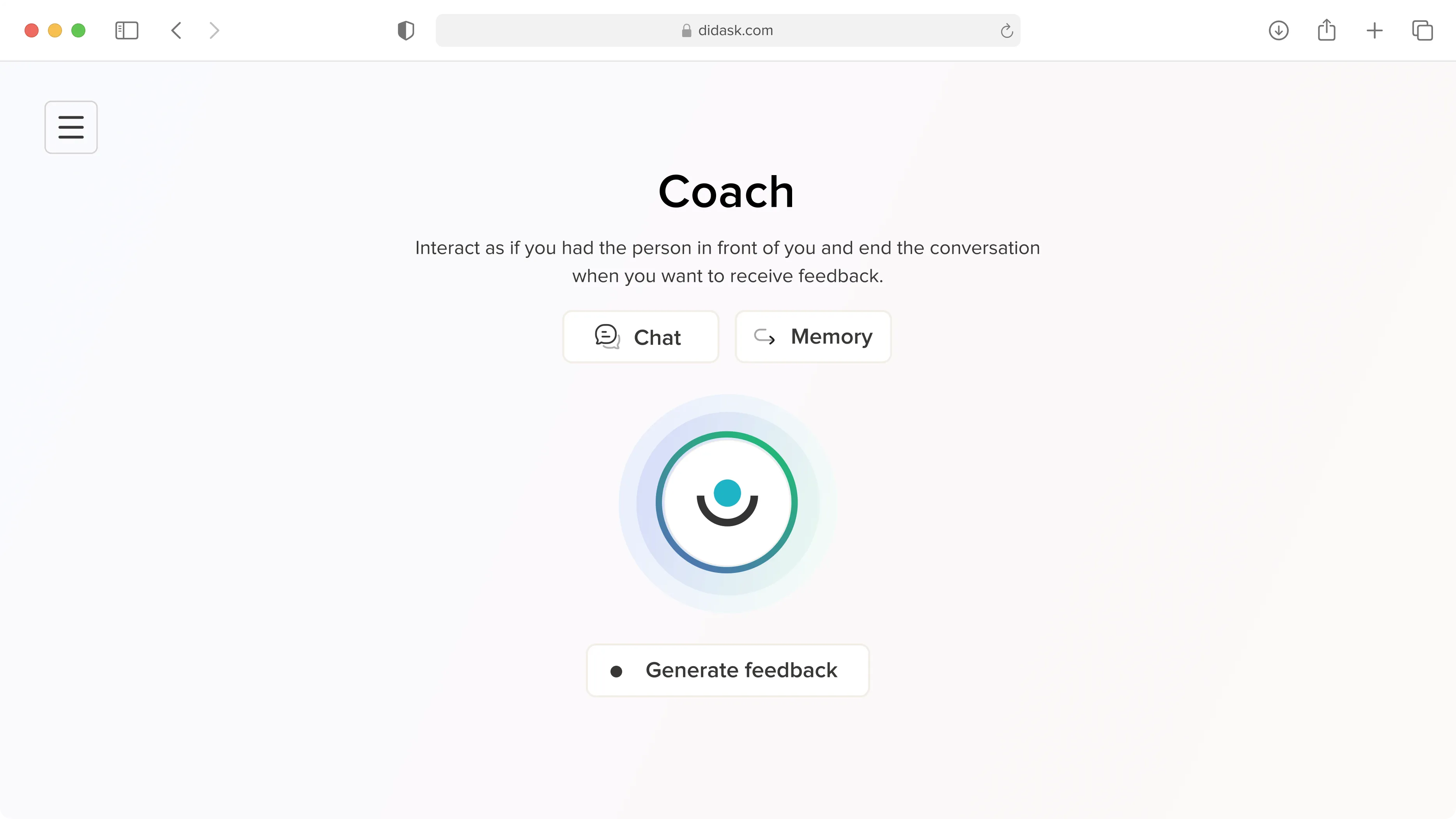
Un tuteur pour chaque soignant. Sans en recruter un seul.
En 1984, Benjamin Bloom mesure un écart qui n’a jamais été démenti : un apprenant suivi individuellement progresse deux fois mieux qu’en salle. C’est le problème des 2 sigma.
On sait ce qui fonctionne, personne ne peut se le payer. Aucun établissement ne mettra un formateur derrière chaque aide-soignant. Didask reproduit ce tutorat : le parcours s’ajuste au niveau réel de chacun, corrige l’erreur au moment où elle se produit, et fait revenir les notions au bon intervalle.
"La plupart des plateformes utilisent l’IA pour produire du contenu plus vite. Didask l’utilise pour rendre l’apprentissage plus efficace. Ce n’est pas une IA de productivité, c’est une IA pédagogique fondée sur les sciences cognitives."
On sait ce qui fonctionne, personne ne peut se le payer. Aucun établissement ne mettra un formateur derrière chaque aide-soignant. Didask reproduit ce tutorat : le parcours s’ajuste au niveau réel de chacun, corrige l’erreur au moment où elle se produit, et fait revenir les notions au bon intervalle.
"La plupart des plateformes utilisent l’IA pour produire du contenu plus vite. Didask l’utilise pour rendre l’apprentissage plus efficace. Ce n’est pas une IA de productivité, c’est une IA pédagogique fondée sur les sciences cognitives."

LA PLATEFORME
Trois réponses aux blocages terrain
Vous n’avez jamais conçu de formation ? Ça n’a pas d’importance.
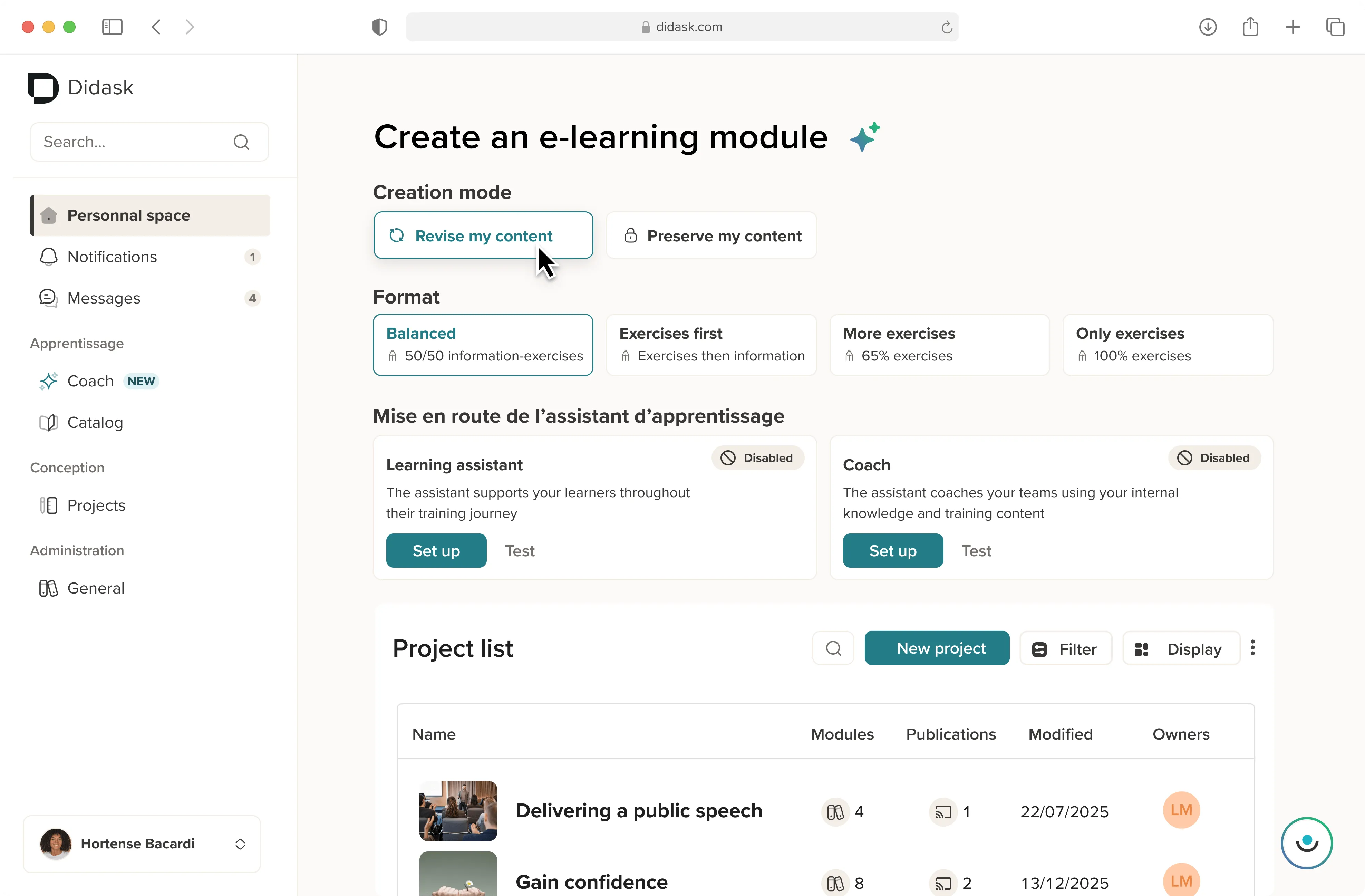
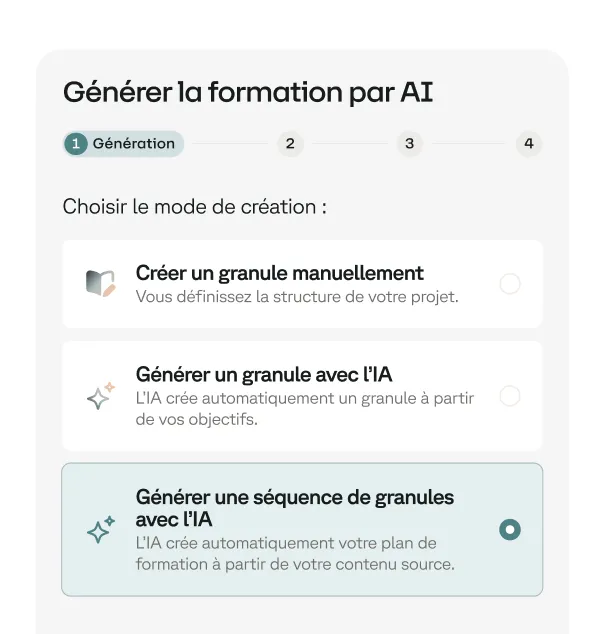
Vous déposez ce que vous avez déjà : protocoles de soin, procédures, présentations, documents réglementaires. L’IA en fait un parcours structuré, avec des mises en situation issues du terrain. Vous relisez, vous ajustez, vous diffusez.
83
%
de nos concepteurs n’avaient jamais créé de module avant Didask et produisent en autonomie.
8 704 apprenants · juin 2023

Vos soignants se forment quand ils peuvent.
Les modules sont courts et accessibles en ligne depuis le navigateur de leur mobile. Un aide-soignant avance entre deux services, reprend trois jours plus tard là où il s’était arrêté.

-60
à -75%
de temps de formation à contenu équivalent : vos équipes retournent plus vite auprès des patients.
993 apprenants · mars 2025
.webp)
Votre conformité se prouve, elle ne se reconstitue pas.
DPC, EPP, audits internes, demandes de l’ARS ou des financeurs : chaque apprenant a son tableau de bord, chaque formation son historique, chaque certificat son export. Vous filtrez par établissement, par service, par métier.
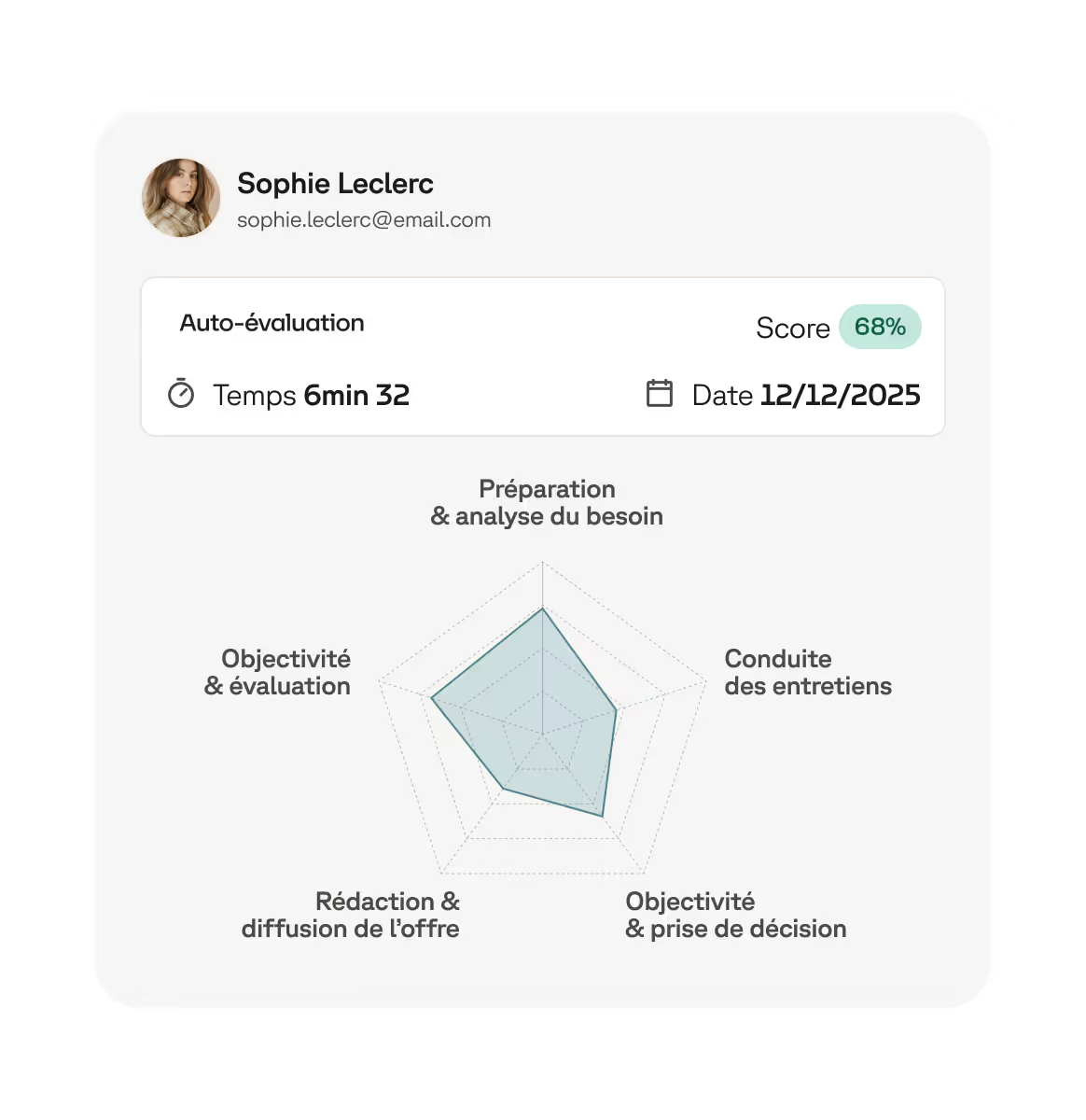
Et surtout : vous prouvez la maîtrise réelle, pas le fait d’avoir cliqué sur toutes les pages.
.webp)
THE CHALLENGES
The 5 major challenges faced by healthcare professionals
RESULTS
employees trained continuously
250
%
250
%
to get started independently, without an e-learning culture
5
workshops
5
workshops
continuous onboarding paths
24
/7
24
/7
SECURITY
Enterprise-grade security
Built into every layer, protected end-to-end
DATA SECURITY
Isolated hosting, end-to-end encryption, and zero outbound data flow — ensuring your data never leaves your controlled environment.
IP PROTECTION
Your content, raw or generated, remains 100% yours. No reuse, no training, no retention by AI models, ever.
COMPLIANCE
Strict GDPR alignment and full adherence to data-governance standards throughout the entire lifecycle of your data.
SAFE AI GENERATION
A hybrid architecture and cognitive guardrails that minimize hallucinations and deliver consistently reliable, high-precision outputs.
FAQs
We have no e-learning or LMS culture, is that a problem?
No, that's precisely the profile Didask is designed for. A structured onboarding process, supported by an educational engineer, enables teams with no prior e-learning experience to produce content autonomously. AI transforms your existing materials (PPT, PDF) into interactive training.
Our caregivers don't have computers or professional email addresses. How do they manage?
The platform is responsive: your teams can access it from their mobile browser at any time. SSO simplifies login by avoiding multiple credentials, and short modules fit into fragmented schedules.
Can we standardize training across our different establishments?
Yes. You create spaces per establishment while sharing a common catalog, with management by site, department, or profile. If your group already has an LMS, SCORM Connect allows you to deploy your Didask courses there.
How do we manage high turnover and continuous arrivals?
Onboarding paths are accessible at any time, autonomously, with a placement test that adapts the path to each new arrival. This way, you train new recruits continuously, without needing to re-engage a trainer for each wave of arrivals.
Does Didask meet our regulatory obligations (DPC, ARS, funders)?
Yes. You have detailed dashboards by entity, learner, and skill, complete exports, and automatic certificates. Adaptive learning also allows for validating actual skill development, not just completion.
Is our health data protected?
Your data is hosted in the European Union and processed in compliance with GDPR, with encryption and granular access management. Your content remains your property and is never used to train AI models.
MEET US
Get a demo!
We'd love to learn about your project
Thank you! Your submission has been received!
Oops! Something went wrong while submitting the form.
Effective learning,
made scalable
made scalable
Mobile training
Course Authoring
Microlearning
e-Learning
Authoring Tools
Authoring Tools
Learning Experience
Platform
Platform
.png)
CapTERRA — 4.9