


According to a RAIN Group study published in 2024, only 33% of companies consider their sales training programme truly effective. This is not a budget problem, nor a problem of goodwill. It is a problem of starting point.
Indeed, most teams launching a sales training begin with content: which sales techniques to teach, which trainer to choose, which platform to use, which internal marketing strategy to adopt. These questions come too early. Before building anything, you have to understand why salespeople fail where they fail, in which area precisely, and on which field situations. Without this preliminary diagnosis, even the best-designed programme produces few lasting results.
This article guides training managers and sales directors step by step in building an effective system tailored to their company, from needs analysis to deployment, through to measuring the impact on business indicators. It is aimed at any sales professional looking for an operational guide, not a catalogue of good intentions.
Step 1: Make the right diagnosis before creating any content
The diagnosis of a sales training programme is conducted on two levels.
The first is macro: mapping the major friction zones of the sales team. At which stage of the sales cycle are deals most often lost? On which profiles? Do new salespeople struggle to reach full autonomy quickly? Are seniors stagnating on their conversion rate? Does the team perform differently depending on market segments or customer types? These questions make it possible to prioritise the areas to address and to avoid scattering resources across all skills at once.
The second level is micro: identifying the concrete mistakes observed in the field, in precise situations. This is where what Didask calls the relevant mistake comes in. Not "our salespeople lack assertiveness in negotiation", too vague to be trained, too blurry to be measured. But: "faced with a price objection, our salespeople systematically lower their proposal without exploring alternatives." Its observable opposite, "the salesperson restates the value of the offer before any concession", is the expected change. A precise behaviour, anchored in a real work situation, that can be trained and assessed.
Take Sophie, sales director in a B2B services SME. At the macro level, her CRM data showed a collapse of the conversion rate at the closing phase, on new salespeople only. Digging at the micro level, through interviews with managers and listening to recorded calls, she identified the precise mistake: her salespeople were presenting the offer before having restated the customer's need. The previous training had addressed "customer discovery" in general. It was answering the wrong question.
.webp)
Our advice
Build a diagnostic matrix shared between the managers and the training manager: one row per sales role (hunter, account manager, new recruit, etc.), one column per key stage of the sales cycle, and in each cell the relevant mistake observed plus the associated expected change. This overview makes it possible to prioritise the work streams, align stakeholders before design, and have a reference base to measure the programme's impact once deployed.
Step 2: Segment your team to adapt the programme to each profile
Once the target behaviours are identified, the next question is: for whom? This is where many programmes lose their effectiveness by treating all salespeople the same way, without accounting for their own experience or their role in the sales cycle.
Three segmentation dimensions are essential.
1/ Skill level
A beginner salesperson needs the fundamentals: structuring a discovery meeting, mastering the product pitch, handling early objections. An experienced salesperson has other needs: complex negotiation, key-account management, portfolio development. Training both on the same path guarantees that neither really benefits from it. A preliminary mapping of essential sales skills by level facilitates this segmentation.
2/ Role in the sales cycle
Developing the skills of a hunter, centred on prospecting and generating new opportunities, does not resemble developing those of an account manager whose job is to retain and grow existing accounts. The critical situations are not the same, the relevant mistakes either, and therefore neither is the content to build.
3/ Tenure in the company
A new salesperson needs a structured integration path (onboarding sequenced over 30, 60 and 90 days) to become autonomous as fast as possible. An employee in post for several years needs a continuous upskilling system, targeted at their real friction points, not a generalist refresher.
Our advice
Create a mapping of the sales team's profiles before designing any module: a list of the roles present, skill levels estimated by the managers, tenure. For each profile, associate the 2-3 priority relevant mistakes identified in the first step. This cross-referencing directly gives the programme's structure: who trains what, in which order, with what depth. It is also useful to mention any legal constraints related to professional training in your sector of activity.
Step 3: Choose the right formats and build the pedagogical sequence
A sales training programme is not a list of modules. It is a sequence: each phase prepares the next and builds on what precedes it. The choice of formats is not a question of preference or budget but a question of design.
The articulation of formats, not their accumulation
The basic rule: alternate acquisition time and practice time. This is the principle of blended learning applied to sales training. Not a mix of formats for variety's sake, but an architecture where each format fulfils a precise function. For example a classroom session to lay the fundamentals and create group dynamics, then short digital modules to deepen each key point at one's own pace. Role-plays and simulations to train behaviours under pressure. Field feedback to anchor what was learned in the real contexts of the sales cycle. It is not the accumulation of formats that makes quality: it is their articulation in service of a precise behavioural objective.
What cognitive science says about effective formats
The key phenomenon to understand is learning transfer: the ability to apply what you have learned in a new situation, different from the one in which you learned it. This is precisely the central problem of sales training. A salesperson may well understand a sales technique in a classroom and be unable to apply it under pressure facing a real prospect.
Cognitive science has identified a powerful lever to favour this transfer: the testing effect, or trial-error-feedback learning. You retain better, and transfer better, what you had to actively retrieve from memory, making mistakes and receiving corrective feedback, than what you simply read or heard. Concretely: if Geoffrey, a salesperson, practises on a case simulating a real objection, makes a mistake, receives targeted feedback, and starts again, he will memorise and apply the technique far better than Nida, his colleague who watched a 20-minute video on the same subject.
This is why interactive formats, simulations anchored in authentic field situations and spaced recall exercises are the real levers of an effective sales training programme. And the good news is that e-learning now makes it possible to design exactly this type of practical case: realistic situations where the salesperson makes a choice, makes a mistake, receives targeted corrective feedback, and starts again. Far from passive slide-and-quiz modules, the best current platforms make it possible to create paths where mistakes are not only possible, but intentional. These are the formats to bet on, not because they are modern, but because they have proven themselves.
Pedagogical AI: a real advance, provided you do not confuse tech with pedagogy
Digital tools now make it possible to design sales training content far more effective than ten years ago, provided you choose the right ones. AI opens up concrete possibilities: generating practical cases from field situations, adapting the path to each salesperson's level, providing instant feedback after each exercise. These are real gains, which reduce design time and increase content relevance.
But technology does not do everything. An AI that generates content without a pedagogical framework produces modules that look like training without having its effects. What makes the difference is an AI designed to apply the principles of cognitive science: spacing reactivations, provoking mistakes to better correct them, adapting difficulty according to the learner's progress. This is what is called pedagogical AI, and it is the approach of Didask Training, whose platform is built around these mechanisms rather than around the mere production of content.
.png)
Good to know
The testing effect and spaced repetition are two of the most robust findings of cognitive science applied to learning. Yet most traditional LMS software does not integrate them natively into its design logic. This is one of the key criteria to check when choosing your sales training platform.
Our advice: The choice of LMS platform directly conditions what will be possible to do. Before comparing features or prices, ask each vendor three questions: how does the platform integrate spaced repetition? How does it personalise the path according to the learner's level? How does it allow managers to contribute to content creation without expertise in instructional design? These three criteria are among those that distinguish Didask from generalist LMS on the market.
Step 4: Involve managers as designers and relays of the programme
A programme can be well designed, well sequenced, deployed on a suitable platform. If it is not relayed by managers day to day, its potential remains largely untapped. This is not a question of motivation but a mechanical question of transfer.
The sales manager plays a role at three distinct moments. Before the launch: they contribute to the diagnosis, define with each salesperson the expected behaviours, and set the framework. A salesperson who knows their manager will observe and discuss what they learned engages differently in their training. During: they maintain the momentum, connect simulated situations with the real contexts of the sales cycle. After: a debrief focused on a precise field conversation at D+7, a joint listening at D+15, an individual coaching point at D+30. Three moments that anchor what was learned rather than letting it evaporate.
But their role goes beyond follow-up. The manager is also the company's best source of content to help their teams progress. They know the objections that recur, the practices to assess in the field, the situations that put their salespeople in difficulty, the moves that distinguish the best performers. This material is infinitely more relevant than generic cases designed by an external provider, provided you give them the tools to harness it and handle the design without becoming an instructional designer.
This is precisely what Didask's AI enables: a manager flags a mistake observed in the field, and the platform automatically generates an interactive practical case with corrective feedback, ready to use. Field knowledge turns into a training resource in a few minutes, with no specific training, no contact with an external provider.
Our advice
Formalise the manager's role in the programme from the design phase: explicitly define what is expected of them before, during and after, and include it in the project schedule. A manager who discovers their role on launch day cannot be an effective relay.
Step 5: Anchor the training over time
The previous phases make it possible to design and launch a programme well. This one conditions its long-term effectiveness, because it is often here that everything collapses.
Without regular reactivation, what was learned fades within a few weeks. This is not a problem of salespeople's motivation, it is how human memory works. The solution is not to lengthen the initial sessions, but to change the logic: moving from the event to the continuous process. And this is precisely what LIFOW or Learning In the Flow Of Work enables.
LIFOW is the idea that the most effective training is not the one you follow outside your activity, but the one that integrates into it. Nida, preparing a difficult meeting, accesses in thirty seconds a practical case on handling price objections. Geoffrey, stuck on a complex stage of the sales cycle, finds the resource he needs without interrupting his activity. Spaced reactivations arrive at the right moment, in the form of short recall exercises that exploit the testing effect described above. Training stops being a constrained time to become a permanently available service, which structurally transforms a one-off event into a continuous-improvement process.
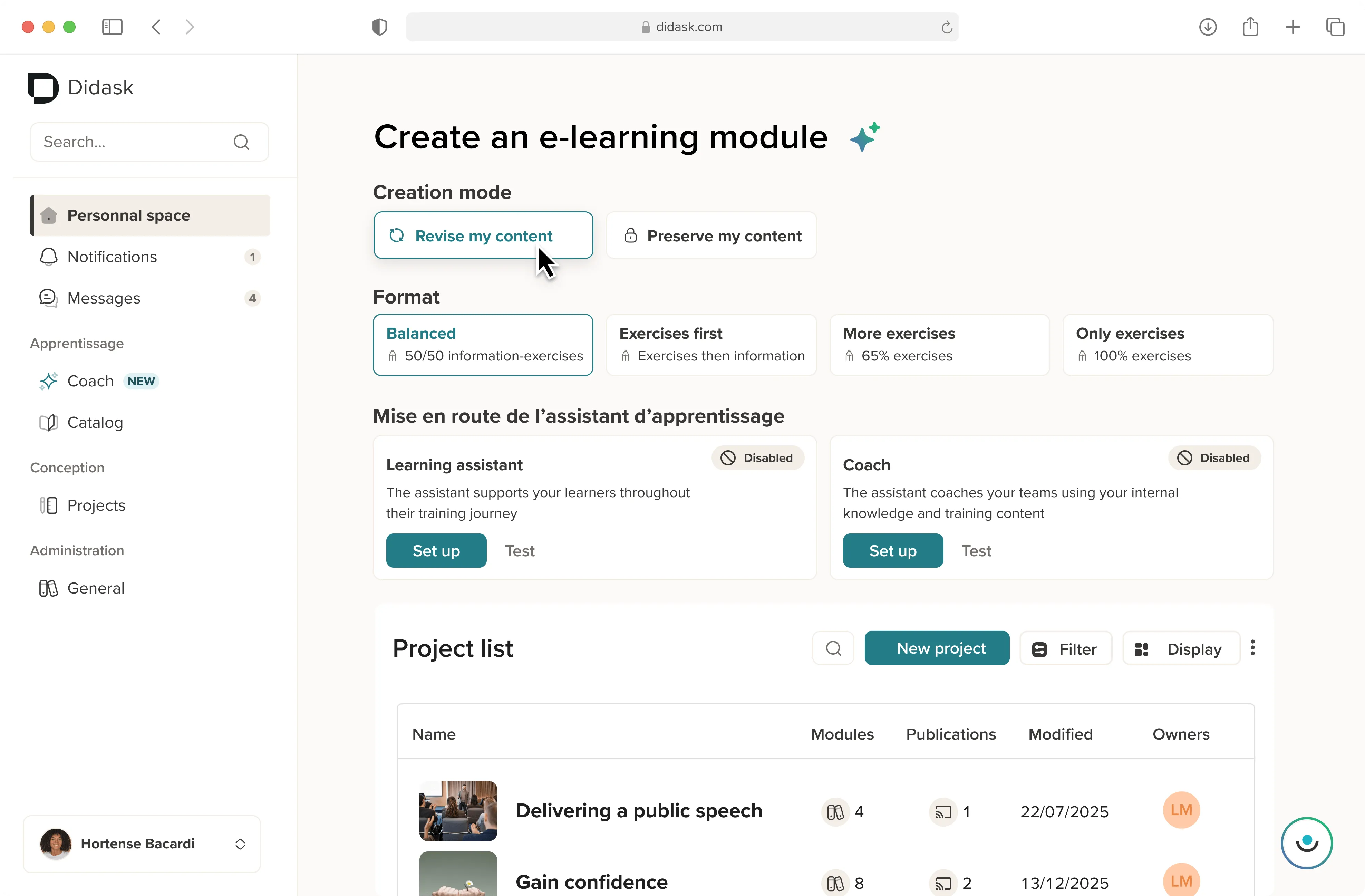
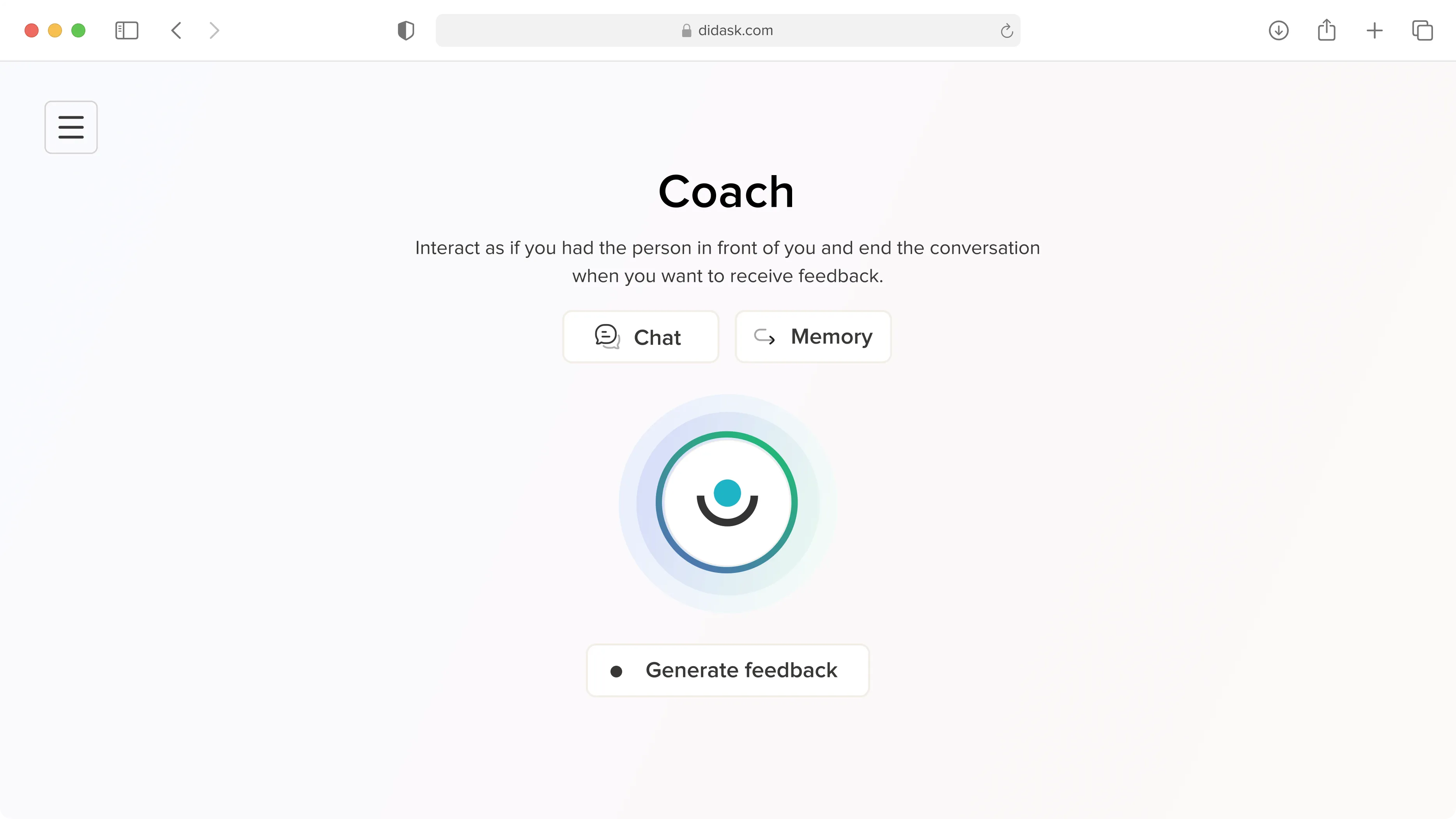
But this requires software capable of integrating directly into the salespeople's work environment. Concretely: our salesperson Geoffrey must be able to interact with his training, ask questions, practise on a case or get coached from his CRM or his Slack, without opening a dedicated e-learning platform. This is exactly the use case of Didask Coaching, designed to integrate with existing business tools and deliver contextualised support in the flow of work. It is this native integration that takes the LIFOW concept into operational reality.
This model also requires ritualised moments with the manager, distinct from the post-training sequences and planned over the long term: a monthly joint listening, an individual point centred on progress, a debrief after high-stakes meetings. These moments are not improvised. They are slotted into the calendar as milestones of the programme. It is the combination of the two, the permanent availability of LIFOW and the regularity of managerial moments, that creates the conditions for truly lasting sales learning.
Good to know
According to the RAIN Group / Allego study (2024, 242 sales professionals), organisations whose training programmes are highly effective are 4.9 times more likely to have an onboarding that makes their salespeople quickly operational. One more argument for treating duration and continuity as design criteria.
Our advice
Plan the reactivations at the same time as the initial content. Not after. For each training block, define: when, in what form and with what content the salespeople will be re-engaged at D+15, D+30 and D+60. Without this calendar, reactivation remains a good intention that never materialises.
Step 6: Measure the impact and adjust
A sales training programme is not steered by module completion rates or participant satisfaction at the end of a session. These indicators measure the training activity rather than its effects on field performance.
Measuring impact requires two levels of reading. The intermediate behaviours first: have the relevant mistakes identified at the start disappeared from the conversations observed by the managers? Do salespeople apply the techniques worked on in a real context? It is these behavioural changes that precede and condition the business results. Then the commercial indicators: conversion rate, sales cycle length, average basket, ramp-up time of new recruits.
This evaluation, often referred to in blogs and HR literature as levels 3 and 4 of the Kirkpatrick model, is only possible on one condition: having defined the indicators and established a baseline before the launch. Without a point of comparison, it is impossible to demonstrate anything, neither to your leadership nor to your team. This is the missing link in most training plans: you deploy, you measure satisfaction, you conclude that "it went well". A figure regularly cited in HR literature attributes to ATD (Association for Talent Development) the observation that organisations investing in comprehensive training programmes post margins 24% higher than those that do not invest. Measurement is not a reporting exercise but a condition of success.
Platforms like Didask make it possible to cross-reference progress data (mastery rate per skill, progress on practical cases, persistent gaps) with CRM data, to steer the team's upskilling with the same rigour as a sales pipeline. The confidentiality of individual data must of course be taken into account when setting up this tracking.
But measuring only has value if it leads to concrete adjustments. A block that does not produce the expected behavioural changes must be reworked. It is this logic of iteration, measure, identify what is blocking, adjust, relaunch, that turns a training programme into a living system, able to improve over time. To go further on the question of return on investment, our article ROI or ROE to evaluate your training details the two approaches and helps choose the evaluation framework most suited to your context.
Our advice
Define a maximum of three indicators before the launch: a behavioural indicator observable by the managers, a progress indicator on the platform, a business indicator tracked in the CRM. Three well-chosen indicators, regularly evaluated and adjusted, are worth more than an exhaustive dashboard that no one consults.
Conclusion
Launching an effective sales training programme is not a question of budget or catalogue. It is a question of method: starting from the field, building for each profile, choosing the formats that favour transfer, involving managers from the design stage, anchoring what was learned over time, measuring, then adjusting.
These six phases are not independent: each conditions the next. A good diagnosis makes segmentation relevant. Good segmentation makes the formats useful. Good formats, relayed by managers and accessible in the flow of work, make it possible to achieve lasting behaviour changes. And lasting behaviour changes are what eventually show up in the figures and in the company's commercial successes.
.webp)
.webp)

.webp)



.png)