


Every year, thousands of sales employees follow training courses within their companies. Sales techniques, objection management, commercial negotiation, prospecting, sales cycle, customer service... The content is often solid. The trainers, competent. Budgets, committed.
And yet, in reality, on-the-ground behaviors do not really change.
This paradox is documented: according to a study relayed by Action Selling, 87% of what a salesperson learns during training is forgotten in less than a month. But the problem goes beyond oblivion. Even salespeople who remember the concepts are often unable to mobilize them at the right time, in front of a real prospect, in a real sales interview, in a situation that they have never simulated.
The real challenge in training sales teams is therefore transfer: the ability to apply what you have learned during the session in the field, in response to the real needs of the profession. And that is precisely what blended learning makes it possible to build, provided it is designed as an educational architecture, not as a simple mixture of formats.
Blended learning and commercial training: what are we really talking about?
Blended learning, or blended training, refers to a training system that combines online learning and face-to-face sessions. But this definition, which is too generic, does not frankly say what is essential.
In the context of commercial training, blended learning is not a compromise between two formats. It is a deliberate pedagogical architecture, in which each modality plays a specific role and meets the specific needs of learners. Digital technology structures theoretical contributions, trains salespeople on contextualized practical cases and ensures long-term reinforcement. Face-to-face, on the other hand, is reserved for deliberate practice: role plays, simulated sales interviews, collective simulation activities, real-time feedback.
This distribution is not a question of logistics or budget. It is an educational choice based on the way in which commercial skills are really acquired: through repeated exposure to situations close to the field, and especially not through the sole transmission of information.
Blended learning is often confused with hybrid training. Hybrid training generally refers to a session where some participants are in the classroom and others remotely, simultaneously. Blended learning, on the other hand, combines distinct learning periods, each designed for a specific educational objective, allowing each learner to progress at their own pace.
The real problem: why most commercial training courses have no impact on the ground
The question is not whether your salespeople have been trained. The question is what they do differently the next day, in front of a prospect, in a real sales interview.
However, the answer is often disappointing, and it is not a question of motivation or the quality of the trainer. It's a structural problem, linked to how most business training programs are designed.
The first obstacle is oblivion. The Ebbinghaus curve shows that without active consolidation, up to 70% of information is lost in 24 hours. But forgetting is only the visible part of the problem.
The real obstacle is the transfer. An employee can perfectly remember that it is necessary to practice active listening during the discovery phase, and be completely unable to detect the right moment to do so in front of a real interlocutor. He may know the fundamentals of commercial negotiation and not know how to mobilize them when a buyer objects to the price. The knowledge is there. The ability to act, no.
This phenomenon is amplified by a frequent design defect: 72% of managers and training managers believe that their programs fail because they are not adapted to the real situations experienced by salespeople. Training that is disconnected from the sales cycle, real objections or buyer profiles encountered on a daily basis does not produce lasting behavioral change.
.png)
Good to know
According to RAIN Group, the most effective sales training programmes consistently combine three modalities: in-person (93% of high-performing organisations), virtual classrooms (66%) and self-directed learning (50%). No high-performing organisation relies on a single format.
Face-to-face alone or all-remote: the objective limits of each format
Before understanding what blended learning brings, you need to understand what each format taken in isolation cannot do.
Face-to-face alone: effective but not scalable
The face-to-face session remains irreplaceable for some learning. Role plays, sales interview simulations, immediate feedback from a trainer, group dynamics, all elements that promote the simulation and anchoring of commercial skills.
But face-to-face alone has structural limits. It is expensive, difficult to organize for dispersed sales teams, and punctual by nature. A training session, no matter how well designed, cannot produce the steady reinforcement required for the sustainable acquisition of a skill. Once the session is over, the collaborator is alone in front of the field, without a net, without a reminder, without personalized support.
The all-remote: powerful but incomplete
Modern digital learning goes far beyond videos and multiple choice questions. The best platforms offer contextualized practical cases, realistic scenarios, personalized feedback, and even coaching thanks to AI. All these modalities that really promote transfer. A learner can practice dealing with a price objection or conducting a discovery interview safely, at their own pace.
What the all-remote cannot reproduce is the collective dynamic: emulation between peers, the immediate feedback of a trainer who observes in real time, the confrontation with unpredictable situations generated by other participants. Dimensions that play a real role in anchoring commercial skills.
Designing a blended learning commercial training course: what architecture?
An effective blended learning sales training system cannot be improvised. It is based on clear sequential logic, in which each step prepares for the next.
A solid architecture is generally organized in three stages.
Before the in-person session : digital technology is preparing the ground. Employees have access to online training modules. Theoretical contributions, practical cases, first simulation activities. The objective is to arrive at the session with a homogeneous level of knowledge, to devote the collective time to training, not to transmission.
During the session : the face-to-face, or synchronous virtual classroom, is entirely dedicated to deliberate practice. Role-playing games, simulated sales interviews, group work on real objections. This is where social learning happens: learners also learn from each other.
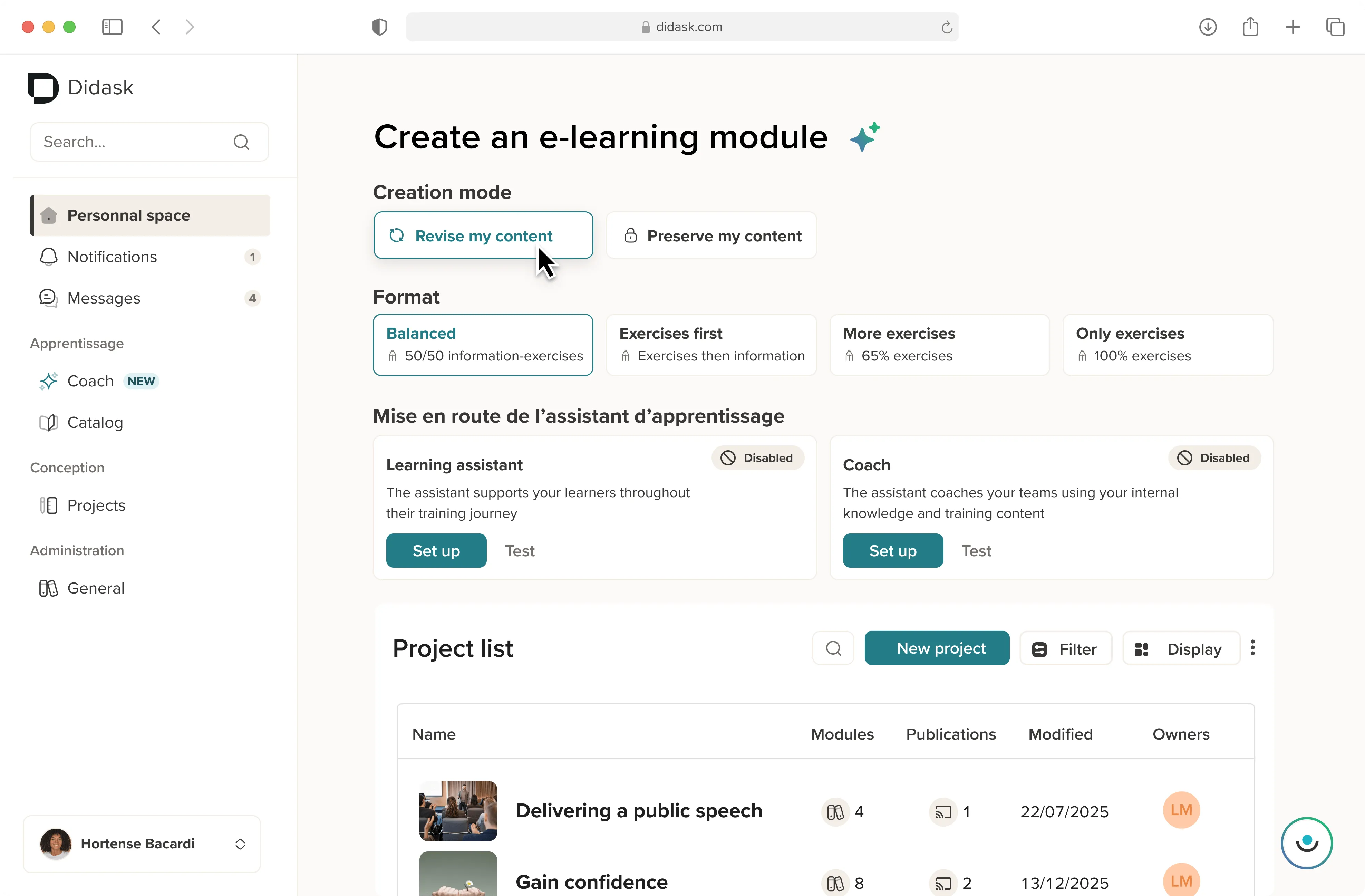
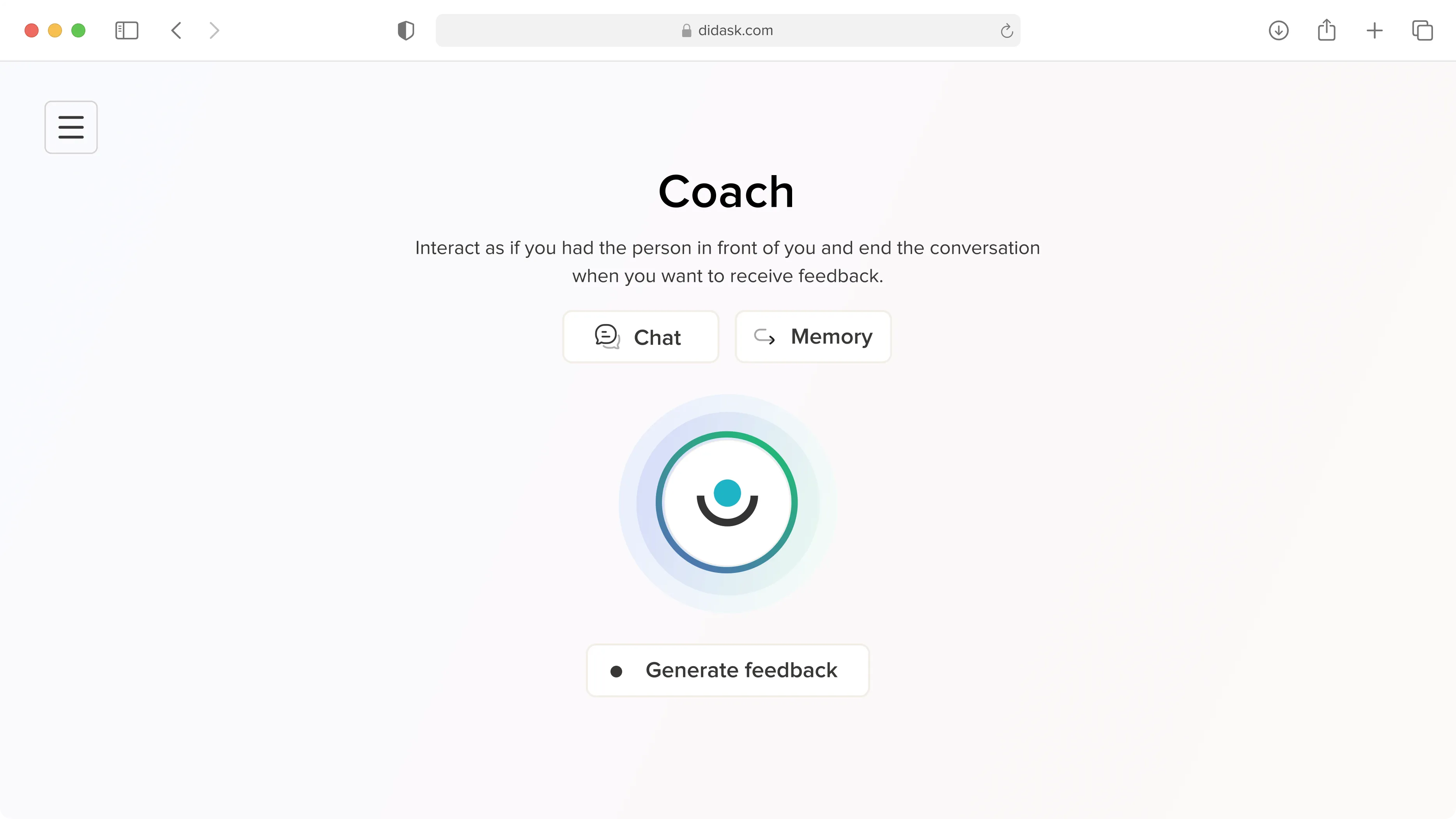
After the session : digital technology is taking over to anchor the achievements. Spaced repetition, micro-challenges in the field, personalized monitoring of the progress of each learner. The manager can thus monitor the evolution of his teams in real time and adapt the support according to the needs identified. It is this phase, which is often overlooked in traditional training plans, that makes the difference between forgotten training and lasting behavior change. Tools like Didask Coaching allow precisely this support in the workflow, at the moment when the learner needs it.
How to measure if training has really impacted business performance
A blended learning commercial training course is not only managed to the satisfaction of the participants. The real indicator is what happens in the field after training.
This means defining measurable objectives in advance, directly linked to expected commercial behaviors: conversion rate, number of qualified discovery meetings, progress in the sales cycle, ability to conclude in the face of an objection. Concrete, observable indicators that make it possible to assess whether the transferring actually happened.
Personalized follow-up plays a key role here. One training platform like Didask makes it possible to monitor the progress of each learner throughout the course, not only at the end of the training, and to adjust the system according to real results. A decisive asset for managers and training managers who seek to demonstrate the ROI of their actions.
.webp)
Worth noting
Measuring the effectiveness of sales training goes beyond module completion rates or end-of-course scores. It is on-the-job behaviours, and their impact on revenue, that truly validate a blended learning programme.
Conclusion
Business training only produces sustainable results when it is designed for transfer and not just for transmission. This is where blended learning is changing the game: by articulating digital and face-to-face in a coherent way, it creates the conditions for learning that really applies in the field, in front of a prospect, in a real sales interview.
But an effective blended architecture cannot be improvised. It requires a structured training plan, educational methods adapted to the needs of each employee, and above all, tools capable of customizing monitoring and measuring the real progress of each salesperson.
This is precisely what the Didask platform and its LMS : transform a commercial training program into a continuous, measurable and performance-oriented system.
No more training. A lever for the development of commercial skills over the long term.
.webp)
.webp)
.webp)


.webp)


.png)