


A customer training LMS is a platform that trains people outside your company: customers, partners, distributors or franchisees. It gives them separate spaces, with no HR directory, and tracks progress by organisation.
The stakes go well beyond software vendors. In France, 2,035 franchise networks had 93,395 franchised outlets in 2025 (Fédération française de la franchise, March 2026). Each one is a team that is not employed by the brand, yet must master its products and standards.
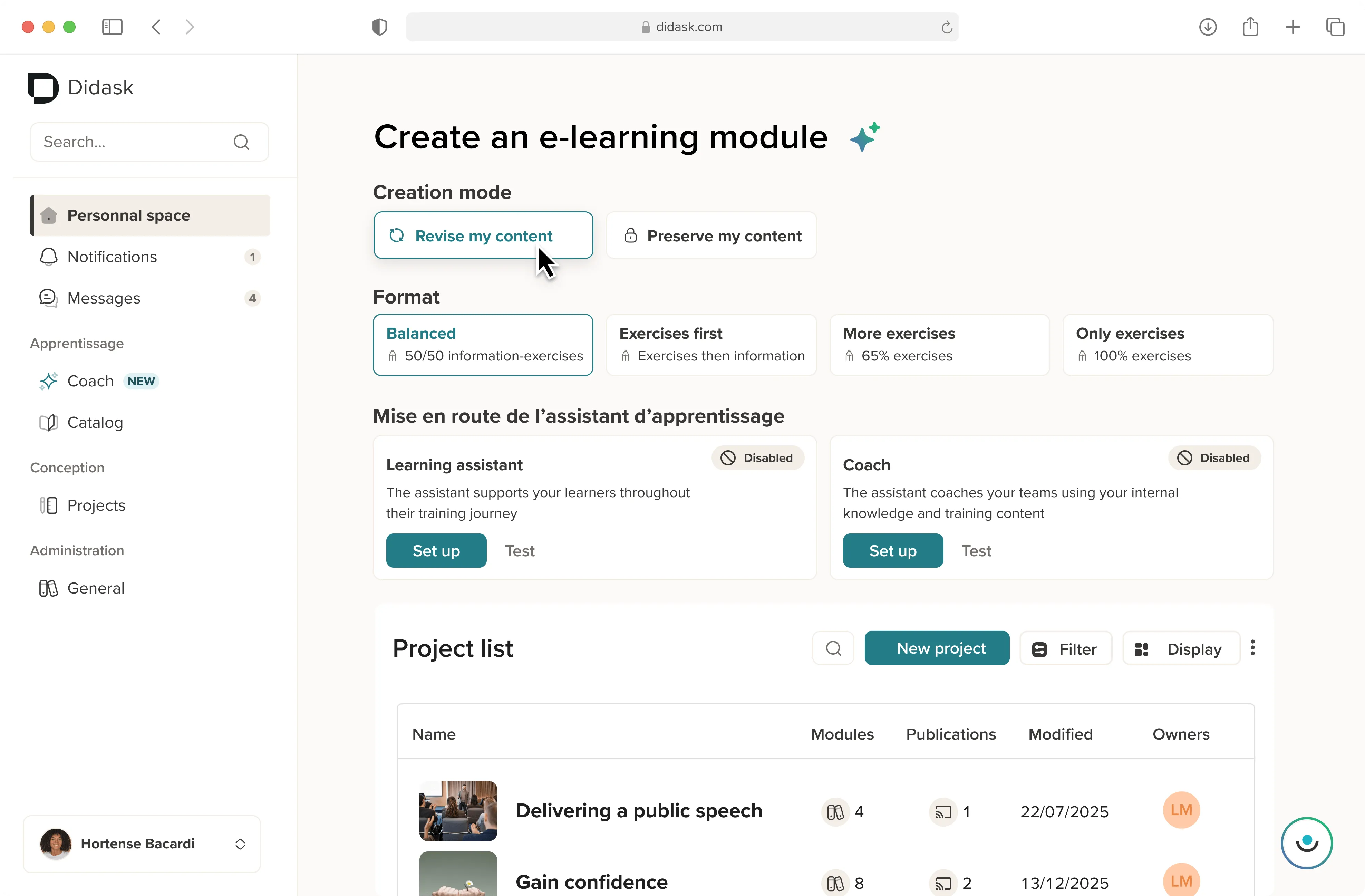
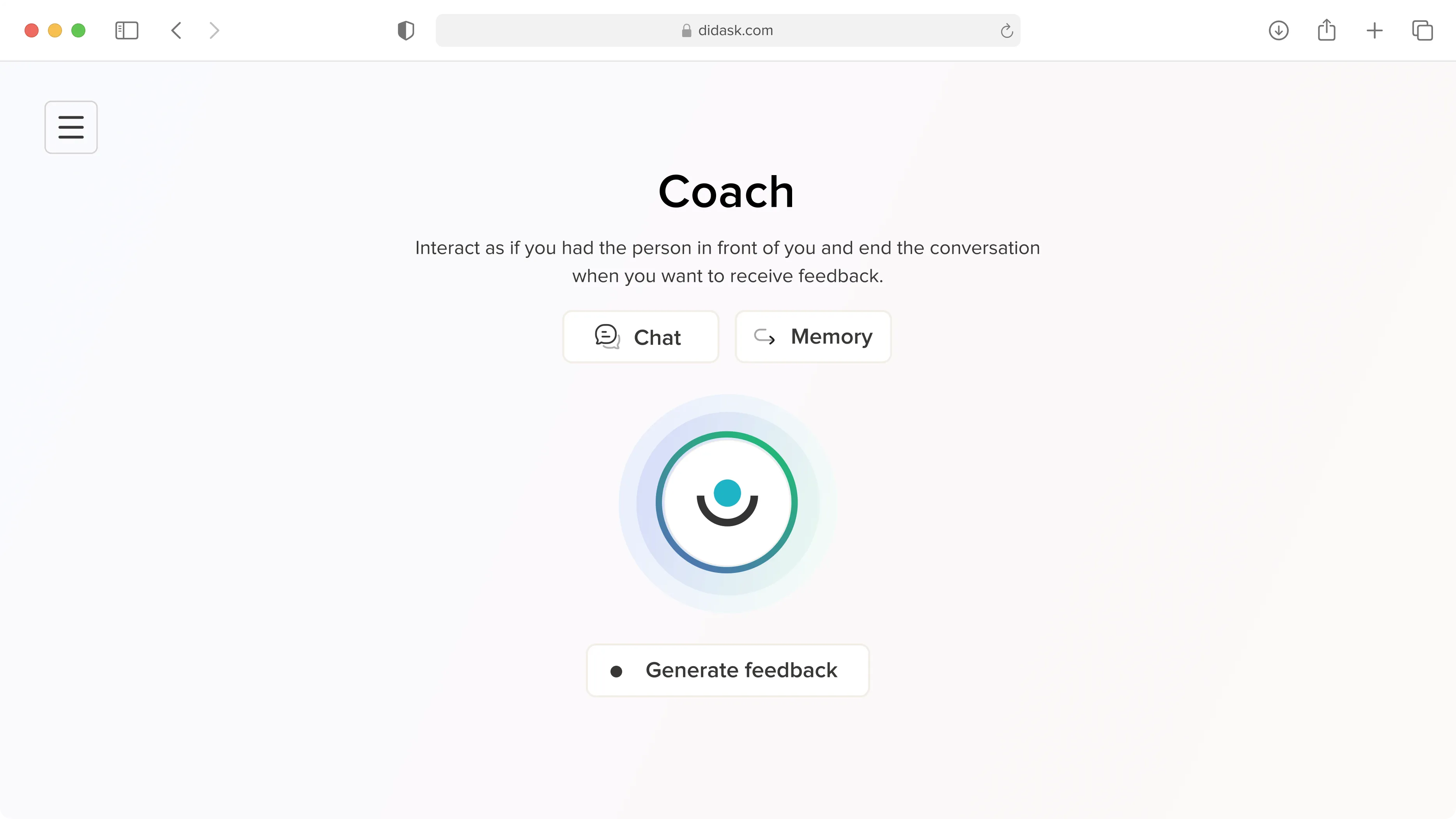
Didask is a French all-in-one learning platform built on cognitive science. It turns a company's technical documentation into interactive learning paths, then delivers them to its customers and partners, on its own platform or inside their LMS.
What are the 7 best LMS platforms for customer training in 2026?
The seven platforms selected are Didask, Docebo, Rise Up, 360Learning, Dokeos, Teachizy and Digiforma. The first three best cover the needs of a company training an external network; the last two mainly serve organisations that sell their training.
Our method, and what it is worth
Didask publishes this comparison and ranks itself first. Each platform is assessed against the seven criteria detailed below, using publicly verifiable information gathered on 7 October 2026 from vendor documentation.
We distinguish a feature documented in a help centre from a promise on a sales page. When information was not found, we say it is not publicly documented, never that it does not exist.
Ratings collected on Capterra France on 7 October 2026, except Didask (29 September 2026).
1. Didask
French all-in-one learning platform built on cognitive science, which produces learning paths from the company's existing documents.
What it brings to customer training. The design AI turns a technical manual, a 90-slide deck or an installation procedure into an interactive learning path. It tackles the real bottleneck of external programmes: product knowledge scattered across PDFs and in the heads of experts who have no time to design training.
Strengths
- Didask Training cuts training design time by 50 to 65% (Didask measurement on 2,237 training courses, October 2025).
- 83% of Didask designers had never created a module and are now autonomous (Didask measurement on 8,704 learners, June 2023). This is what allows product experts to train a network themselves.
- SCORM Connect deploys the full Didask experience inside a customer's or partner's LMS, adaptive learning included, with no loss of features.
- Siloed sub-spaces per partner, white label and credit-based billing rather than named accounts, suited to external audiences that change often.
- AI translation of learning paths, and hosting in France, with Scaleway in Paris.
The right choice if your product knowledge is technical, changes with every product range, and your customers or distributors sometimes already have their own LMS.
.webp)
They train their customers and partners with Didask
SIG Eco21 · Pellenc · ENGIE · Uptoo · Amundi · Betterfly Tourism
2. Docebo
Vendor founded in 2005, based in Toronto, focused on large enterprises.
What it brings to customer training. The most complete and best documented extended enterprise offer in the panel (opening an LMS to external audiences, in separate spaces).
Strengths
- Documented Extended Enterprise app: each customer gets its own domain, brand, language, catalogues and registration mode, open, moderated or by administrator.
- Salesforce synchronisation of users, contacts and custom objects, with customer education cited as a use case.
The right choice if you sell an international customer academy, in several currencies, and your sales team works in Salesforce.
3. Rise Up
French LMS founded in 2014 in Paris, which claims 5 million active learners in 73 countries.
What it brings to customer training. A page dedicated to customer and partner training, and the only delivery to a third-party LMS documented by a competitor in the panel.
Strengths
- Documented partner platforms managed by partner administrators, and separate academies per audience.
- SCORM Launcher and LTI connection documented to publish a module in a customer's LMS, with tracking kept centrally in Rise Up.
- Hosting announced with Scaleway in Paris, ISO 27001 and SOC 2 Type II certifications.
The right choice if you are a large organisation that wants to run internal training and external academies on a single platform hosted in France.
4. 360Learning
LMS founded in late 2013 in Paris, where internal experts create and run the training.
What it brings to customer training. A model where your account managers and product experts design the modules themselves, as close as possible to customers' real questions.
Strengths
- Extended Academies add-on: fully custom domains, colours per group and emails branded for the customer.
- Documented self-registration, with a security code and email domain restriction.
- Documented sync of learning path and certification statistics to Salesforce contacts and leads.
The right choice if your customer knowledge sits with a customer success team that you want to turn into designers.
5. Dokeos
Belgian vendor active since 2004, part of the Lyvia group, focused on regulated industries.
What it brings to customer training. A long-standing extended enterprise offer, with a version dedicated to franchise networks.
Strengths
- Sub-portals with their own visual identity, language and content, and dashboards per franchise.
- Optional token-based pricing, one token per enrolment, useful when the volume of external learners fluctuates.
The right choice if you run a franchise network in a sector where training traceability matters.
6. Teachizy
French vendor created in 2018, originally aimed at trainers who sell online courses.
What it brings to customer training. A fast, low-cost way to launch a first customer academy, with a separate enterprise offer.
Strengths
- Teachizy+ white-label offer, with SSO, mobile app, unlimited learners and a dedicated server hosted in France.
- Announced use cases: customer academy, franchisee training, customer training for software vendors.
- Online sales via Stripe and PayPal, with built-in sales pages.
The right choice if you are launching your first customer academy with a limited budget and a short catalogue.
7. Digiforma
Lyon-based vendor founded in 2009, management software for training providers.
What it brings to customer training. An answer for companies whose external training is a business in its own right, with its administrative obligations.
Strengths
- CRM, invoicing, online catalogue and Qualiopi tracking in the same tool.
- Online payment by card or SEPA direct debit via Stripe, and a learner extranet hosted in France.
- Public, detailed pricing grid, from €49 excl. VAT per month for 200 learners per year to €699 excl. VAT and above for large volumes.
The right choice if you sell your training like a training provider, and administration weighs more than course design.
What is a customer training LMS, and how does it differ from an internal LMS?
A customer training LMS follows three rules that an internal LMS ignores: no line management to make training mandatory, several organisations to keep apart, and learners who already have their own tools. Most LMS platforms assume the opposite: an HR directory, a manager, a captive audience.
The learner must be convinced, not summoned. A distributor or customer receives no training objective from you. They only finish a learning path if it helps them in today's work, in a few minutes.
Each organisation only sees its own data. Two competing distributors must not see each other's results, and do not necessarily receive the same content. Siloing and delegated administration become requirements, not options.
Training has to go to the learner. It must arrive in their language, sometimes under their brand, and often inside the LMS their company already uses. One more portal, with one more login, loses part of the audience before the first connection.
Note
"Customer training" sometimes means training your own customer service teams. That is a different project, which requires conversational practice scenarios and access from the CRM. It is covered in our comparison of LMS platforms for customer service training.
Why self-service through a knowledge base is not enough
Because customers search on their own, but rarely find. According to Gartner, 73% of customers use self-service at some point in their journey, but only 14% of issues are fully resolved there (Gartner, August 2024, 5,728 customers surveyed, international market).
A knowledge base answers a question that has already been asked. Structured product training anticipates usage errors before they become tickets, which makes it the natural extension of customer onboarding.
Why content holds back most programmes
Because product knowledge sits in 50-page manuals and in the heads of experts whose main job is not training. Designing one module then takes weeks, while the catalogue needs dozens, to be redone with every new product range.
Only 35% of customer education teams build content aligned with the stages of product adoption (TSIA, The State of Education Services 2025, April 2025, surveys of customer education teams, international panel).
Pellenc, an agricultural equipment manufacturer, trains people to use and maintain its machines. Cyrielle Lauer, Skills Development Manager, sums up the problem: "Subject matter experts know their topic, but then how do you pass it on?" (published testimonial).
At an energy industrial group that trains its customers to operate and maintain its systems, Didask generated 11 modules from a single 91-slide technical deck.
How do you choose an LMS to train your customers and partners?
Seven criteria are enough to separate the platforms, and the first is the time from a technical document to a deployed learning path. It decides whether your catalogue keeps pace with your product launches, or stays one range behind.
- Time from an existing document to a deployed learning path. How many hours from your manual, product sheet or installation procedure? Ask for the demo on your own documents, and check that a product expert with no e-learning skills can reproduce it.
- Siloed spaces per customer or partner. Each organisation must have its own learners, specific content and reporting, with a local administrator who sees nothing of the others. Ask whether this is included or sold as an add-on.
- Delivery where the learners are. SSO, white label, and above all export to a customer's LMS in SCORM or xAPI. Check what remains of the learning experience once the module is delivered elsewhere.
- Consistency across a multilingual network. One identical core for everyone, controlled local versions, and translation that does not create an orphan version per language. That is the challenge of any international deployment.
- Engagement without obligation. Short sessions, practice scenarios close to the field, immediate feedback on mistakes. An external learner who gets bored does not come back, and nobody will chase them for you.
- A licence model suited to changing audiences. Credits, tokens or active users rather than named accounts, and online sales if you plan to monetise. Calculate the total cost per learner actually trained, not the price per licence.
- Measurement by organisation and by skill. Results by customer, by site and by skill, exportable via API to be cross-referenced with your sales, support tickets or product returns.
.png)
Three questions to ask in the demo
1. "Turn our technical manual into a learning path in front of me, now, without preparing it."
2. "Show me what a distributor sees when following this path from their own LMS, and what I get back from their results."
3. "How does a partner's administrator manage their learners without seeing anyone else's?"
What results can you expect from a customer training programme?
Training customers first strengthens their loyalty, provided you teach them to make better use of your offer. According to Gartner, a customer service organisation that educates customers on new uses of the product raises the probability that they stay to 82% (Gartner, August 2020, modelled on international data).
This figure is a modelled probability, not a French measurement. No equivalent French data has been published to date: it indicates a trend, not a guaranteed result.
What you teach matters as much as how much. Training customers in firm-specific expertise increases their loyalty, whereas building their general market expertise can reduce it.
The consequence is direct: train on your products, procedures and use cases, rather than on general industry knowledge that your customers will reuse to compare your competitors.
What Didask has measured. Didask Training cuts the time learners spend in training by 60 to 75%, with the same learning scope (Didask measurement on 993 learners, March 2025). For an external audience, every hour saved is an hour the customer or partner does not have to take from their business.
Subject matter experts who train an entire network. At SIG Eco21, a Geneva energy programme that trains architects, engineers, installers and energy managers, 100% of experts create their own modules. More than 6,000 people have been trained since launch, with around 80 training courses a year (published testimonial).
The same training for internal and external sites. At ENGIE, 2,500 agents across 20 customer service centres, internal and outsourced, follow the same learning paths. 60 training projects were created in 6 months, with a satisfaction score of 8.5/10 (published testimonial).
An external audience that finishes. At a laboratory network that trains restaurant owners in food hygiene, 772 out of 836 learners completed at least one learning path, with an NPS of 63. At a cooperative of independent retailers, 133 sales staff were certified on its suppliers' products.
.png)
What SIG Eco21 says
"The promise that experts could create content without any particular teaching knowledge really caught my attention."
Sophie Schönenberger, Training Manager, SIG Eco21
"Learners are no longer drowning in a flood of information. They come out of the online part with the key messages we want them to remember and understand."
Laetitia Rapin, Project Officer, SIG Eco21
Why the completion rate does not prove your customers know how to do it
Because a customer can finish the installation module and still get the first assembly wrong. Finishing is not knowing how to do, yet it is the indicator most platforms put forward.
Coverage is the first blind spot. A completion rate calculated only on enrolled learners says nothing about partners who never logged in. A network can show 90% completion and leave half of its outlets untrained.
What to measure instead: the share of the network actually reached, success by skill and the gap between entry and exit assessments. Then track a business indicator per customer, such as ticket volume or product return rate.
The best test is still yours: give each vendor one of your technical manuals, and see what your distributors could do with it the following week.
.webp)
.webp)
.webp)


.webp)

.png)