


Revenue, conversion rate, sales cycle... You already track your commercial KPIs. But are you tracking them to understand, or to reassure yourself? Most sales teams measure outcomes without ever explaining their root causes. This article goes back to basics: which indicators to choose, how to interpret them, and above all how to improve them.
What is a commercial KPI (and why most teams track too many)
A commercial KPI (Key Performance Indicator) is a measurable indicator that evaluates the performance of a sales team in reaching its objectives. It is not just another number in a spreadsheet: it is a signal for action.
There are two main families of indicators. Lagging indicators measure achieved results: revenue generated, number of deals closed, average revenue per salesperson. Leading indicators measure the causes that produce those results: call volume, lead qualification rate, number of meetings booked.
.png)
Leading vs lagging: the distinction that changes everything
Leading indicator (cause): number of calls made, number of meetings booked. You can act on these today to influence tomorrow's results.
Lagging indicator (result): revenue generated, number of deals closed. It measures what has already happened — too late to intervene for the period in question.
Tracking 24 KPIs simultaneously dilutes attention and paralyzes decision-making. The rule: 3 to 5 actionable KPIs per role, chosen in line with the strategic objectives of the current period.
The essential commercial KPIs to track without fail
Four families structure commercial performance: activity, conversion, revenue and retention. Each sheds light on a different dimension, and all are necessary to manage your team effectively.
Activity KPIs: measuring prospecting effort
These indicators measure the volume of effort put in by your salespeople on prospecting. They answer a simple question: are your teams doing enough to feed the pipeline?
- Number of prospects contacted: raw activity volume for the period. Warning signal: volume below the set weekly targets.
- Meeting booking rate: (meetings booked / prospects contacted) x 100. This threshold varies significantly by sector, channel and target maturity. It is best assessed as a trend, compared against your own historical data.
- Number of meetings held: actual commercial activity. Warning signal: significant gap between scheduled and completed meetings.
These KPIs measure volume of effort, not its quality. A salesperson can make 100 calls with no result if their pitch is poorly adapted or their prospects poorly targeted. Always cross these figures with your conversion indicators.
Conversion KPIs: identifying the stages that slow down your sales
The overall conversion rate measures the percentage of leads transformed into customers over a given period. It is the most widely tracked indicator, and the least informative if you stop at that single figure.
The real value lies in the stage-by-stage pipeline analysis. A low quote-to-close rate points to a closing problem. An overly long sales cycle signals a qualification issue upstream.
Revenue KPIs: monitoring the financial health of your activity
Revenue generated per salesperson is the reference outcome indicator. It should be read alongside the average deal size (total revenue divided by number of transactions) to identify upsell opportunities.
Two indicators remain underused by field teams: the customer acquisition cost (CAC) and the Customer Lifetime Value (CLV). Their ratio is decisive for evaluating the true profitability of your commercial activity.
.webp)
The CAC/CLV ratio: the profitability metric most teams underestimate
CAC (Customer Acquisition Cost) = total cost of sales and marketing activities ÷ number of new customers acquired.
CLV (Customer Lifetime Value) = average customer value × average relationship length.
A CLV ≥ 3 × CAC ratio is the widely accepted benchmark in SaaS and B2B models. Below this threshold, your business model is consuming more resources than it generates.
Retention KPIs: the indicators too often overlooked
Retention rate, churn rate, NPS, upsell and cross-sell rates: these indicators are rarely assigned to salespeople. That is, at least partially, a strategic mistake.
In organizations where salespeople manage their accounts from acquisition through to retention, their performance is also measured by the customer lifetime they generate. In structures with dedicated Customer Success teams, this tracking becomes a shared indicator across both functions.
Good to know: NPS and growth go hand in hand
According to Fred Reichheld, creator of the Net Promoter Score (Harvard Business Review, 2003), companies that improve their NPS tend to grow faster than their direct competitors. A salesperson who generates promoters creates value well beyond the initial contract.
How to choose the right commercial KPIs for your team (without drowning)
A good commercial KPI meets three criteria: it is actionable (you can course-correct quickly), aligned with the strategic objectives of the period, and measurable at a frequency suited to your sales cycle.
A simple method: assign each salesperson 1 outcome KPI and 2 activity KPIs. Review this selection every quarter based on how priorities and results evolve.
Alignment between individual KPIs and collective team objectives is often neglected. A salesperson optimized for new customer volume can destabilize the strategy if the business needs stable, recurring revenue.
3 questions to validate a KPI before adopting it
1. Is it actionable? Can you course-correct quickly if the indicator drifts?
2. Is it aligned? Does this KPI directly contribute to a strategic objective for the period?
3. Is it measurable at the right frequency? Does the data collection frequency match your capacity to react?
If you answer "no" to any of these questions, move on to a different indicator.
Building a commercial dashboard that motivates (rather than punishes)
A management dashboard serves the manager on a daily basis: 3 to 5 activity and conversion KPIs, updated in real time. A reporting dashboard serves leadership each month: it synthesizes results and the main trends of the period.
Dashboard design directly affects team behavior. An overloaded dashboard generates anxiety and few corrective actions. A lean dashboard focused on 3 to 5 indicators frees up capacity for analysis and action, and helps keep your sales team motivated over the long term.
When KPIs stagnate: the underestimated role of sales training
KPIs that plateau despite effort rarely signal a motivation problem. They most often reveal a skills gap: in pitch quality, lead qualification, objection handling or closing.
B2B sales training is then the most direct lever for improving indicators durably. To measure the impact of this skills development, the same principles apply as for training KPIs: linking each learning action to an observable field result. According to an internal Didask simulation applied to a team of 10 salespeople (average revenue 200,000 euros per year), a 20% performance improvement generates a calculated ROI of 2,567% on the training cost (ROI of Training ebook, Didask, 2025).
From data to competency: how to diagnose the real bottlenecks
Three steps allow you to turn a declining KPI into a training action plan. First step: identify the sales cycle stage concerned (prospecting, qualification, closing or retention).
Second step: isolate the failing key sales competency (pitch quality, active listening, negotiation or account follow-up). Third step: deploy a targeted learning solution and measure its post-training impact on the target KPI.
.png)
Kirkpatrick Level 4: the only measure that resonates with leadership
The Kirkpatrick model evaluates training impact across 4 levels: reaction, learning, behaviour, results. Level 4 is the only one that justifies a training investment to senior leadership — and the only one measured directly against your commercial KPIs.
Training continuously to embed new commercial reflexes
A one-off training session is not enough to durably improve KPIs. Ebbinghaus's forgetting curve is clear: without reinforcement, 70% of learning disappears within 24 hours of the training.
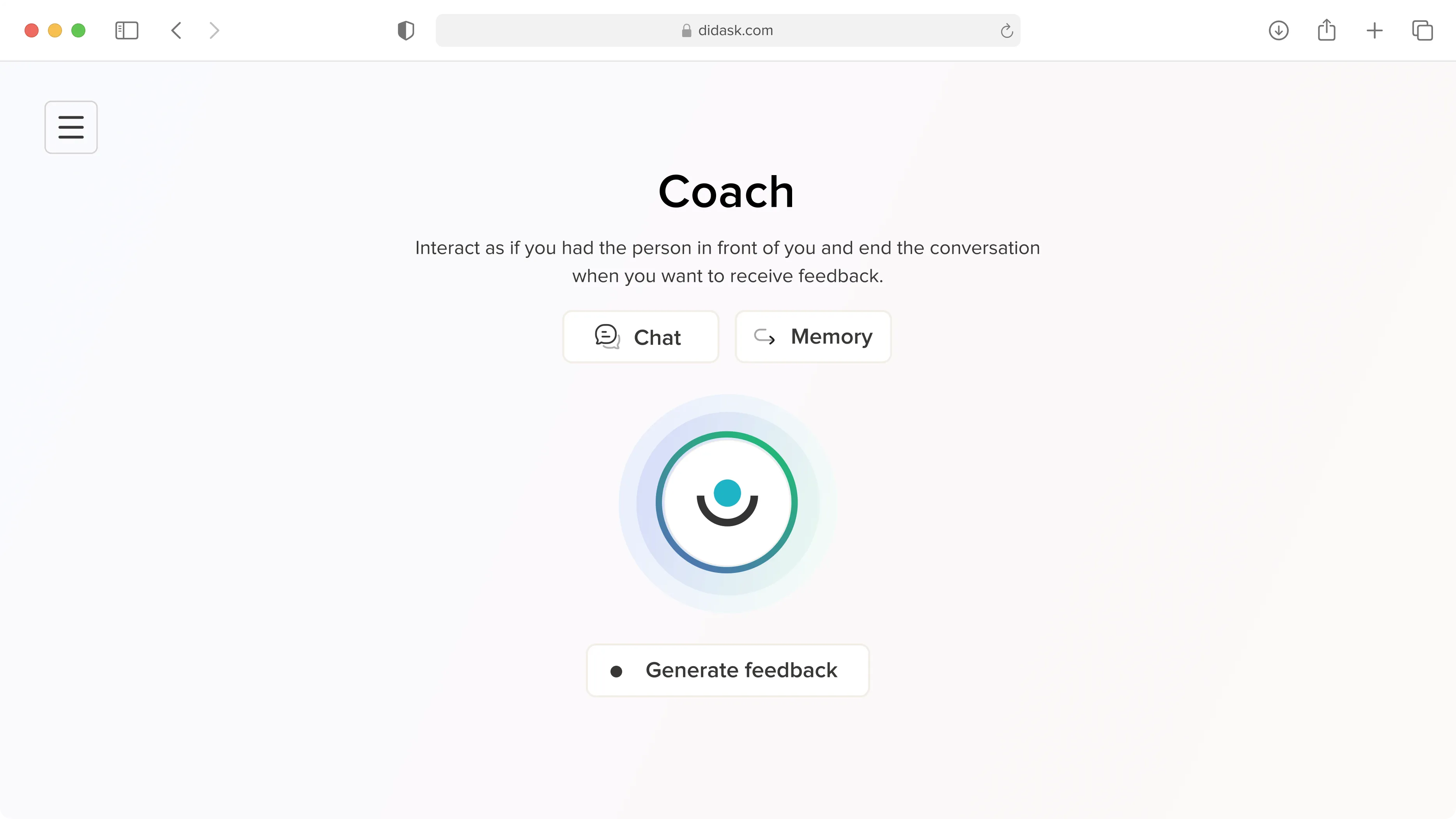
The answer is not to multiply sessions. It is to embed learning in the daily workflow, at the precise moment the salesperson needs it. That is exactly what contextualized sales coaching provides: supporting teams in real situations, not only in training rooms.
Worth noting
Companies that deploy Didask Coaching report a 2x reduction in training requests during annual reviews (1,487 learners, Nov. 2025). The coach addresses needs in real time, before they become declared skill gaps.
With Didask Coaching, salespeople access a contextual AI assistant integrated directly into their business tools. 56.1% of users consult the coach several times a week after one month of use (410 learners, Oct. 2025).
How often should you analyze your commercial KPIs?
Analysis frequency must be correlated to capacity for action. Analyzing a KPI without being able to course-correct in the same breath is time-consuming and demotivating for field teams. The same logic applies to onboarding KPIs: an indicator tracked too late no longer allows intervention for the period concerned.
Conclusion
Commercial performance is not measured by the number of indicators tracked, but by the quality of the decisions they make possible.
Choose your KPIs methodically, interpret them rigorously, and link every gap to a concrete action. When that action involves training, it produces results that last.
.webp)
.webp)


.webp)


.png)