


Your sales enrollment program is up and running. Tools are deployed, content is accessible, managers are briefed. Yet salespeople still fail to apply what they learned in real situations, conversion rates stagnate, and new hires still take just as long to become autonomous.
The problem does not lie in your sales strategy. It lies in the way you train your teams.
Here is how to design Sales Training That genuinely transforms selling behaviours and turns your sales enrollment program into a lasting performance driver.
What does sales enancement really expect from training?
Sales enancement brings together all the resources, processes and tools provided to salespeople to help them sell more effectively. Training is its central foundation, yet it is too often reduced to an information function.
Yet informing and training are two actually different things. One produces salespeople who know. The other produces salespeople who act.
What is the difference between sales content and behavioural training?
A playbook, a battlecard or an objection-handling sheet are sales content assets. They serve as references at the moment of action, not as skills development tools. Behavioural training, on the other hand, aims to durably modify the reflexes and automations of the salesperson.
Confusing the two is a recipe for predictable disappointment. Salespeople well-equipped with resources but insufficiently trained will always improvise in real situations. To Go Further, Discover The Costly Mistakes in Sales Training and how to correct them.
.webp)
Worth noting
Sales content answers the question "what to say?". Behavioural training answers "how to act?". Both are necessary, but only the latter durably changes performance.
What are the three roles of training in a sales enancement programme?
Training plays three distinct roles depending on the stage of the sales journey. Each role calls for a specific learning approach.
Why do sales enrolment training programmes fail in practice?
Most programmes invest heavily in content production and under-invest in pedagogy. The result is predictable: training watched once, never applied.
This is not a budget problem or a lack of team motivation. It is a design problem.
What does the forgetting curve do to your sales training?
In 1885, psychologist Hermann Ebbinghaus demonstrated that without reinforcement, we forget approximately 70% of what we have learned within 24 hours of training (Ebbinghaus, H., 1885, Über das Gedächtnis). For a sales team, this means the annual training kickoff is structurally insufficient.
What your salespeople learned on Monday morning is largely forgotten by Wednesday. Without spaced reinforcement and repeated practice, the training investment evaporates within days.
.png)
Did you know?
Spaced repetition multiplies long-term retention by 2 to 3 compared to training concentrated in a single session. Source: Cepeda et al., 2006, Psychological Bulletin.
What pedagogical mistakes undermine sales enrollment programs?
Three mistakes recurred systematically in sales training programs:
- Cognitive overload: Too much information delivered in too little time, with no prioritization or spacing.
- Lack of practice: informational modules with no role-play or personalised feedback on behaviours.
- One-size-fits-all format: A homogeneous approach applied to very different profiles, levels and contexts.
These three mistakes share the same root cause: training designed around content, not around real learning.
What are the pillars of effective sales training?
Effectively training a sales team is not improvised. Cognitive sciences provide a clear framework for designing programs that durably anchor competencies, not just knowledge.
How do you anchor product knowledge in practice rather than in slides?
A forty-slide product presentation does not make a competent salesperson. What anchors a skill is contextual practice: handling a real objection, simulating a demo, solving a difficult client case. To determine which Sales Techniques to Teach in Training, you first need to identify where your salespeople lose opportunities.
This approach draws on Benjamin Bloom's research, which showed that a learner supported by personalized feedback reaches levels of mastery impossible in standard group training. Researchers call this the “2 Sigma problem” (Bloom, 1984, Educational Researcher). Scenario-based training with targeted feedback produces salespeople who act differently, not just think differently.
How do you personalize learning paths based on the salesperson's profile and level?
An SDR three months into the role does not have the same needs as a seasoned Account Executive. Applying the same path to everyone means training no one correctly. SDR, AE and AM commercial profiles Call for distinct learning approaches, with different objectives and complexity levels.
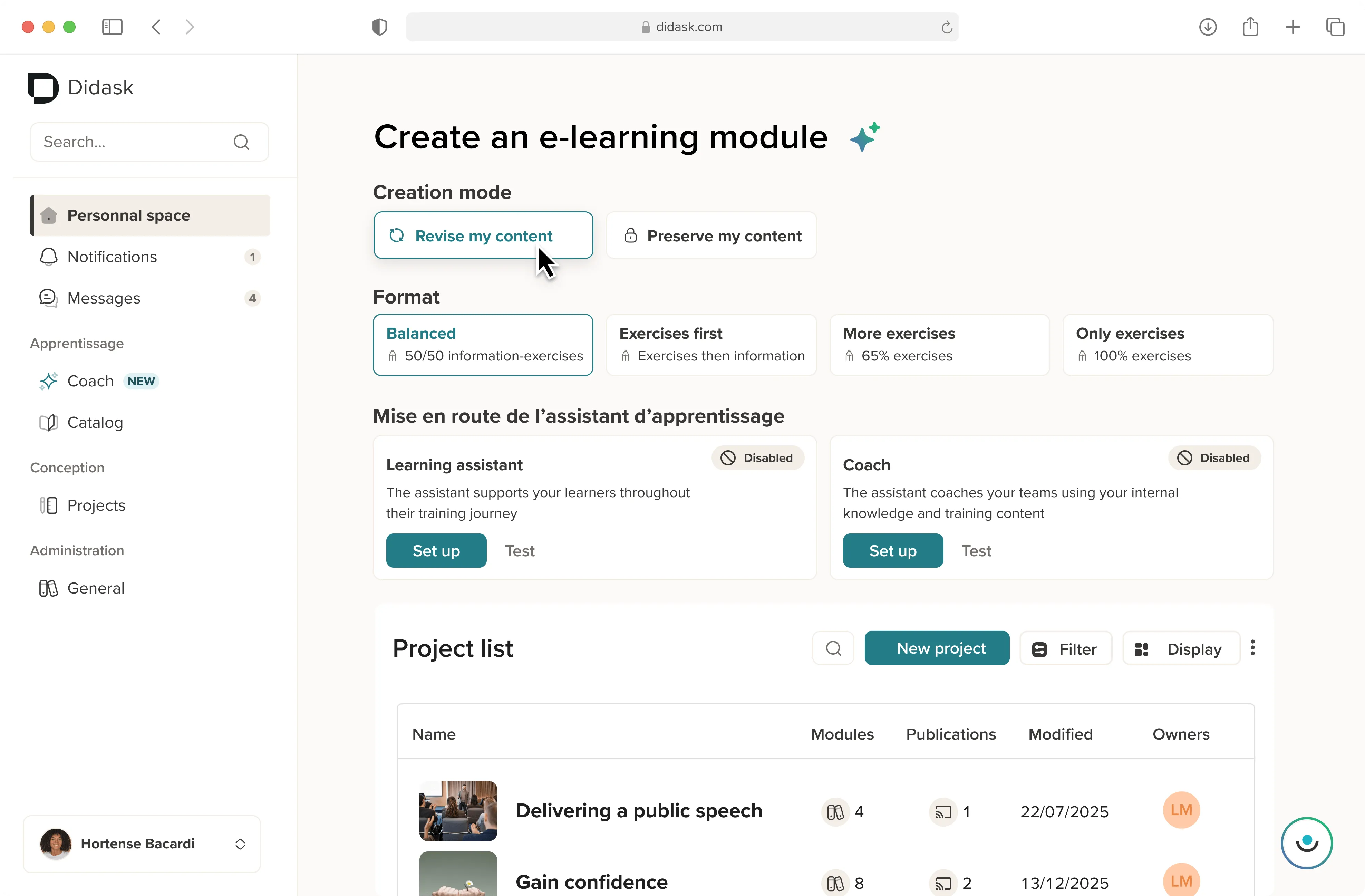
Adaptive learning automatically adjusts content, difficulty and pace to each salesperson's actual level. With Didask Training, learners benefit from personalized sequences that adapt to their gaps and strengths, with tailored feedback at every step.
Field results
94% of learners trained with Didask say the training is useful in their real work (1,780 learners, November 2025). That is the transfer indicator that actually matters.
How do you integrate training into the workflow of sales teams?
A salesperson preparing a call does not have time to navigate an LMS to find the right module. They need a contextual, immediate and precise answer, directly in their work tools. This is exactly what Training in the flow of work Covers: Learning at the Moment of Need.
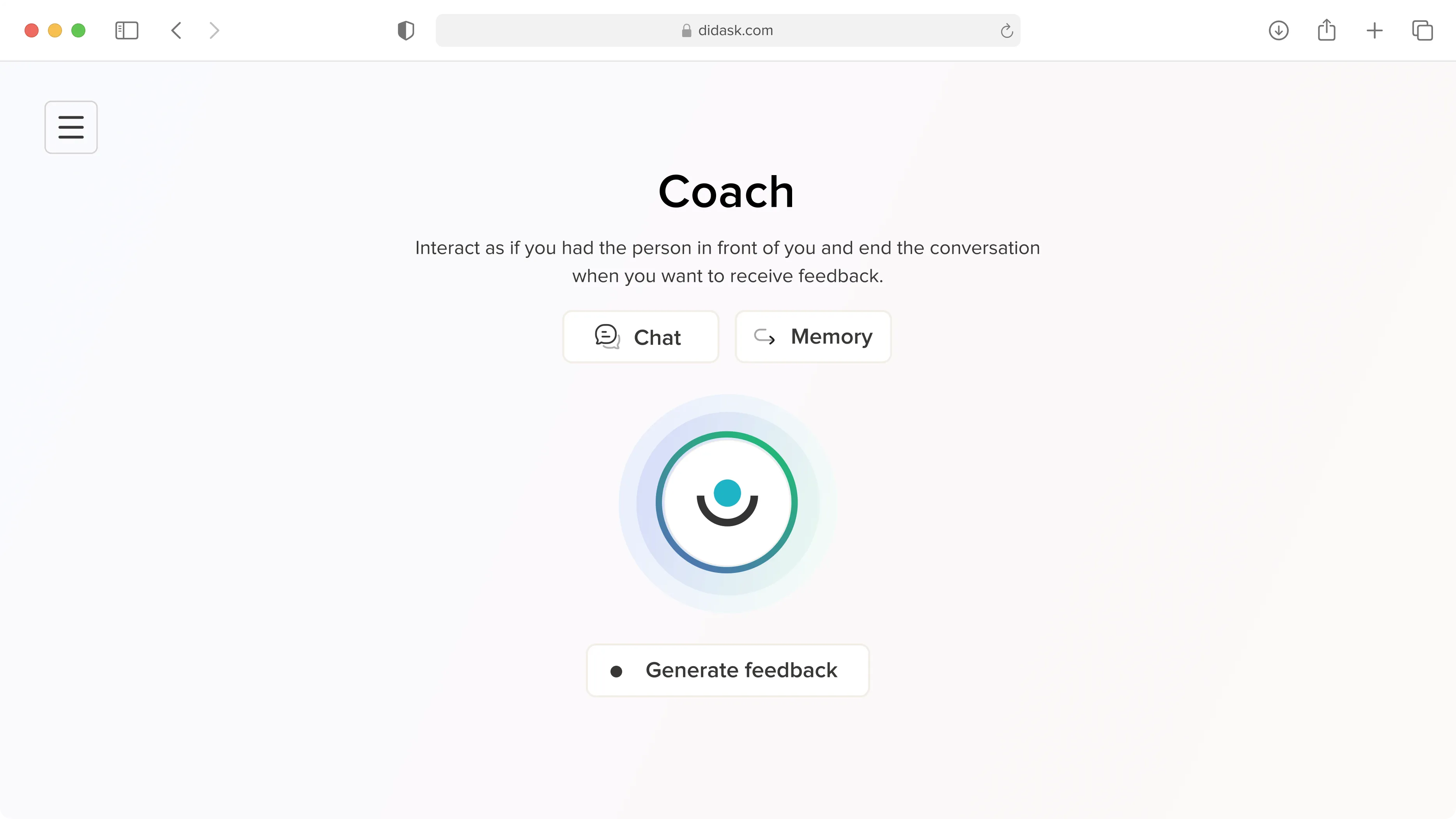
Didask Coaching meets this need: an AI companion that connects to the CRM, intranet or existing business tools, and provides personalized answers when the salesperson needs them. 56.1% of users return to it multiple times a week after one month of use (410 learners, October 2025).
How do you structure a training program for your sales enancement?
Effective year Sales training program is not built around available content catalogs. It is built around the real friction points in your teams' sales cycle.
How do you map critical competencies across each stage of the sales cycle?
Before creating a single module, identify the stages where your salespeople lose opportunities: weak qualification, unconvincing demos, hesitant objection handling, failed closing. These friction points are your pedagogical priorities.
- Identify the 3 to 5 critical stages in your sales cycle.
- CRM data analysis to locate drop-off rates by stage.
- Interview field managers on observed behaviours.
- Cross-reference with customer feedback on their buying experience.
- Prioritise competencies with the highest impact on conversion rates.
Which formats should you choose based on the learning objective?
Each objective learning calls for a different format. Putting everything into long e-learning is a guaranteed recipe for mediocre effectiveness and plummeting engagement.
How do you measure training impact on sales enancement indicators?
Module completion rates are not a performance indicator. What matters is the connection between training and concrete sales results. Track the right Sales KPIs to reveal the real performance of your sales teams.
Relevant indicators to track:
- Reduction in the sales cycle following training.
- Improvement in conversion rates at each stage of the cycle.
- Time-to-productivity for new sales hires.
- Evolution of success rates in pitches and demos.
With Didask, training managers observed an average of a 60 to 75% reduction in training duration for an equivalent learning scope (993 learners, March 2025). Less training time for the same skills acquired: that is a defensible ROI in any executive committee.
How does Didask accelerate the performance of your sales teams?
Didask is an LMS platform built on cognitive sciences to guarantee real competency transfer in workplace situations. It is designed for teams who want to train fast, train well, and measure impact.
Didask Training Enables You to Create Sales Training paths in a matter of hours, with no prior instructional design expertise. 83% of designers who had never created modules are now autonomous (8,704 learners, June 2023). Design time is reduced by 50 to 65% compared to a traditional approach (2,237 training courses, October 2025).
Didask Coaching complements the program with an AI companion integrated directly into your salespeople's tools. It provides contextualized answers, best practice reminders and continuous reinforcement, without interrupting the workflow.
Client results
Teams using Didask observe a twofold reduction in training requests during annual reviews (1,487 learners, November 2025). Proof that continuous training integrated into daily work effectively replaces one-off programmes.
A sales enancement program is only as strong as the training that underpins it. Tools, content and playbooks are not enough if competencies are not durably anchored in your salespeople's behaviours.
Designing effective training means choosing the right formats, personalising learning paths, and measuring impact on the metrics that really matter. That is precisely what Didask's cognitive science-based AI makes possible.
.webp)
.webp)


.webp)



.png)