OUR USAGES
Industry and manufacturing
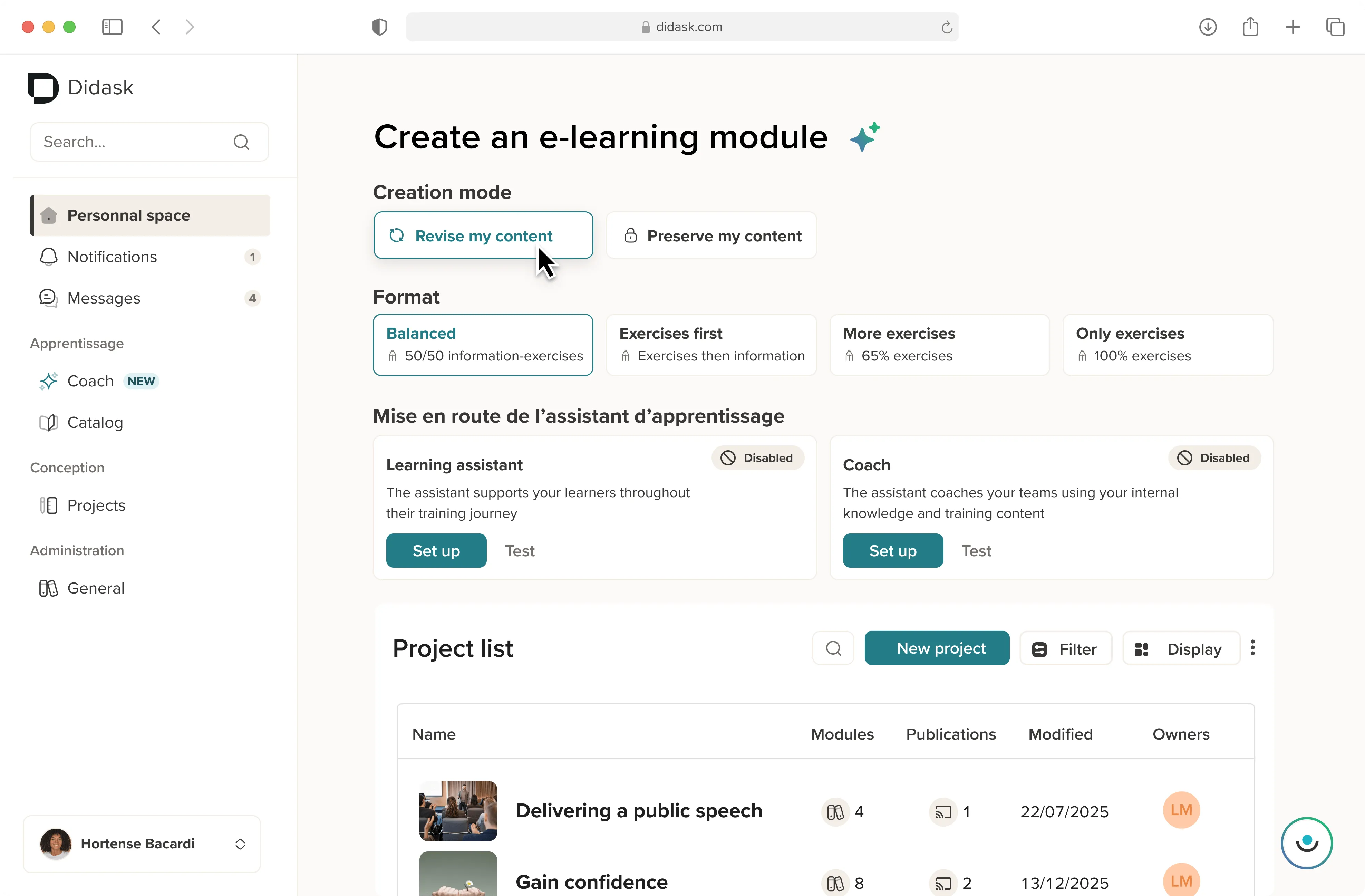
Your experts know how to do it, not how to teach it.
Your industrial LMS needs to bridge the gap.
You are one or two people responsible for equipping hundreds of operators and technicians, spread across multiple production sites and sometimes several countries, with certifications to prove. Didask designs the training for you: your experts provide the content, and artificial intelligence structures the learning path.












SOLUTIONS
What’s holding back technical training
in the industry
Today, your daily routine
WITH DIDASK
Your trainers are field experts.
Technicians, adjusters, and senior operators: they have mastered the craft, not instructional design.
Your experts provide the content, and AI structures the pedagogy.
83% of our designers had never created a module before and are now fully autonomous. 8,704 learners · June 2023
PERSONALIZED LEARNING
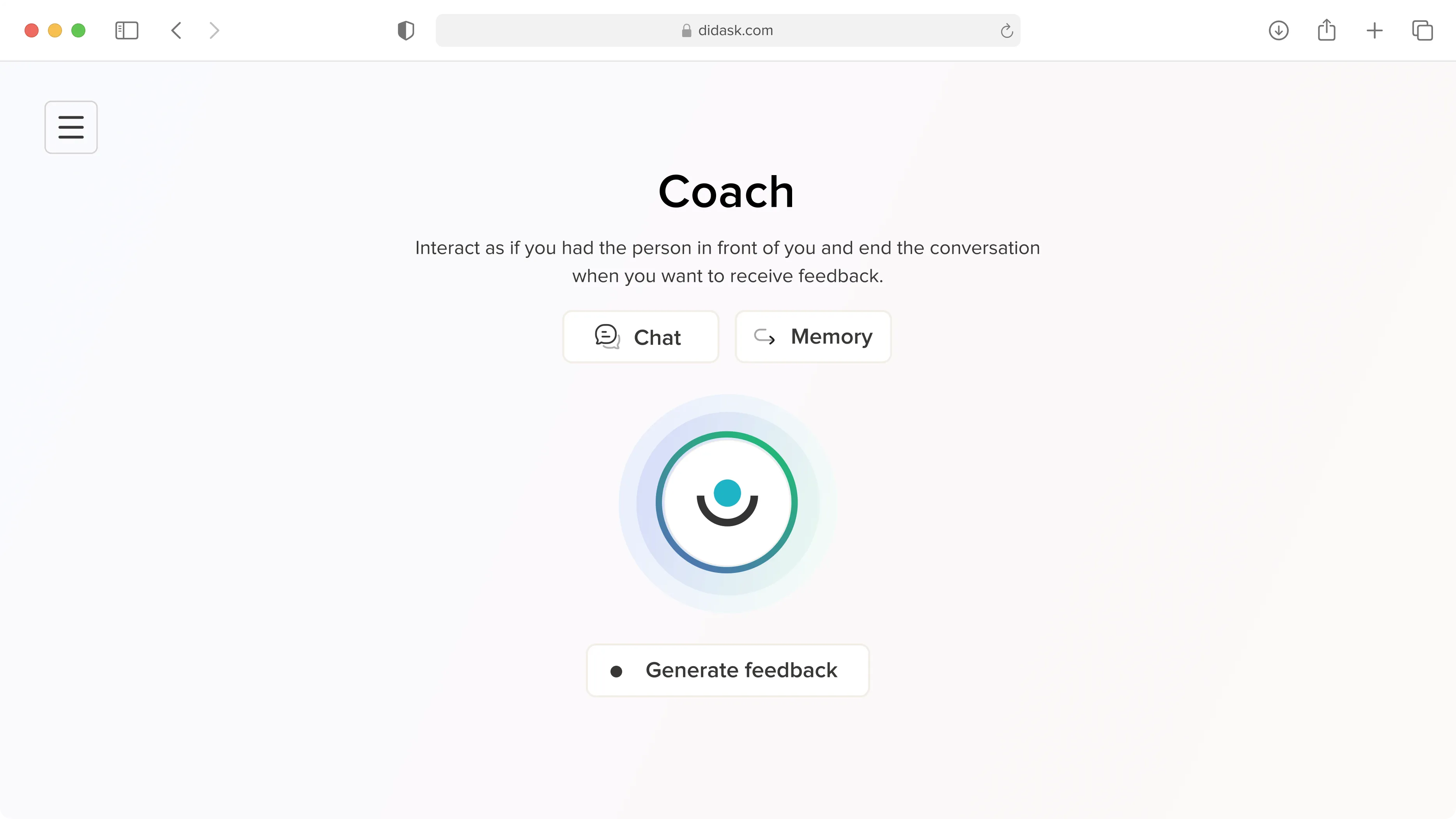
Personalized tutoring that learns from every student, continues support after the session, and asks the right questions to reinforce key concepts at the right time.
Your teams are spread across ten sites and three countries.
Bringing multiple centers and production units together in one place is expensive and halts operations.
A common foundation deployed across all your sites.
From a single platform, without stopping production.
APPLIED PRACTICE
Targeted prompts that appear exactly when the need arises in daily work, guiding users to the most relevant training modules.
You are designing with only one or two people.
Weeks of work for one hour of e-learning, and a backlog that never shrinks.
Design 2 to 3 times faster.
50% to 65% less time spent creating each training course.
2,237 courses · October 2025
2,237 courses · October 2025
FOCUSED ESSENTIALS
Workflow-integrated interactions that deliver the right concept in seconds, without adding to the learner's daily workload.
Your best expertise is retiring.
In a tight labor market, every departure costs months of onboarding time for new hires.
Your experts' know-how becomes a transferable learning path.
Before they leave, not after.
FOCUSED ESSENTIALS
Interactions integrated into the workflow that deliver the right concept in seconds, without adding to the learner's daily workload.
Your modules are being tracked, but not applied.
Completion rates go up, but performance doesn't change—and in safety and quality assurance, that gap comes at a cost.
FOCUSED ESSENTIALS
Interactions integrated into the workflow that deliver the right concept in seconds, without adding to the learner's daily workload.
Your operators are put into real-world scenarios, not just reading material.
They make their mistakes in the module, not on the job.
FOR YOU
Workshop-style apprenticeship for every operator. Without adding a single trainer.
In 1984, Benjamin Bloom identified a gap that has never been disproven: a learner receiving one-on-one support with personalized feedback reaches a level of mastery unattainable in group training. Two standard deviations—this is the 2 Sigma Problem.
The industry once relied on this exact model. An experienced worker, a new hire, and time spent together on the job: apprenticeship was a form of individual tutoring, but pressure on staffing levels has nearly eliminated it everywhere. Didask makes it scalable again through cognitive science: the learning path adjusts to each person's actual level, corrects errors the moment they occur, and reinforces concepts at the right intervals. The Didask Coaching offer extends this tutoring into the workflow, answering questions exactly when they arise, right at the workstation.
"Most platforms use AI to produce content faster. Didask uses it to make learning more effective. This isn't productivity AI; it's pedagogical AI rooted in cognitive science."
The industry once relied on this exact model. An experienced worker, a new hire, and time spent together on the job: apprenticeship was a form of individual tutoring, but pressure on staffing levels has nearly eliminated it everywhere. Didask makes it scalable again through cognitive science: the learning path adjusts to each person's actual level, corrects errors the moment they occur, and reinforces concepts at the right intervals. The Didask Coaching offer extends this tutoring into the workflow, answering questions exactly when they arise, right at the workstation.
"Most platforms use AI to produce content faster. Didask uses it to make learning more effective. This isn't productivity AI; it's pedagogical AI rooted in cognitive science."

THE PLATFORM
Three solutions to workshop bottlenecks
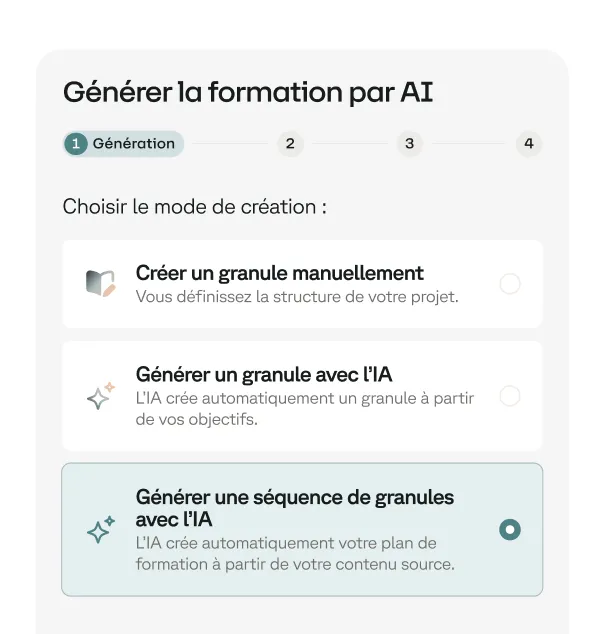
Never designed a training course before? That doesn't matter.
They upload what they already have: operating procedures, protocols, plans, and technical presentations. The AI turns them into a structured course with scenarios drawn from production. They review, they adjust, you publish.
83
%
of our designers had never created a module before using Didask and now produce content independently.
8,704 learners · June 2023

A common foundation across all your sites, from a single platform.
Didask Training combines design, delivery, and tracking in one tool: a shared catalog with dedicated sub-spaces for each factory or subsidiary. Blended learning keeps the workshop for what can only be learned on the job.

-60
up to -75%
in training time for equivalent content: your teams get back to their patients faster.
993 learners · March 2025
.webp)
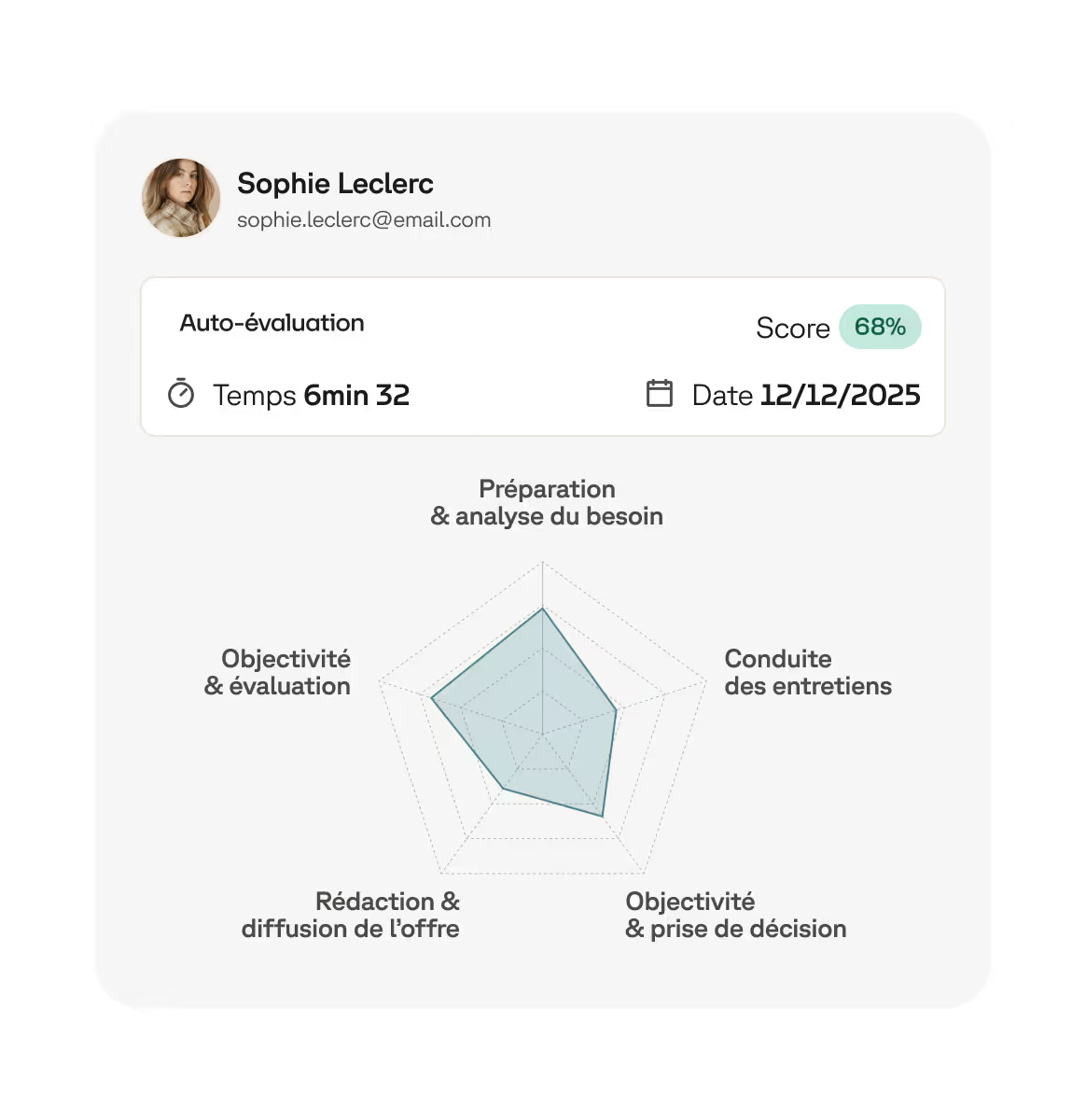
You prove mastery, not just attendance.
Manage renewal deadlines, certificates, and proof of training archives.
Your operators are evaluated in real-world conditions, not through multiple-choice quizzes. You prove mastery of the task, not just that they scrolled through the pages.
Your operators are evaluated in real-world conditions, not through multiple-choice quizzes. You prove mastery of the task, not just that they scrolled through the pages.
A boundary we prefer to set: no platform can issue certifications for you. It tracks theory and deadlines, but practical validation and official certification remain the employer's responsibility.
.webp)
FEATURES
The features you expect from an industrial LMS
RESULTS
of independent designers with no prior design experience
83
%
83
%
reduction in design time per training course
−50 to −65
%
−50 to −65
%
say the training is useful in their actual work
94
%
94
%
TESTIMONIALS
How our clients turn training
into proven results
Welding, piping, mechanical maintenance: this group brings in 200 employees each year for high-demand roles in a challenging recruitment market. A common foundation—corporate culture, safety, quality, digital tools—is followed by ten specialized career paths, developed with internal experts.
Since 2025, the program has expanded beyond onboarding to cover continuous training: advanced techniques, regulatory compliance, soft skills, HR development, and information systems.
« We were convinced by Didask’s cognitive science-based approach: it allows us to create truly useful learning paths. » David Rocci, Head of Learning, Monteiro
Since 2025, the program has expanded beyond onboarding to cover continuous training: advanced techniques, regulatory compliance, soft skills, HR development, and information systems.
« We were convinced by Didask’s cognitive science-based approach: it allows us to create truly useful learning paths. » David Rocci, Head of Learning, Monteiro
Certificates issued
2000+
learner recommendation
8.95/10

SECURITY
Enterprise-grade security
Built into every layer, protected end-to-end
DATA SECURITY
Isolated hosting, end-to-end encryption, and zero outbound data flow — ensuring your data never leaves your controlled environment.
IP PROTECTION
Your content, raw or generated, remains 100% yours. No reuse, no training, no retention by AI models, ever.
COMPLIANCE
Strict GDPR alignment and full adherence to data-governance standards throughout the entire lifecycle of your data.
SAFE AI GENERATION
A hybrid architecture and cognitive guardrails that minimize hallucinations and deliver consistently reliable, high-precision outputs.
FAQS
What is an industrial LMS and how does it differ from a standard LMS?
Definition — Industrial LMS: an LMS platform that tracks regulatory certifications with deadlines, reaches field operators without individual workstations, and allows technical experts to build their own training courses.
Let's go back to basics. An LMS—Learning Management System—hosts your content, delivers it to the relevant teams, and tracks what each employee has completed. That is the general definition, valid in all sectors.
What changes in the manufacturing industry is not the nature of the tool, but the three constraints it must accommodate—and these apply just as much to an SME as to a multi-site group present in several countries. A vendor that adds a few safety modules to its catalog checks none of these boxes. The main methodological error in the manufacturing sector is comparing features before having addressed that specific need.
Let's go back to basics. An LMS—Learning Management System—hosts your content, delivers it to the relevant teams, and tracks what each employee has completed. That is the general definition, valid in all sectors.
What changes in the manufacturing industry is not the nature of the tool, but the three constraints it must accommodate—and these apply just as much to an SME as to a multi-site group present in several countries. A vendor that adds a few safety modules to its catalog checks none of these boxes. The main methodological error in the manufacturing sector is comparing features before having addressed that specific need.
Does an industrial LMS manage certifications and mandatory safety training?
It tracks the theoretical portion of your legal and regulatory obligations—general safety training, electrical certification, vehicle operation, and ergonomics. It tracks renewal deadlines, generates certificates, and archives evidence for client audits or certification bodies.
It cannot evaluate a physical action on actual equipment or issue a formal certification: that remains the employer's responsibility, and no vendor should claim otherwise. A technical point to verify: the platform must manage two distinct deadlines for the same requirement—the training renewal date and the certification review date. Many only manage one.
At Didask, course certificates and administrative certificates are generated, archived, and downloaded in bulk to justify the effective completion of training to a funding body or during a Qualiopi audit.
It cannot evaluate a physical action on actual equipment or issue a formal certification: that remains the employer's responsibility, and no vendor should claim otherwise. A technical point to verify: the platform must manage two distinct deadlines for the same requirement—the training renewal date and the certification review date. Many only manage one.
At Didask, course certificates and administrative certificates are generated, archived, and downloaded in bulk to justify the effective completion of training to a funding body or during a Qualiopi audit.
Our subject matter experts have never designed e-learning. Is it doable, and how long does it take?
This is the most common scenario among our industrial clients, and it is the heart of our approach. 83% of our designers had never created a module before Didask and are now autonomous (8,704 learners, June 2023). Your experts provide their raw material, and the AI generates the pedagogical structure and questions.
Expect it to take a few days for an expert to publish their first course, with no prior design experience. The platform is rated 4.9/5 for ease of use (Capterra, since 2023), and an instructional designer helps you get started.
We prefer to advise you to start with a single use case—the one with the most urgent need—rather than a complete catalog. The best test remains the simplest: have one of your experts produce a module during the trial period, on their own subject, without help from the vendor.
Expect it to take a few days for an expert to publish their first course, with no prior design experience. The platform is rated 4.9/5 for ease of use (Capterra, since 2023), and an instructional designer helps you get started.
We prefer to advise you to start with a single use case—the one with the most urgent need—rather than a complete catalog. The best test remains the simplest: have one of your experts produce a module during the trial period, on their own subject, without help from the vendor.
How do you train field operators in workshops or on-site without a workstation or professional email address?
Training is accessible online via a mobile or tablet browser: no mobile app to install, no professional email required. But first, verify that connectivity is actually your problem—in most factories, break areas have Wi-Fi coverage, and the real bottleneck is the lack of individual accounts and shared workstations.
The criterion to prioritize is therefore the identification method: access by employee ID, code, link, or via your internal directory. An operator must be able to log in in a few seconds and train without stopping work for longer than a break. This is what determines the first-login rate, far more than offline mode.
The criterion to prioritize is therefore the identification method: access by employee ID, code, link, or via your internal directory. An operator must be able to log in in a few seconds and train without stopping work for longer than a break. This is what determines the first-login rate, far more than offline mode.
Does Didask integrate with our tools, and do we need to replace the group's LMS?
Didask Training is an all-in-one training platform: design, delivery, tracking, and traceability in the same system. This is the deployment we recommend because it is the only one where pedagogy and proof of mastery are kept in the same place. If the group's LMS is mandatory and non-negotiable, your courses can be delivered via SCORM: you still benefit from the design capabilities without needing to launch a migration project.
As for HRIS, the connection is made via SSO, employee ID, or code, and user accounts are created and deactivated in sync with your HR system. Course enrollment is automated based on job role, unit, or site.
This point is decisive in the industry: with temporary staff, short-term contracts, and continuous recruitment, manual account management quickly becomes unmanageable. Always ask for the API documentation and the list of operations actually covered, not just the mention "integration available."
As for HRIS, the connection is made via SSO, employee ID, or code, and user accounts are created and deactivated in sync with your HR system. Course enrollment is automated based on job role, unit, or site.
This point is decisive in the industry: with temporary staff, short-term contracts, and continuous recruitment, manual account management quickly becomes unmanageable. Always ask for the API documentation and the list of operations actually covered, not just the mention "integration available."
How do you choose an LMS for an industrial company and measure its ROI?
Three criteria are deal-breakers: audit-ready traceability, real access for your field operators, and the ability to manage a common foundation across multiple sites and languages—an international LMS isn't just multilingual; it must reflect the actual organizational structure of your subsidiaries. Four criteria then help distinguish between the remaining solutions: integration with your existing tools, your experts' ability to design content without needing to be instructional designers, proof of mastery rather than just completion, and the annual cost relative to the number of operators actually trained.
A comprehensive offering is therefore not a criterion, but a risk: weighting all seven equally is the primary cause of over-engineered and under-utilized tools.
Regarding measurement, avoid completion rates: a module followed to the end proves a connection, not a skill. Track success rates in situational assessments, the time it takes for new hires to reach autonomy, and the reduction in errors on trained points. These are the only three indicators that hold up before industrial management, because they relate to operations rather than the tool. This is also what distinguishes a true corporate training program from a catalog of modules.
A comprehensive offering is therefore not a criterion, but a risk: weighting all seven equally is the primary cause of over-engineered and under-utilized tools.
Regarding measurement, avoid completion rates: a module followed to the end proves a connection, not a skill. Track success rates in situational assessments, the time it takes for new hires to reach autonomy, and the reduction in errors on trained points. These are the only three indicators that hold up before industrial management, because they relate to operations rather than the tool. This is also what distinguishes a true corporate training program from a catalog of modules.
MEET US
Get a demo!
We would love to hear about your project
Thank you! Your submission has been received!
Oops! Something went wrong while submitting the form.
Effective learning,
made scalable
made scalable
Mobile training
Course Authoring
Microlearning
e-Learning
Authoring Tools
Authoring Tools
Learning Experience
Platform
Platform
.png)
CapTERRA — 4.9