


A manufacturing LMS is a training platform whose content production, shop-floor access and audit trail are adapted to safety authorizations, scattered sites and teams with no fixed workstation.
In 2026, French manufacturing plans 211,000 hires and rates 48% of those openings as hard to fill (France Travail, 2026 labour needs survey). Every hard-to-fill role shifts the load onto internal training, and therefore onto subject-matter experts who are not instructional designers.
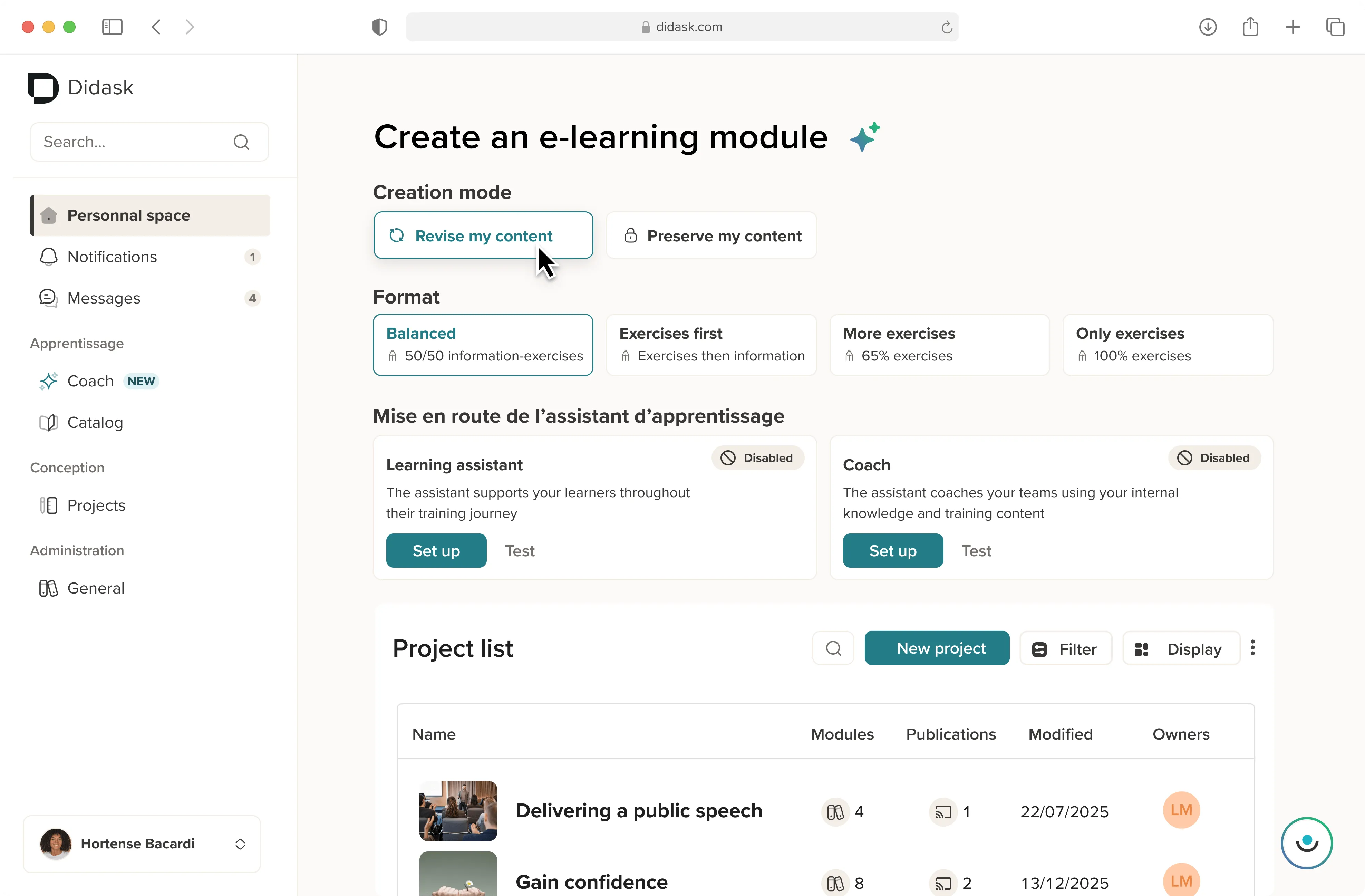
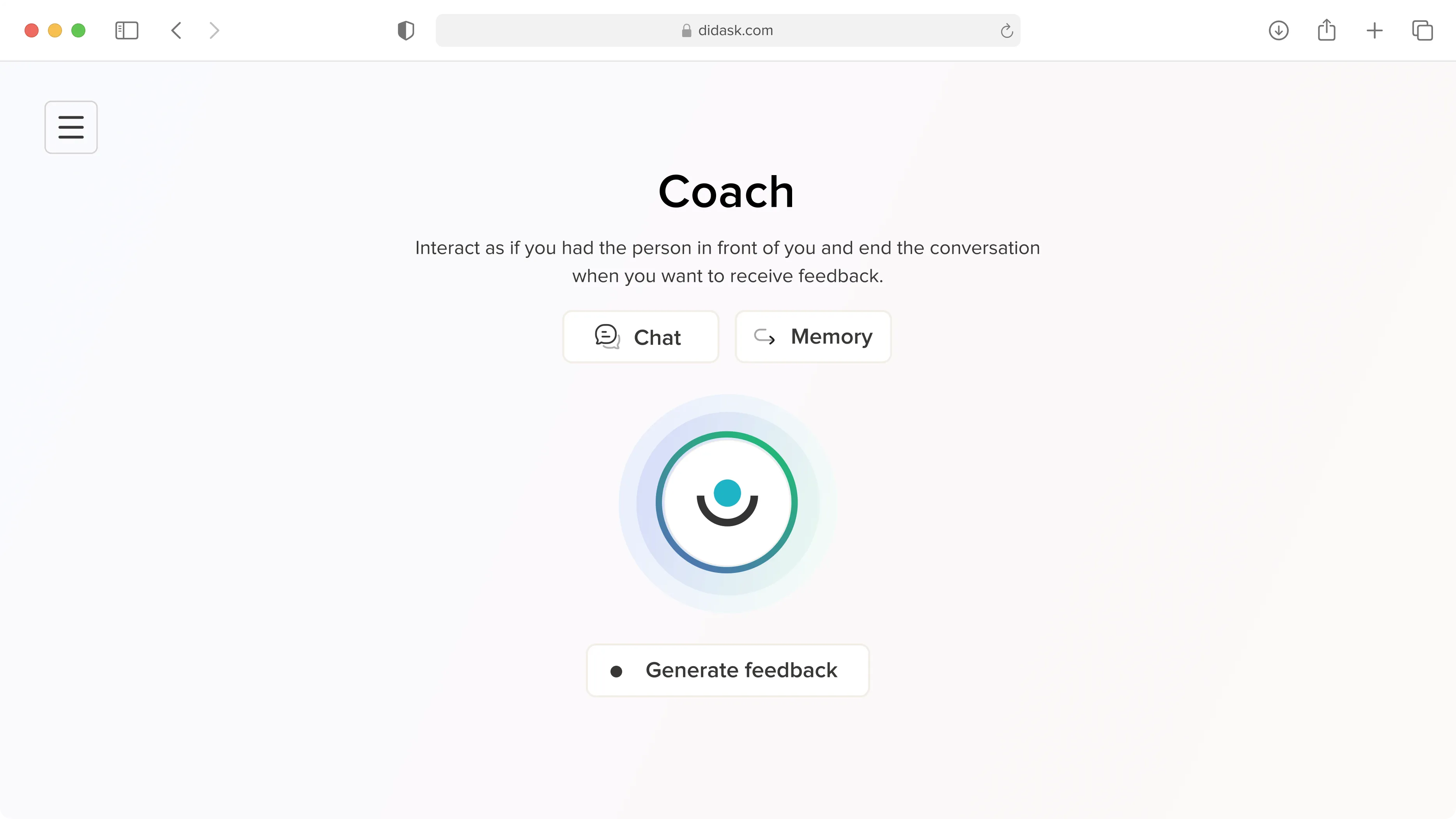
Didask is a French LMS built on cognitive science, generating personalized learning paths from a manufacturer's existing work instructions.
What are the 7 best manufacturing LMS platforms in 2026?
The seven platforms we selected are Didask, Beedeez, Rise Up, 360Learning, Docebo, Cornerstone Learning and Moodle. Didask publishes this comparison and ranks itself first; for the other six, we kept only publicly verifiable information.
Ratings collected on Capterra in August 2026.
1. Didask
A French company behind a complete ecosystem: LMS, authoring tool and design AI grounded in cognitive science. Didask Training cuts the time to build a course by 50 to 65% (2,237 courses, October 2025).
Strengths
- 83% of course creators had never built a module before and are autonomous today (8,704 learners, June 2023).
- Scenario-based practice and adaptive learning: you train application of the task, not recall.
- SCORM Connect delivers learning paths inside the LMS already in place, with no platform switch.
.webp)
They train their teams with Didask
Pellenc, machinery for agricultural equipment · SIG Eco21, Geneva industrial utilities · Monteiro, nuclear supply chain · Ternois Fermetures
2. Beedeez
A French mobile learning platform created in 2015, designed for teams with no fixed workstation.
Strengths
- Native offline mode: the only one in the panel where it is the core of the product.
- Dedicated manufacturing page and written case studies.
3. Rise Up
A French platform founded in 2014, combining LMS, LXP and an authoring tool, blended-learning oriented.
Strengths
- The only sector page in the panel built around safety authorizations and refreshers.
- SCORM 1.2 and SCORM 2004 2nd, 3rd and 4th editions documented, with status and score behaviour.
4. 360Learning
A French LMS founded in 2013, built around collaborative learning: in-house experts produce the courses themselves.
Strengths
- Broadest standards support in the panel: SCORM 1.1 to 2004, cmi5, xAPI and AICC.
- Best-documented heavy-industry references.
5. Docebo
A vendor founded in Italy in 2005, now based in Toronto and listed on the TSX and Nasdaq.
Strengths
- An AWS Paris region appears in the technical documentation for network configuration.
- SCORM 1.2 and 2004 3rd edition, LTI 1.0 to 1.3, xAPI and AICC supported and documented.
6. Cornerstone Learning
The learning module of the Cornerstone OnDemand talent suite, a US company acquired by Clearlake Capital in August 2021.
Strengths
- Native coverage of the full HR cycle, from recruitment to mobility.
- The only French industrial reference in the panel with a named testimonial.
7. Moodle
Open source LMS released in 2002, under the GPL. Beware of a common confusion: Moodle Workplace, the enterprise edition, is proprietary and goes through certified partners.
Strengths
- Broadest offline mode in the panel: all course activities work without a network, except chat and external tools.
- Full control over hosting, including self-hosting by your IT department.
.png)
Can your LMS issue a safety authorization? No, and none can
A safety authorization is signed by the employer, who assesses the person's fitness. An LMS carries the theory, tracks the deadlines and archives the evidence. It does not assess a task performed on real equipment.
Two separate cycles have to be tracked. For electrical work authorization, France's INRS states that 'the recommended interval is 3 years' for refresher training, while 'every year, the employer checks that authorization requirements remain aligned with foreseeable changes' (INRS, ED 6127).
The question to put to every vendor: exactly which part of the authorization cycle does your tool track, and which part stays on me?
What is a manufacturing LMS, and how does it differ from a standard one?
A manufacturing LMS is a general-purpose LMS with three components adapted. Content production first: in a plant, the know-how sits with the machine setter, and it is often tacit. A task mastered becomes automatic, and therefore invisible to the person performing it.
Shop-floor access next, since a line operator does not always have a work email, works rotating shifts and shares a terminal on the floor. The audit trail last, which must stand up to your aerospace customer's auditor as much as to the labour inspectorate.
Article L4141-2 of the French labour code requires "practical and appropriate safety training" for new hires, for those changing role and for temporary staff, "repeated periodically" (Legifrance). Your platform therefore has to track the mandatory training for your sector, including ATEX training and industrial-vehicle operator certification.
How do you choose an LMS for a manufacturing company?
Six criteria are enough to separate the platforms, and the first is the lead time from a work instruction to deployed training.
- Time to build a module. How many hours from a ten-page work instruction? Insist on a demonstration using your own document.
- Autonomy of subject-matter experts. Can a machine setter or shift leader produce a course alone, without an instructional designer?
- Authorization tracking. Deadlines per person, alerts, certificates, exports by site and by role. Ask to see a real export.
- Real access on the shop floor. Login without a work email, shared terminal, mobile usable with gloves on. Test it in the noise, not at a desk.
- Multilingual and integrations. HRIS, SSO, SCORM or xAPI with the group's LMS. The labour code requires that safety training take account of "the language, spoken or read" of the worker (article R4141-5).
- Full cost per operator trained. Licenses, internal design time, backfilling operators during classroom sessions, dormant licenses in a temp-staffing context.
One criterion to drop: completion rate. Mandatory training reaches 100% mechanically, and that figure says nothing about what changed on the line. The frequency index for workplace accidents stands at 26.4 per 1,000 employees in the general scheme in 2024 (French national health insurance – Occupational risks): it is competence in real situations you have to aim at, and therefore measure.
.png)
When the subject-matter expert becomes the course designer
'Subject-matter experts know their topic, but then how do they pass it on? Didask lets us make instructional design easier, get training tailored to our needs, and brings cognitive science in to make information accessible to every audience.'
— Cyrielle Lauer, skills development manager, Pellenc
.webp)
.webp)
.webp)



.webp)
.png)