


Are you hesitating between SCORM and xAPI for your digital training strategy? It is normal. This choice involves your ability to measure the real impact of your training and to personalize learning paths.
SCORM offers immediate universal compatibility. xAPI promises a wealth of data and unprecedented flexibility. But which one really fits your business needs?
This article offers you a decision framework, based on concrete operational criteria.
Why compare SCORM and xAPI?
The vocational training landscape has changed radically. Organizations now require personalized courses, multimodal monitoring and accurate measurement of training ROI. Technical standards must follow this transformation.
SCORM still dominates 70% of infrastructures LMS existing. But it shows its limits in the face of new educational challenges. xAPI meets needs that SCORM cannot satisfy: mobile learning, social learning, adaptive learning driven by AI.
This strategic choice has a direct impact on four critical dimensions:
- Educational effectiveness : ability to personalize courses according to real needs
- Impact measurement : wealth of data to prove the ROI of your training courses
- Organizational agility : flexibility in the face of changing learning methods
- Long-term investment : sustainability of your digital training infrastructure
It is not a question of choosing between “ancient” and “modern.” It's about determining which standard best serves your skills transformation strategy.
What are the key differences between SCORM and xAPI?
SCORM (Sharable Content Object Reference Model) is a standardized packaging format. It ensures that a module created works on any compatible LMS. Think of SCORM as a standardized box to transport your training content between platforms.
xAPI (Experience API) is a language for communication about learning. It captures and stores learning experience data wherever it occurs. xAPI tells the full learning story of your employees, beyond the LMS.
SCORM or xAPI: what criteria should you consider for your organization?
The choice between SCORM and xAPI depends on six business criteria. Each reveals an aspect of your digital maturity and your educational ambitions.
1. Your digital learning maturity
Are you new to digital training? SCORM offers a smooth learning curve and turnkey solutions. Do you already have advanced expertise? xAPI unlocks significant educational innovation opportunities.
2. Your existing technical infrastructure
Are you using a traditional LMS with no planned evolution? SCORM integrates immediately. Are you considering a open ecosystem connecting multiple tools ? xAPI is becoming strategic for centralizing learning data.
3. Your educational goals
Do you mainly aim at compliance and awareness? SCORM meets this need in an effective way. Are you looking to sustainably transform business behaviors? xAPI allows the fine monitoring necessary for real change.
4. Your learning modalities
Do you exclusively offer traditional e-learning? SCORM is more than enough. Do you combine face-to-face, distance, field and social learning? xAPI alone can trace this diversity of experiences.
5. Your investment capacity
Are you looking for rapid deployment with a limited budget? SCORM minimizes initial costs. Are you investing in a long-term vision with dedicated resources? xAPI optimizes ROI over several years.
6. Your need for impact measurement
Are you satisfied with the basic metrics (completion rate, score)? SCORM provides them natively. Do you have to prove the business impact of your courses? xAPI offers the essential analytical granularity.
Do you have to choose between the two?
No The hybrid approach is often the best strategic compromise.
Keep SCORM for your existing content library and compliance training. Simultaneously develop your new strategic paths with high added value using xAPI. This coexistence eliminates the risk of a “big bang” migration while opening you up to educational innovations.
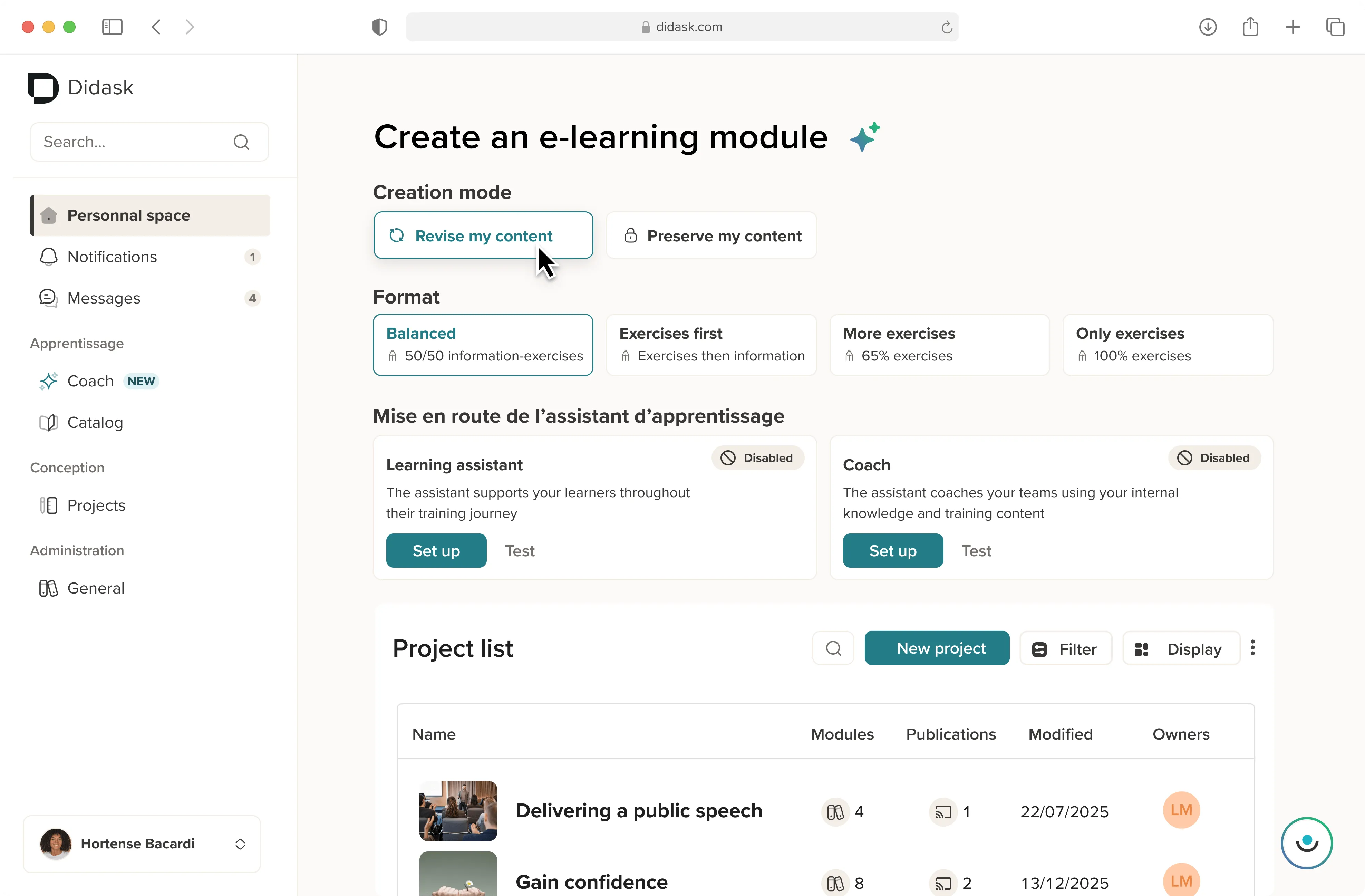
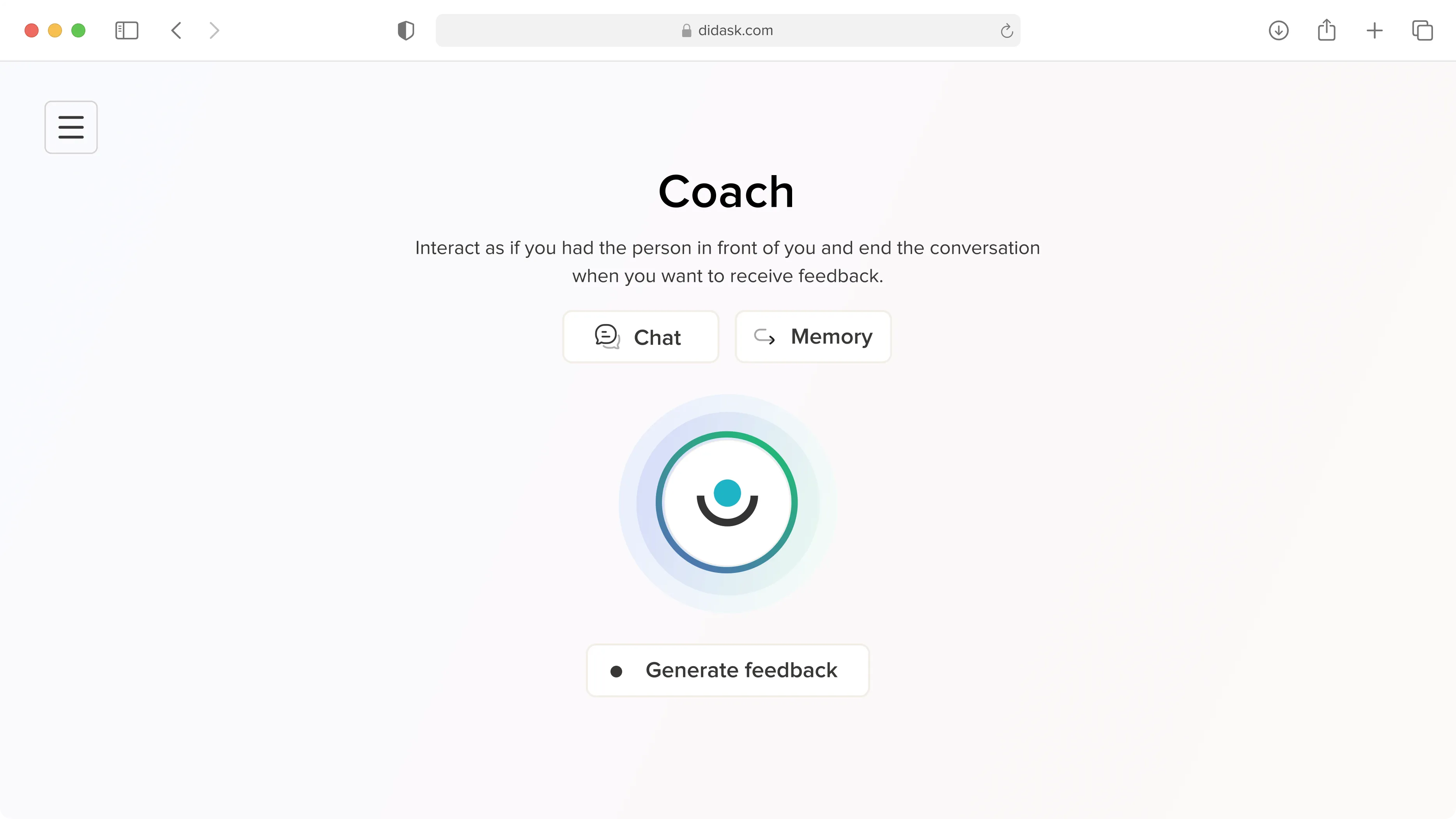
A training platforms like Didask natively support this dual approach. You benefit from universal SCORM compatibility AND extended capabilities via API to Adaptive learning and personalization.
Typical transition roadmap:
Phase 1 (months 1-2) : Audit your content and prioritize according to the expected business impact
Phase 2 (months 3-4) : Launch an xAPI pilot on 1-2 critical paths with rigorous measurement
Phase 3 (months 5+) : Expand xAPI progressively based on success and your available resources
In which cases should SCORM be preferred?
SCORM is not obsolete. It meets specific needs with considerable efficiency.
Extensive existing content library
Have you invested in thousands of hours of SCORM training? Migration would represent an inordinate cost with no obvious added value. SCORM will continue to work perfectly for this heritage content.
Simple and top-down training needs
Regulatory training, awareness-raising, product information: these use cases do not require sophisticated tracking. SCORM provides exactly what you need: score, completion, time spent.
Tight budget constraints
The training budget is limited and every euro counts. SCORM minimizes infrastructure and development costs. You deploy quickly without heavy technical investment.
Classic LMS infrastructure stabilized
Your current LMS is no longer evolving and does not support LRS external. Staying on SCORM avoids an expensive overhaul of your technical architecture.
Teams without advanced data skills
Nobody in your organization masters the analysis of complex learning data. The xAPI wealth would remain untapped. SCORM offers simple and immediately actionable KPIs.
When does xAPI become indispensable?
xAPI unlocks educational scenarios that are impossible with SCORM.
How does xAPI support adaptive learning?
xAPI and adaptive learning form a powerful duo to maximize educational effectiveness.
Fine tracking of interactions reveals where each learner is really struggling. A misunderstood concept? xAPI detects it via error patterns. The system automatically proposes a targeted complementary exercise, adapted to the learner's profile.
Concrete example: Marie fails a practical negotiation case three times. xAPI identifies that her difficulty relates specifically to the treatment of price objections. The educational AI instantly generates an additional scenario focused on this specific point. Marie is progressing where she really needs it.
At Didask, each learner receives the optimal path for their skills development, based on cognitive science.
How do I migrate from SCORM to xAPI?
Migrating to xAPI is not a technical project. It is a gradual educational transformation that requires method and pragmatism.
Step 1: Audit and mapping (2-4 weeks)
List all of your current SCORM content with what it's actually used for. Identify strategic paths that would really benefit from xAPI. Prioritize based on expected business impact, not based on technical ease.
Deliverables: prioritization matrix (impact vs effort), 3-5 candidate migration paths.
Step 2: Prioritization by business value (1-2 weeks)
For each candidate path, quantify the expected gain with xAPI. Sales training with measurable ROI? Onboarding with a reduction in skills development time? Compliance with real behavioral monitoring?
Deliverables: encrypted business case for the first 2 pilot courses.
Step 3: Pilot controlled with measure (2-3 months)
Deploy xAPI on 1-2 test paths with a limited population. Rigorously measure the improvement vs the previous SCORM release. Collect user feedback and identify the adjustments that are needed.
Deliverables: comparative impact report, optimization recommendations.
Step 4: Phased deployment (6-12 months)
Extend xAPI to other paths based on your successes, your learnings and your available resources. Maintain SCORM for what's already working well. Coexistence is not only possible but desirable.
Didask supports you in this transition by combining SCORM compatibility and xAPI innovations. Our expertise in cognitive science ensures that your migration serves educational effectiveness, not just technical modernity.
What guarantees the effectiveness of your training courses?
You should definitely know that:
The choice between SCORM and xAPI is less important than you think for the real effectiveness of your training courses.
Excellent educational content tracked in SCORM will transform your collaborators more than a mediocre module into an xAPI. The technical standard is a means, never an end in itself.
Educational effectiveness is based on three fundamental pillars, independent of the tracking format:
1. Anchoring in cognitive sciences
Granularization of objectives, spacing of revisions, immediate feedback, active memory retrieval. These principles, validated by research, multiply the training impact, regardless of the standard used.
2. Personalization at the cognitive level
Adapt the content to the level of each learner, identify their specific difficulties, propose targeted exercises. Educational AI makes this personalization possible on a large scale.
3. Contextualized scenarios
Learners progress by practicing in contexts close to their professional reality. The decontextualized exercise generates few transfers, even when tracked in xAPI.
Didask bases its approach on these scientific principles. Our educational AI transforms your raw content into cognitively optimized learning experiences. SCORM or xAPI, what matters is that 94% of our users confirm a positive impact in their daily professional lives.
Conclusion
SCORM or xAPI? The answer depends on your context, not abstract trends.
Choose SCORM for immediate simplicity, universal compatibility, and traditional training needs. Choose xAPI for ambitious instructional strategies, deep impact measurement, and complex learning ecosystems.
The hybrid approach often remains the most pragmatic in the transition phase. It combines the security of the existing and progressive innovation.
But remember: the technical standard follows your educational vision, it never precedes it. Focus on effective learning first. The tracking format will come naturally.
Discover how Didask reconciles technical compatibility and educational innovation. Our LMS supports SCORM while offering adaptive learning and educational AI based on cognitive science. We truly transform your employees, regardless of your standard.
.webp)
.webp)
.webp)

.webp)


.png)