
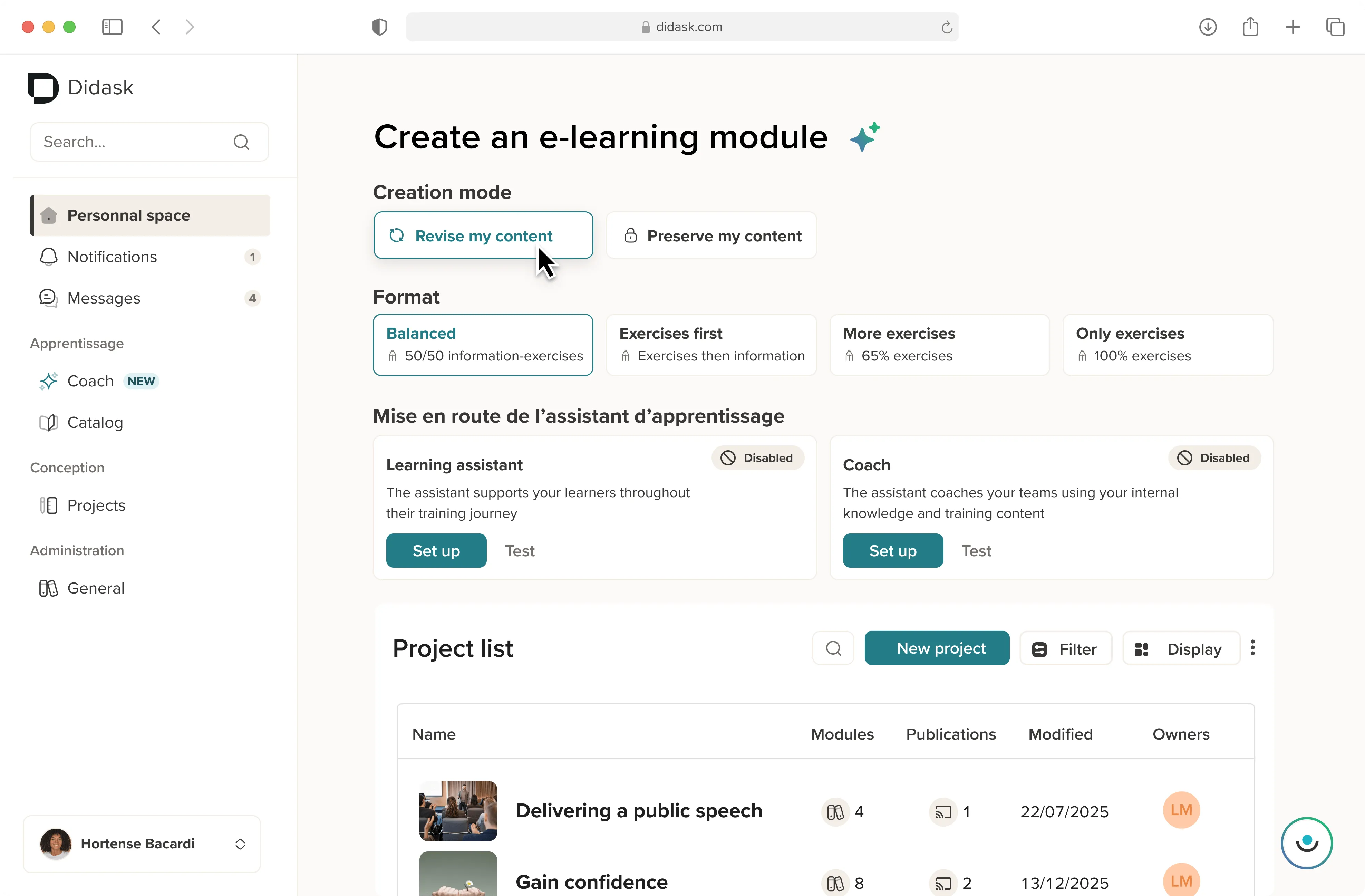
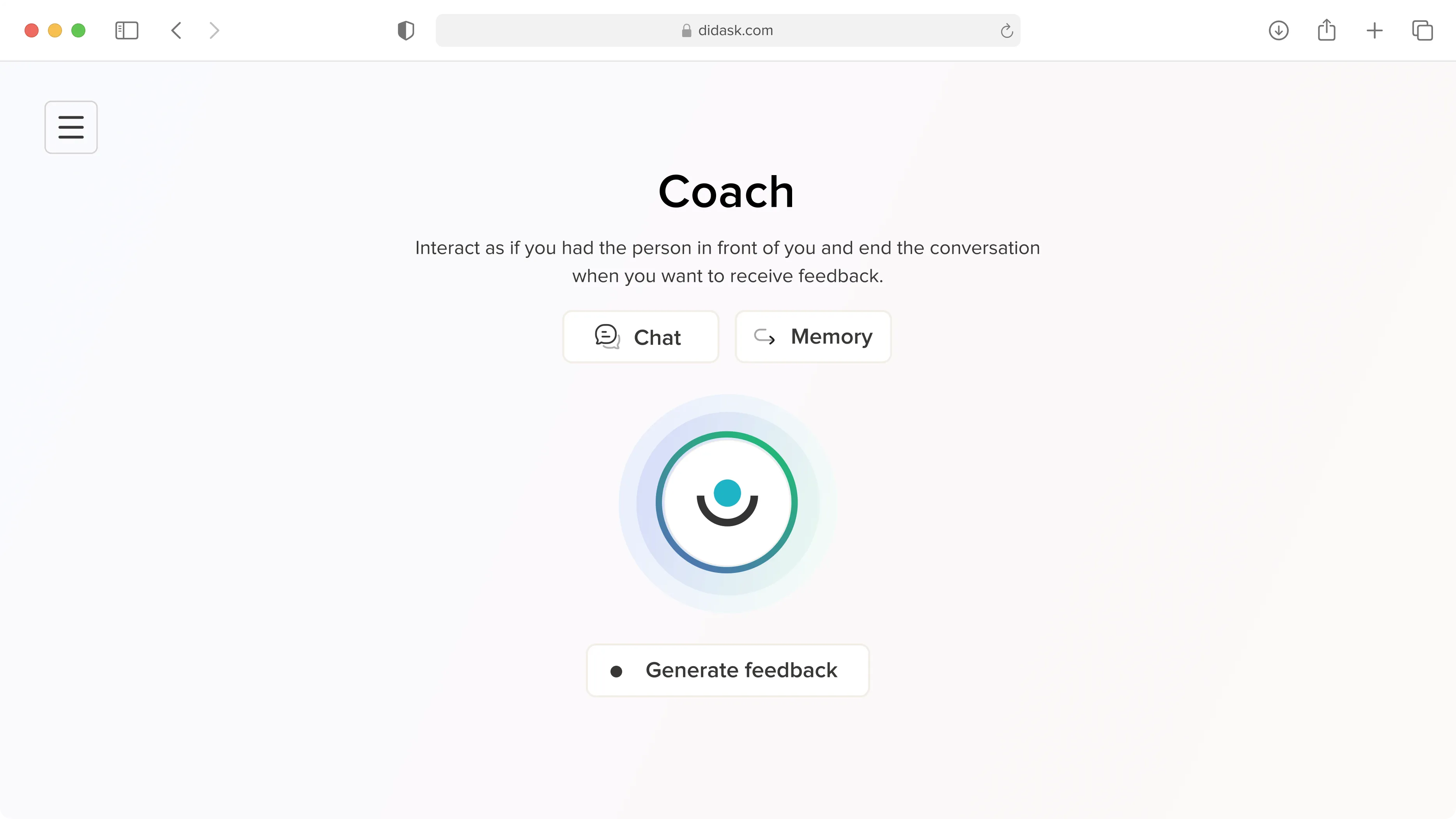


A restaurant LMS is a training platform designed for teams in constant rotation: mobile access without a work email address, onboarding paths by role, and hygiene training records kept site by site.
In 2023, 14% of employees in accommodation and food services took part in training funded by their employer, against 41% across all sectors (Insee Références, Formations et emploi, 2025 edition). Twenty-seven points of gap, in a sector carrying 319,000 recruitment projects in 2026 (France Travail, BMO 2026 survey).
Didask is a French LMS grounded in cognitive science, which turns a site's binders and recipe sheets into onboarding paths by role.
What are the 7 best restaurant LMS platforms in 2026?
The seven platforms selected are Didask, Beedeez, Yoobic, Rise Up, Docebo, Sparted and 360Learning. All seven vendors are European, five of them French. Didask publishes this comparison and ranks itself first.
Method: only information publicly verifiable on each vendor's own site, as recorded on 27 August 2026. We set aside Xenia and Operandio, operational execution platforms where training is only a side module.
Ratings recorded on Capterra on 27 August 2026. Sparted has only 4 reviews, and the case-study results below are announced by the vendors, with no published sample.
1. Didask
A complete French ecosystem — LMS, authoring tool, design AI, AI coach — grounded in cognitive science.
Strengths
- Production open to whoever already carries training: 83% of authors had never built a module before (8,704 learners, June 2023).
- Didask Training cuts design time by 50 to 65% (2,237 courses, October 2025) and training time by 60 to 75% at equivalent content (993 learners, March 2025).
- Access by employee number, code or SSO, with no work email address, in micro-sessions of 10 to 15 minutes, built-in audio included.
- Food hygiene programme built with a food safety consultancy: NPS of 63, teaching effectiveness of 5.6/6.
.webp)
They train their teams with Didask
Pierre & Vacances · Le Collectionist · One Business School · Betterfly Tourism
2. Beedeez
A French mobile learning vendor, created in 2015.
Strengths
- Documented offline mode, SCORM import, delegated administration and white label.
- Documented franchise network.
3. Yoobic
A field execution platform with a built-in LMS, founded in 2014 by French founders.
Strengths
- Hygiene audits with photo proof and microlearning on new menus, in a tool usable offline.
- Sub-processors published one by one, all with stated EU location, plus ISO 27001 and SOC 2 Type II.
4. Rise Up
A French vendor created in 2014, bringing LMS, LXP and an authoring tool together in the same platform.
Strengths
- Paths centralised then contextualised by brand, with HRIS and Microsoft Teams connectors: this is the multi-site building block of criterion 5 below.
- Hosting stated on a European sovereign cloud (Scaleway, Paris), ISO 27001, SOC 2 Type II.
5. Docebo
A vendor born in Italy in 2005, headquartered in Toronto.
Strengths
- Hosting region chosen by the customer, EU included, and mobile offline access.
- Verifiable ISO certificates: 27001 (no. IT22-07607D), 27017, 27701, and SOC 2 Type II.
6. Sparted
A French vendor created in 2014, built on a daily format of three to four minutes.
Strengths
- Servers stated in France, 34 languages, platform deployed under the brand's own identity.
7. 360Learning
A French LMS created in 2013, where internal experts produce the training.
Strengths
- ISO 27001 and SOC 2 Type II.
- Published references.
.png)
Does your LMS make you compliant with hygiene regulations? No, but the training obligation applies all the same
Regulation (EC) No 852/2004, Annex II Chapter XII, requires food handlers to be supervised and instructed in food hygiene matters in a way appropriate to their work activity. The obligation covers everyone who handles food, not one designated person.
The specific 14-hour training comes under the order of 12 February 2024, of which at least 4 hours must be in person. On top of that comes the operating licence: 20 hours, valid for ten years.
No LMS issues these certificates: it carries the theoretical foundation — cold chain, allergens, cleaning — and preserves the proof, site by site.
What is a restaurant LMS, and how does it differ from a standard one?
A restaurant LMS is a general-purpose LMS with three components adapted. Access first: a commis has neither a workstation nor a work email address, their only screen is their phone.
Then the pace. Onboarding is not rolled out once a year, but with every wave of recruitment: 97,100 recruitment projects for kitchen assistants and multi-skilled staff in 2026, 93,800 for waiting staff (France Travail, BMO 2026).
Then the proof. Traceability of regulatory training has to be produced site by site and person by person, not consolidated at group level.
How do you choose an LMS for a restaurant or a multi-site group?
Six criteria are enough, and the first is how you identify a team member with no work email address (the questions to ask before choosing).
- Login method. Employee number, code, QR code in the back office or SSO: this is what decides the first-login rate.
- Production time. Ask for the demonstration on your own induction manual, not on a prepared example.
- Autonomy. Can one person build a path, then update it when the menu changes?
- Onboarding by role. Front of house, kitchen, reception: a path by role built once, triggered from the HRIS on every arrival.
- Multi-site management. Sub-spaces by site, brand or franchise, consolidated reporting. Have this block priced separately.
- Cost per trained employee. Dormant licences out of season, internal design time, paid modules.
Want to go further? Discover the best LMS platforms across all sectors.
One criterion to set aside: the completion rate. Several vendors in the panel display between 80% and 100% on their food service cases, none with a sample or a method. Having finished the allergens module and knowing how to answer the customer who mentions an intolerance are two different things: that is the illusion of mastery, which only scenario-based practice can lift.
.webp)
.webp)
.webp)

.webp)


.png)