


A finance LMS is a training platform whose audit trail, deadline tracking and security documentation are built around the regulatory obligations of banking and insurance.
In 2024, regulatory training reached 96% of employees at banks affiliated to France's banking association (AFB), up from 93% in 2023 (French Banking Federation, December 2025). In this sector, mandatory training is no longer part of the plan: it is the plan.
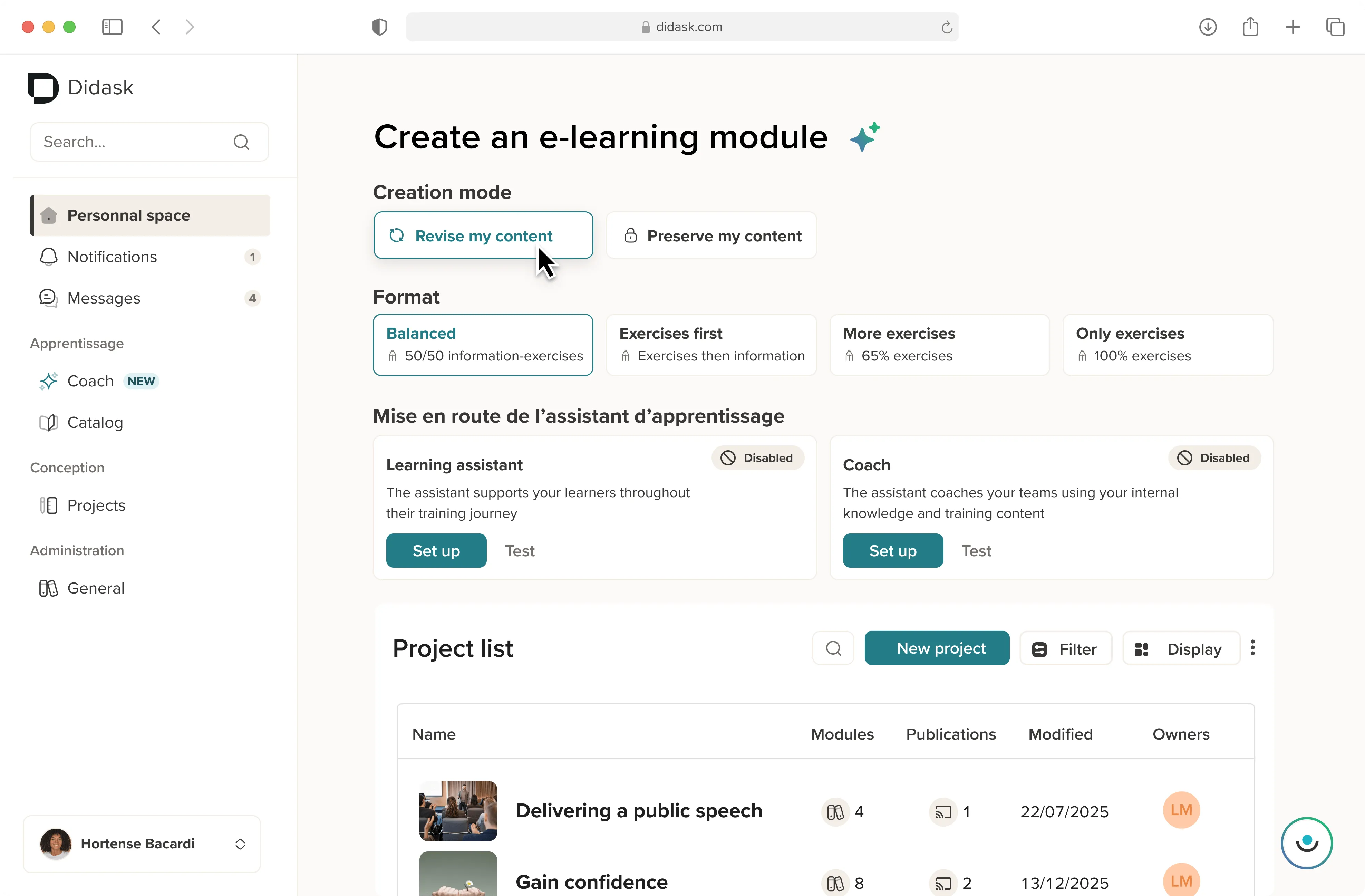
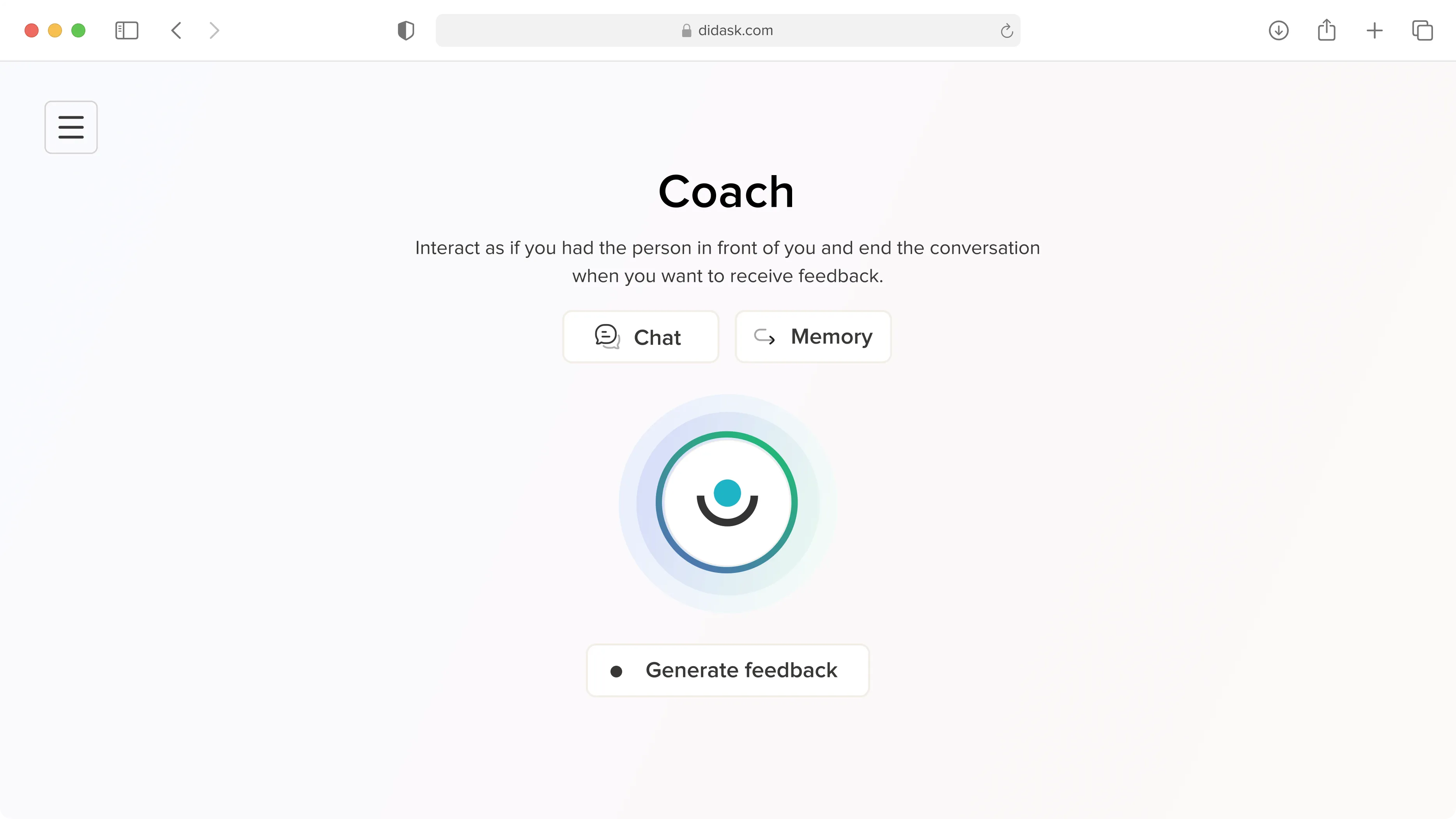
Didask is a French LMS built on cognitive science, generating personalized learning paths from an organization's existing procedures.
What are the 7 best finance LMS platforms in 2026?
The seven platforms we selected are Didask, 360Learning, Bealink, Rise Up, Cornerstone, Docebo and E-TIPI Learning. Five are European vendors, which matters in a market where DORA has turned data location into a board-level question. Didask publishes this comparison and ranks itself first.
Method: we only report what is publicly verifiable on each vendor's own site, as reviewed on 26 August 2026. Note that in English, LMS also stands for loan management system, which is not the subject here.
Ratings collected on Capterra on 26 August 2026: the Bealink listing carries only 9 reviews, under its former name Syfadis Xperience.
1. Didask
A complete French ecosystem — LMS, authoring tool, design AI, AI coach — grounded in cognitive science. Didask Training cuts course build time by 50 to 65% (2,237 courses, October 2025) and time spent in training by 60 to 75% (993 learners, March 2025).
Strengths
- Course creation open to compliance experts, with no instructional design skills required.
- Updating and redeploying a module takes a few clicks.
- Hosting in France with Scaleway, SSO over SAML 2.0 or OpenID Connect.
.webp)
They train their teams with Didask
IFCAM, the Crédit Agricole group's corporate university · Konecta, outsourced customer relations for banking and insurance · CFPC, the French accountancy profession's training centre
2. 360Learning
A French LMS founded in 2013, where in-house experts produce the courses themselves.
Strengths
- Most French financial references in the panel.
- Broadest standards coverage of the panel, and the only public pricing alongside our own.
- Sector page naming MiFID II, the Insurance Distribution Directive and AML/CFT explicitly.
3. Bealink (formerly Syfadis)
Born from the combination of Syfadis, Bealink and Callimedia. Worth knowing at tender stage: these are no longer three separate vendors.
Strengths
- Largest installed base in banking and insurance.
- Native TMS: regulatory classroom training and online learning in the same tool.
- French vendor, operating as Syfadis SAS, based in Rennes.
4. Rise Up
A French platform founded in 2014, combining LMS, LXP and an authoring tool.
Strengths
- Most precisely named hosting in the panel.
- Rule-based automatic assignment of compliance training.
5. Cornerstone
A US vendor founded in 1999, whose Learning module sits within a wider talent management suite.
Strengths
- The only vendor in the panel whose trust center publishes a DORA position.
- Broadest compliance inventory: ISO 27001:2022, 27017, 27018, 27701, 42001, plus a SOC 2 Type 2 report.
6. Docebo
A vendor founded in Italy in 2005, now headquartered in Toronto and publicly listed.
Strengths
- Hardest certification evidence in the panel: numbered, verifiable ISO certificates (no. IT22-07607D).
- Native management of external learners, on separate portals.
- Dedicated financial services page, with automated recertification.
7. E-TIPI Learning
A French vendor, the only one in the panel naming the Insurance Distribution Directive, AML/CFT, Solvency II and the ACPR, France's banking and insurance supervisor.
Strengths
- Architecture designed for decentralized networks.
- Documented SSO and automated account provisioning.
.png)
Does your LMS make you DORA-compliant? No, but the training obligation applies all the same
The EU's DORA regulation has applied since 17 January 2025. Article 13(6) requires digital operational resilience training to be built into staff training programmes as mandatory modules, for all employees and for management. Article 5(4) adds a separate obligation on the management body: to keep sufficient knowledge up to date through regular training.
No LMS therefore makes you compliant: it carries the programme and preserves the evidence. Your vendor is also, in its own right, an ICT third-party service provider under the regulation. Two questions to ask: what DORA clauses do you offer, and where exactly does my data sit?
What is a finance LMS, and how does it differ from a standard one?
A finance LMS is a general-purpose LMS with three components adapted: named, time-stamped evidence that stands up to the ACPR or the AMF, France's financial markets authority; access for external networks without routing them through your HR system; and retention. Decree no. 2026-310 of 24 April 2026 requires AML/CFT training records to be kept for five years after an employee leaves (Légifrance).
How do you choose an LMS for a bank, an insurer or a finance department?
Six criteria are enough to separate these platforms, and the first is the lag between a policy note and training in production. Our guide sets out the questions to ask before choosing.
- Time to build a module. Ask for the demonstration on your own policy note.
- Time to correct and redeploy. The real test is not creation, it is the update.
- Audit trail and retention. Named time-stamped exports, version history, five-year retention.
- Openness to external networks. Partitioned spaces, white labelling, or SCORM or xAPI delivery inside the broker's own LMS.
- DORA vendor file. Data location, certifications actually held, contractual clauses. This is what sinks projects in committee.
- Total cost over three years. The heaviest item is internal production, and nobody costs it.
Would you like to find out more? Discover the best LMSs across all sectors.
One criterion to set aside: the completion rate. Mandatory training reaches it mechanically, and the supervisor examines not volume but fit to risk. What matters is transfer to real situations, and that is what you should measure.
.png)
What a bank expects from online training
“What we liked, obviously, is your format, which is built on questioning, which allows and even encourages error, then explains why.”
— Christelle Chappaz, Learner Experience Director, IFCAM, the Crédit Agricole group's corporate university
Didask modules now account for around 50% of the online part of the programme.
.webp)
.webp)
.webp)



.webp)
.png)