
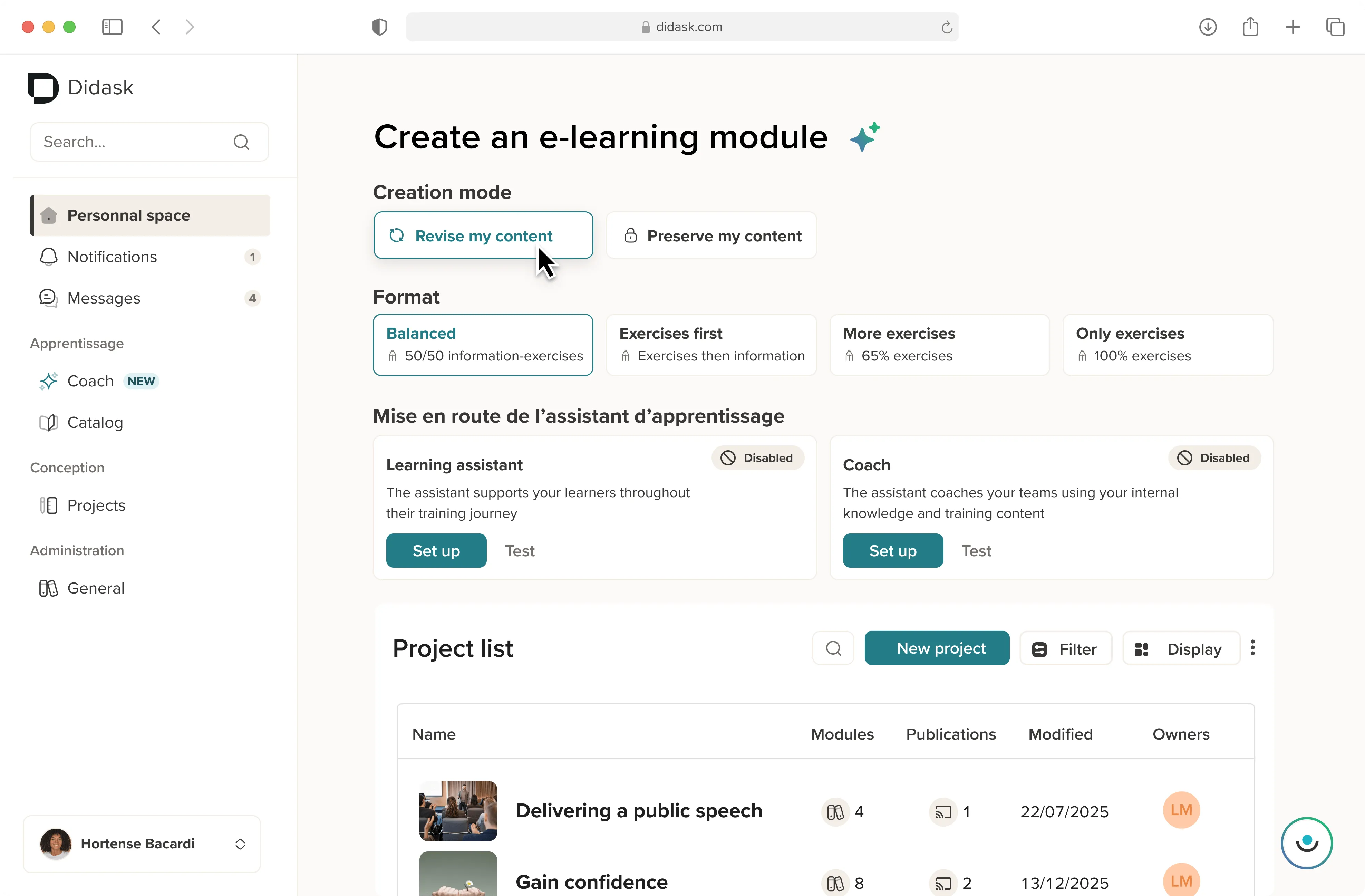


The healthcare sector accumulates constraints: high turnover, strict regulatory obligations, healthcare professionals often in the field and rarely available for classic training. Online training has established itself as a logical response, but its implementation raises as many questions as it resolves. Which formats really work with care staff? How do you guarantee that the training produces a real effect, and not just a ticked box? This guide on healthcare e-learning answers these questions, from strategic framing to the choice of digital learning tools.
Why e-learning has become essential in the healthcare sector
Healthcare establishments face a paradox: training is a legal and operational obligation, but organising this training has become structurally difficult. Staggered hours, multiple sites, permanent rotations, sustained turnover: classic in-person sessions are no longer suited to these field realities.
Distance learning offers a concrete answer. The flexibility of online learning allows each healthcare professional to follow a training according to their schedule, from any site, with a simple internet connection.
Five constraints make in-person training insufficient in this healthcare field:
- Teams on staggered or shift hours, hard to bring together simultaneously
- A multi-site structure that complicates any centralised training logistics
- High turnover that requires fast, repeatable onboarding
- A volume of mandatory regulatory training in constant increase
- A requirement for documented traceability for accreditations and inspections
Dispersed teams with little availability: the scheduling challenge
Freeing up a member of the care staff for a day of training implies a replacement, a cost and a complex organisation. Retention after a dense classroom session remains low: Ebbinghaus (1885) established that, without revision, a large part of memorised information is forgotten within just a few days.
In-person sessions remain essential for certifying technical actions. Asynchronous training accessible online, with no time constraint or travel, complements this system for all learning that does not require physical presence.
The concrete benefits of e-learning for healthcare-sector organisations
Beyond flexibility, healthcare e-learning presents measurable benefits for training managers:
- Cost reduction: elimination of the travel, accommodation and catering costs related to in-person sessions
- Universal accessibility: any healthcare professional can access their online courses from any connected device, from their establishment or their home
- Automated traceability: tracking of each learner's progress, generation of certificates, integrated reporting
- Fast content updates: adapting a digital module takes a few hours where an in-person overhaul mobilises weeks
- Satisfaction and engagement: distance learning respects individual constraints and improves adherence to the training programme
A demanding regulatory context: DPC, HAS and continuing medical education
The healthcare sector generates a significant volume of legally mandatory training, from continuing medical education to continuing professional development (DPC). The national DPC agency governs the continuing-training requirements for self-employed healthcare professionals, general practitioners included. Each traceability gap can have consequences during audits by the French National Authority for Health (HAS) or inspections by the DGOS.
.webp)
Main regulatory training courses concerned
Hospitals and clinics: AFGSU (levels 1, 2 and 3), hospital hygiene, healthcare-waste (DASRI) management, fire safety (art. R4227-28 of the French Labour Code), DPC training, protection of health data (GDPR / HDS). Pharmaceutical industry and medtech: GMP, pharmacovigilance, haemovigilance, materiovigilance (ANSM regulations in force). Sources: HAS, DGOS, ANSM, INRS.
E-learning makes it possible to automate this tracking: automatically generated certificates, exportable reports, histories accessible from the platform interface. Find the detail of the legal obligations in our article on mandatory company training.
What distinguishes effective healthcare e-learning from e-learning that serves no purpose
Most healthcare e-learning modules share the same flaw: they inform without training. A clickable slideshow followed by a final quiz does not produce a change in practice. Yet this is the dominant format, including on many online training platforms specialised in the healthcare field.
.png)
The illusion of competence
Watching a video about an action or a procedure creates a feeling of mastery that does not hold up in a real situation. Cognitive science calls this phenomenon the illusion of competence: familiarity with interactive content is confused with the ability to apply it. Knowing how to watch does not mean knowing how to do.
The trap of top-down e-learning: informing is not training
The work of Roediger and Karpicke (2006, Psychological Science) demonstrated that active-recall exercises significantly improve long-term retention compared with simply rereading the same online course. A module with no forced practice remains an acquisition of knowledge, not an effective training.
For critical actions in a care setting, this distinction is not trivial. A poorly assimilated protocol can have direct consequences on the quality of care and the prevention of incidents. Discover how active learning methods make it possible to overcome this problem.
The learning formats that work with field teams
Microlearning and interactive training scenarios are the formats best suited to the constraints of care staff: short sessions, accessible on mobile, repeatable over time. Blended learning, which combines online learning and in-person sessions for technical actions, remains the most complete solution for certifying training.
Research on spaced learning (Cepeda et al., 2006, Psychological Bulletin) shows that short reminders spread over several weeks produce markedly higher retention than a single session, depending on the conditions and the retention delay measured. To go deeper into the available pedagogical tools in professional training, see our dedicated guide.
Pedagogical AI: an underexploited innovation in healthcare training
Pedagogical artificial intelligence makes it possible to adapt the training path in real time to each learner's level, to generate personalised feedback and to massively reduce design time. A reference nurse or a pharmacist can become a module designer with no prior IT expertise. Our article on in-house e-learning design details how to support this move towards autonomy.
Results measured with Didask Training
Organisations using Didask Training reduced their average design time by 50 to 65% (basis: 2,237 training courses, October 2025). 83% of designers had no prior experience in module creation before getting to grips with the platform (8,704 learners, June 2023).
Sectors and use cases: where healthcare e-learning concretely applies
Healthcare e-learning does not address a single organisation profile. The challenges of a public hospital, a pharmaceutical laboratory, a home-care provider or a health insurer are very different, and the training programmes must be too.
Hospitals and clinics: from onboarding to regulatory compliance
Turnover in these healthcare establishments requires fast, standardised onboarding for each new member of care staff. E-learning is particularly suited to the preparation of certifying training (AFGSU), to therapeutic patient education and to the prevention of musculoskeletal disorders. For this last subject, see our article on MSD training in companies.
Traceability is critical for HAS accreditations and regulatory compliance. An LMS with automated reporting meets these requirements with no administrative overload. As an example, Grand Est Addictions deployed Didask to train all the healthcare professionals in its network in the identification of addictions, fully autonomously. See also our article on onboarding field teams.
Pharmaceutical industry, medtech and home-care services
In the pharmaceutical industry and medtech, e-learning is above all a tool for compliance at scale. The digital update of a module takes a few hours where an in-person overhaul mobilises weeks: a decisive advantage in a sector where regulatory changes are frequent.
Home-care providers face a different reality: training heterogeneous teams on content specific to each role. An e-learning platform with personalised paths according to profiles makes it possible to cover these populations from a single interface. See our article on field training for advice on supporting mobile teams.
How to succeed in implementing a healthcare e-learning strategy
The main pitfall in online-training projects in the healthcare sector is investing in software before having defined the uses. Technology must follow pedagogy, never the other way round.
Map the needs first of all
You have to distinguish two types of training: those with a legal obligation (where traceability comes first) and those with a performance stake (where field transfer is the key indicator). This distinction conditions the learning formats chosen and the budget allocation between content production and infrastructure.
Involving subject-matter experts from the design stage is non-negotiable. Content created with a reference general practitioner or a pharmacist trainer will be infinitely more relevant than a generic module from an external catalogue.
Choosing the right LMS solution for the healthcare sector
Several criteria are specific to healthcare digital: GDPR compliance, mobile accessibility and ease of use for non-technician designers. Didask Training is rated 4.9/5 on Capterra for its ease of use (since 2023).
Measuring the real impact: beyond the completion rate
The completion rate is the most tracked and the least useful indicator. That a learner has finished an online course says nothing about their ability to apply the content in a real medical or care situation.
The Kirkpatrick model offers a more accurate reading: at levels 3 (application) and 4 (results), you measure what really counts. In the healthcare sector, this translates into concrete indicators: reduction in non-conformities during audits, improvement in the quality of care, reduction in onboarding time. At Didask, 94% of learners report using the content directly in their real work (1,780 learners, Nov. 2025). Our article on the ROI of training develops the measurement methods applicable in your organisation.
The trends that will redefine healthcare e-learning by 2027
Three structuring innovations are taking shape in the healthcare-digital field, at different stages of maturity.
Generative artificial intelligence already makes it possible to transform a protocol or a procedure guide into an interactive module in a few minutes. This is a major advance for subject-matter experts in the healthcare sector, who can now share their expertise without going through an external provider or mastering information technologies.
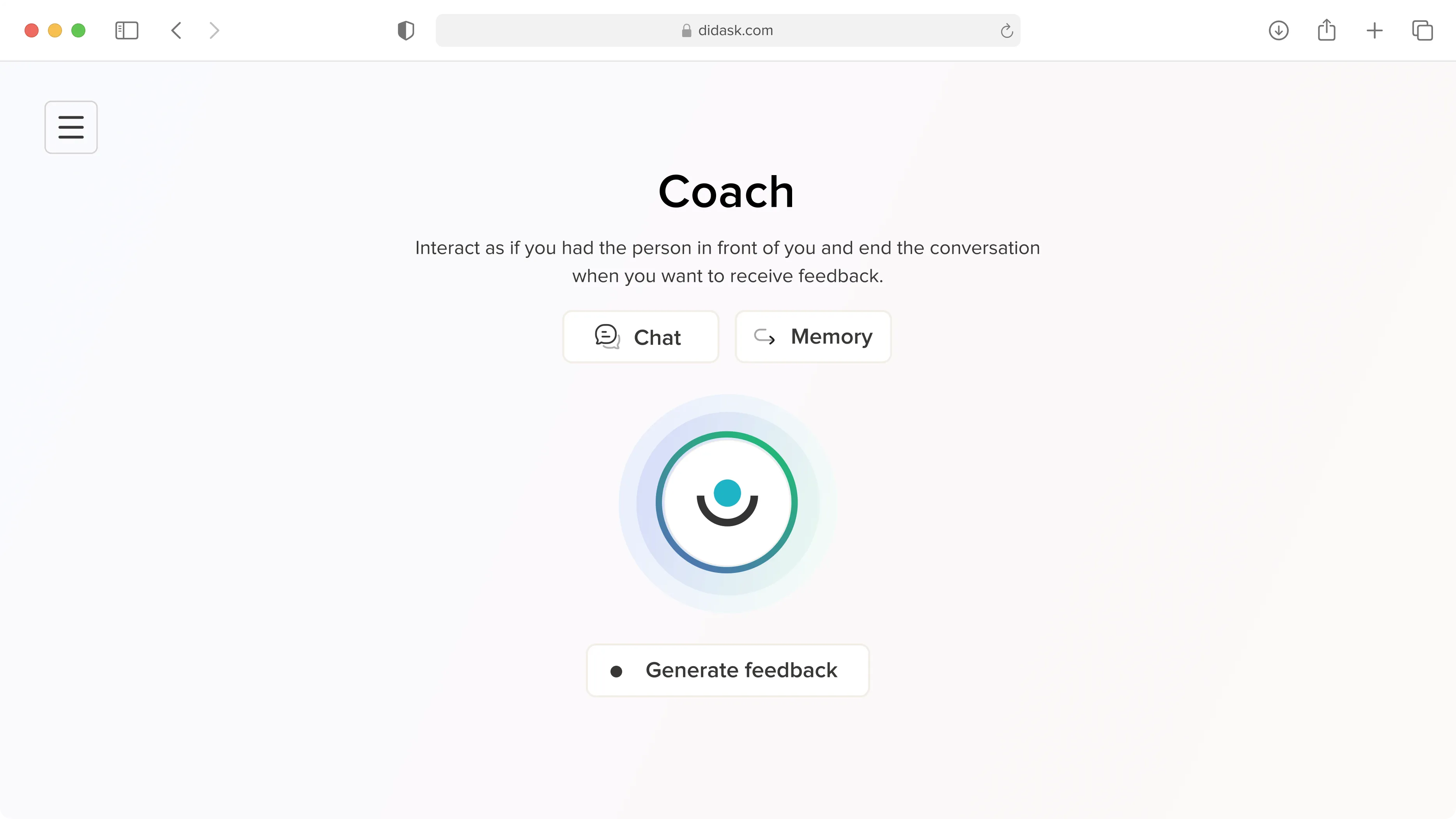
AI coaching in the flow of work represents the next step: the learner accesses contextualised assistance at the precise moment they need it, from their mobile, during the action, with no training session planned in advance.
AI coaching in a situation: a concrete example
A home-care worker has to handle an unusually complex situation. Rather than calling her manager back, she queries her AI coach from her phone: in a few seconds, she gets a contextualised answer linked to her organisation's protocols. This is the principle of Didask Coaching: learning at the moment of need, integrated into the flow of work.
Immersive virtual reality, still emerging, opens up prospects for training in high-risk technical actions: simulation of emergency situations, training in a care environment with no risk to the patient. These technologies are progressing rapidly, even if their large-scale deployment remains costly. Finally, collaborative peer-to-peer learning is progressing in care teams to strengthen the patient-safety culture, in line with the orientations of the DGOS/HAS 2023-2028 roadmap.
Conclusion
In the healthcare sector, the challenges of training are rarely comparable to those of other industries: a poorly anchored skill can have direct consequences on patient safety and the establishment's regulatory compliance. This is precisely why healthcare e-learning is only effective if pedagogy precedes the technological choice.
Before selecting a software or an online-training platform, define your uses, identify your populations and distinguish your compliance obligations from your real upskilling objectives. The organisations that obtain measurable results share one point in common: they have invested in pedagogical design as much as in infrastructure. Technology amplifies good pedagogy; it cannot take its place.
.webp)
.webp)
.webp)


.webp)

.png)