


Les field workers form the backbone of many businesses. On construction sites, in factories, shops or call centers, they bring the organization to life on a daily basis. However, their training remains a major challenge: logistical constraints, inadequate formats and poor commitment are all obstacles to their skills development.
In a context where jobs are evolving rapidly, how can we effectively support these field employees towards a real acquisition of skills?
What are the real challenges of training field teams?
Train the field workers represents a major social and economic challenge. These employees need regular training to adapt to technological developments and structural changes in their sector. However, according to a recent IFOP study, one in five field workers did not receive any training in the last six years.
The obstacles are numerous. First, a logistical problem: many of these employees do not have available time or adequate physical space to follow vocational training at their workplace. Distance learning systems remain inaccessible for these jobs, which require a specific approach. More than 50% of them say they have already given up sessional of training due to lack of time or because of a format that is not compatible with their professional constraints.
Then, a motivational challenge. The courses offered often seem too far from the professional daily life of learners. They are generally designed for managers, then adapted clumsily to the field, without taking into account the real needs and specific constraints of field jobs. The effectiveness of these training programs is therefore limited, and the results in terms of skills development remain insufficient.
What methods really work in the field?
To sustainably engage field employees in training, three levers are particularly effective. First, the link with career development and employability: when employees understand how continuing education fits into their professional development, their intrinsic motivation increases significantly. Then, perceived usefulness: plus training practice meets the concrete challenges of daily life, the more employees invest time and energy in following it. Finally, managerial support: the support of the hierarchy transforms the formation of an obligation into an opportunity. The manager plays a key role in the learning process and must build learners' confidence.
Beyond structured training, informal peer learning is emerging as a powerful skills accelerator. This collaborative approach promotes the sharing of expertise and knowledge directly related to work situations. Contrary to popular belief, peer-to-peer exchanges far outweigh top-down learning via hierarchy. How do you explain it? Several hypotheses can be put forward.
Psychological safety would allow employees to dare to ask their real questions without fear of judgment. Between peers, it would be easier to recognize your shortcomings and express your doubts. The collaborative nature of exchanges would encourage the resolution of concrete problems rather than the simple transmission of instructions. Finally, the common language would reduce cognitive load: the explanations would be rooted in the daily reality of the job, facilitating understanding and immediate application.
However, this approach has a practical limitation: it requires knowing who to contact, daring to do so, and finding the person available at the right time. A particularly complex challenge for newcomers. This is where modern digital solutions come in, which play a decisive role in democratizing access to training.
Digital tools at the service of field training
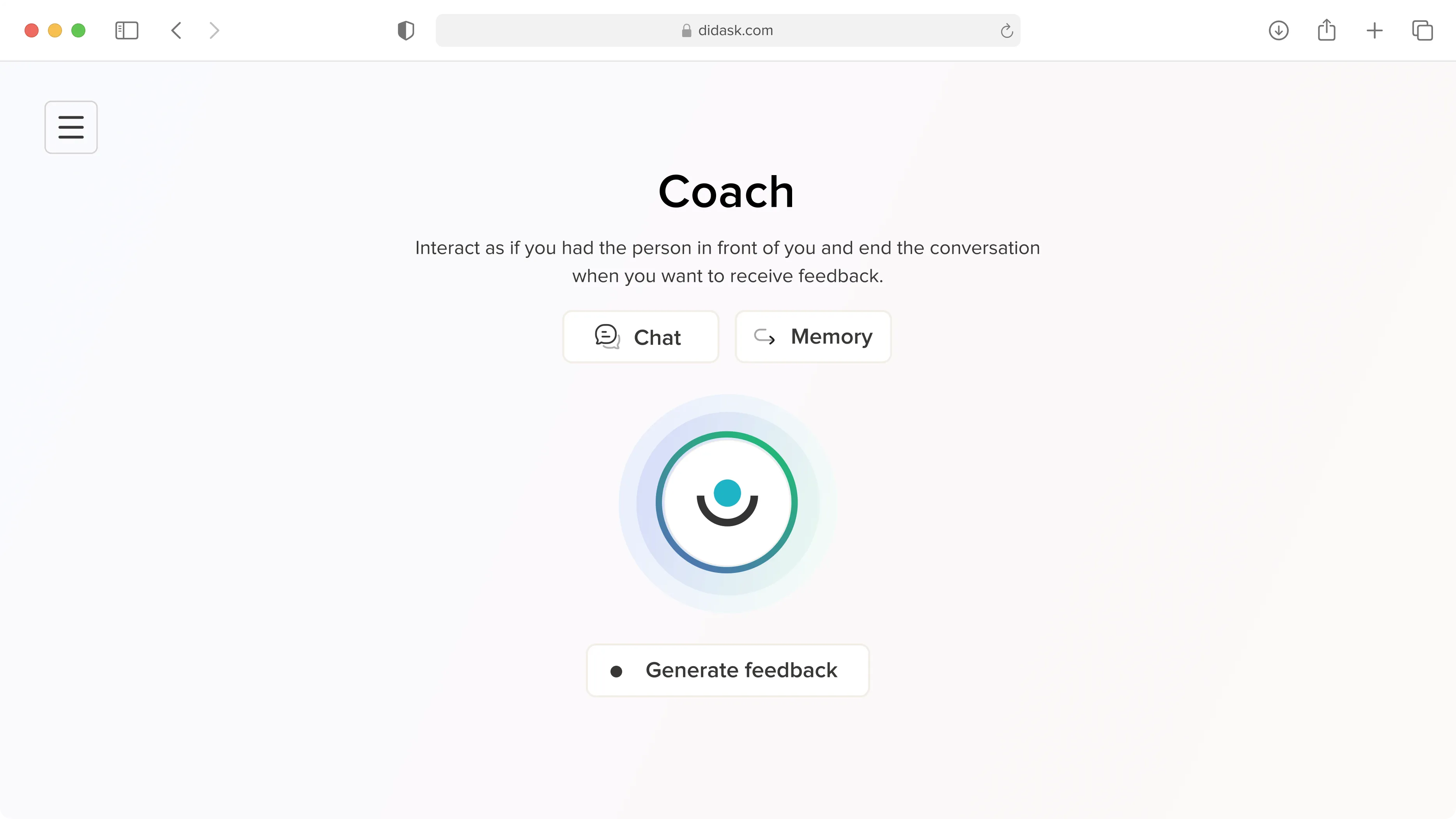
This limit of informal learning can now be overcome thanks to assistants based on generative artificial intelligence. These tools offer the equivalent of an expert colleague who is always available, accessible directly from a smartphone or tablet in the field. This flexibility perfectly meets the constraints of nomadic professions.
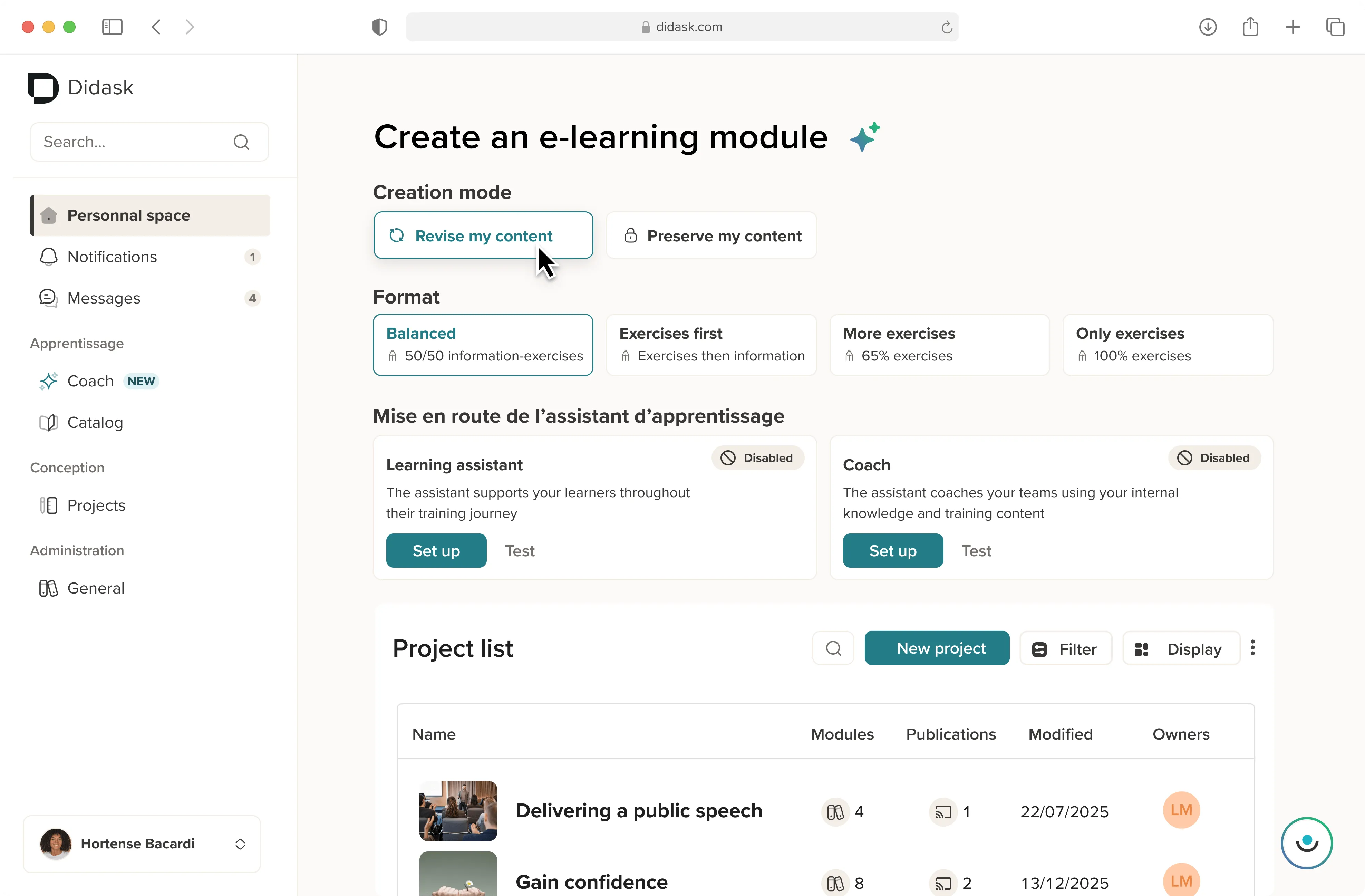
The Didask learning assistant is a concrete example of this approach. Available at any time, it answers questions in real time, recommends training courses adapted to everyone's profile, offers practical training and helps to anchor best practices. This solution of Mobile learning allows you to have a learning companion in your pocket who combines the proximity of peer exchange and permanent availability. The platform offers an intuitive interface, designed for field workers, with a easy access to online training content.
What does that look like in practice?
Let's take the example of a supermarket employee who started in the fresh food department a few weeks ago. Faced with doubts about the storage temperature of cheeses, he questions his AI assistant who instantly provides him with the official procedure. Before restocking a complex department, he uses the tool to get the optimal order of storage. During his break, he identifies the training courses available to improve his hygiene practices. In a few minutes, he can even train with tailor-made exercises with immediate feedback. The learning assistant allowed him to quickly reach an operational level by guiding him step by step in his new missions, without waiting for the availability of a tutor. This on-the-job training combines theoretical training and practical training, thus offering an effective blended learning system.
Beyond intuition, these virtual assistants demonstrate a real return on investment. An MIT and Stanford study conducted with customer service agents proves the measurable impact of these technologies: 15% improvement in productivity and a drastic reduction in integration time, from eight months to only two months to reach a satisfactory level of performance. The benefits are particularly marked for newcomers and less experienced employees, who progress more quickly thanks to this personalized support. These results demonstrate the importance of an adapted methodology and efficient digital tools to effectively manage the increase in skills of field teams.
Assistants based on Artificial Intelligence are thus transforming access to vocational training for field employees. They meet logistical constraints, offer learning directly linked to daily professional life and guarantee a measurable increase in skills without excessively mobilizing the organization's human resources.
How to assess the effectiveness of field training? The checklist
Conclusion
Training field teams effectively requires a redesigned approach. Organizations should consider these collaborators as a fully-fledged target population, with specific needs in terms of autonomy, meaning and practical application. Informal learning, combined with digital tools such as AI assistants, offers a strategic lever to accelerate skills development without excessively mobilizing human resources. Online training is no longer limited to a session behind a screen: it is now support accessible directly in the field, at the heart of professional activity, via mobile or tablet.
Book a demo to discover how Didask's educational AI can transform the training of your field employees.
.webp)
.webp)
.webp)



.webp)

.png)