


Training sales teams is a top priority for most B2B organizations, from large corporations to SMBs. Budgets are often available. Sessions are scheduled. Salespeople attend.
Yet results don't always follow. The pipeline stagnates. Sales cycles get longer. New hires take months to become truly operational. Techniques and fundamentals learned in training sessions don't translate into applied skills when facing actual clients.
The problem isn't that companies train poorly. It's that they design their sales training programs as pedagogical events, when they should be treated first and foremost as a question of method and management. An effective program starts well before choosing content or tools: it begins with a precise diagnosis of failures in the sales cycle, adapts to the real needs of each sales profile, and integrates monitoring mechanisms that measure impact on field results rather than participant satisfaction.
This article is written for training directors, HR leaders, and managers who want to make B2B sales training a measurable performance lever, not just another session with no follow-through.
B2B sales training: a different problem
Training B2B salespeople is not the same as training salespeople in general. B2B sales follows its own logic, which makes most generic programs insufficient, not because the techniques taught are wrong, but because they are not grounded in the real situations teams face.
First specificity: the sales cycle is long. A B2B salesperson can work an opportunity for six, nine, twelve months before closing, or losing it. Mastering sales fundamentals is not enough: training that does not prepare reps to sustain a commercial relationship over time produces skills misaligned with reality.
Second specificity: stakeholders are multiple. In B2B, a purchasing decision is almost never made by a single person. It involves several stakeholders with distinct roles: buyer, influencer, end user, financial decision-maker. Presenting the same offer the same way to people with different needs is a basic sales technique mistake.
Third specificity: financial stakes are high. Every lost opportunity has a direct and measurable cost. This context demands a fine mastery of sales interview fundamentals, negotiation, and closing. Competencies that are not acquired in a single day of training.
Starting in the right place: diagnosing failed situations
Before deciding what to teach, you need to identify where things break down in the sales process. This is the step most training managers skip, jumping directly to content selection or vendor sourcing.
Yet friction points vary from one organization to another. Some teams lose opportunities at the prospecting stage, due to poor qualification. Others fail during discovery, unable to get a reluctant stakeholder to open up. Still others collapse at closing, after months spent nurturing the client relationship. Each friction point calls for its own pedagogical solution. Addressing all these needs with the same program guarantees none of them will be truly resolved.
This diagnosis is also an opportunity to share best practices from top performers with the rest of the team, and to identify the fundamentals to consolidate before moving on to more advanced competencies. This is where a relevant training action plan originates.
Five key questions to ask before launching a B2B sales training program:
- At which stage of the sales cycle do we lose the most opportunities?
- Which objections come up most often, and how do reps currently handle them?
- What is the performance gap between top salespeople and the rest, and what drives it?
- Are new hires reaching their targets within the expected timeframe?
- Do we have field evaluation indicators to measure skill progression after training?
.webp)
Worth noting
An effective diagnosis can't be done from behind a desk. It requires listening to your sales reps, analyzing CRM data, and observing real sales conversations. That groundwork is what turns a training program into a performance tool — rather than a catalogue of generic advice.
B2B sales ramp-up: the most underestimated challenge
A B2B salesperson takes several months to become fully operational, a timeframe that varies depending on the complexity of the sales cycle and the quality of the onboarding program. During this period, they generate little or no revenue, consume management time, and tie up resources. Every month saved translates directly into measurable revenue, making ramp-up an often-overlooked lever of commercial growth.
Hiring a B2B salesperson represents a significant investment. Yet sales onboarding remains the blind spot of most training plans. A few days of product presentation, one day of field accompaniment, and the new hire is left to face their first client meetings alone.
An effective program treats ramp-up as a standalone priority, with a sequenced learning architecture across 30, 60, and 90 days.
The first month establishes sales cycle fundamentals and B2B prospecting techniques.
The second month exposes the new hire to simulated scenarios: discovery interviews, first objections, qualifying a major account. Sessions can alternate between in-person and remote formats, depending on the geographic spread of the team.
The third month anchors skills through field practice, with personalized manager coaching and regular group coaching sessions.
Good to know
Companies that formalize their sales onboarding process significantly reduce ramp-up time, with a direct and measurable impact on revenue generated by new hires. For a sales team of ten reps, every month saved on ramp-up can represent tens or even hundreds of thousands in additional revenue — depending on average deal size and typical close rate.
Training a dispersed B2B sales force: the case for digital learning
A B2B sales team is not sitting in an open-plan office. They are on the road, in client meetings, constantly on the move. Designing a program that requires blocking two days in a classroom is designing a program that salespeople will only follow halfway.
Digital learning addresses this constraint structurally. Team members access modules whenever they want, from any device, without collective scheduling constraints. A salesperson can work through an objection-handling sequence on a Sunday evening before a busy week, or review a module between two meetings. The LMS becomes an always-available learning service rather than an event to be planned.
This format also allows for contextualized practice scenarios: simulating a discovery interview with a complex stakeholder, practicing how to defend an offer to a buying committee, role-playing a negotiation. Situations that in-person training cannot recreate on demand, and that expert trainers cannot reproduce individually for every salesperson.
Virtual classes complement this approach: they allow a group of salespeople to meet remotely, share real-time field experience, and work collectively on live cases. These sessions are particularly effective for reinforcing fundamentals between in-person workshops, without the logistical overhead.
These modalities cover dedicated training time well. But between sessions, commercial reality doesn't stop: a salesperson may face an unexpected objection the morning after a meeting, or need to urgently prepare a pitch for a new type of buyer. This is where a deeper evolution of digital learning comes in: learning in the flow of work.
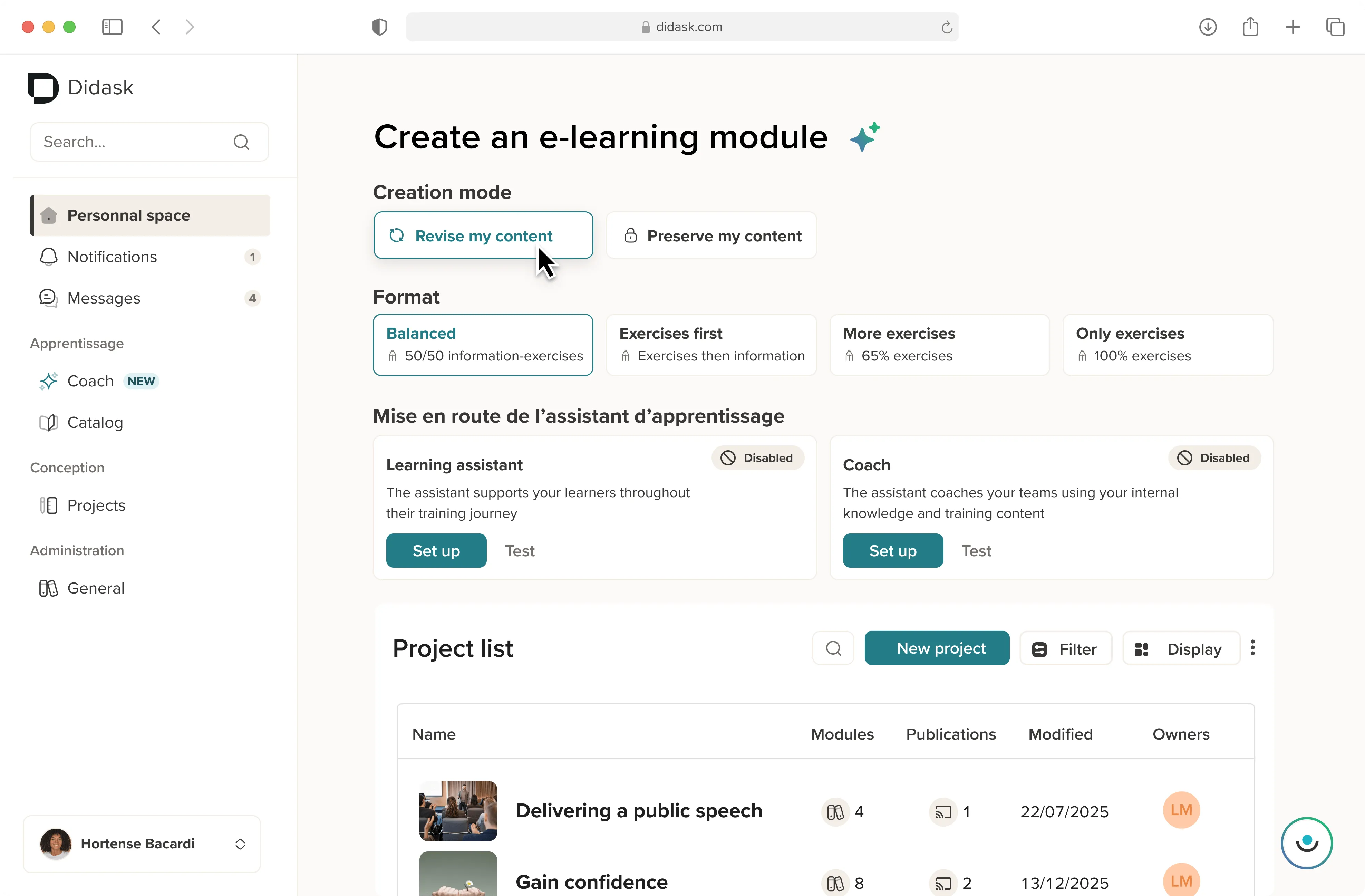
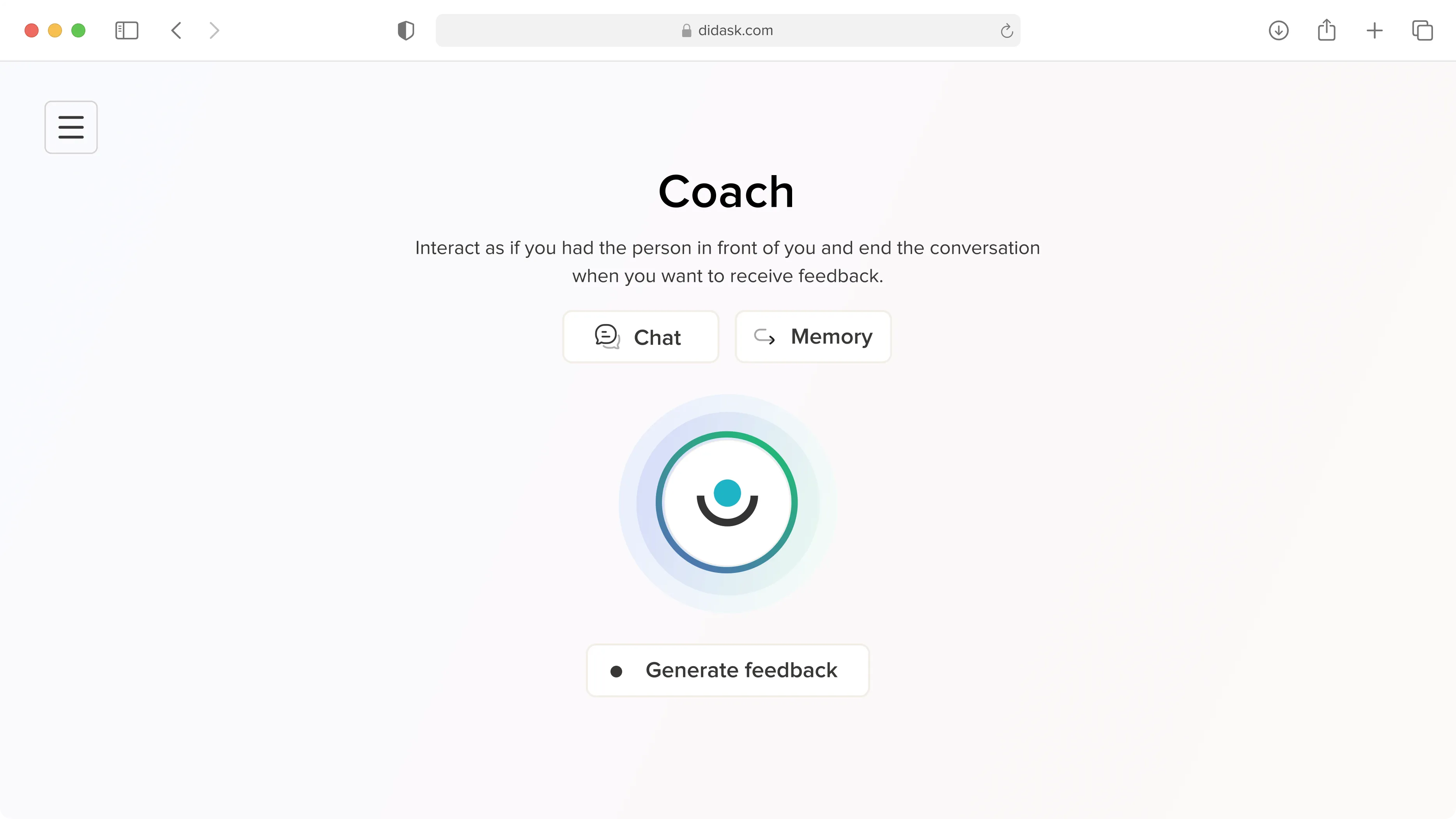
Today, learning in the flow of work integrates training directly into the critical moments of commercial activity, within everyday tools (Slack, Teams, CRM...). A salesperson who has just received an unexpected objection can immediately access the right information or practice scenario, without leaving their workflow. Training stops being a dedicated time slot and becomes continuous support, grounded in real situations.
This level of relevance is made possible largely by artificial intelligence. This is notably the approach taken by Didask, whose pedagogical AI adapts resources to the precise context of each learner, based on their profile and progression: the right content, at the right time. A senior rep managing a complex sales cycle does not receive the same recommendations as a junior rep in the prospecting phase.
The sales manager: the primary lever for skills transfer
A B2B training program can be well-designed, well-deployed, and well-tracked on the platform side. If it is not reinforced by the manager on a daily basis, its impact remains limited.
The manager is not a spectator of the program. They are its primary transfer lever: the one who observes real situations, identifies gaps between what was learned and what is applied, and reinforces good behaviors through useful feedback. Three concrete practices structure this management role: a post-training debrief focused on a specific field situation, a joint call or observation at day 15, and an individual coaching session at day 30 focused on objectives set at the outset.
Their role goes beyond follow-up. The manager also legitimizes training in the eyes of the team. A salesperson whose manager doesn't acknowledge their learning, doesn't share field experience, and doesn't create space to practice new techniques will end up treating training as an administrative obligation. A team member's engagement in their own learning depends heavily on the manager's engagement in the program.
There is a third lever that is often overlooked: the manager as content creator. They know the real objections from the field, the profiles of difficult buyers, the contextual details that make a difference in a sales conversation. This internal expertise is a valuable pedagogical resource, provided it can be captured and shared. Platforms like Didask integrate a pedagogical AI that guides the content creator step by step: the manager structures their knowledge around core business fundamentals and shares field insights, with no pedagogical expertise or certification required, and the AI turns it into a professional-quality training program.
This is also a way to maximize return on training investment: rather than relying solely on external providers, the company capitalizes on its own internal specialists to produce content grounded in its commercial reality. A widely underused approach, despite delivering immediately more relevant results for teams.
Worth noting
A rep who knows their manager will observe and discuss what they've learned in the weeks ahead engages with training differently. Manager involvement has to be built before the program starts — not after.
Conclusion
Training B2B sales teams effectively is not a question of budget. It is a question of method: starting from the right diagnosis, adapting modalities to the real constraints of a dispersed sales force, leveraging digital learning to personalize at scale, and giving managers the tools to anchor skills in the field.
A well-designed program is not an expense. It is a measurable performance lever, with direct impact on revenue, new hire ramp-up, and the progression of every salesperson through their sales cycle.
.webp)
.webp)


.webp)


.png)