

Completion rates for mandatory e-learning stay low in hospitals and nursing homes for a simple reason: the modules are opened without any structure. No group, no deadline, no one waiting for the caregiver.
Among Didask's healthcare clients, 72.4% of training paths that are started get completed (5,409 out of 7,471, Didask data, November 2026). Once a path is under way, it usually goes all the way. Our hypothesis: most of the loss happens earlier, at the point of getting started.
Why is the e-learning completion rate so low in healthcare?
Because with open access, nothing triggers the moment to train. On a ward under pressure, training without a deadline always comes after patient care.
The completion rate of a training course is the share of enrolled learners who finish the module or path. It shows that content was gone through, not that it was understood or applied.
Open-access training means opening online modules that everyone takes whenever they want, with no group, no deadline and no individual follow-up. It is appealing because it seems to solve the puzzle of 12-hour shifts and night teams.
A pattern that goes beyond healthcare
In MIT and Harvard MOOCs, 3.13% of 2017-2018 participants completed their course, compared with 46.02% of learners on the verified track (Reich and Ruipérez-Valiente, Science, 2019). These are general-audience US courses, not training for care staff.
For Justin Reich, an education researcher at MIT, and his co-author José Ruipérez-Valiente, this low completion rate did not improve over six years of data. The gap between the two groups also reflects self-selection: the verified track is paid.
Without a set moment, intention does not turn into action
An implementation intention is a plan that specifies when, where and how you will act. The meta-analysis by Sheeran, Listrom and Gollwitzer, covering 642 tests, shows that it improves behavior (European Review of Social Psychology, 2024).
Open access does the opposite: it leaves caregivers to decide on their own, with no set moment. Applying this finding to hospital training is a transposition, but it sheds useful light on endless postponement.
In nursing homes, the team changes faster than the course catalog
Agency staff are part of daily life in care facilities for older people. In May 2023, 65.3% of the facilities surveyed by Fnadepa, a French federation of directors of elderly-care facilities, regularly used agency staff (461 respondents, 77% of them nursing homes, Fnadepa flash survey, May 2023, in French).
A temporary worker does not look for a module they don't know exists. If no one assigns it to them, they won't take it.
No one is waiting for the caregiver at the end of the module
Supervisor support is one of the factors associated with transferring training to the job (Blume et al., meta-analysis of 89 studies, 2010). With open access, the nurse manager knows neither who has taken the training nor what to do about it.
How can you improve the completion rate of mandatory e-learning?
Replace permanent access with structured access: a cohort, a deadline, protected time, a manager who relays and targeted reminders. The content remains available, but the moment to start is decided.
- Train in cohorts. A group starts together: a department, a nursing home unit, a cohort of new hires. Agency staff join the cohort of the department where they work.
- Set a deadline and milestones. An end date and two or three intermediate steps turn “someday” into “this week”.
- Protect a time slot. Block 15 to 20 minutes in the schedule: a quiet afternoon, the night shift, after handover. Mandatory training takes place during working time, including on a smartphone: see how to train nursing home teams without a computer or work email.
- Make the nurse manager or coordinating nurse the relay. They announce the training, track their team's progress and revisit a practical case at handover.
- Send reminders at the right time. A useful reminder points to specific content and an upcoming deadline. For staff without an email address, it goes through the manager, in person.
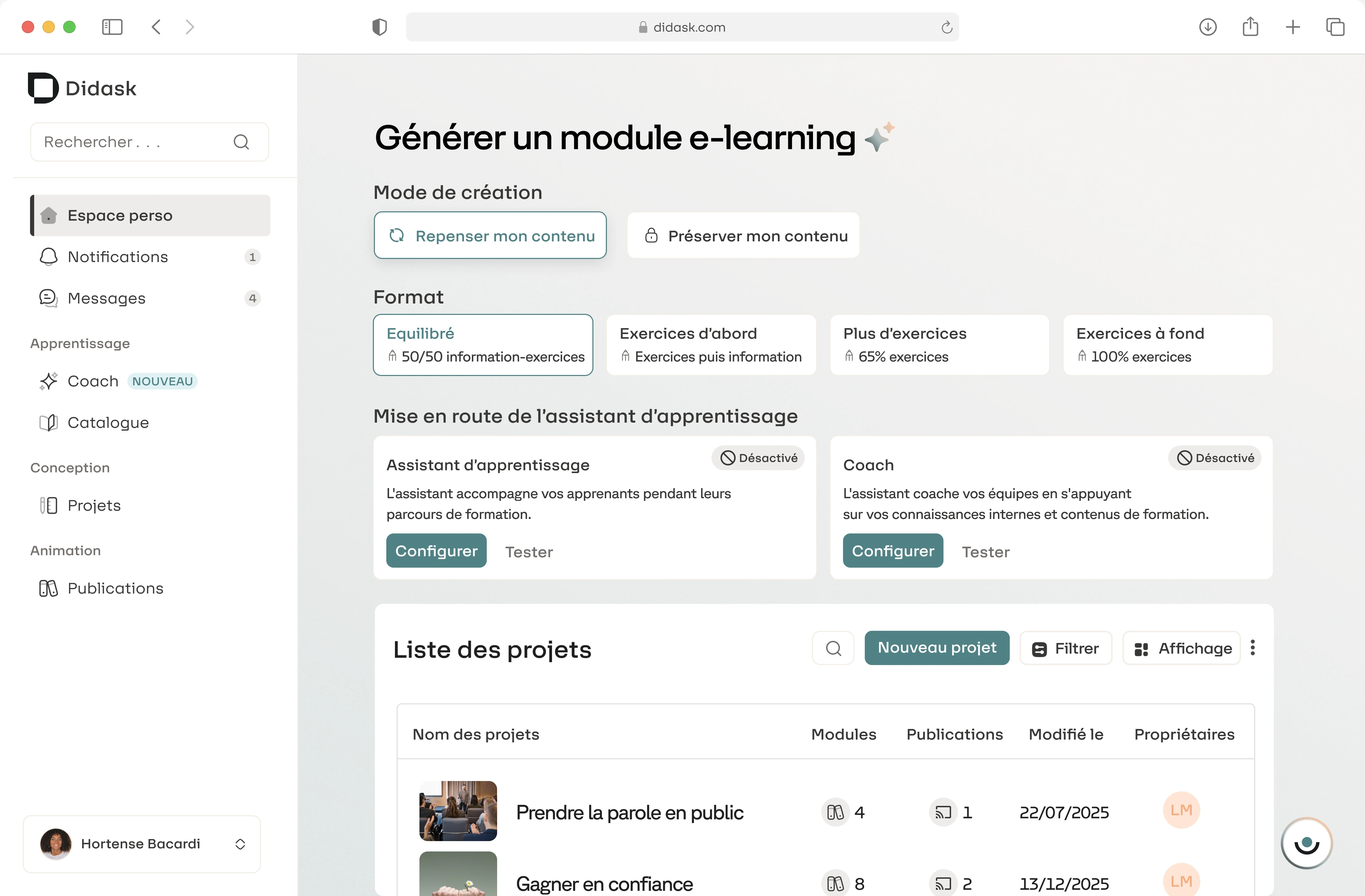
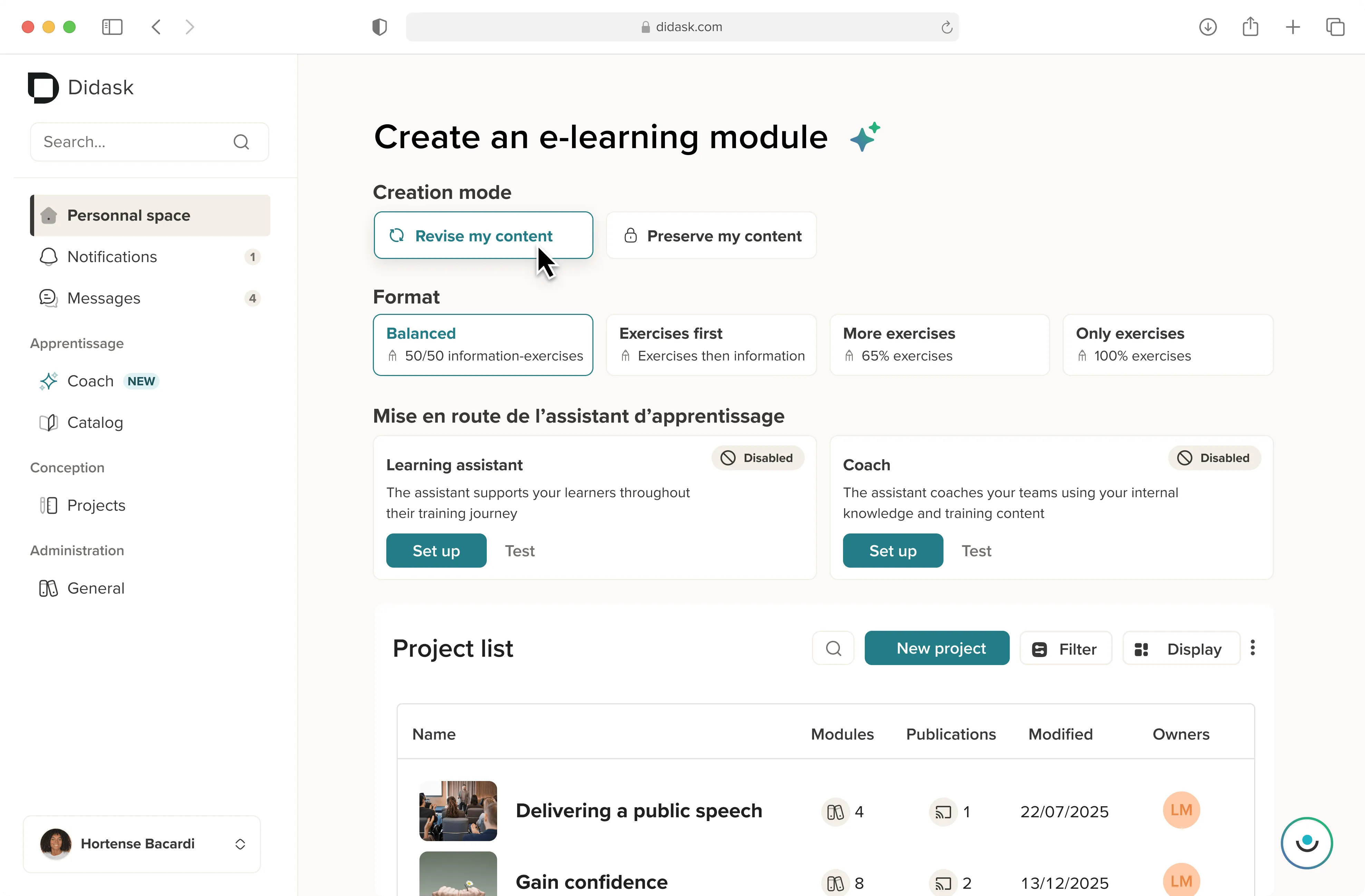
On Didask, a deadline can be set per group or per learner when a training course is assigned. Caregivers see it on their course, under the label “access until…”. Automatic reminders can notify those who haven't finished as the deadline approaches.
A manager with the Manager role sees where each team member stands: course not started, in progress or completed, and last activity. They can follow up in one click with those who haven't made progress.
Is making training mandatory enough to raise participation?
No. Making training mandatory sets a deadline, but it doesn't make the content useful. What gets people to the end of a module is that it is short and makes them practice.
Mandatory training can reach 100% completion without changing any practice: people finish it to tick the box. A copied slide deck followed by a final quiz gives no reason to engage. The lever is cognitive engagement: getting learners to think, not just to click.
Among Didask's healthcare clients, 33.9% of activities are active exercises other than multiple-choice questions: sorting, reordering, open questions, interactive images (1,626 out of 4,794, November 2026). This type of activity makes caregivers draw on what they know.

Open access still has its place
Keep it for reference resources, such as protocols, and for on-demand help. An AI assistant for healthcare staff answers in the flow of work, with no schedule. The mandatory core, however, needs structure.
Should you stop looking at the completion rate?
No, but it is not enough. Read it alongside two other indicators: the start rate and actual activity time, tracked by department.
The start rate is the share of enrolled learners who have begun the training. A decent completion rate combined with a low start rate points to an access problem, not a content problem.
Actual activity time counts the minutes spent doing things in the module, not the time a session stays open. This is also what surveyors look for in HAS certification: proof that training was actually completed.
Tracking by department, finally, shows where the system gets stuck. A night unit where few staff get started doesn't need a new module, but a time slot and a relay. To build your dashboard, see our guide to training indicators. To go beyond usage, see how to measure the effectiveness of healthcare staff training.
In summary
The completion rate of e-learning in healthcare depends first on access, not content. Replace open access to the mandatory core with a cohort, a deadline and a manager who relays. Start with a pilot department, then compare its start rate with that of open access.