
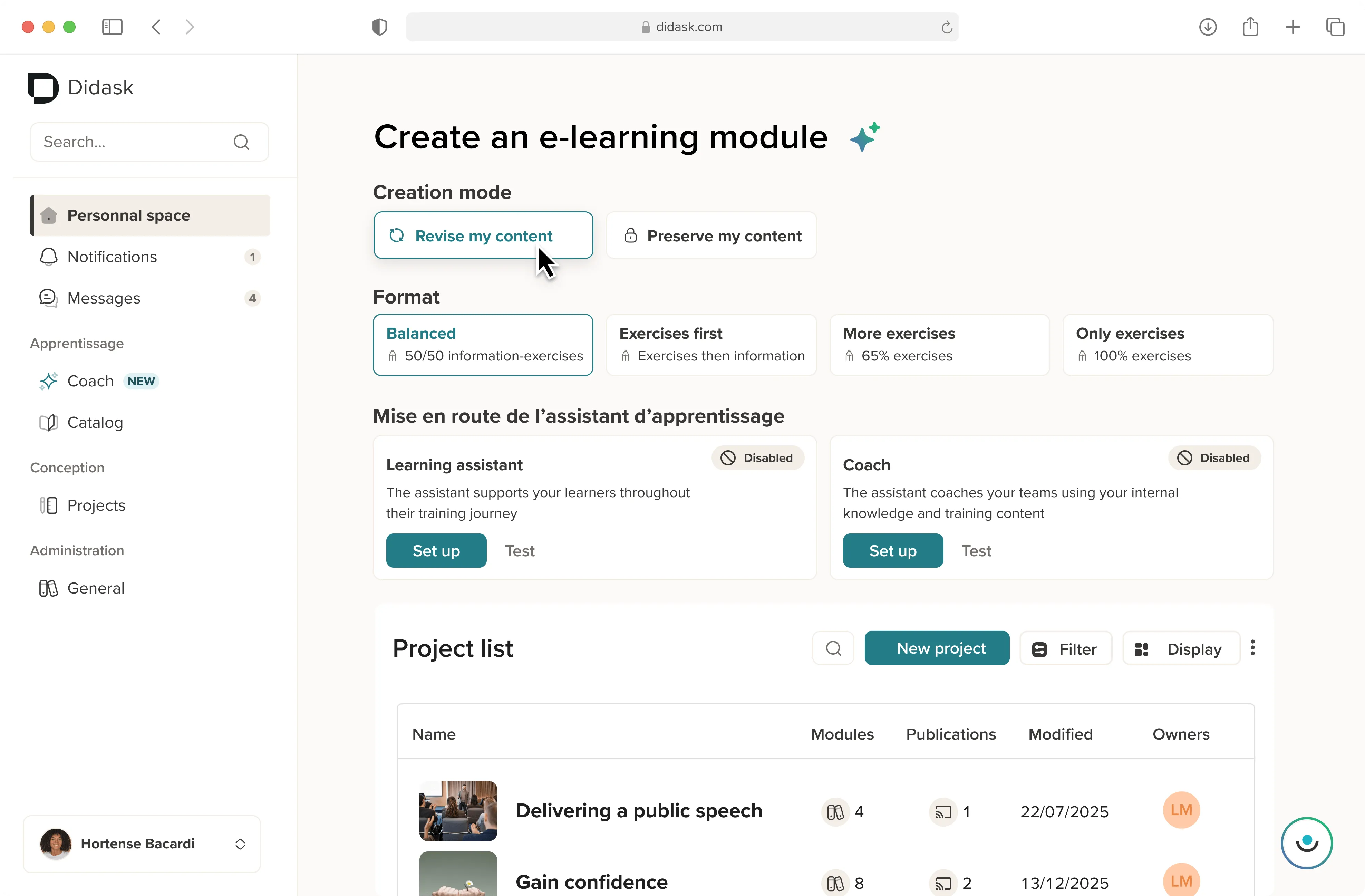



Traditional training materials are evolving towards digital formats, where each sequence of activities is designed to optimize the acquisition of skills. This transformation reflects the new challenges of professional training, where the modularization of sessions becomes the backbone of agile and efficient distance learning.
How to design an e-learning module that guarantees a real increase in skills? What teaching methods and digital resources should be deployed to create effective learning paths? From setting goals to implementing interactive assessments, let's explore the steps for creating an effective training module.
What is a training module: definition and typology
A training module is a structured learning unit, designed to impart specific knowledge in a specific field. This brick in a course is distinguished by its ability to function independently while being integrated into a larger educational scenario.
The fundamental characteristics of a module
The instructional designer must take into account three essential dimensions to create a module:
- The organization of the module : a clear structure that guides the learner
- The modularization of sessions : coherent sequences of activities
- Varied training materials : online courses, quizzes, videos, simulations
Educational objectives: define and structure an effective training module
The design of an e-learning module requires a precise cognitive architecture, where each learning objective is part of a global vision of skills transformation. This fundamental step orients the entire educational scenario towards measurable results.
The construction of learning objectives
Educational objectives translate into concrete and measurable results for employees. This methodological approach meets the concrete needs of corporate training, establishes precise evaluation criteria and ensures rigorous monitoring of progress. The approach naturally integrates the analysis of the professional context, the detailed identification of the skills to be developed, without forgetting the essential consideration of disability situations.
The fundamental pedagogical architecture
The module is organized around a logical and fluid progression. The alternation between theory and practice paces learning, supported by adapted supports: videos, evaluations and simulations. This methodical construction ensures the achievement of the desired objectives.
Coherence between training and goals
The effectiveness of a module is based on three pillars: clear objectives, appropriate resources, and relevant evaluations. This structure optimizes learning and reinforces skills acquisition.
The different types of training possible
The evolution of digital learning has led to the emergence of several complementary modalities.
Face-to-face training : Traditional pedagogical face-to-face learning is now enriched with digital tools. This training method favors collaborative learning and is particularly suitable for complex situations in the workplace.
Distance education : Designed for online learning, it makes full use of digital resources: interactive training content, dynamic evaluations, virtual classrooms. The online courses, structured in short sessions, incorporate various learning materials to maintain engagement.
Blended learning : This hybrid pedagogical approach combines open training and face-to-face training. It offers direct access to resources while maintaining the benefits of face-to-face learning, thus meeting the needs of a large audience of employees.
The implementation of an efficient module
The creation of an eLearning module mobilizes a methodology rooted in cognitive sciences, transforming digital learning into a performance driver. The content architecture is based on a structured catalog, offering fluid access to educational resources. Progressive activity sequences and regular assessments punctuate learning.
The choice of teaching methods (between modules and within a module) reflects this search for effectiveness. Virtual classrooms foster collaborative learning, while asynchronous modules allow for individualized progression. This complementarity maintains commitment while respecting everyone's learning rhythms.
The technological ecosystem: towards intelligent creation
The challenge today lies in the subtle orchestration of educational resources to shape a transformative learning experience.
The revolution in educational tools
The current technological landscape is drawing a new map of training. With the arrival of next generation learning platfoms, the digital ecosystem can meet the growing requirements of modern vocational training. These devices enrich the educational experience through interactive content and dynamic evaluations that resonate with current challenges.
Artificial intelligence at the heart of instructional design
AI is profoundly redefining the architecture of learning. Beyond automation, it introduces a new cognitive dimension to module design. Didask's educational AI embodies this transformation: it analyzes the content in detail, orchestrates coherent educational scenarios and customizes the learning path accurately.
The continuous optimization of your training modules
Educational excellence comes from a capacity for permanent adaptation. Your training modules must constantly evolve.
Data intelligence at the service of learning
Analysis of training sessions reveals the real mapping of the learning experience. Each interaction becomes a signal, each progress a performance indicator, each friction an opportunity for improvement. Collaborative learning enriches this dynamic: learners' feedback and the sharing of professional experiences nourish an organic evolution of content.
The virtuous cycle of improvement
Optimization follows a methodical trajectory: performance measurement, analysis of results, adjustment of methods, evaluation of impacts. This systemic approach guarantees a constant progression towards an increasingly qualitative pedagogy.
.webp)
.webp)
.webp)

.webp)



.png)