

Preventing occupational risks is a legal obligation. Yet for many companies, it remains a box to tick rather than a practice rooted in teams' daily work.
The finding is unambiguous: according to Dares and Insee (2022), only 33% of blue-collar workers accessed professional training during the year, compared with 68% of managers. That is half as many, for the people often most exposed to risk. Not because the risks have disappeared, but because training formats do not match the reality of those they are meant to protect.
This article reviews what a prevention approach actually involves: legal obligations, types of risk, stakeholders, funding, and above all, how to effectively train employees who do not fit the mould of classroom training.
What the Labour Code says: the employer's legal obligations
Preventing occupational risks is not optional. Article L.4121-1 of the French Labour Code requires every employer to take the necessary measures to ensure the safety and protect the health of their employees, both physical and mental.
This general obligation breaks down into several concrete requirements:
- Assess risks and record them in the Single Risk Assessment Document (DUER), mandatory from the very first employee
- Implement prevention, information and training measures
- Specifically train new hires, workers changing positions, and workers exposed to particular risks (chemical risk, working at height, manual handling, etc.)
- Appoint one or more employees competent in prevention, or call on an external specialist
.webp)
Note
In the event of a workplace accident, the employer may be held liable if they cannot prove they implemented the necessary prevention measures, including training. The DUER and training certificates are essential pieces of evidence.
Which occupational risks need to be prevented?
Occupational risks cover a broad spectrum, whose diversity is often underestimated. They are generally divided into:
Physical and mechanical risks: falls from height, manual handling, work in confined spaces, electrical risks, noise, vibration. They particularly affect the construction, industry and logistics sectors.
Chemical risks: exposure to hazardous products, asbestos and dust. They require specific, regulated training (chemical risk, asbestos sub-section 4).
Ergonomic and musculoskeletal disorders (MSDs): problems linked to posture, repetitive movements and physical effort. The leading cause of occupational illness in France, they affect every sector, including the health and social care sector.
Psychosocial risks (PSR): stress, burnout, harassment. Long overlooked, they are now part of risk assessment on the same footing as physical risks.
Who is concerned by occupational risk prevention training?
Prevention training concerns everyone in the company, at different levels.
The employer or company director carries the legal responsibility. In SMEs, they are often the first actor in prevention themselves.
The HR or training manager orchestrates the training plan and ensures regulatory compliance.
The prevention adviser or assistant (in large organisations and the public sector) provides technical support and regulatory monitoring.
Managers and supervisors are on the front line to detect risky situations and relay good practices in the field.
Employees, finally, are both recipients of training and everyday actors in prevention, notably through staff representatives on the works council (CSE).
How can prevention training be funded?
Prevention training can be funded through several mechanisms, often little known to companies.
The prevention subsidies from the Health Insurance fund for Occupational Risks (CARSAT, CRAMIF, CGSS depending on the region) allow small businesses to fund up to 70% of the cost of certain prevention actions, both material and training-related.
The OPCOs (skills operators) can cover all or part of eligible training, as part of the skills development plan.
The CPF (Personal Training Account) can be used for certain certifications related to workplace safety.
Finally, certain regulated training courses, first-aid at work (SST), PRAP (prevention of risks linked to physical activity), electrical authorisations, are eligible for specific funding depending on the sector.
Good to know
The Health Insurance prevention subsidies are available to companies with fewer than 50 employees. They cover actions targeted by sector (industry, construction, retail, health and social care, etc.). Check with your regional CARSAT to find out which schemes are available in your sector.
Implementing a prevention plan: where to start?
An effective prevention plan cannot simply be decreed. It is built from a rigorous analysis of the company's real situation.
Step 1: assess the risks. Risk assessment is the mandatory starting point. It must cover every work unit, take into account real working conditions, and result in a prioritisation of the risks recorded in the DUER.
Step 2: define priority actions. Not all actions are equal. Prevention favours first removing the risk at source, then reducing it, before resorting to personal protective equipment (PPE).
Step 3: train the teams. Training is not an end in itself: it must enable employees to understand the risks they are exposed to, adopt the right actions, and respond correctly in an emergency.
Step 4: measure and update. The DUER must be updated every year, and at every significant change (new position, new process, reorganisation). Prevention is an ongoing process, not a one-off audit.
Why prevention training does not always reach its target
Knowing your obligations and setting up a prevention plan is necessary. But it is not enough if the training deployed produces no real impact on behaviour.
Three structural obstacles hold back the effectiveness of current schemes, particularly for field populations.
The accessibility problem. Employees on shifted hours, without a fixed workstation, working across several sites, cannot be mobilised for a half-day of classroom training. For many, the only digital tool available is their phone.
The engagement problem. Content that is too top-down, with no interaction or hands-on scenarios, embeds no reflex. Cognitive science is clear: without active effort from the learner, there is no durable learning. Scrolling through slides does not train anyone.
The real-impact problem. Having attended a training course does not guarantee knowing how to act in a real situation. The gap between what is learned in the classroom and what is applied in the field often remains considerable. And when it comes to safety, that gap can have serious consequences.
The role of AI in occupational risk prevention
Training field teams in risk prevention means resolving a paradox: the people most exposed are often the hardest to reach through classic training schemes.
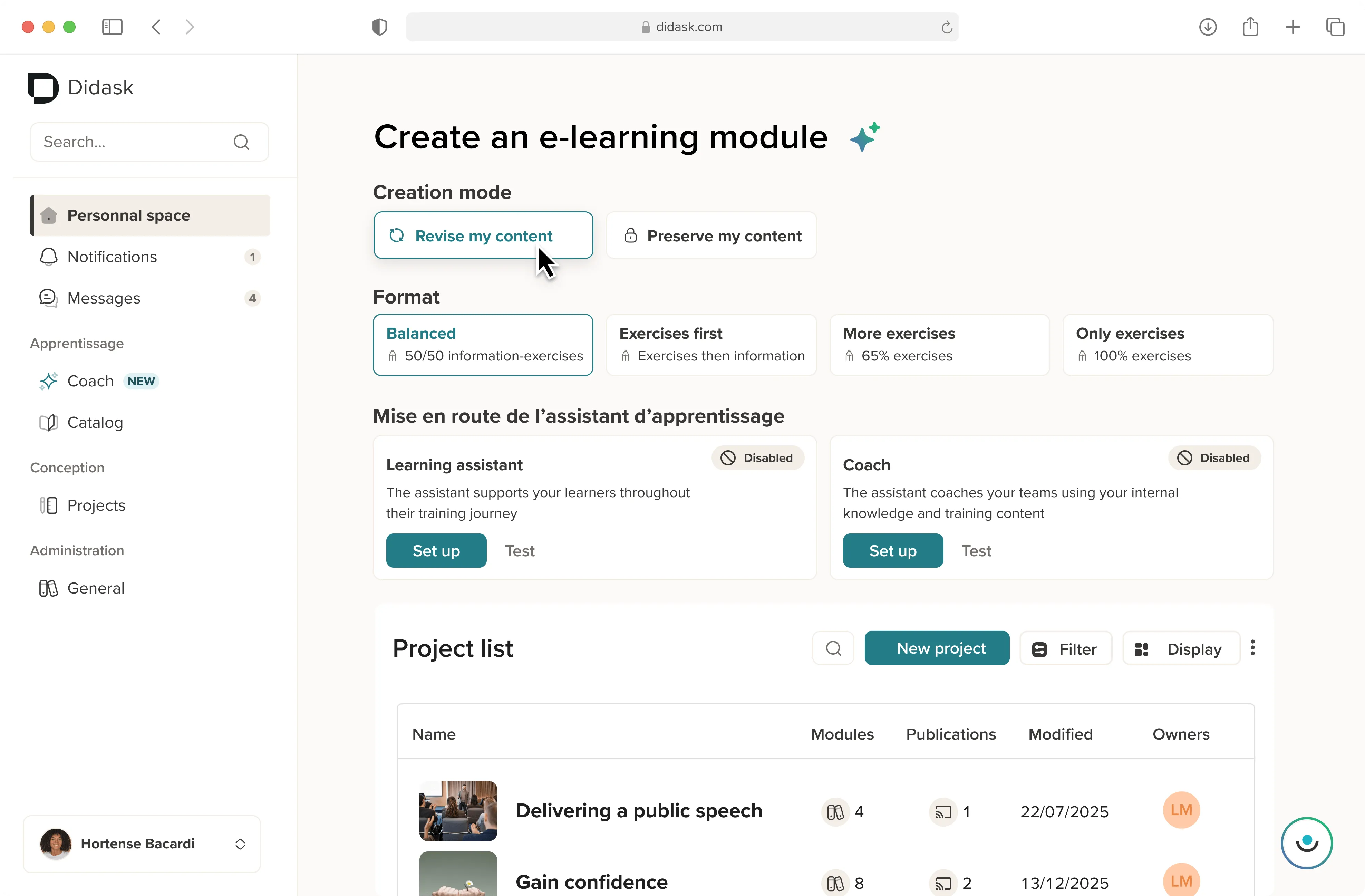
Didask's AI offers a concrete answer to this paradox. It allows internal experts (HSE managers, prevention specialists, subject-matter trainers) to turn their procedures, protocols and prevention content into interactive training paths, with no technical skills in instructional design. What used to take weeks is done in a few hours.
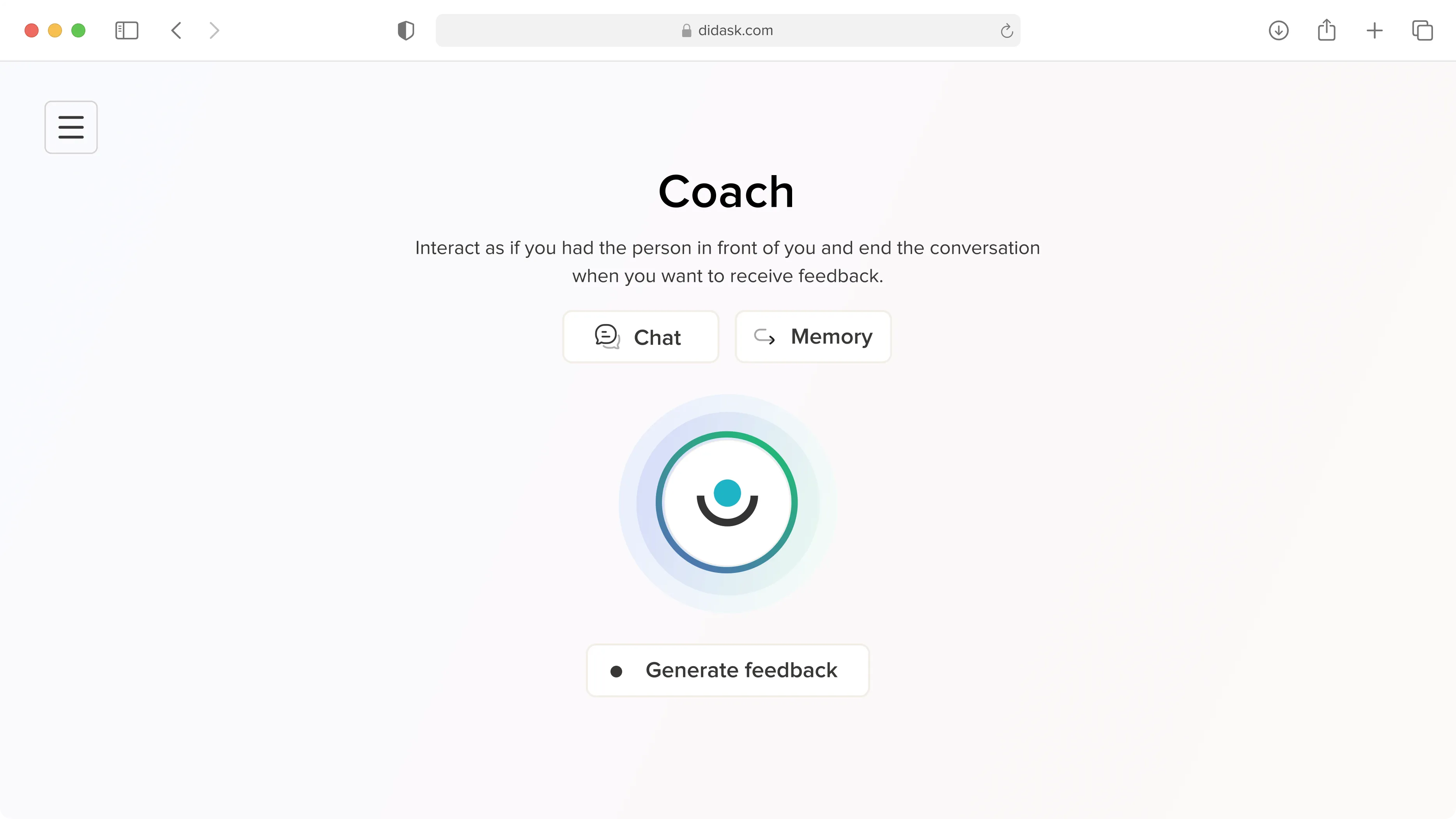
But pedagogical AI does not stop at content creation. It also supports informal learning: the question an employee no longer dares ask their manager, the procedure forgotten before an intervention, the uncertain action before using a chemical product for the first time. Didask's AI provides access to the right information, at the right moment, in the right context, from a phone, in the field, without bothering anyone.
Recent research confirms the effectiveness of this approach: an AI fed with an organisation's internal training content significantly improves the retention of safety instructions, more so than a generalist AI (Vando et al., 2024). This is consistent with the results of two impact studies conducted by Didask (2025, 2026), which show that using a platform allowing knowledge to be applied actively and in context, rather than received passively, leads to measurable gains in retention.
Conclusion
Occupational risk prevention rests on two inseparable pillars: a structured approach (risk assessment, DUER, prevention plan) and training that produces a real impact on everyday behaviour.
The second pillar is too often sacrificed in favour of the first. Training to tick a box protects no one. But training with schemes adapted to the constraints of the field (accessible, interactive, rooted in the real working context) genuinely changes the game.
.webp)
.webp)


.webp)

.png)