


Most retail networks train their salespeople. At onboarding, to integrate newcomers. In annual sessions, to bring teams up to speed. Sometimes before launching a collection or a sales offer. Training programmes exist, sales techniques are taught, and yet in-store training, the kind that happens directly on the sales floor, in the heat of the action, at the moment the salesperson needs it, often remains the missing link.
Training upfront is necessary. But it is not enough. What makes the difference on the floor is an in-store salesperson's ability to call up the right reflexes at the right moment, in the customer relationship, facing a product they do not yet know well, facing an objection they have never handled in training. That skill is not acquired in a classroom twice a year. It is built continuously, directly in the point-of-sale environment.
It is this challenge, training dispersed sales teams with high turnover without taking them off the floor, that this article seeks to address. It is aimed at training managers and regional directors who must deploy an effective sales training programme at the scale of a network.
Turnover, seasonality, the field: why retail has a structural training problem
According to common estimates in the sector, in-store salespeople experience a turnover rate of between 25% and 40% per year, well above the national average of 15% across all sectors (INSEE). In some networks, this figure climbs even higher, particularly among retailers that recruit large numbers of short contracts or students to cover peak periods.
This reality has a direct consequence on how training is managed: you have to train continuously, not just once a year. Every new recruit, whether they join a group of fifteen in a collective onboarding or are integrated alone in a store, must acquire the fundamentals of selling, master the products, understand the company's positioning, absorb the store's processes. This is the whole point of a well-structured field onboarding. And this cycle starts over with every recruitment wave, at the expense of the overall sales dynamic.
On top of this comes the geographic constraint. A network of fifty or a hundred points of sale means as many different sites, often spread across the whole territory. Bringing staff together for a classroom training session involves travel costs, heavy logistics, and above all several days without sales advisers available in store. For many companies in the retail sector, this is an equation impossible to solve several times a year.
The result is predictable: training takes place at the start of the contract, then in one-off sessions, often spaced several months apart. In between, salespeople manage on their own, with gaps, poorly installed habits, partially absorbed sales techniques. And when a new range is launched or a procedure changes, the information circulates informally, with no guarantee of consistency from one point of sale to another.
This is not a problem of willingness. It is a problem of format. Conventional training systems were designed for stable organisations, not for the reality of a retail network in a market where headcount is constantly renewed.
.webp)
Good to know
Turnover has a direct cost on training. Each departure means starting a full cycle of integration and upskilling over again. On average, the cost of replacing an employee represents 0.5 to 2 times their annual salary depending on the seniority of the role (Gallup, 2019). For a network of a hundred points of sale with 30% turnover, this potentially represents several hundred training days per year, not counting seasonal hires. A scalable training system is not a comfort, it is an economic necessity.
Which skills should be trained first in an in-store salesperson?
Before choosing a training format, you need to know what to train. In retail selling, the core is well known: welcoming the customer, active listening, uncovering specific needs, product argumentation, presenting the benefits of the offer, handling objections, negotiation and closing the sale. Methods such as SONCAS or CAB, designed for short sales conversations and a direct face-to-face advisory relationship, form a solid base for developing the sales skills of an in-store salesperson, including the merchandising and product-display dimensions.
What makes the difference is the way these skills are taught. Role-plays must draw on real, specific cases: objections that salespeople actually encounter, scenarios taken from the store's daily life and the customer experience, not generic examples that speak to no one. This level of relevance means involving frontline managers and subject-matter experts in designing the content. They are the ones who know what really happens in store, what gets stuck in the quality of service and customer advice, what works.
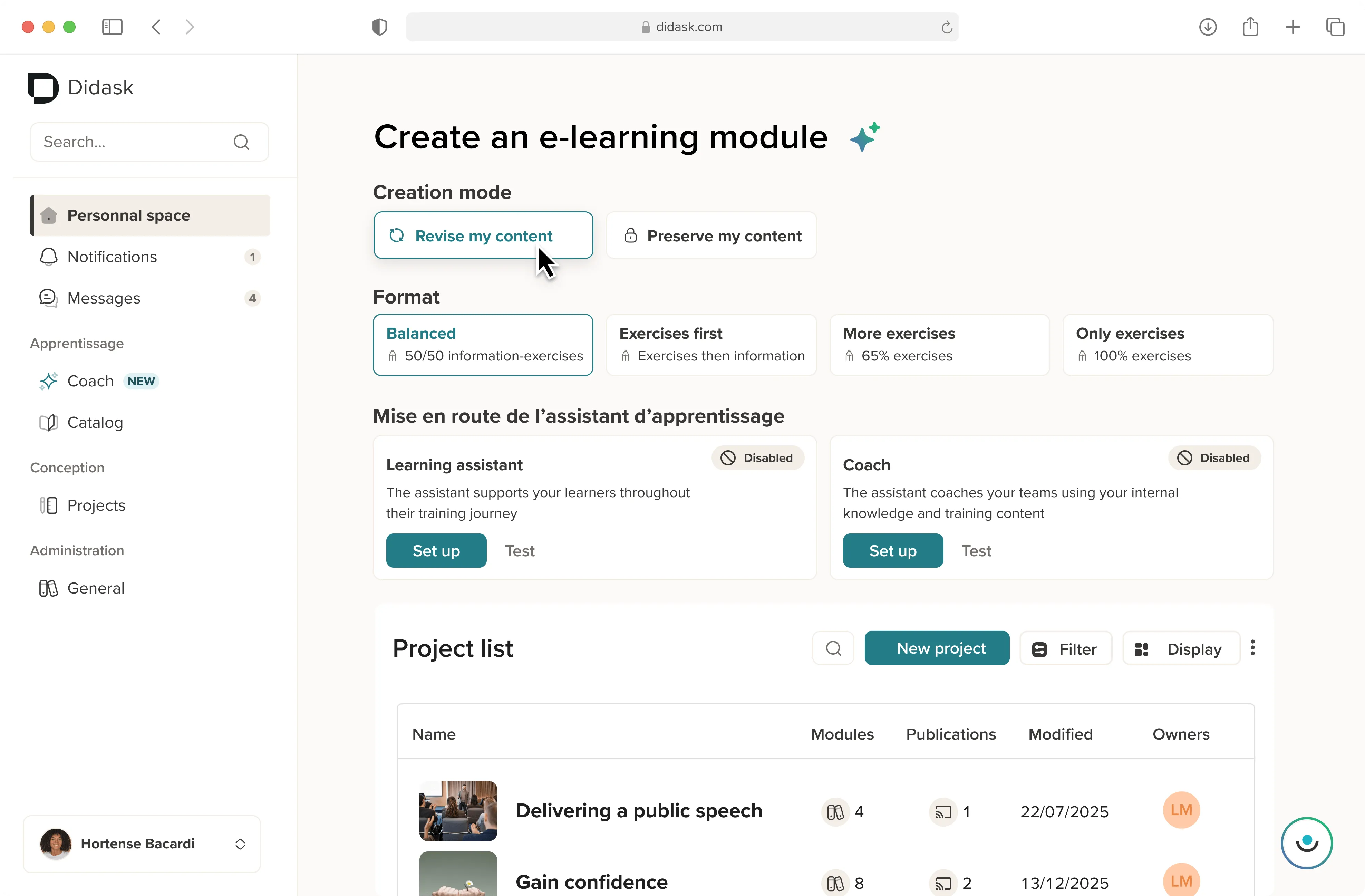
A regional director or a department manager is not an instructional designer and cannot spend days structuring training modules specific to their network. It is precisely to meet this need that Didask was designed: the platform allows subject-matter experts to contribute to content creation without having to master the inner workings of instructional design. Result: 83% of designers using Didask had never created training modules and are now autonomous (8,704 learners, June 2023).
Training in the flow: mobile digital learning at the pace of the point of sale
The LIFOW principle: learning without leaving the floor
The retail constraint is clear: you cannot take salespeople off the floor to train them. Classic distance training does not solve the problem either, since an e-learning module designed to be followed from a desk does not match the conditions of an active store. The logical answer is to bring training to where the salespeople are, on the point of sale, between two customers, before opening, at the moment the need arises.
This is the LIFOW principle, Learning In the Flow Of Work: integrating training into daily work rather than extracting it from it. Concretely, this means short, even very short, modules of 2 to 10 minutes, the duration range considered most effective by skills-development professionals (ATD Research), accessible from a smartphone, designed to be followed in the gaps of the day, without disrupting the team's work organisation. Not a two-hour session that has to be scheduled. A resource you consult when you need it, to make a sale more effectively or master a specific product before it goes on the shelf.
A concrete example: Sofia and the new collection
Take Sofia, a department manager in a ready-to-wear retailer. Her store has just received a new collection with technical fabrics she does not yet know well. With her mobile digital learning system, she accesses a dedicated module in a few minutes: pitch, product presentation, frequent customer questions. She can then test herself on practical cases, for example a customer hesitating to buy, a price objection, a comparison with a competing product, and prepare before the first customers arrive.
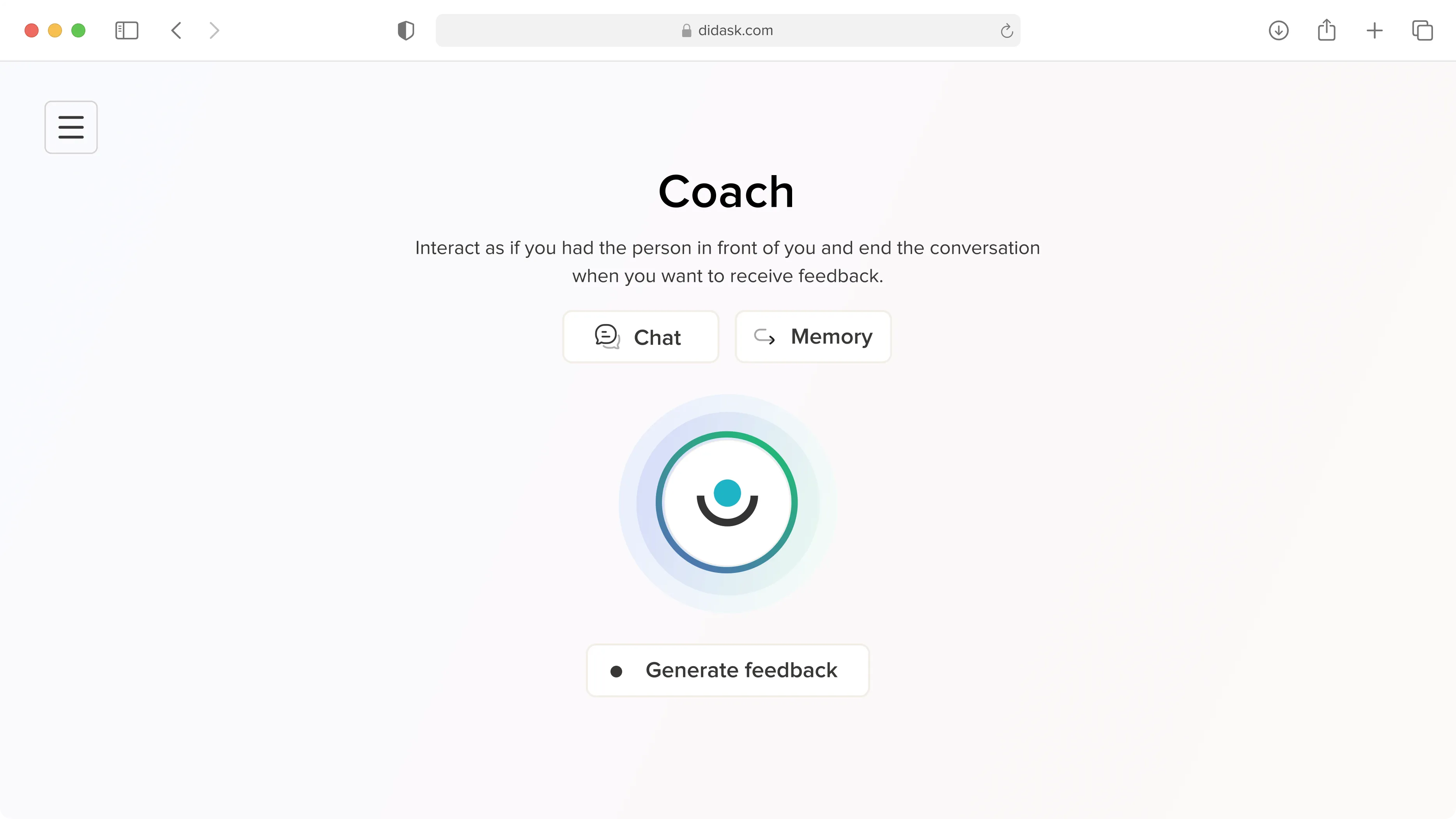
With Didask Coaching, Sofia goes even further: she asks her questions, explains her needs, and the AI coach answers her with pedagogy, devises role-plays specific to her context, formulates corrective feedback. She progresses at her own pace, without mobilising a trainer at every step. At Didask, 84% of learners find the coach's answers consistently relevant and contextualised (410 learners, Nov. 2025).
What cognitive science says
What makes these approaches effective is not only their mobile format. It is also that they are designed in line with what cognitive science knows about learning: spaced repetition to anchor notions in long-term memory, regular reactivation to fight forgetting, the testing effect (learning by testing yourself rather than rereading) and constant attention to not cognitively overloading the learner with too much information at once.
For a retail network, the stake is also one of consistency. Whether the training is followed in a store in Lyon or in Bordeaux, the content is identical, the level of demand is the same, something classroom training never really guarantees at large scale. And the results are measurable: at Didask, 94% of learners report that their training was useful in their real work (1,780 learners, Nov. 2025), and training time is reduced by 60 to 75% at constant learning scope (993 learners, March 2025).
Personalised paths for heterogeneous teams
In a retail network, salespeople do not all start from the same level or the same specific needs. Leo, a beginner, must master the fundamentals above all: conducting his first sales conversations, acquiring the right customer-advice reflexes. Franck, an experienced salesperson, has other objectives: progressing on complex situations, refining his stance facing a difficult customer, developing his skills on a premium range. Treating everyone the same way, with the same content at the same moment, means effectively training no one.
A good in-store training system adapts to these profiles. It offers differentiated support paths, adjusts the difficulty level, identifies individual gaps and directs each salesperson towards what they really need, rather than delivering a uniform programme to the whole network. This personalisation, sometimes also called adaptive learning, difficult to implement in a classroom, is precisely what the most advanced digital learning platforms enable. One caveat though: while the arrival of artificial intelligence has considerably increased the capabilities of these tools, the personalisation criteria must remain pedagogical choices, not technical ones.
The result is real skill development over time, not knowledge frozen after onboarding, but a continuous upskilling that supports the salesperson throughout their professional journey in the retailer.
Steering at scale: harmonising practices across the entire network
This is often the final argument that clinches the decision. A digital learning system takes no more effort to deploy across 500 points of sale than across 10. The content is created once, updated centrally, and accessible everywhere simultaneously. Gone are the disparities between regions, the trainers who do not deliver the same message, the merchandising or customer-advice best practices that stay confined to a few stores.
For a regional director or a training manager, this fundamentally changes the nature of the work. Energy is no longer absorbed by logistics such as organising sessions, finding rooms, freeing up salespeople, coordinating external trainers. It can be invested where it creates value: designing relevant content, refining it as feedback comes in, building a genuine sales-management and team-support solution rather than managing schedules.
It is also a profitable investment. The cost of a classroom training session, between trainer fees, travel, accommodation and non-worked days, is fixed and repeats with every recruitment wave. A digital system absorbs these variable costs: once the content is produced, the marginal cost of training an additional salesperson is almost nil. On a high-turnover network, whatever sales-performance objective the company sets, the economic equation quickly turns favourable.
Finally, it is steerable. Didask makes it possible to track the progress of each point of sale in real time, to improve paths continuously, to identify weak spots without waiting for the next review meeting. The training manager moves from an organiser's role to a pilot's role.
.png)
Worth noting
A well-instrumented system makes it possible to carry out a cross-evaluation between training indicators (completion rate, progress by point of sale, recurring gaps) and field data: conversion rate, average basket, manager feedback. Enough to concretely measure the return on investment of each programme.
Conclusion
Point-of-sale sales training has long stumbled on the wrong problem. Not on content. Sales techniques exist, methods are known, the skills to develop are identified. But on deployment: how to ensure the training support of dispersed teams, with high turnover, without taking them off the floor.
Conventional systems do not answer this problem. They were designed for other contexts. Mobile digital learning, microlearning in the flow of work and personalised paths were designed for exactly this one.
For training managers and regional directors looking to build an effective sales training programme at the scale of a network, the question is no longer whether digital learning is relevant in retail. It is how to implement it seriously, with the right content, the right pedagogical mechanisms, and the right tools (and the same observation holds in B2B sales training).
This is precisely what Didask offers: a solution designed so that subject-matter experts can create effective training without becoming instructional designers, deployable across an entire network of points of sale, and calibrated to the recommendations of cognitive science. Not one more LMS. A tool built so that in-store training produces measurable results, on the conversion rate, on the average basket, on the consistency of sales practices from one end of the network to the other.
.webp)
.webp)

.webp)



.png)