


eLearning has evolved considerably over the years, moving through two successive generations of platforms. But today, a third generation is emerging to completely transform our approach to online learning... and finally give eLearning genuine real-world impact!
eLearning: Then and Now
In its early days, eLearning focused on digitalising content and managing its distribution. However, courses were often complex to create and the learning experience was far from engaging.
Then a second generation arrived, promising to improve learner engagement and user experience. Although it brought significant advances, certain problems persisted — notably short-term engagement and the difficulty for subject-matter experts to create quality content.
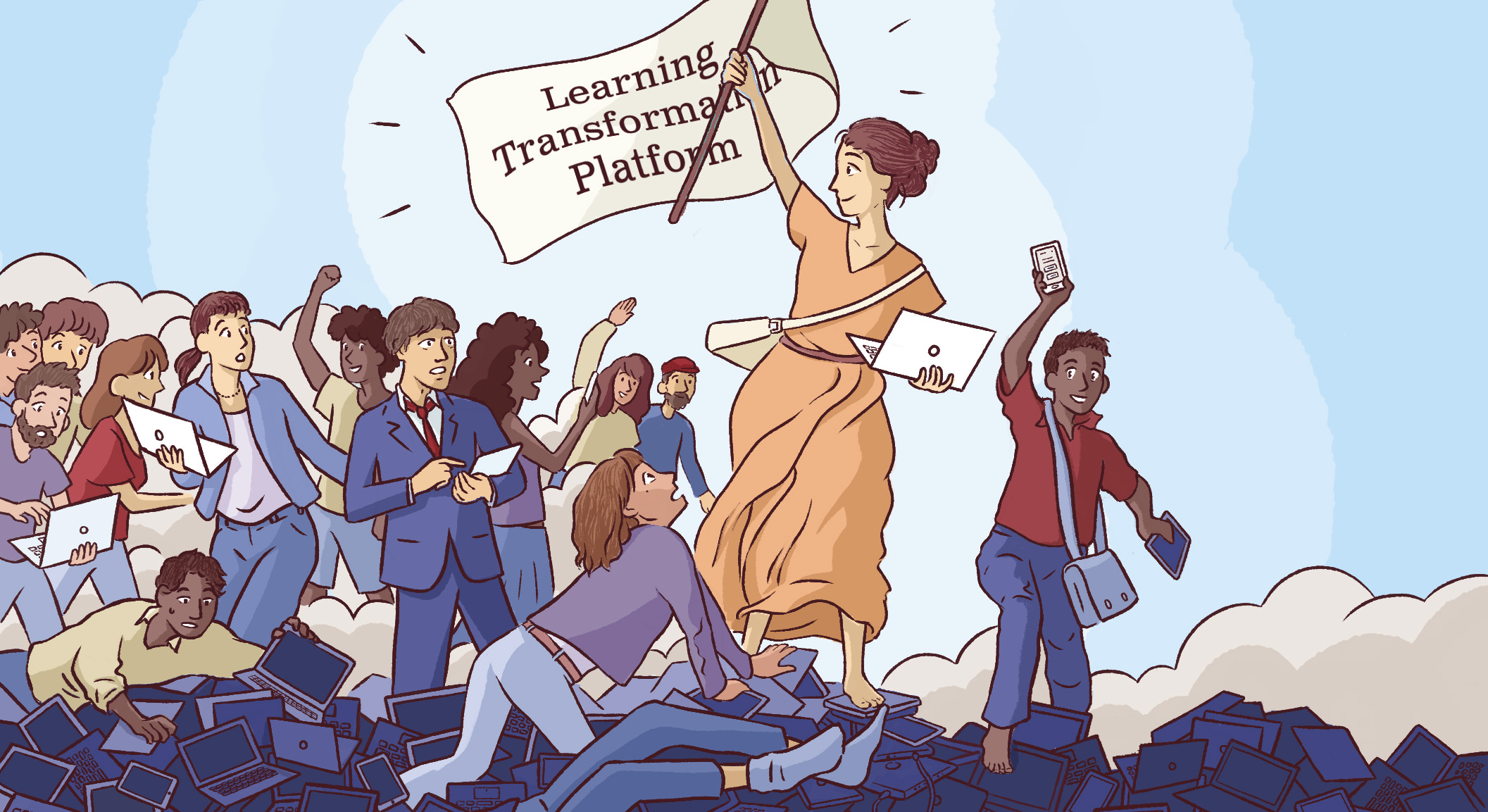
Faced with these challenges, a new approach emerged: the third generation of learning platforms aims to reinvent eLearning by adopting a new paradigm. In short, it promises a revolutionary training experience and a profound transformation — one that finally solves the problems of engagement, real-world impact and content creation.
The Learning Transformation Platform: A New Paradigm
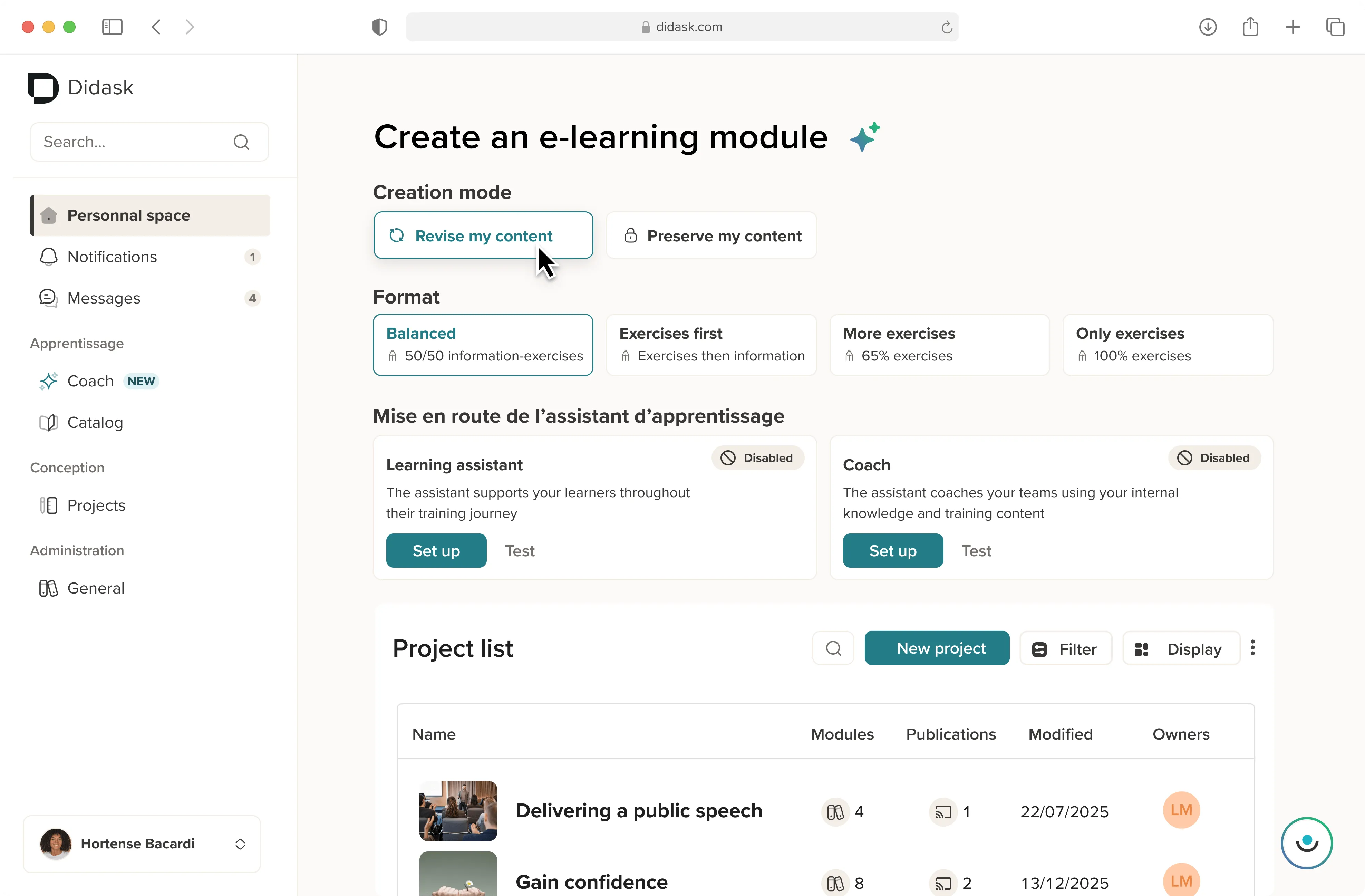
Didask's Learning Transformation Platform is at the forefront of this third generation, transforming the way we learn online.
An Approach Grounded in Cognitive Science
Didask adopts a cognitive science-based approach drawing on decades of research. Thanks to its pedagogical artificial intelligence, Didask automatically identifies — directly from the raw content uploaded by the course designer — the key concepts to work on, thereby simplifying course design.
This scientific approach also enables Didask to automatically recommend effective pedagogical methods for each desired change. For instance, the platform offers scenario-based exercises with feedback to correct misconceptions, and top-down transmission formats followed by flashcards to support memorisation.
Enhanced Personalisation and Adaptability
The Learning Transformation Platform revolutionises the learning experience by making it more attuned to the human brain. Content is optimised to foster lasting change rather than mere knowledge acquisition. Every aspect of the learner experience is designed to maximise real learning, drawing on cognitive research.
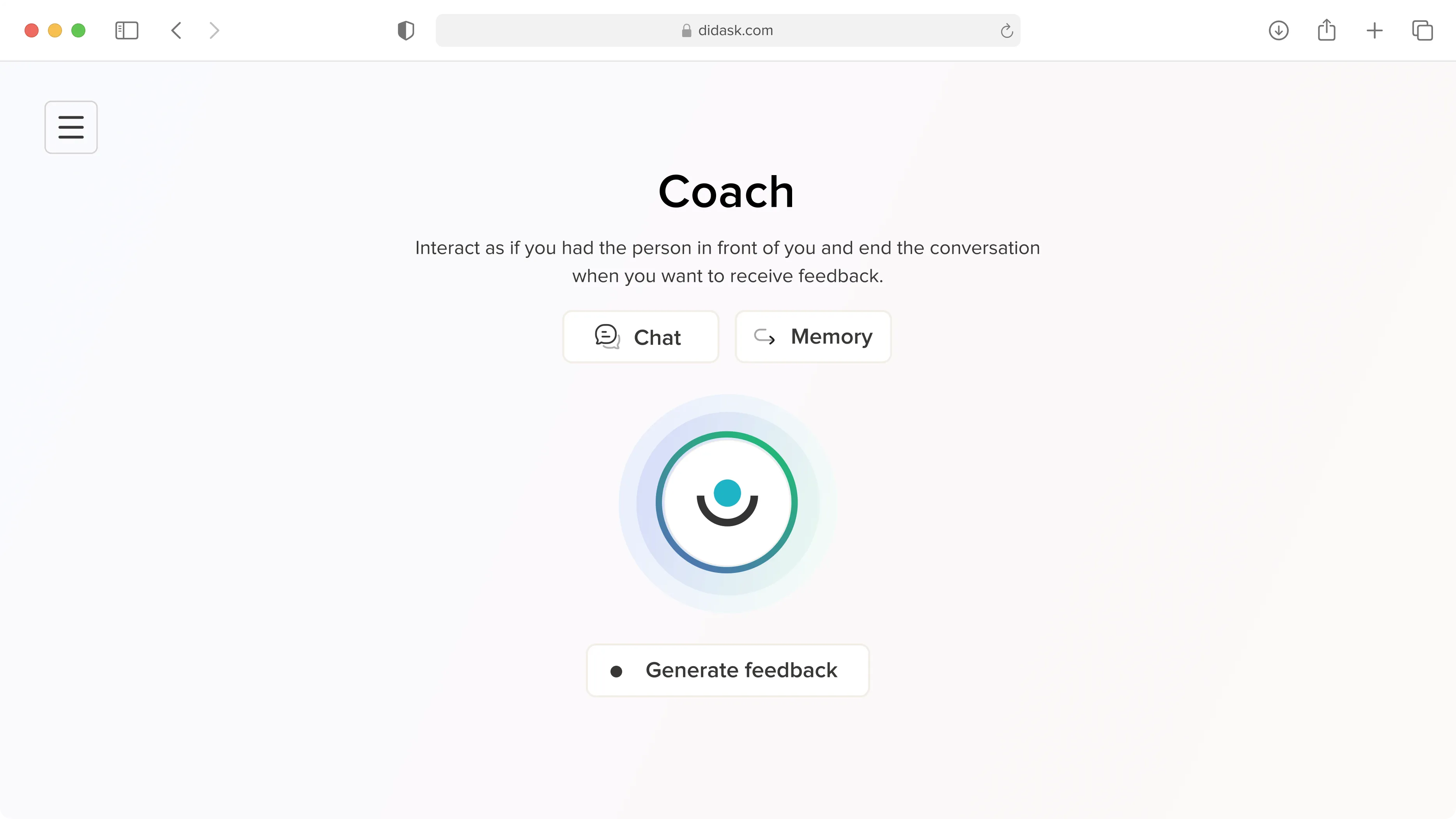
The platform offers tailor-made training programmes adapted to organisations' specific needs. It provides an adaptive experience (or adaptive learning) where each learner receives only the content relevant to them, thanks to placement assessments. In addition, a personalised virtual tutor is available for each learner, adjusting content in real time based on their individual characteristics.
An Approach Focused on Impact and Simplified Creation
Unlike older LMS (Learning Management Systems) that focused on course completion rates, the Learning Transformation Platform delivers impact data. It measures learner engagement, skills progression and return on investment for the organisation. Thanks to intelligent analytics tools, this data can be used to continuously improve performance.
As you will have gathered, Didask is revolutionising content creation by enabling any subject-matter expert to produce pedagogically highly effective content. Thanks to simplified processes, the creation of impactful modules is now 10 times faster than on the traditional market. The platform lowers the barrier to entry for knowledge sharing.
Conclusion: A New Era for eLearning
With Didask, the Learning Transformation Platform revolutionises the creation of effective learning experiences. Simply import your raw content and choose the impact you want to achieve. The platform will automatically generate personalised learning pathways, with granularised content, clear presentation, practical exercises and flashcards. You can then edit and adjust the content as needed.
Didask is democratising content creation and enabling any subject-matter expert to become a pedagogue. With constantly improving technology, content creation is becoming ever more accessible, and internal eLearning is becoming a skills driver for teams — meeting 21st-century standards.
.webp)
.webp)
.webp)





.png)