


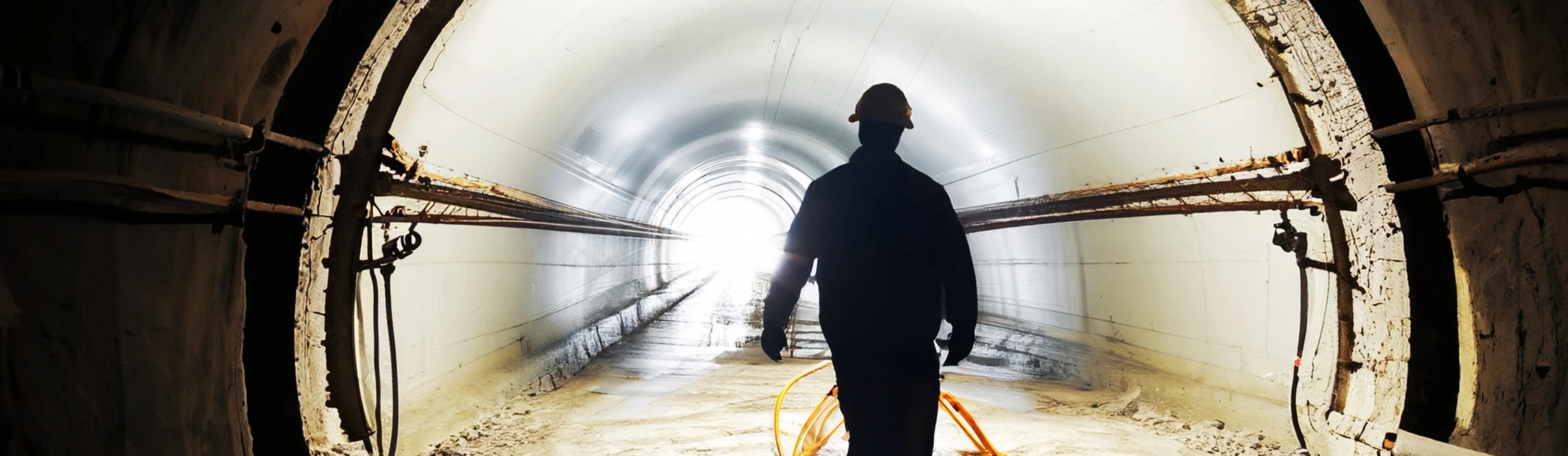

Every year, confined-space interventions go wrong for lack of preparation. CATEC training exists to address this: it certifies the skills of operatives and supervisors according to a national framework structured by the INRS. But obtaining the certification is not enough. You still have to organise the sessions, track the renewals and guarantee retention over time. This Didask article gives a complete overview of the system and explores how companies and training organisations can steer it effectively.
What is CATEC training? Definition and regulatory context
CATEC, or Certificat d'Aptitude à Travailler En espaces Confinés (Certificate of Aptitude to Work in Confined Spaces), is a professional certification system steered by the INRS. It was designed to standardise the skills of staff required to work in environments with atmospheric risks. The French Labour Code requires the employer to take all necessary measures to prevent risks in confined spaces, which makes CATEC certification the recognised reference in this area.
What is a confined space? Concrete examples by sector
A confined space is a volume with restricted access, insufficient natural ventilation and a potentially dangerous atmosphere (asphyxiation, explosion, intoxication).
- Water and sanitation: tanks, reservoirs, sewers, pipes
- Chemical and petrochemical industry: reactors, storage tanks
- Construction: shafts, trenches, tunnels
- Food industry: silos, fermentation tanks
- Energy: boilers, valve chambers
Is CATEC mandatory? What the regulations say
CATEC certification is not a strict legal obligation. On the other hand, it constitutes recognised proof that the employer has properly trained its teams in the risks of confined spaces. In the event of an accident with no documented training, the employer's criminal liability can be directly engaged.
.png)
Key point
In the absence of documented training, the employer is exposed to prosecution for inexcusable fault in the event of an accident. CATEC is the national reference for proving that the prevention obligation has been met.
Who is concerned by CATEC certification?
The CATEC system certifies two distinct profiles with complementary responsibilities. The companies concerned cover a broad spectrum: local authorities, public-works companies, manufacturers and maintenance providers.
CATEC operative: role, responsibilities and expected skills
The operative physically enters the confined space to carry out a defined task. They must master the use of personal protective equipment (PPE), the reading of gas detectors and emergency evacuation procedures. Permanent communication with the supervisor is a skill assessed in its own right.
CATEC supervisor: role, responsibilities and expected skills
The supervisor stays at the surface and bears responsibility for the overall safety of the intervention. They continuously monitor the atmosphere of the space, manage access to the perimeter and trigger the alarm in the event of an anomaly. This role, often considered passive, is in reality the most critical safety link of the operation.
Content and structure of the CATEC training
The CATEC programme defined by the INRS is built around two complementary and non-substitutable components. The training alternates theoretical input, case studies and practical role-plays on real equipment.
The theoretical component: regulations, risks and procedures
This component covers all the knowledge required before any confined-space intervention.
- Definition and classification of confined spaces
- Atmospheric risks: lack of oxygen, toxic gases, explosive atmospheres
- Applicable regulations and the responsibilities of each actor
- Work authorisation document and prevention plan
- Communication, alert and rescue procedures
- Site signage and marking
This component is now compatible with digital formats, provided the INRS framework is respected. This is where blended learning brings the most value.
The practical component: role-play and equipment handling
Learners handle, in a real situation, the extraction tripod, the harness, the multi-gas detector and the communication equipment. They carry out timed evacuation simulations assessed by an INRS-certified trainer.
.webp)
Worth noting
The practical part of CATEC cannot be reduced and must be carried out in person with an INRS-certified trainer. Digital does not replace the field: it prepares for it.
Prerequisites, duration and access conditions for the CATEC training
Access to the CATEC training requires medical fitness certified by occupational medicine and professional experience related to the work concerned. No specific qualification level is required, but sufficient command of written French is needed for the theoretical assessments.
Duration of the CATEC training by path
The initial training generally lasts 1 to 2 days depending on the profile and the sector of activity. The certification obtained is valid for 3 years, after which a one-day maintenance and updating of skills (MAC) is required. Candidates without sufficient prerequisites must follow a preliminary pre-CATEC step before accessing the certification.
How much does a CATEC training cost?
Prices vary depending on the accredited body, the sector of activity and the type of path followed. It is recommended to request several quotes from INRS-certified bodies to compare the offers available in your region. These costs are eligible under the skills development plan and can be covered through the OPCOs.
Assessment and certification: how do you obtain CATEC?
The CATEC assessment combines a written theoretical test and practical role-plays graded by INRS-accredited trainers. Passing both tests conditions the issuing of the certificate. The certificate explicitly states the certified role(s): operative, supervisor or both.
- Step 1: checking the prerequisites and medical fitness
- Step 2: registration with an INRS-accredited body
- Step 3: completing the theoretical component (in person or blended)
- Step 4: carrying out the practical exercises on equipment
- Step 5: assessment by the certified trainer
- Step 6: issuing of the certificate (valid for 3 years)
How do you become a CATEC trainer?
To run CATEC sessions, the trainer must themselves be certified by the INRS through a specific train-the-trainer programme. They must demonstrate significant field experience in confined spaces and keep their own skills up to date according to INRS requirements. This accreditation is issued for a limited period and must be renewed periodically.
Managing CATEC at scale: the little-known challenges of training managers
For a training manager handling several hundred field employees, CATEC is above all an organisational problem. Manually tracking expiry dates, coordinating sessions with production constraints and proving compliance in case of an inspection: these are the real day-to-day challenges. Pedagogy is only half the subject.
Key point
An expired CATEC that goes undetected on an employee working in a confined space directly exposes the employer to criminal liability in the event of an accident. Without an automated tracking system, this risk is almost impossible to control at scale.
Preparing learners upstream: the role of digital in the theoretical part
A theoretical e-learning module ahead of the in-person session can reduce the duration of classroom sessions and help harmonise participants' levels from day one. In cognitive science, the principle of cognitive load (Sweller, 1988) establishes that a learner prepared upstream devotes more attentional resources to practical exercises, where they have the most impact. Didask Training makes it possible to create these theoretical modules in a few hours, with no prior technical skills.
Worth noting
With Didask Training, companies reduce training time by 60 to 75% at constant learning scope (993 learners, March 2025). Applied to CATEC theoretical preparation, this gain frees up in-person time for high-value-added practical exercises.
Steering CATEC compliance over time with an LMS
Regulatory compliance is not a one-off event: it is a continuous process. A suitable LMS generates automatic alerts before expiry dates, centralises supporting documents and produces usable compliance reports in a few clicks.
Training organisations: how to digitalise your CATEC programme without betraying its practical demands
Digitalising the CATEC theoretical component is not a pedagogical concession: it is an opportunity to focus all the value of your trainers on what cannot be digitalised. By relieving your classroom sessions of the transmission of basic knowledge, you free up time for role-plays, complex cases and high-value-added exchanges. The trainer's role is thereby enhanced, not diminished.
Key point
With Didask Training, designers reduce their creation time by 50 to 65% (2,237 training courses, Oct. 2025). For a training organisation that must keep several CATEC programmes up to date, this gain concretely changes the economics of the catalogue.
Structuring a blended CATEC path in 3 steps
Updating your CATEC content without recreating everything
Regulations on confined spaces evolve: newly approved equipment, updates to INRS guides, sector changes in water and sanitation. With an AI authoring tool, an update that once required several days of work is now handled in a few hours on the sections concerned. For a certified training organisation, this is the guarantee of staying compliant without destabilising your entire catalogue.
CATEC training protects lives: that is its primary purpose. But its pedagogical and administrative management often remains the weak link of prevention systems. Digital is not a shortcut: it is a lever to strengthen the quality of learning, maintain compliance over time and free trainers up for what really matters. Companies and training organisations now have the tools to move from a one-off-event logic to continuous steering of their regulatory certifications.
.webp)
.webp)


.webp)


.png)