

Expertise
-
30.06.2026

AI-Generated End-of-Module Practice: The Performance Lever Your Training Hasn't Activated Yet

Computer visual
Summary
Gradient avec du bleu rose et beige
Maximize Your Training ROI
Discover proven methods to measure and optimize the business impact of your training programs. Case studies and checklist included.
Download the guide

Your learners have just finished a module. They answered exercises, received feedback, made progress. What if this exact moment, right after learning, while the memory trace is still fresh, turned out to be the most strategic one for making what they just learned stick? An impact study conducted at Didask measured precisely the effect of a personalized exercise, automatically generated by AI at the end of each module. The results are clear: it boosts learner performance, and it costs course designers nothing.

In brief
What our study reveals about the impact of AI-generated end-of-module practice.
AI-generated end-of-module practice significantly predicts learner performance.
Learners who engage with this practice score significantly higher, regardless of their initial motivation level.
This practice is generated automatically by Didask's pedagogical AI, with zero extra time for course designers.

What our impact study measured

To carry out this study, just under 200 learners took part in a training course split into two parts. Half of the learners had the AI activated for the first part of the course but not the second, and vice versa for the other half.

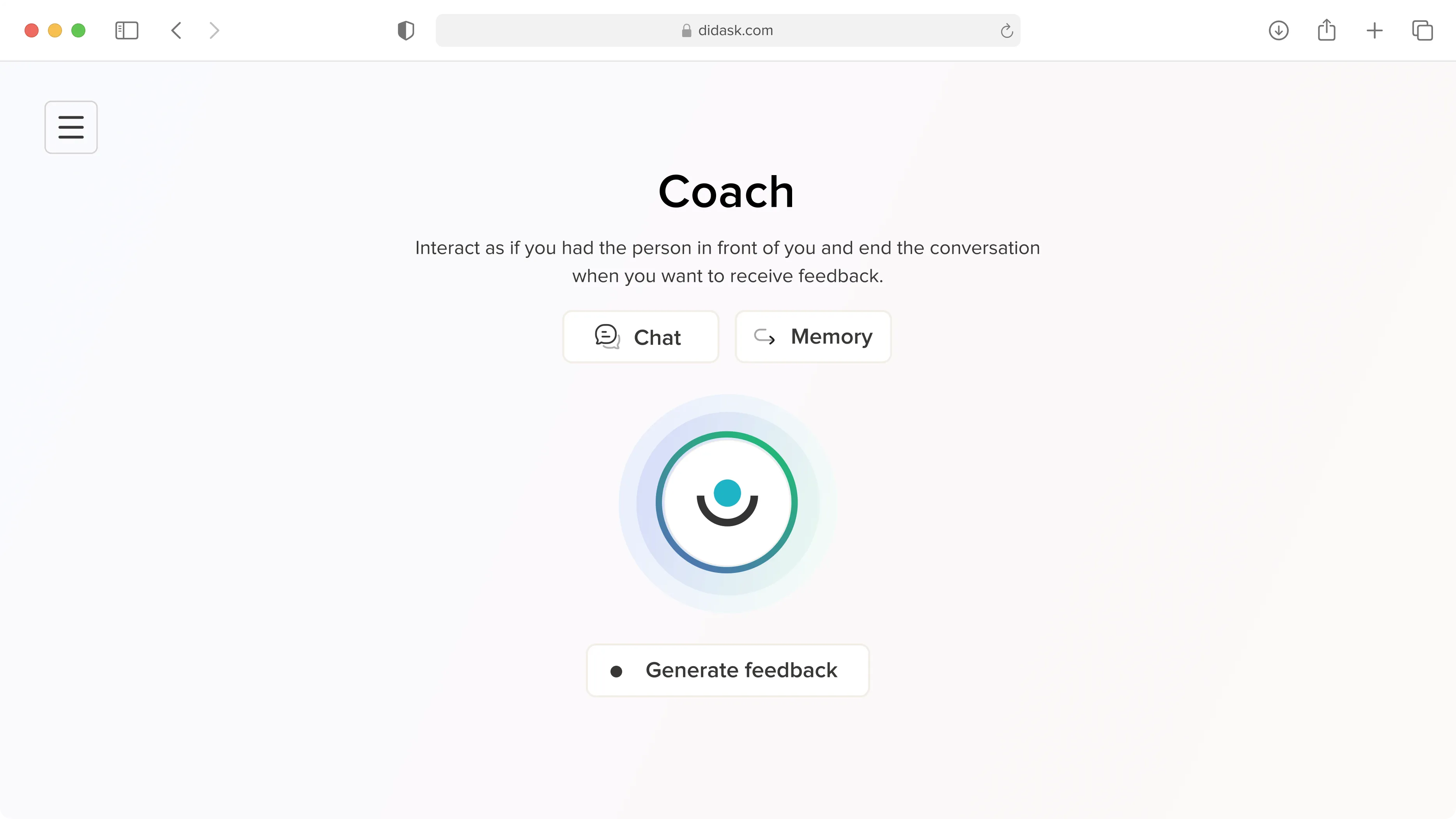
The AI condition included several types of interaction: conversational open-ended questions built into the course, spontaneous interactions with the assistant, and practice automatically triggered at the end of each module. After completing their training, learners took a performance test, our key measure.

The study then identified which types of interaction best predicted the results. This is where the signal becomes particularly clear.

End-of-module practice: the strongest predictor of performance

End-of-module practice significantly predicts learner performance (β = 0.316, p = 0.007). The more modules a learner completes with practice, the higher their performance, regardless of their initial motivation (β = 0.424, p = 0.024).

Learners who engage with this practice score significantly higher than those who don't (p = 0.0003).

An effect independent of motivation

In our models, learners' initial motivation is not statistically significant. It is actual engagement with end-of-module practice, not the starting profile, that explains the performance gain.

Why it works: active manipulation and a metacognitive pause at the right moment

This result can be explained by what happens cognitively at the end of a module. The learner has just absorbed new information, and what's needed now is a moment to pause and actively work with it: rephrasing it, putting it in context, testing their understanding in a situation slightly different from the course.

This is exactly what end-of-module practice triggers. The learner doesn't reread: they answer, they justify their answer, they receive personalized feedback. This moment of forced activity acts as a metacognitive pause, letting the learner check what they have actually understood, not just what they feel they have retained.

Studies have repeatedly shown that exercises interspersed throughout a course produce better results than a single test at the end (Kornell & Bjork, 2008). End-of-module practice embodies this principle: it breaks the effort into several distributed moments, rather than concentrating it in a final assessment.

The spacing effect in practice

Our study also confirms that learners who start practicing early in the course get better results than those who concentrate their use toward the end of training (r = 0.271, p < 0.001). Practice distributed over time is more effective than a massed revision effort, even at an equivalent volume of use.

What this means for course designers: zero workload, maximum impact

On most platforms, designing exercises that are relevant, varied, and paired with immediate feedback is the most time-consuming part of instructional design. It's also the part that non-specialist teams tend to neglect for lack of time.

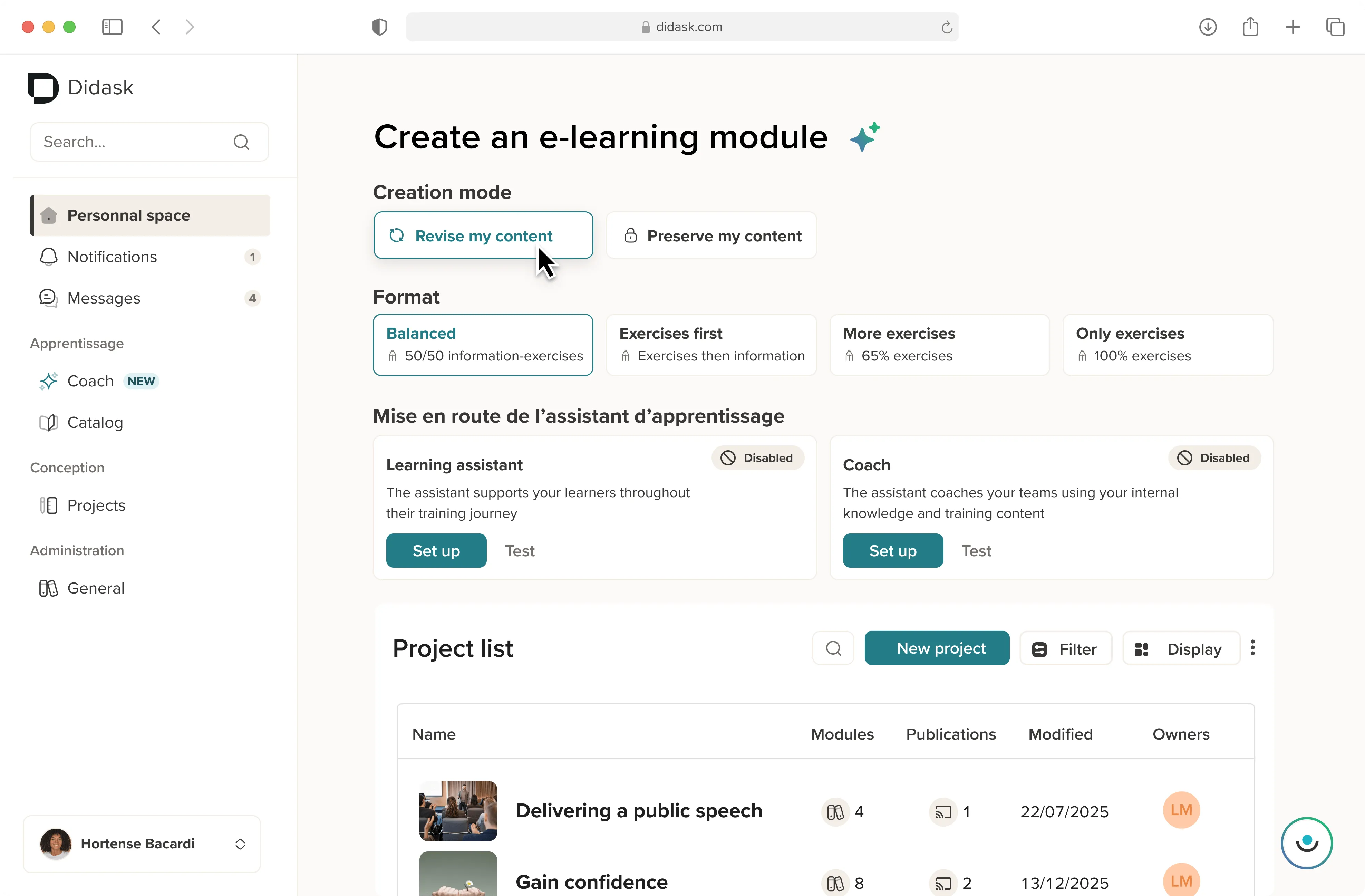
In Didask, end-of-module practice is generated automatically by AI from the content provided by the subject-matter expert. The questions are conversational, adapted to the learner's level, and paired with personalized feedback. The designer has nothing to produce manually for this step: the AI handles it, drawing on the same cognitive principles documented in this study. If you'd like to learn more, other articles cover Didask's impact on training.

This is what an AI grounded in cognitive science means in practice: not a tool that generates content faster, but one that generates content that works better, because it's designed to activate the right learning mechanisms.

book a demo
What is an AI-generated end-of-module practice exercise?
It's a conversational exercise automatically triggered at the end of each training module. The AI generates questions from the module's content and offers personalized feedback based on the learner's answers. No manual work is required from the course designer.
Why is this practice more effective than a standard quiz?
A standard end-of-course quiz assesses the learner only once. End-of-module practice breaks retrieval effort into smaller pieces: each module ends with active recall of what was just learned, reflecting the spacing principle documented in cognitive science research (Roediger & Karpicke, 2006; Kornell & Bjork, 2008). Frequency and distribution over time matter as much as the content of the exercises.
Do less motivated learners benefit just as much?
The study shows that the effect of end-of-module practice holds even after controlling for learners' initial motivation. It is not the learner's profile that determines the benefit, but their actual level of engagement with the exercises.
Does this create extra work for course designers?
No. In Didask, end-of-module practice is entirely generated by the pedagogical AI from the content provided by the subject-matter expert. The designer focuses on the substance, the AI handles the pedagogical structuring and exercise generation.
How do these results fit into Didask's pedagogical approach?
Didask is built on cognitive science principles: active engagement, immediate feedback, information sequencing, and spaced review. End-of-module practice is a direct expression of these principles, and our study confirms this isn't just a theoretical promise.
Icône de plume de stylo dans un cercle blanc.
About the author
Léa Combette
Léa is a Senior Learning Scientist at Didask. With a PhD in Cognitive Science, she has conducted research in France and the United States on learning and motivation mechanisms, publishing 6 articles in peer-reviewed journals and giving conferences in Paris and Los Angeles. With 7 years of expertise in impact evaluation in the training and education sector, she now contributes to the continuous improvement of the Didask product by integrating insights from cognitive science. Passionate about bridging theory and practice, she shares her expertise through impact studies, articles, and the MinDrop podcast. From student to teacher to researcher, she brings a 360° perspective on learning and development challenges.
Blocs visibles uniquement sur prévisualisation webflow
Icône d'une étoile vide centrée dans un cercle blanc.
This is some text inside of a div block.
ENGIE achieved an overall score of 16.72/20 in the Customer Service of the Year ranking, with scores ranging from 15.21 for chat to 17.61 for social media, confirming the excellence of their customer relations.
In brief
Traditional LMS platforms have7 structural limitationsthat hinder the effectiveness of your training programs:
A 30-minute tour of Didask in action
Traditional LMS platforms have7 structural limitationsthat hinder the effectiveness of your training programs:
Icône d'une étoile vide centrée dans un cercle blanc.
This is some text inside of a div block.
ENGIE achieved an overall score of 16.72/20 in the Customer Service of the Year ranking, with scores ranging from 15.21 for chat to 17.61 for social media, confirming the excellence of their customer relations.
Icône d'information avec un 'i' minuscule dans un cercle.
Note
Generic soft skills training (management, time management, leadership) is most affected. Without grounding in concrete job-specific situations, it generates little measurable impact and a high risk of disengagement.
Platform visual
See Didask in action
See how Didask's AI automatically generates practice that truly makes knowledge stick.
Book your personalized demo
Gradient avec du bleu rose et beige
Give us 30 minutes, your courses will never be the same again.
Discover the all-in-one Didask platform during a personalized and free demonstration, led by an expert.
obtenir une démo
Give us 30min, your courses will never be the same again
book a demo
MEET US

Get a demo!
We’d love to know how to help you

Thank you! Your submission has been received!
Oops! Something went wrong while submitting the form.