


Today, the technical skills are no longer the only ones attracting the attention of recruiters. Businesses are now looking for employees who can adapt, communicate, and solve problems in a variety of contexts. These skills, which are grouped under the global term “transversal competencies”, are an essential lever for professional success.
But in concrete terms, what do these really cover skills ? And above all, how do you develop them effectively within your organization? These are the questions we asked ourselves and we are going to answer them together!
What is transversal competence?
Transversal skills (Soft Skills) refer to all the abilities that are useful in various professional contexts, regardless of the company, the professions or the function performed.
By default, unlike technical skills (Hard Skills), they are not specific to a particular profession, but they apply to several fields of activity.
For example, we are talking about communication, time management, creativity or the ability to solve problems quickly.
On the contrary, technical skills are rather linked to the mastery of a very specific software, tool or working method. They are often acquired through academic training, while transversal skills are developed through experiences, collaborative learning and team-based projects.
Why are transversal skills essential?
For several years now, recruiters have agreed that transversal skills have become key indicators of employee employability.
And for good reason: they guarantee an employee's ability to evolve within the structure and to adapt easily to new practices and new partners.
Several studies show that HR managers in charge of recruitment now highly value qualities such as versatility and communication in their search criteria for new talent.
Focusing on the training and development of these skills makes it possible to reduce recruitment costs on the one hand, but also to retain talent on the other.
Indeed, training your employees in transversal skills means giving them the means to progress in their careers, to experience real job development. This approach reinforces the long-term commitment of employees: employees who feel understood, listened to and supported are more likely to be permanently involved in company projects.
Finally, in the face of digital transformations and the rise of remote work, transversal skills such as agility, curiosity and the ability to learn continuously have become essential. Stable and “timeless”, they are what remains at all times despite a job market that is sometimes uncertain and always in motion.
What are the transversal skills most sought after by recruiters?
Communication and information management skills
Internally, the first transversal skill that is most sought after is related to communication. Knowing how to listen, clearly formulate your ideas and adapt your speech to different interlocutors is essential in the professional sphere.
Good communication strengthens collaboration between teams and prevents misunderstandings.
Leadership and team management
In the second position of the most sought-after technical professional skills, we find management. The skills to motivate, coordinate and support partners on a daily basis and throughout their career are particularly appreciated by companies.
Leadership is undergoing a real evolution, not limited to managers anymore: employees are the very drivers of a team and they must be able to count on each other to boost themselves when needed, for example.
Creativity and problem solving
With a constant need for innovation and novelty, the current professional situations in which companies find themselves are sometimes complex. They therefore expect resourceful profiles who are able to think differently.
Creativity, combined with good critical analysis, promotes rapid problem solving, for effective internal projects.
Time and priority management
Knowing how to organize your tasks, anticipate the unexpected and respect deadlines are among the key skills for the professional success of employees.
This control of time contributes to individual productivity and to the collective success of the entire company.
Interpersonal skills and collaboration
Working in a team involves being caring, active listening and having a good ability to manage conflicts.
These human skills, called behavioral or transversal skills, are an essential pillar for a pleasant collaborative environment.
Critical thinking and decision making
Being able to analyze a situation with hindsight, to evaluate several scenarios and to choose the best option... this is the last transversal skill that can allow a recruiter to distinguish profiles with high potential.
What are the benefits of developing transversal skills in business?
Better talent and career management
Transversal skills allow HR managers to more precisely identify the profiles of employees who are able to evolve rapidly. With this reliable foundation, they can build consistent career plans for employees.
Increased team productivity and efficiency
Employees with strong transversal skills are more autonomous, responsive and efficient.
They adapt quickly to changing priorities, new tools and all types of missions.
The result: there is better operational efficiency and an improvement in overall performance.
Creating a more collaborative and agile work environment
By encouraging cooperation and knowledge sharing, businesses develop a culture of strong teamwork.
How to value transversal skills on the CV and during interviews?
Each employee has transversal skills that are specific to him.
Above all, it is important to identify which ones are the most relevant for the position in question. Candidates can rely on job descriptions or job offers to identify the skills they are looking for.
Second, it's helpful to note that recruiters appreciate practical examples. Each experience can be used to demonstrate how a skill has been mobilized in a real professional situation.
Finally, some courses certify the development of transversal skills. It is a good way to reassure recruiters about the mastery and concrete implementation of the skills acquired.
How to identify the transversal skills of your employees?
For companies, evaluating the transversal skills of a candidate or an employee requires a global approach: interviews, tests, situations, feedback and a survey of former/current partners... there is no shortage of ways to identify talent strengths!
How does Didask help companies develop the transversal skills of their employees?
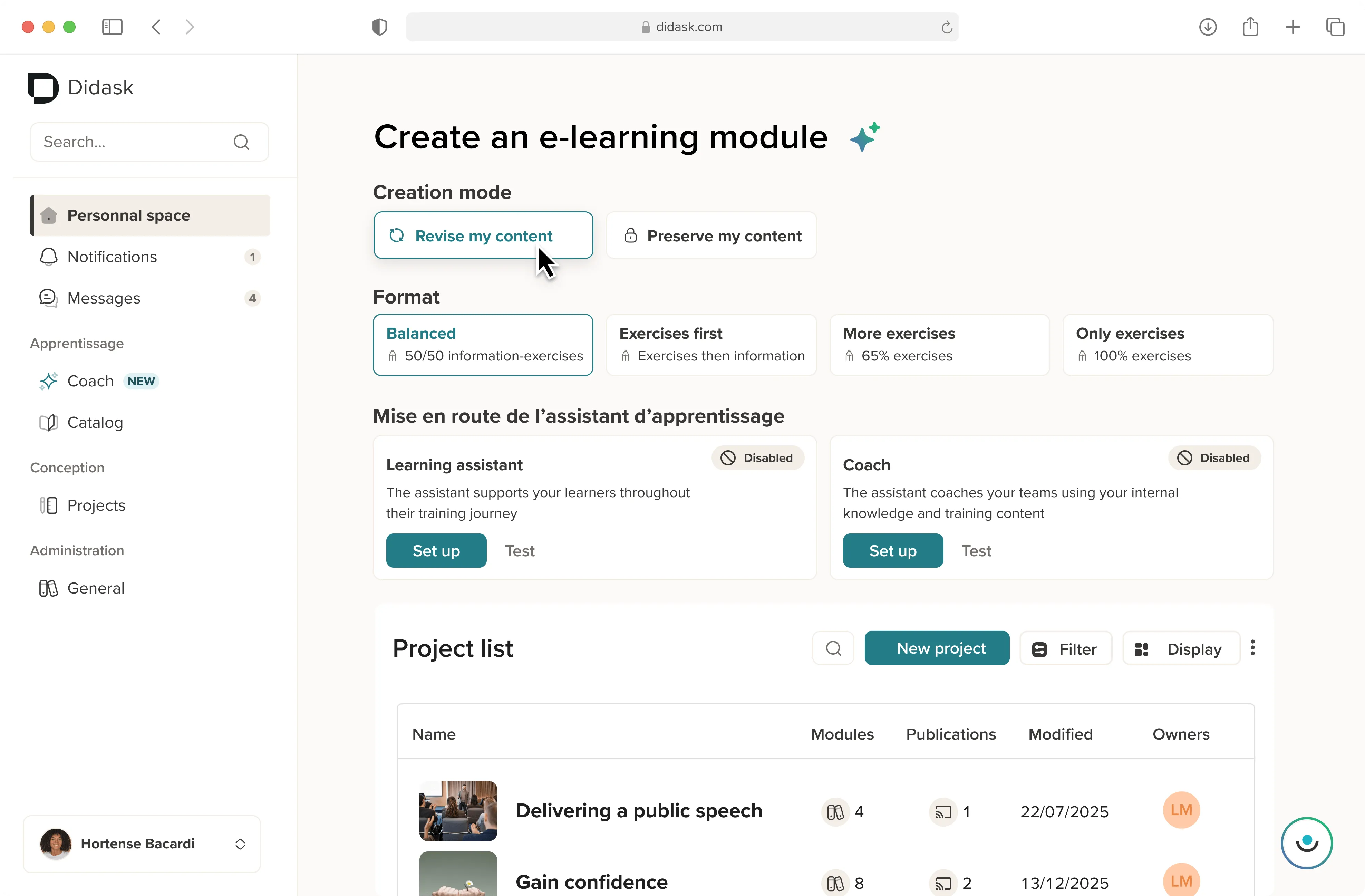
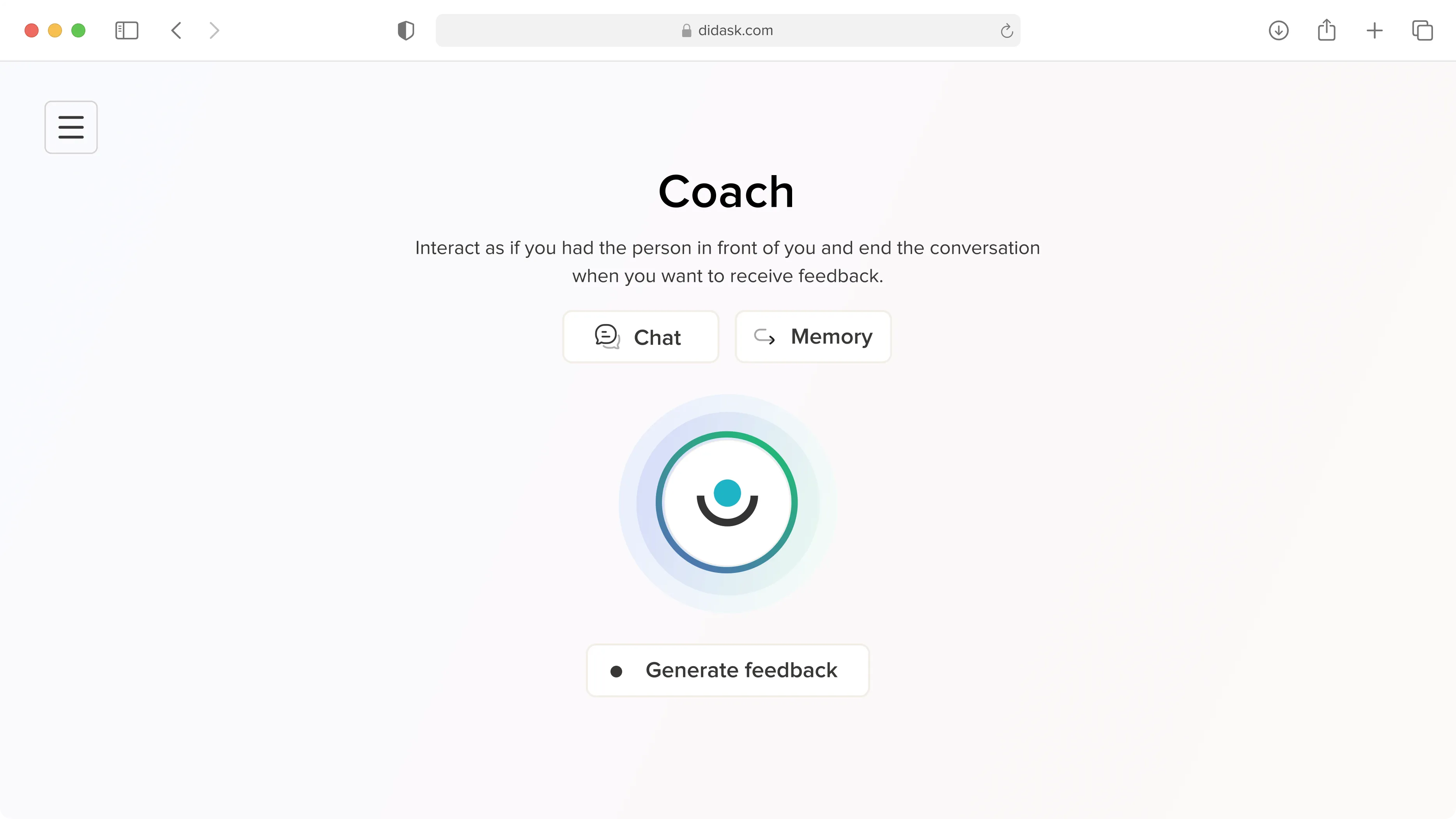
Didask supports companies and training organizations in setting up tailor-made transversal skills development programs.
Our online training platform is based on active pedagogy, which places the user at the heart of every action.
Our solution allows you to design comprehensive training programs, measure the progress of employees and anchor learning in reality and in the long term thanks to the concepts of learning by Doing and of gamification.
.webp)
.webp)
.webp)




.png)