


In a constantly evolving professional world, designing effective training courses can no longer be done without taking into account the real needs of users. The Human Centred Design is now becoming an essential approach for create learning experiences that are relevant, engaging, and sustainable.
Find out how this human-centered method is transforming the way companies train and how the Didask LMS platform integrates it concretely into its solutions.
Understanding Human Centred Design
A method focused on users and their needs
Human Centred Design, or HCD, is a human-centered design method. It is based on a simple but powerful idea: create products, services or training that meet the real needs of users. Unlike traditional approaches in which the content or product precedes the user experience, HCD starts with people, their contexts, problems, and goals.
Derived from design methods and social sciences, this approach has established itself in product development environments, but also in professional training and business transformation environments.
HCD, Design Thinking, User Design: what's the difference?
Although the Human Design, Design Thinking and User Design share a common base, they have nuances. The Design Thinking is more of an innovative mindset, often applied to solving complex problems. The User-Centred Design focuses on the user experience in the context of the development of digital systems or products.
Human Centred Design, on the other hand, encompasses these dimensions while going further: it takes into account the global context of work, emotions, uses, and motivations, and is perfectly applicable to the design of training courses or educational devices.
A valuable approach for training and business
In work environments that are constantly changing, this method makes it possible to design adapted, engaging and effective solutions, whether it's training programs, content platforms, or collaborative tools.
The 4 main principles of Human Centred Design
1. Understand the real needs of users
It all starts with listening. Before designing anything, HCD involves conduct interviews, observe, analyze the real situations of users. This phase is essential for collecting concrete information, far from the often biased hypotheses.
2. Co-create with stakeholders
This method encourages co-creation : users, trainers, HR managers or project managers are involved in the design process. This active involvement promotes the adoption and relevance of the solutions developed.
3. Iterate, test, and adjust
The solutions are not fixed : they are tested in the field, improved at each stage. It is this iterative approach that makes it possible to arrive at a product or content that is truly adapted, whether it is an e-learning module or an internal application.
4. Designing inclusive experiences
It integrates a inclusive design vision. It takes into account accessibility constraints, cultural differences, and technological disparities to create content adapted to all users.
Key stages of a Human Centred Design project
1. Empathy: going into the field
The process starts with an immersion in the daily life of users. We listen to their opinions, their problems, their expectations. This makes it possible to get out of the often erroneous assumptions about their needs.
2. Clear definition of the problem
Once the needs have been identified, it is necessary Define the right problem to solve. A precise formulation makes it possible to target the design and to avoid answers that are too broad or inadequate.
3. Ideation: room for creativity
It is time to generate as many potential solutions as possible, without self-censorship. The aim? Explore innovative ideas, even improbable ones, for opening new paths.
4. Prototyping: creating testable versions
Models, simplified courses, prototype courses are developed to be tested quickly. This allows Confronting ideas with reality without waiting for the final version.
5. Test: learn and adjust
User tests make it possible to gather concrete feedback. Depending on the results, you adjust, improve, or rethink the solutions until you get a version that really works for users.
Why integrate HCD into your training programs?
Better learner engagement
Based on their needs and contexts, courses designed with an HCD approach are more engaging, more relevant and more motivating. We no longer form “to form”, but for rSolving a real business need.
Devices adapted to real uses
The Didask training catalog is part of this logic: each course is designed based on concrete professional situations, with a Author tool intuitive that makes it easy to customize.
Increased pedagogical effectiveness
It favors the rapid increase in skills, because the contents are immediately applicable, designed with Educational AI and adaptive learning solutions. We train less, but better
Facilitated adoption of internal tools
Training with an HCD approach is also better support change in business. New digital systems, processes or tools are more easily adopted when they are presented in training courses designed for users.
In which cases should you not use Human Design?
Although very effective, this method is not always suitable. For example:
- When the constraints are too rigid to allow iteration (regulated procedures, fixed processes).
- For highly standardized or regulatory training (compliance, security), where user needs are less differentiated.
- In case of limited resources for field listening and testing.
How do you implement this approach?
Implementing a Human Centred Design approach in your training projects does not require revolutionizing everything at once, but rather structure a new way of designing.
The first step is to Raise awareness among teaching teams, HR or L&D to the main principles of HCD: empathy, co-construction, iterative testing, inclusion. Acculturation sessions or dedicated training courses can help lay the solid foundations of the method.
Then it is advisable to choose a pilot project : a training system to be redesigned, a new skill to develop or a tool to be deployed. By relying on HCD from the needs analysis phase, and then by involving end users in design choices, a virtuous dynamic of user-centered design is initiated.
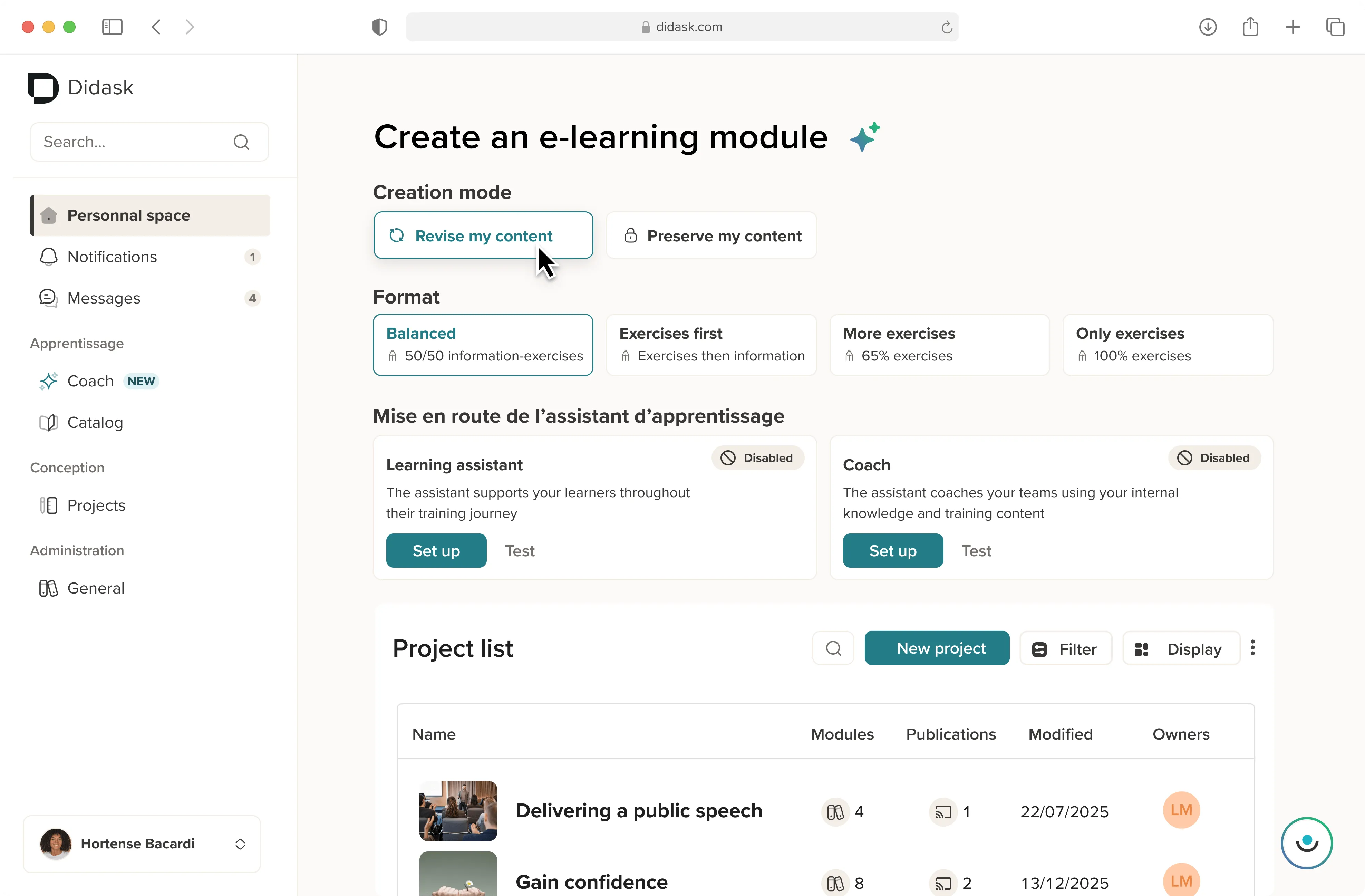
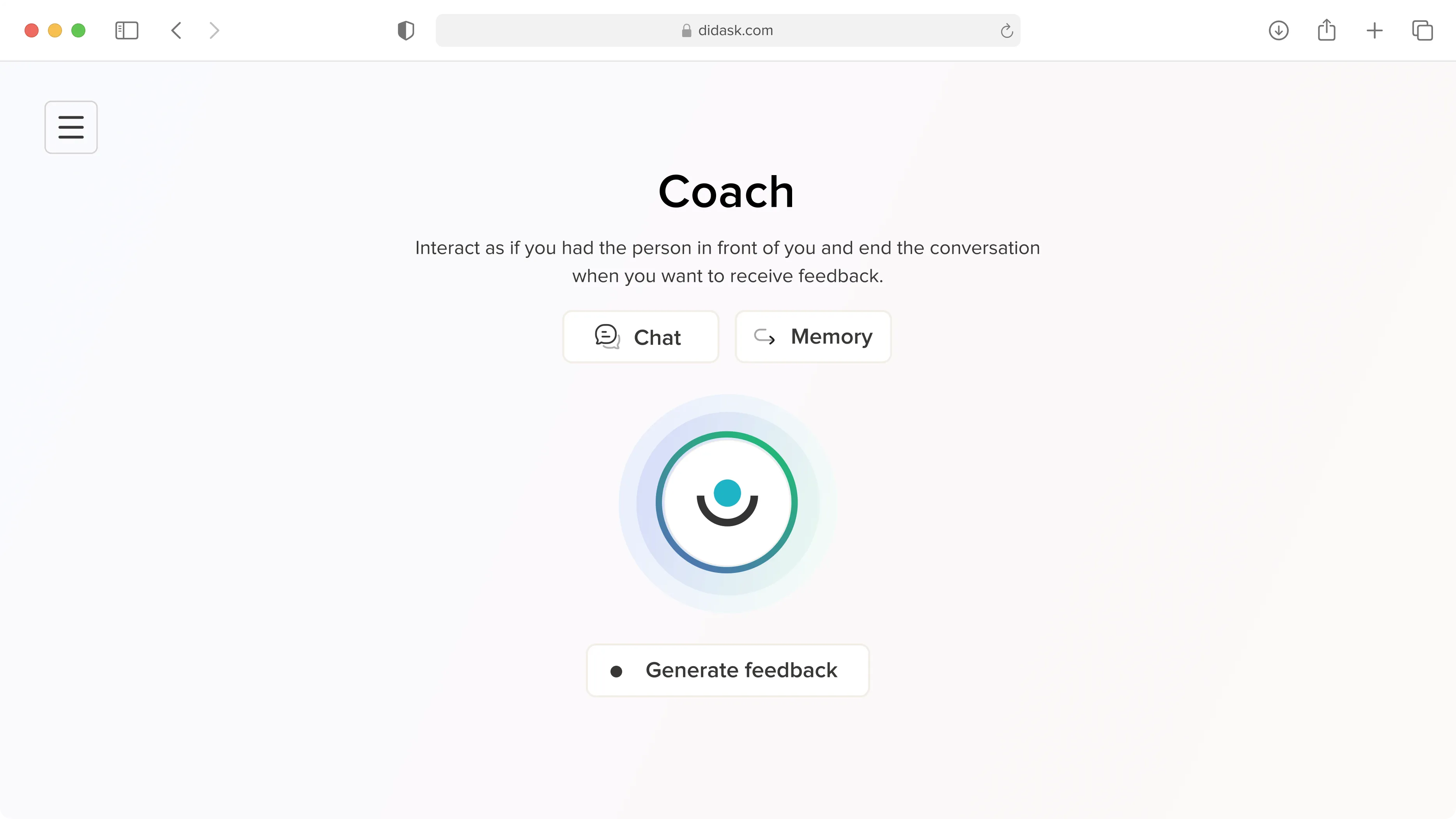
Of course, this approach requires adapted tools to move from intention to action. A platform like Didask facilitates its implementation thanks to its lms tool structured, its AI assistant to guide content creation, and its authoring tool designed to combine content and business use. This allows model effective routes, even without extensive technical expertise.
Didask: a concrete application
Human Centred Design is not just a concept at Didask, it is a philosophy applied on a daily basis, both in the development of the platform and in the courses offered. Each feature of the LMS Didask was designed with and for users, in direct connection with field feedback from partner companies and training organizations.
Thanks to his Author tool, instructional designers can create training modules rooted in concrete professional situations, as close as possible to the learners' work environment. The AI assistant comes to support them in the structuring of content, by offering clear formulations, coherent pedagogical logics and adaptation to learner profiles.
In addition, the system of Adaptive learning by Didask allows each user to follow a personalized path based on its responses, achievements or shortcomings. This guarantees a targeted and measurable increase in competence, while maximizing learner engagement and satisfaction.
Adopting Human Centred Design is rethinking training around the user : its needs, its uses, its constraints. It's a design process that focuses on empathy, iteration, co-creation, and accessibility.
With Didask, this philosophy becomes reality: an LMS tool designed for humans, at the service of business performance and educational transformation.
.webp)
.webp)
.webp)





.png)