


Onboarding is an essential part of the employee experience. Structured welcome courses, training platforms, documents shared from the first day... Welcome message sent, visit of the premises planned, schedule for the first day organized... On paper, everything seems ready to successfully integrate new employees. Maybe too ready sometimes.
Because in many companies, the first weeks remain surprisingly unclear. The newcomer moves forward, checks boxes, agrees in meetings. The manager, for his part, says to himself that everything is fine. Until you realize that, no, the job position is not that solid.
The problem is not a lack of effort. HR teams often do a lot, and quite well. But onboarding rarely fails through carelessness. It fails because of very logical, almost comfortable mistakes that are repeated because you think you are doing well. Neglecting early preparation, underestimating the importance of the first impression, or forgetting that onboarding is a long process: all risks that threaten the successful integration of each new hire.
In this article, we review these most common onboarding mistakes. Those that creep everywhere, discreetly, and that end up hurting what matters most: the engagement, productivity and retention of your talent.
Mistake 1: Overloading new employees from the first days
Jeanne-Claire arrives on Monday morning, motivated and focused. At noon, she has access and her equipment is in place on her desk. In the evening, a drive with “everything you need to know”: documentation, knowledge base, internal resources. On Tuesday, an onboarding course to follow. On Friday it's all over. On paper, it's flawless. In reality, when a concrete situation arises, Jeanne-Claire hesitates. She saw a lot of things. She doesn't really know what to do yet.
This error is probably the most common one. It starts with a good intention: not to forget anything, to show that everything is planned, to give as many keys as possible from the start. The problem is that we concentrate in a few days — sometimes in a few hours — what should happen gradually. And above all, we forget a simple reality: when we arrive in a new work environment, everything is already new and that's a lot.
Tools, colleagues, implicit rules, expectations that are sometimes unclear... The brain of the newcomer is already busy. Between the discovery of corporate culture, the numerous social interactions and the learning of internal practices, cognitive stress accumulates. Cognitive science speaks of cognitive overload: limited working memory can only process a limited amount of information at a time. Adding a massive layer of information, even well-organized, is the same as talking louder to someone who is already trying to understand. This reassures the organization at the time because “everything has been transmitted”, but in terms of effectiveness and the anchoring of learning, it is missed.
Added to this is another frequent confusion: wanting to give everything, all the same, and to everyone. Jeanne-Claire works in the legal department, but her onboarding journey makes her spend time on all product arguments and customer service processes. Is it really useful for its function? The essential is drowned in the accessory. Personalizing the journey is no longer an option: it is an essential condition for commitment.
An effective onboarding process therefore does not seek to tell everything, or to everyone. It seeks to provide what is essential, at the right time, with the right level of information to allow each person to start doing their own job well and find their place within the team.
Mistake No. 2: Confusing transmitting information and training
Jean-Franck is conscientious. As soon as he arrives, he does everything he is asked to do. Online modules, presentations, reference documentation: he reads, he looks, he validates. He even consults additional resources on the internal site. At the end of the week, her onboarding is officially over. On paper, everything is fine. In reality, when he has to apply what he has “learned” as part of his mission, as for Jeanne-Claire, it is much less fluid.
This confusion is very common: if the information has been transmitted, then the training is done. Logically, it fits. Pedagogically, much less. Watching a video or reading a guide doesn't magically turn someone into a self-employed professional. This is what cognitive science calls the illusion of control: to have the impression of knowing without being able to really act in a real situation.
Training is not about exposing someone to content in the hope that it will be enough. It's about building an interactive learning journey. A journey that advances in stages, that doses up information, that allows you to practice and test yourself on situations that are close to real life, and that provides personalized feedback in real time. The recruit must be active, not passive, to truly learn. This is where e-learning and mobile learning come in handy: they allow skills to be trained in a gradual and adapted manner.
The most annoying thing is that this illusion suits everyone. Jean-Franck does not always dare to inform his manager that he does not feel ready. The company, for its part, says to himself that “it's good, he saw everything”. The lack of an asset check masks the problem until an error occurs.
Effective onboarding is not just about what has been seen or validated. He wonders what has been trained, evaluated and corrected through regular feedback. It is this practical action that promotes retention and the development of real skills.
Mistake #3: Designing onboarding without starting from real work
Jeanne-Sophie followed an impeccable onboarding. Clean slides, company vision, well-aligned values, documented processes. He was even presented with the history of the brand and the latest strategic projects. Frankly, it's square. The problem is that on Monday morning, back at her desk, faced with her first real work situation, she finds herself staring at her screen wondering where to start.
This error is very common, and often invisible. Many onboarding sessions are designed from headquarters, based on what the organization wants to tell about itself. We are talking about brand image, employer brand, major orientations. It's interesting, sometimes inspiring. But this is not necessarily what Jeanne-Sophie needs at 9:12am when a concrete subject falls on her and she has to respond to a customer or manage an operational problem.
As a result, the lag is immediate. Jeanne-Sophie knows the global strategy, she could almost recite it. On the other hand, prioritizing daily tasks, using the right tools at the right time, or managing a slightly wobbly daily situation is still unclear. From a practical point of view, what she has learned is right. Simply, it is not yet very useful for increasing operational skills or for creating a link with your team.
Effective onboarding starts where the work really starts: in the field. It is based on the situations experienced, the decisions to be made, the possible mistakes. It is based on the real needs of the new position that we can organize a course that makes sense. It is under this condition that learning becomes transferable and that productivity accelerates.
Mistake #4: Leaving managers and business experts out of the design
Jeanne-Aurélie manages onboarding in her company. She is organized, eager to do well. The courses are clean, structured, coherent. She even set up a preboarding effective with a welcome message and the sending of the employment contract in advance. The problem is not what she did. Rather, it was what she had to do alone.
Because all too often, onboarding is designed without those who really know the job. Managers and field experts arrive after the fact. They are asked to be available to answer questions, to welcome newcomers on the day of their arrival, to ensure the visits of the locals. Sometimes, they are assigned a role of sponsor or mentor through a mentoring program, but without real involvement in the design of the device. A relationship of trust is poorly built without this coordination.
However, they are the ones who know what a new employee will need at their job. They are the ones who can help to integrate best practices and to plan the key stages of taking office. The situations he will encounter. Classic mistakes. Decisions that make you hesitate when starting out. Without their contribution, onboarding is consistent, but partially above ground.
HR obviously has a key role: providing the framework, ensuring overall coherence, structuring the experience and managing the administrative part. But designing an entire onboarding process without managers and business experts means depriving yourself of the essential: the reality of work. 82% of companies also do not feel ready the day a new employee arrives (source: Deloitte). Better communication and coordination between HR, managers and teams would bridge this gap.
Effective onboarding is a collective effort. HR orchestrate, managers and experts get their hands dirty, and everyone contributes to supporting the newcomer. It is this collaboration that reinforces the feeling of belonging from the very first days.
Mistake #5: Reducing onboarding to the first day or week
Jean-Louis had the right to an onboarding with the greatest care. Careful welcome with a visit to the premises, a busy agenda, presentations, meetings with the team. The first week was dense, almost reassuring. She was even offered a coffee break with her new colleagues to promote social integration. Then, the following Monday, nothing left. Jean-Louis feels a bit alone. Her commitment is beginning to crumble due to a lack of regular follow-up. The sense of belonging he had felt is fading away.
This error is common: thinking of onboarding as an event, rather than as a process. You put a lot of energy into the first day, the first week, and then you consider that most of the work is done. However, onboarding is a process that extends well beyond the onboarding phase. In reality, it is often in the weeks and months that follow that serious matters start.
If the objective of onboarding is to get an employee to take full control of their position, then we must be clear: this does not happen in a few days. Not even in a week. A new employee takes an average of 6 to 8 months before being fully operational. And 80% of recruits make the decision to stay or leave within the first six months. It is a crucial stage in the relationship between the new employee and the company.
But long does not mean monotonous. The weeks follow each other, without necessarily being the same. The challenges are evolving, the questions are changing, the level of support must be adjusted as the employee progresses. What's useful the first week isn't necessarily useful a month later. Regular follow-up points, feedback sessions and interim evaluations help maintain satisfaction and commitment over time. Planning for these regular interactions is essential for evaluating progress and setting new goals.
Effective onboarding accompanies the development of skills at the right pace, where the job is really at stake. It is a guide to optimize the integration of the employee in the long term, not just a formality of the first days.
.webp)
Tip: structure your onboarding over several months
Schedule regular check-ins with the manager: at Day 7, Day 30, and Day 90. Plan feedback and exchange sessions to adjust support as skills develop. Onboarding doesn't stop at the end of the probationary period.
Mistake #6: Measuring what's easy instead of what's useful
Jean-Bruce has been working with the team for three weeks. In terms of indicators, everything is fine. Courses completed, validations passed. On the internal site, his user account shows exemplary progress. On the ground, it's more nuanced.
Because while measuring completion rates is reassuring, it says nothing about the ability to manage a real situation, to gain autonomy, and to avoid classic mistakes. It's confusing activity and performance. The experience of new employees is not just about ticked boxes.
If the objective is to take control of the station, the Indicators need to change : ability to act alone, quality of decisions, evolution of the questions asked, feedback from the manager, satisfaction surveys, feelings about new situations. We can also take into account the regular updating of skills and the relationship between the time invested and the results obtained. More demanding indicators, but infinitely more useful for measuring the real impact of your integration system. It is this approach that allows the onboarding program to be continuously optimized.
Mistake #7: Underinvesting in the right tools
Without a budget, Jeanne-Brigitte designs onboarding with the resources at hand. PDFs, slides, scattered documents. No centralized solution, no dedicated platform. She does her best, but the device quickly becomes difficult and very time-consuming to follow, maintain and update. The digitalization of onboarding is no longer a luxury: it is a driver of performance and scalability. It is also an opportunity to strengthen the employer brand image among new hires.
With inadequate and fragmented tools, it is impossible to personalize courses, to easily involve managers and business experts, or to monitor real progress. It is also impossible to adapt the content to the pace and needs of each learner. The lack of an integrated solution penalizes the experience of new employees and lengthens the entire recruitment process.
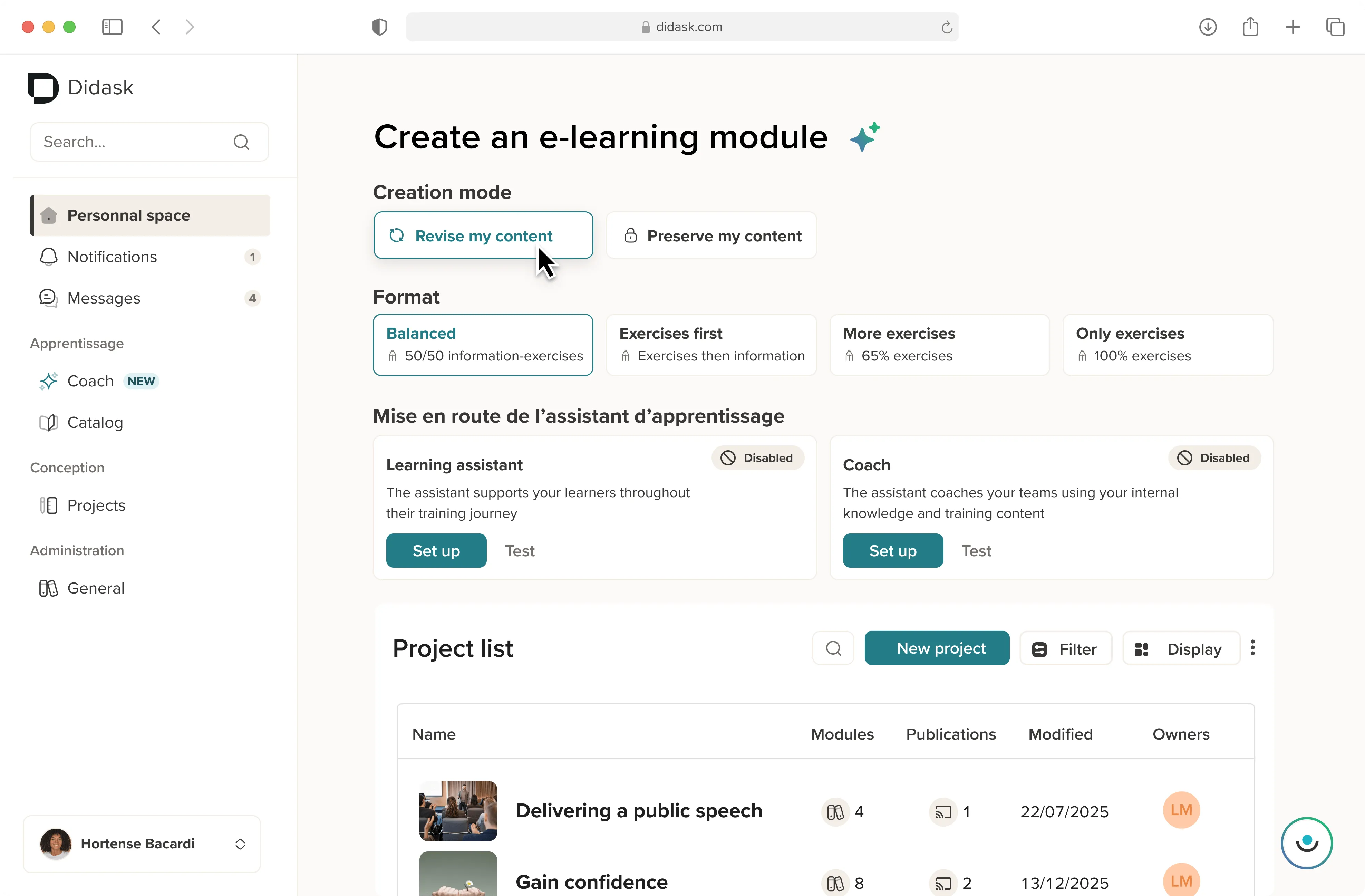
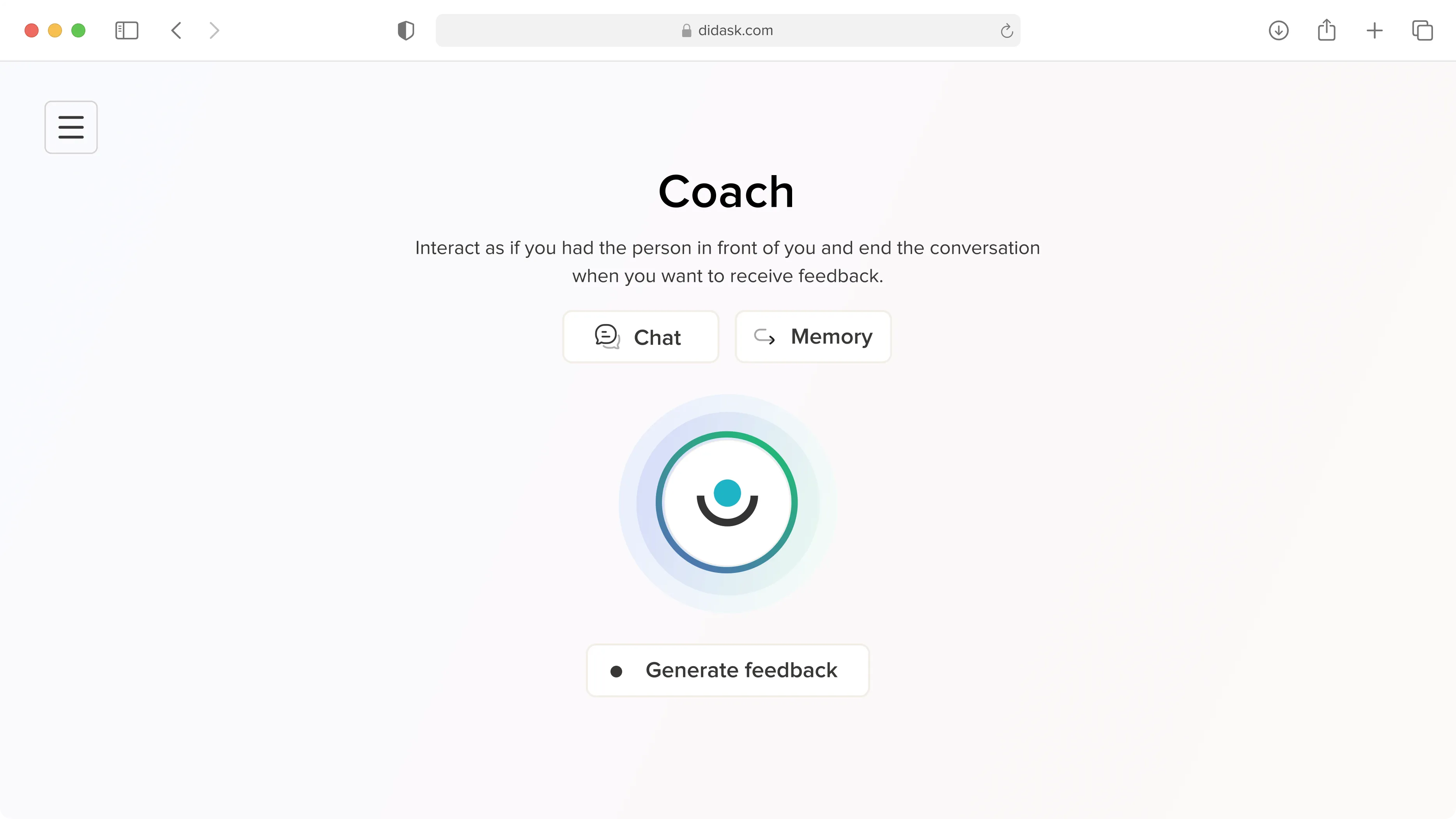
It is therefore necessary to have a solid platform capable of centralizing, structuring and transforming business knowledge into learning, measuring and adapting. An offer that meets the needs of onboarding management while promoting social integration and interaction within teams. This is precisely what Didask allows: to absorb educational complexity and to equip teams to design effective onboardings, without tinkering or heavy engineering. In particular, Didask's educational AI makes it possible to create adaptive courses that adapt to the level of each employee, while freeing up time for the HR and training teams. A real partner to ensure successful integration on a large scale.
Bonus mistake: Being afraid... of mistakes
We keep saying it at Didask: mistakes are part of learning. It is therefore normal to commit a few of them in your onboarding, don't worry. It's even an opportunity to learn and grow. The trick is to accept and understand them so as not to redo them again and thus advance your device. Regularly collecting feedback from your new collaborators allows you to continuously improve your integration process. Each feedback is a valuable aid in optimizing the experience of future arrivals.
Conclusion
In fact, onboarding doesn't fail because businesses aren't doing enough. It fails because we do a lot of things, but not always in the right place or at the right time. We inform too much, we don't train enough. You heal at first, then you let go. Completion is measured, not skill. We overlook preboarding, we underestimate remote onboarding, and we forget that social integration is as important as technical training.
The result is employees who move forward, but a bit by experimenting. Not incompetent. Just not yet armed for the real work, the one that starts when the supports are closed. People who have not yet found their place, due to the lack of a adapted support.
Thinking of onboarding as a living, progressive, and sometimes a bit uncomfortable learning path doesn't make life complicated. It means accepting that taking a new position can be learned. And that a successful onboarding, it's a profitable investment: less turnover, more engagement, and accelerated productivity. In the final analysis, it is also a matter of common sense: supporting your talents as soon as they arrive means giving them the means to succeed — and you have the opportunity to keep them.
.webp)
.webp)




.webp)

.png)