


We talk a lot about onboarding, often with brilliant words: employee experience, employer brand, corporate culture... However, behind these beautiful concepts, the integration of a new employee too often remains a succession of meetings, documents to read and welcome videos where you smile politely without understanding everything.
Let's be fair: a lot of businesses have already made an effort. The LMS platforms have been modernized, the routes are better thought out, the messages more careful. The days of the welcome booklet in PDF sent by email seem far away. And yet... despite all these tools, the core of the problem persists.
Because onboarding is not just a question of technique or automation. What matters is not what you show the employee, but what they really learn. Yes yes, I am talking about apprenticeship!
Those first few days — those first weeks, in fact — play a decisive role. They can transform recruitment into lasting success... or early departure. In a job market where attracting and retaining talent is becoming a combat sport, onboarding is no longer an HR detail: it is a strategic performance phase.
This article proposes a change of perspective. To see onboarding not as an integration ritual, but as a real learning journey, where cognitive sciences and digital technology finally offer the means to sustainably succeed in this decisive stage. Are we going?
What is onboarding and why is it a decisive moment?
Onboarding, literally “boarding”, refers to the process between the moment a candidate signs their employment contract and when they become a full member of the company. An in-between that is often underestimated: neither quite the recruitment process, nor yet training, nor total social integration. However, it is during this period that everything comes into play: understanding the position, trust, a sense of belonging and, more generally, the quality of future collaboration.
Onboarding, much more than a simple “welcome”
For a long time, integrating someone consisted of showing someone around the premises, introducing the team and handing over some practical documents (does that bring back memories?). Today, most companies have understood that it is necessary to go further: prepare the equipment in advance, communicate before the arrival of the new employee, offer digital modules or immersive courses.
This is real progress: employees feel expected, supported and taken seriously. But successful onboarding isn't just about making a good first impression. It should allow the new employee to understand what they are doing, why they are doing it, and how they can do it effectively. In other words, it is no longer just about informing, but about helping to learn and promoting autonomy.
A strategic moment for performance and loyalty
Several HR studies, including an often cited Brandon Hall Group survey relayed by Glassdoor, indicate that structured onboarding could improve the retention of new employees by up to 82% and their productivity by more than 70%. Even if these figures vary depending on the context, the trend is clear: a good start determines the future.
Conversely, nearly one employee out of two would consider leaving their job in the first year when integration is not well experienced. And here, the consequences go far beyond simple administrative inconvenience. Bad onboarding is a bit like recruiting a new bass player for a rock band*, having him rehearse three times without really explaining the setlist to him, then going on stage. If he leaves the ship the day before the concert, it's not just the bass line that collapses: it's the whole band that falters, the fans that doubt, and the tour that crashes.
In a company, the disengagement or early departure of an employee produces the same domino effect: loss of pace, internal tensions, damaged image and a lot of energy to be reinvested to “reconnect the amp”.
Onboarding is therefore an investment that pays off:
- For HR teams, it limits repeat hires and optimizes talent management
- For managers, it accelerates the development of skills and strengthens team cohesion
- For the company, it aligns culture and performance while improving retention rates
- And for the rookie, of course, he promotes his development and development within his new team.
What businesses are still forgetting
Despite progress, most devices remain focused on the transmission of information: processes, organization charts, internal tools, corporate values... In one week, we try to condense several months of implicit culture. As a result, newcomers often come out drowned in cognitive load.
Good onboarding is not the one that gives the most information, but the one that meets real needs, helps to understand, connect and use in action. And what is often missing is the link between theory and action: how does this “customer orientation” value translate into an email? How does this process impact daily decisions?
Also be careful, it's not just a matter of tools. Digital platforms have made the experience more fluid, but they do not replace a clear educational intention: what should the person learn, at what pace and under what conditions?
A moment that is both emotional and cognitive
Onboarding is also a moment of vulnerability. Everyone wants to do the right thing, but does not yet know the codes. The desire to integrate is strong, but the way to achieve this remains unclear. It is therefore a period where learning is intense, and where mistakes can be costly in terms of trust and adaptation.
This is where the cognitive dimension comes into its own: in these first weeks, the newcomer's brain sorts, assimilates, tests. Each interaction, each task, each feedback gradually builds its mental model of “how we work here”. To ignore this reality is to leave the quality of integration to chance.
In summary
Onboarding is not an administrative formality or a series of checklists. It is a strategic and educational moment where the success of recruitment, collective cohesion and long-term performance are at stake. And while many companies have modernized their tools, the real challenge lies elsewhere: designing devices that really teach people, so that each employee understands, experiences and is permanently anchored in their new work environment.
Why onboarding is often a missed appointment with apprenticeship
Even though companies take care of their integration processes for new employees, one observation persists: many leave their onboarding without really having learned how to work. They know the values, the procedures, sometimes even the first name of the CEO... but remain hesitant, dependent, not very autonomous.
The intention is good, the result less so. Why? Because most devices confuse information, socialization and learning.
A flood of information that tires more than it trains
The first mistake is wanting to say everything right away. Newcomers are often welcomed by a deluge of information: corporate culture, tools, procedures, strategies, internal acronyms... In a few days, they hear more concepts than they will remember in a month.
The result: cognitive overload. The human brain cannot effectively encode so much new data in such a short period of time. Instead of facilitating integration, this avalanche of information creates confusion and even frustration: the person has the impression of having “seen a lot” but of not really controlling anything.
It's as if your guitar teacher showed you all the chords at once on the first day, without ever giving you time to practice them. At the end of the course, you don't know how to play any of them.
An experience that is still too top-down
Second mistake: onboarding is still too often designed as a one-sided transmission. We explain, we present, we unfold. The employee listens, takes notes, checks off e-learning modules. Everything is calibrated, but nothing forces him to think, test, or reformulate his mission or goals.
However, you don't learn by listening, you learn by actively processing information, by relating it to what you already know, by making mistakes, and then by correcting. Onboarding should be a time of ownership, not a succession of benevolent monologues.
The paradox of “everything planned”
Another common pitfall: the hyper-structured process. Roadmaps, precise agendas, modules to be validated... everything seems precise. But by dint of wanting to master the course, we take away what makes it rich: the right to try, dialogue, experience.
Overly supervised onboarding leaves no room for learning by doing. One observes without experimenting, one reads without doing. And after a few weeks, the recruit discovers the real complexity of the new position, often alone.
It's as if you spent three weeks explaining cornering theory to a driver without ever letting him get behind the wheel. Everything is fine as long as the car stays on paper.
A vision that is still too “HR”, not “learning” enough
A lot of onboarding was thought of as HR projects, not as learning paths. Their logic is administrative and cultural: “let's make sure that the person is welcomed and checks off all the steps.”
But integration is above all a accelerated learning process : learn a job in a new context, learn a work culture, learn to collaborate with new people and to integrate into the organization.
Even today, too many companies think “content” before thinking about “skills”. And this is where onboarding becomes a beautiful empty program: well presented, well digitized, but not very transformative and with no real impact on performance.
In summary
If so many onboardings fail, it is because they stop at the surface: they inform, reassure, decorate, but do not transform. The real challenge is not to add content, but to allow employees within the company to learn actively and understand the rules of the game. Onboarding shouldn't be a welcome PowerPoint: it's the first ground Work-based apprenticeship.
Successful onboarding is first and foremost a successful learning path
Onboarding as a real learning experience
An effective onboarding process should allow employees to understand, act, adjust and feel competent. This implies moving from a logic of transmission to a logic of experimentation: giving the possibility of trying, observing, questioning. For example, a module on “customer culture” should not be limited to an inspiring video: it can invite the recruit to analyze a real customer exchange and to identify good reflexes, thus ensuring a better understanding of company policy.
The contributions of cognitive sciences
Cognitive science provide valuable references here to optimize the integration process, such as:
- Spacing : it is better to spread the learning over time rather than concentrating everything in the first week
- Activation : we better remember what we reformulate or practice actively
- The feedback : accurate, rapid and constructive feedback makes it possible to correct the trajectory and avoid lasting errors
- The meaning : the brain learns better when it understands the purpose of a task and its impact on goals
Applying these principles in onboarding means transforming “information” into useful knowledge and operational skills.
The role of digital technology: simplify, not overload
Digital tools, like LMS, offer great possibilities: adaptive paths, Situations, simulations, exchanges between peers. But be careful, digital technology must remain a means, not an objective.
A good digital onboarding system frees up human time: HR and managers can focus on support, conversation and practice. Digital technology also makes it possible to personalize the pace: everyone learns differently, and onboarding should adapt to these differences rather than smooth them out, while guaranteeing access to essential resources in real time.
Social and collective learning
We often forget that onboarding is also a social moment. New employees learn a lot by observing their peers, asking questions, discussing “real” work codes and participating in team building activities.
Encouraging these interactions, via a mentor, a buddy, or simply time for exchanges and regular interviews, undeniably promotes trust and accelerates understanding. It is a form of informal learning, but crucial for social integration and the creation of lasting relationships.
In summary
Successful onboarding is not based on the quantity of information shared, but on the quality of the learning experienced. It connects theory to practice, the digital to the human, and the individual to the collective. It's open-air learning, where every day counts to anchor good reflexes and build trust, while offering a concrete solution to retention and performance challenges.
How to build a truly effective (and human) onboarding
Step 1: think “learning before tools”
Before choosing a training platform, a checklist or a booklet, it is necessary to define what the employee must really learn in order to take a job successfully. What skills? What attitudes? What decisions should he know how to make? What are the expectations and responsibilities associated with its mission? It is this educational intention that will guide the rest and make it possible to organize a coherent framework.
Step 2: Create a story thread
A good onboarding tells a story: that of discovering a job and a culture. Each step should give meaning to the previous one, like a well-constructed rock piece: intro, verse, rise, chorus, solo. Recruits need to understand the “why” of each stage. This narrative thread reinforces commitment and memory, while facilitating communication around the main challenges of the company.
Step 3: alternate formats and rhythms
The key moments of a structured program:
- Short digital modules (microlearning) to introduce concepts
- Concrete practices to anchor and promote autonomy
- Time for exchanges with peers and managers to give meaning and assess progress
- Cognitive breaks to avoid overload and allow adaptation
It is this variety that maintains motivation and promotes memory, while reinforcing the feeling of being well integrated.
Step 4: involve managers and teams
The role of the manager is essential: he is the one who embodies the culture and provides the keys to the job. But he is not alone. Colleagues, peers and HR also participate in this collective learning and are valuable partners.
Even better: everyone can (and should) contribute to building part of the onboarding process according to their field of expertise. The sales manager, for example, can create a module on “the fundamentals of sales in our company”; the quality manager, a module on “best practices in the field”.
This collaborative logic makes onboarding more lively, more embodied and more credible. But for this to work, you still need tools that allow everyone to create without being an educational engineer. Simple, guiding solutions that absorb complexity to focus on the essential: what we want to transmit.
Step 5: choosing the right tools (and knowing how to use them intelligently)
Thinking about learning before tools is essential. But choosing the right tools afterwards is just as strategic for the effective management of the process.
A good onboarding tool should:
- make it easy to create quality educational content
- integrate naturally into the daily life of recruits. Not in a dark corner of the Intranet but in their everyday tools (hello the LIFOW)
- encourage action rather than passive consumption
- simplify the life of contributors (HR, managers, business experts) and ensure effective follow-up
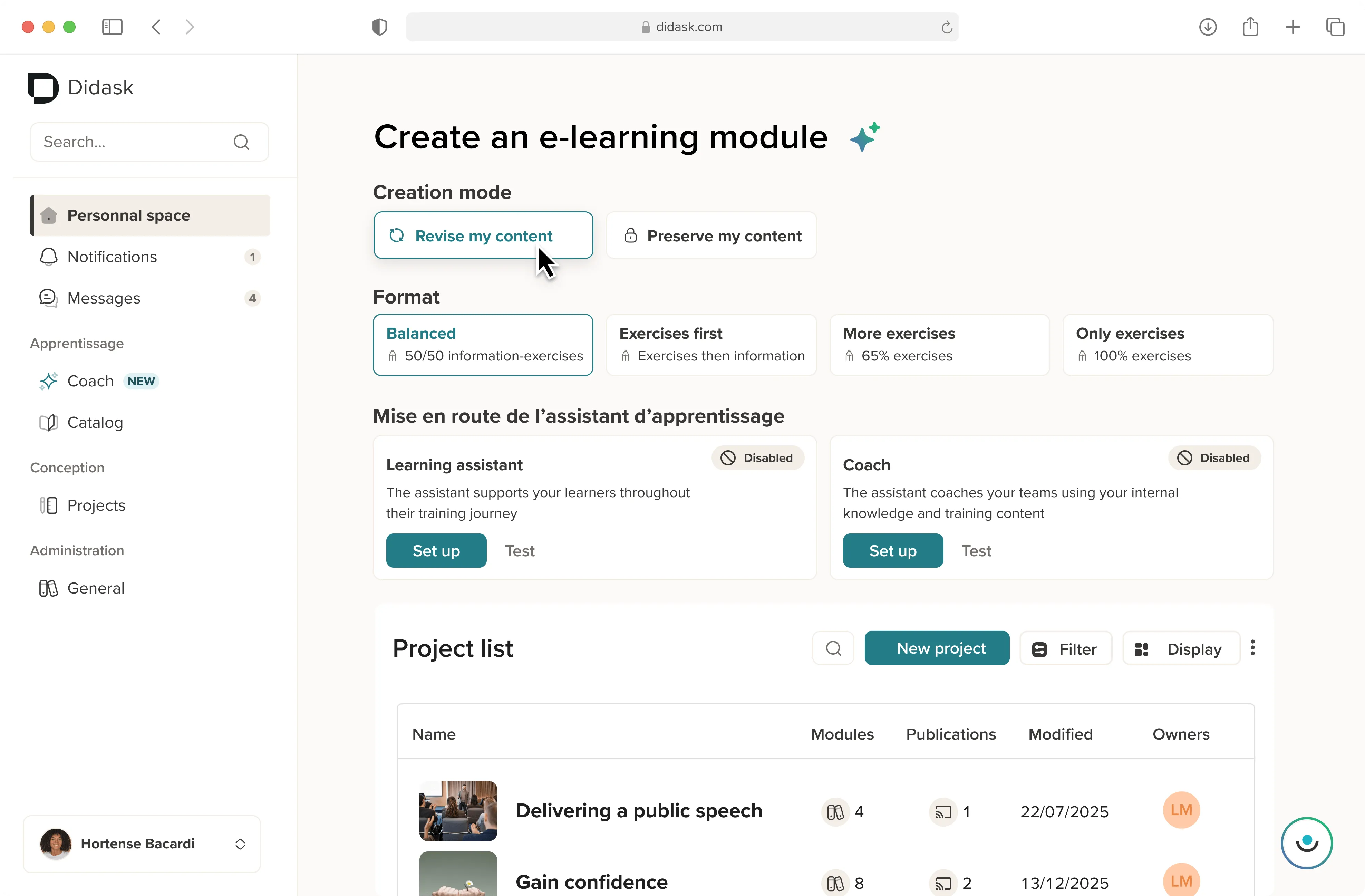
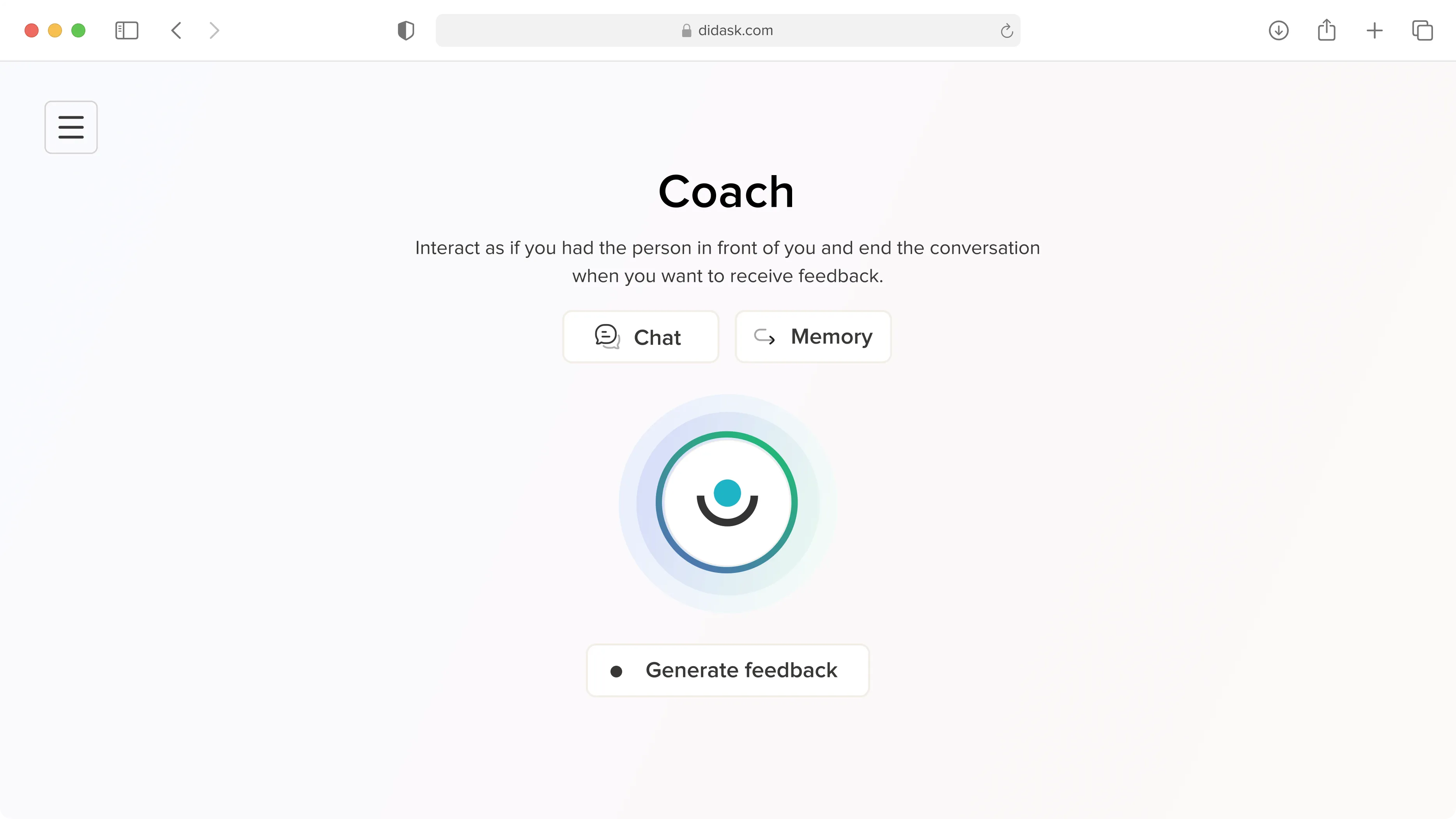
The goal is not to stack software, but to build a smooth, consistent experience without a “gas factory.” A tool like Didask, for example, does just that: it absorbs educational complexity thanks to its educational artificial intelligence based on cognitive sciences, and allows any business expert to easily create effective and engaging modules that meet real needs.
Clearly, it is not about having “more tools”, but about having the right tools to make learning possible at all levels and guarantee a positive return on investment.
Step 6: Integrate continuous assessment
Rather than waiting for the end of the course, you have to measure the progress as you go. A short questionnaire, a scenario, a discussion with the mentor: so many opportunities to adjust the situation, assess achievements and value progress. Evaluation should not be seen as a check, but as a learning mirror that allows valuable data to be collected to continuously improve the process.
In summary
Building effective onboarding means thinking like an educator: understanding how people learn, and creating the conditions for that to happen.
It is not an “HR experience” to be carried out, it is a human experience to live supported by the right tools and involved teams, as part of a global talent management strategy.
From onboarding to sustainable performance
The final challenge of onboarding, as you will have understood, is not the good mood of the first day (even if we love the good mood), it's the performance over time. When employees learn quickly and well, they quickly become useful, autonomous and committed. It understands the priorities, the codes, the subtleties. Above all, he feels competent, and that feeling is a powerful driver of loyalty and success.
An onboarding focused on learning therefore does not end after two weeks. It extends over the first few months, with gradual support that ensures a continuous increase in skills. Some companies even extend this model for all key moments: internal mobility, job changes, business resumption.
Onboarding as a learning culture
Ultimately, good onboarding is a reflection of a company that is learning. An organization that is formed, questioned, and transmitted. When integration becomes a learning space, it permeates the entire corporate culture: curiosity, mutual aid, and progress become natural. And this is where onboarding goes beyond its initial role: it becomes a lever for sustainable transformation, a great development opportunity for the entire organization.
Conclusion
Taking care of your onboarding is not only about welcoming properly. It means giving each new recruit the means to learn quickly, well and sustainably, in an environment where everything is constantly evolving. For a long time, companies have been looking for the right formula: a clear process, efficient tools, a bit of people and a lot of goodwill.
But the onboarding of the future will no longer be content with being fluid or digitized. It must be educational, in the strong sense of the term: allow you to understand, act and feel competent from the very first days, while promoting real added value for the company and the new employee.
Digital technology, well used, is not an end in itself. It is a lever to promote real learning, one that is anchored, transferred and transformed. And it is precisely this approach that Didask puts at the service of companies: helping to design onboarding paths that are based on cognitive science, practice, and the understanding of real work.
Because successful onboarding is not the one that informs the best. He is the one who makes people learn for good. And this is exactly where Didask makes the difference by offering a modern and effective definition of integration: a structured, personalized and measurable learning process, at the service of collective performance.
.webp)
.webp)
.webp)





.png)