

The digital transition has transformed practices within accounting firms. An opportunity to refocus the accounting profession on its most human aspects
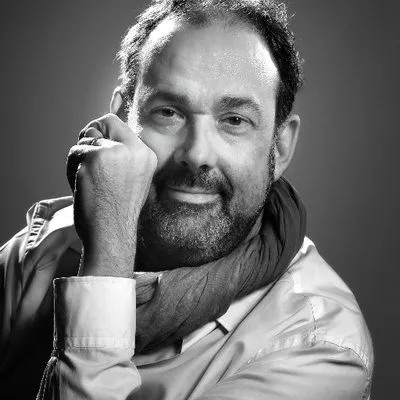
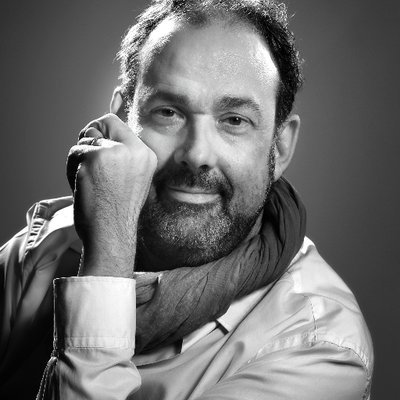
Interview with Philippe Barré, founder of Pluriel Consultants
In a previous interview, the President of the Order of Chartered Accountants, Laurent Benoudiz, presented the current challenges facing the accounting profession and the solutions put in place by the OEC to address them. We discussed in particular the E-COLL training programme developed jointly by the start-up Didask and the accounting firm Pluriel Consultants. Philippe Barré, founder of Pluriel Consultants, reflects on this collaboration.
Tell us briefly about the activities of Pluriel Consultants
Philippe Barré – Pluriel Consultants is an accounting firm of an unusual kind, as it carries out the bulk of its work on advisory assignments, outside the traditional remit of the accounting profession. Despite the deliberately small team size, our scope of work is broad and our assignments exclusively bespoke. Today, Pluriel has around twenty consultants working across our five areas: advisory support, instructional design, assistance to works councils, and of course accounting and statutory audit.
What is the impact of the digital transition on your profession, accounting?
P.B. – The independent accounting profession currently has 150,000 practitioners and has undergone multiple regulatory and technological changes over recent decades. These have impacted the way accounting work is done but have not called our usefulness into question: clients, assignments, the revenue model and employees have remained the same. Today, the profession faces an unprecedented disruption. Some software providers now offer solutions that produce the bulk of accounting entries in real time and without human intervention. How can we justify maintaining our fees when sales, banking transactions and purchases are automatically recorded in the accounts, and bank reconciliations are carried out by an application costing just a few euros a month?
This automation will have two major impacts on firms: on the one hand, average revenue per client will fall for traditional services, and on the other, employees will see their activity levels drop significantly (by between 25 and 40% according to estimates and profiles). The average revenue per client has already fallen by a third in real terms over the past 10 years. In a study we carried out, we estimated that 30,000 to 40,000 jobs were at risk. A large part of our traditional tasks will therefore disappear, and the digital transition will obviously not stop there. Firms will fall victim to a "domino effect" that will force a complete overhaul of their offering, client relationships, human resources, communications and marketing. The question every chartered accountant must urgently ask themselves is: how can we keep our employees occupied and maintain revenue? The answer lies in adapting our processes, developing new services and evolving the team's skills. There is a great deal of strategic work ahead.
As a training organisation, what criteria guide your pedagogical choices?
P.B. – I have always been passionate about training and learning. When I was an associate lecturer at university and at the Cnam, I created a number of highly innovative training programmes for the time. At Pluriel Consultants, we notably created the Trans-formations, designed to support the transformation of accounting firms.
Our extensive experience in support has taught us that "those who do not contribute do not take ownership". In other words, no progress without effort. Endless PowerPoint presentations have abundantly proved their ineffectiveness. We refuse to offer childminding training, because that is not what firms need. After a few weeks, with a little perspective, they are disappointed: despite the initial promise and enthusiasm, their firm has not changed. Nothing happened, because the learning remained superficial.
That is why we want a different, more in-depth approach. In their interest, we are demanding of participants so that they truly invest in their own success.
And your technology choices?
P.B. – To be honest, we explored a fair number of solutions with a great deal of disappointment along the way. Most of the platforms we tested place emphasis on the administrative dimension (managing participant records, logging time spent on the platform, monetising training…) or the entertainment dimension (creating avatars, videos, etc.), but few on the learning dimension. They have no genuine pedagogical rigour. Most sites are little more than slide repositories with no added value.
From your perspective, how did your collaboration with Didask go?
P.B. – We were introduced to the Didask team by the Order of Chartered Accountants of Ile-de-France. The President wanted to create an effective training programme to move firm employees from their role as bookkeepers to that of local advisors for their SME clients. The stakes were enormous for the profession, because we needed to make them unlearn what they had been applying for years.
The Order quickly reached the conclusion that traditional online training was not appropriate, but that given the number of employees to train, 100% in-person seminars were not feasible either. That is why they turned to Didask for the learning platform and to Pluriel Consultants for the design of the training content.
We were immediately won over by the ambition of the Didask project. Thanks to the team's pedagogical expertise, we very quickly understood the advantages of this in-depth approach, which we had never encountered before. The training we co-developed has been a real success. The combination of online training and in-person group days is highly effective. The results are very satisfying and participants are delighted.
As an example, one participant stated in a post-training evaluation:
"You come out of this training completely changed and enriched by the various exchanges with colleagues and trainers. I think it is the best training I have, so far, attended. The learning approach on the platform is particularly innovative compared to the usual e-learning programmes."
What more could you ask for?
Other articles on training in the accounting profession
Case study: an effective programme to help the accounting profession transform
1: E-coll: a demanding training programme for the digital transformation of the accounting profession
2: Accounting profession: the method used to create modules that precisely meet the profession's needs
.webp)
.webp)
.webp)

.webp)


.png)