

Training can help change mindsets on disability in the workplace
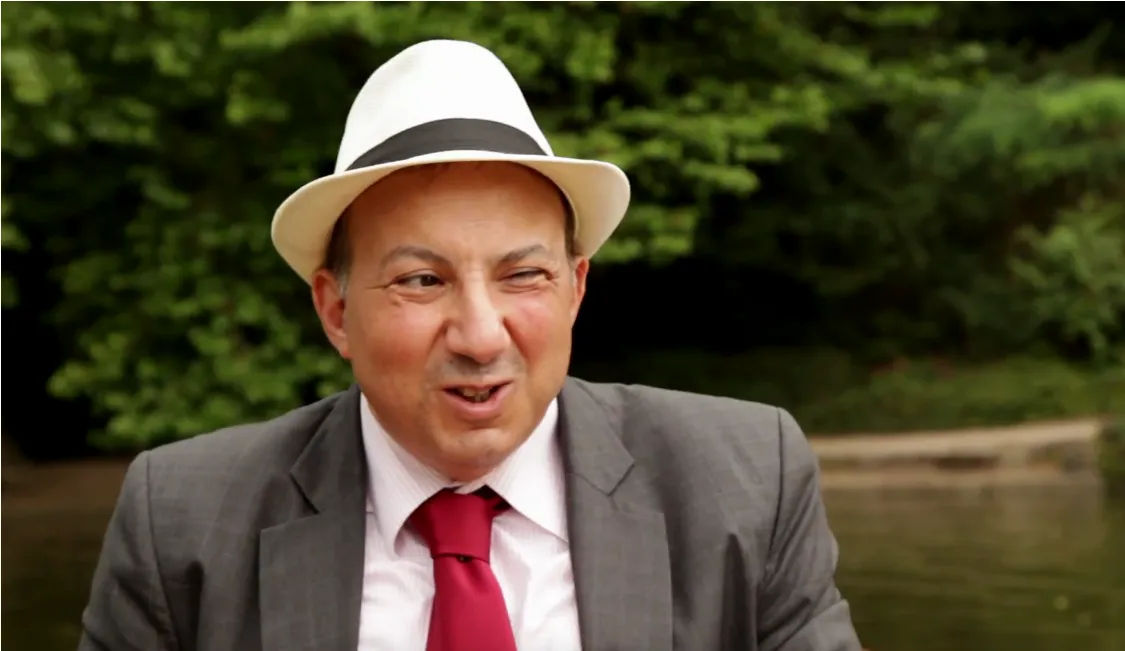
Hamou Bouakkaz, politician, association leader and diversity management consultant, is one of the main designers of the Zest' training — the first e-awareness programme dedicated to disability in the workplace. Blind from birth, he has successively worked as a trader, engineer and teacher, always with a concern for social responsibility and kindness at work. He explains how our relationship to disability, beyond stereotypes, is nothing other than our relationship to the otherness in which we refuse to see our own reflection. Knowing how to recognise ourselves in others and vice versa is ultimately the challenge of awareness-raising, in the workplace and beyond.
Why does disability concern all companies?
Disability is no longer the preserve of a few people who were born unlucky or victims of poorly treated illnesses!
It now affects, temporarily or permanently, nearly one in two employees. People who are blind from birth, like me, are a dying breed!
What is the point of raising employee awareness on this subject?
New technologies and improvements in medical care mean that people can now live, work and lead with a disability, provided that the environment and prejudices do not join forces to put insurmountable barriers in their way!
An informed workforce is an attentive workforce, one that is aware of decision-making biases. Zest' shows that you can be in a wheelchair and be an aerobatic pilot.
No one could have imagined that a blind person could be a trading room operator, before my company took the opportunity to give me that chance.
Nor could anyone imagine that Josef Schovanec, autistic author of several bestsellers, an honours graduate who attended Sciences Po Paris, only found his first job because he happened to meet a blind employer who did not hold it against him that he didn’t look him in the eyes!
Can better consideration of disability situations in the workplace impact organisational performance? If so, how?
Undoubtedly! It is about re-examining the tasks to be carried out within a team in order to put everyone in the best conditions to be at the peak of their abilities for as much of the time as possible.
By adapting to an employee's fatigue levels, by allowing remote working for someone who finds it harder to travel, by not overwhelming the socially anxious person's schedule with meetings, you send an inclusive signal that motivates the employee who benefits from it without penalising their colleagues.
Taking disability situations into account can sometimes accelerate change: when I took up my position as Deputy Mayor of Paris, it helped to advance certain work processes. For example, my presence accelerated the introduction of paperless council proceedings.
Which misconception about disability would you most like to help dispel?
"The disabled person is either a hero or a cursed individual." Being disabled does not grant superpowers, any more than it systematically leads to failure and difficulty in interaction.
Zest' speaks knowledgeably about resilience and shows how foolishness is the most widely shared thing in the world.
To what extent can training help change mindsets on disability?
Zest' is a playful, guilt-free way to begin this journey into otherness. You enter the training thinking you are going to discover someone different.
You leave it discovering that, with a few prejudices and ways of seeing set aside, we are all similar: a subtle blend of self-confidence and doubt, of fragility and boldness (see also our articles Disability in the workplace: deconstructing prejudices through training and It's (high) time to change our perspective on disability in the workplace).
.webp)
.webp)
.webp)





.png)