
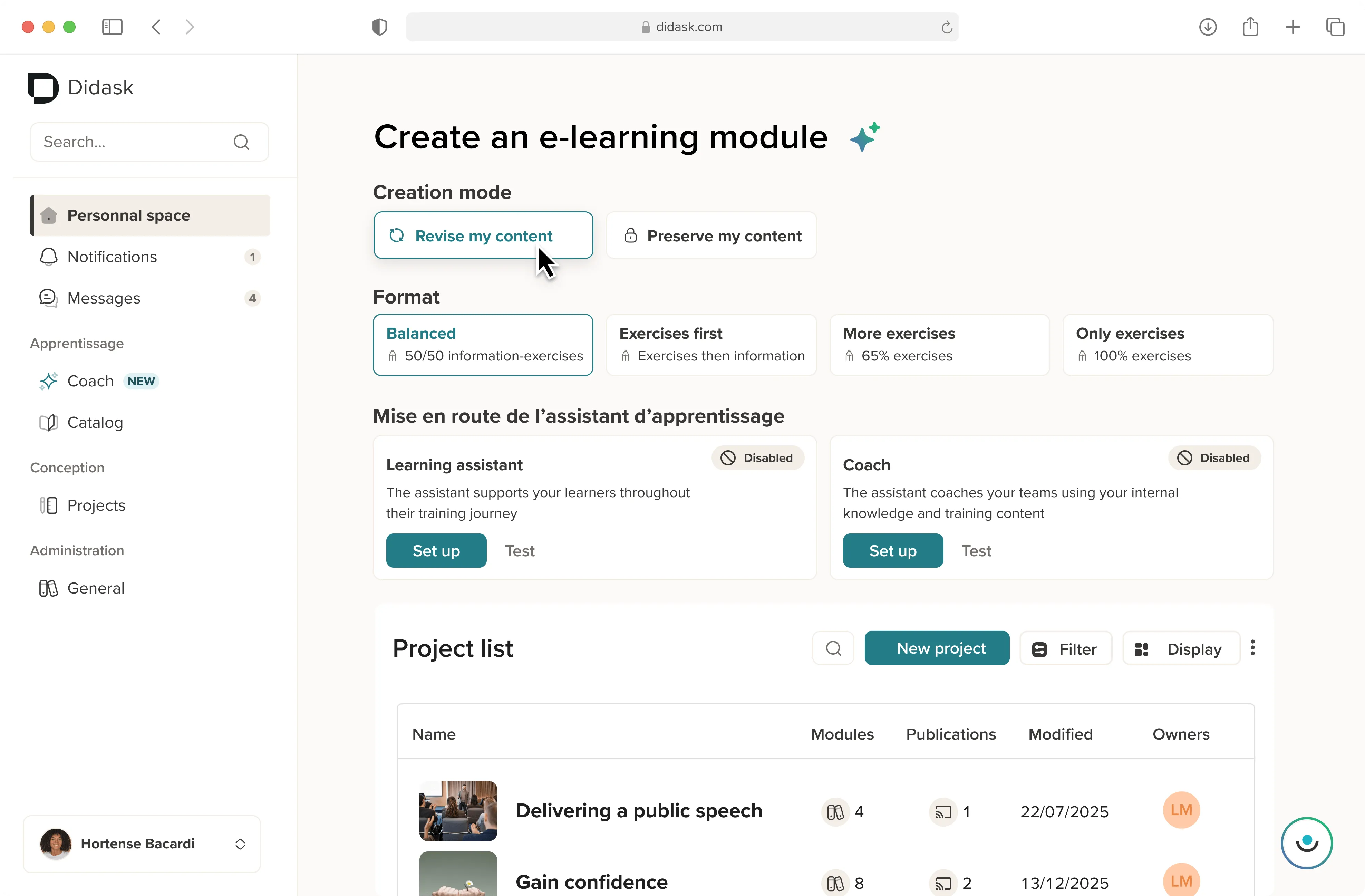



Far beyond the simple digitization of content, instructional design is redefining the relationship between learner and knowledge, placing interaction and engagement at the heart of the learning process.
Faced with this evolution, instructional designers are faced with a major challenge: how to effectively orchestrate the new possibilities offered by digital technology, while guaranteeing an authentic and transformative learning experience. How do you design learning paths that combine technological innovation and effective instruction? Let's find out.
The digital transformation of educational engineering
The advent of digital technology has profoundly changed the traditional codes of training. The learner is no longer a simple passive receiver of knowledge, but becomes a real player in his learning. This fundamental evolution requires a rethinking of instructional design methods, where interactivity and engagement become essential pillars.
Instructional designers are seeing their role evolve into that of architects of learning experiences. Their mission? Create paths that stimulate the active engagement of learners while maintaining consistent educational progress. This new paradigm requires a fine mastery of interactive formats - practical exercises, simulations, dynamic evaluations - which make it possible to transform each learning session into an opportunity for concrete skills development.
This renewed approach to educational engineering is based on a simple but fundamental observation: the effectiveness of training is based in part on the active engagement of the learner.
The challenges of digital instructional design
The digitalization of training brings its share of opportunities, but also places designers in the face of new challenges.
The first of these lies in the need to master a range of tools that are constantly evolving. Beyond simple technical competence, it is a question of understanding in depth how each tool can effectively serve educational objectives.
A major challenge is to avoid the pitfalls of excessive “gamification” or cognitive overload. There is a great temptation to enrich training courses with numerous interactive elements, but as cognitive science points out, the multiplication of stimuli can hinder learning.
The real challenge lies in the ability to build courses where each digital element brings real educational added value. This reasoned approach to digital technology requires a detailed understanding of learning mechanisms and an ability to select the most relevant tools for each training objective. Educational artificial intelligence is emerging today as a valuable ally in this quest for balance between innovation and efficiency.
Optimizing digital educational engineering
The optimization of educational engineering in the digital age is based on a subtle alliance between cognitive science and technology. Research shows that the effectiveness of a learning path depends on its ability to actively mobilize the learner's cognitive processes. To do this, each teaching sequence must be carefully structured around clearly defined objectives.
The key lies in the intelligent articulation of pedagogical modalities. An effective journey intelligently alternates the phases of acquisition, practice and consolidation. This orchestration is no longer left to chance: educational artificial intelligence now makes it possible to finely analyze content and recommend the most relevant formats for each learning situation.
This scientific approach to instructional design finds its most successful expression in next-gen LMS platforms.
Towards intelligent personalization of training
Personalization represents the most promising horizon of digital educational engineering today. Thanks to artificial intelligence, we are entering an era where each path can dynamically adapt to the specific needs of the learner. This evolution marks a decisive turning point: the end of standardized training in favor of truly individualized learning experiences.
Educational AI analyzes learner interactions, pace of progress and bottlenecks in real time. This ability to analyze makes it possible to continuously adjust the course, offering targeted exercises, strategic revisions or additional content exactly when they are needed. Training thus becomes a constant dialogue between the learner and the learning system, guided by data and enriched by artificial intelligence.
This revolution is paving the way for a new generation of professional training, where educational effectiveness is no longer a promise, but a reality that can be measured and optimized continuously.
Educational engineering in the digital age is not just about tools or technologies. It embodies a real revolution in our approach to learning, where technical mastery is put at the service of a pedagogical vision informed by cognitive sciences.The key to success lies in our ability to design learning experiences that combine the effectiveness of proven methods with the possibilities offered by artificial intelligence. This alliance finally makes it possible to realize the promise of training that is truly adapted to contemporary challenges: personalized, engaging and measurable.
.webp)
.webp)
.webp)

.webp)



.png)