


Between the MOOC open to all and traditional face-to-face training, a new pedagogical approach was created: the SPOC (Small Private Online Course). This digital device combines flexibility of online learning and The effectiveness of a small group to create an engaging and personalized learning experience.
For companies as well as for training organizations, the SPOC represents a A real lever for increasing skills collaborators. Let's see together what it consists of and how the Didask training platform supports organizations in its implementation.
- Definition: A SPOC (Small Private Online Course) is a private online training program reserved for approximately thirty selected participants, unlike MOOCs which are open to everyone.
- Format: Combines digital courses, dedicated instructor support, varied educational resources (videos, quizzes, virtual classes) and continuous assessments to guarantee skills development.
- Key difference: While MOOCs (Massive Open Online Courses) transmit information to thousands of people, SPOCs provide individual support to actually develop employees' skills.
- Advantages: Pathway customization, increased engagement, enhanced support, digital flexibility, continuous assessments and secure private access with selected participants.
- For companies: A more suitable format than MOOCs because it guarantees that employees develop their skills rather than simply receiving theoretical information.
- Didask Solution: Training platform combining authoring tool, pedagogical AI, adaptive learning and AI assistant to create effective and engaging SPOCs.
What is a SPOC (Small Private Online Course)?
The SPOC is a private online training, derived from the MOOC, but limited to a limited number of participants. This model promotes educational quality, interaction and support, where MOOCs sometimes suffer from too many learners.
Concretely, a SPOC offers:
- digital courses adapted to a targeted team,
- follow-up by a dedicated trainer,
- various educational resources (videos, quizzes, virtual classes, practical activities),
- and a regular check to measure achievements.
In business, it constitutes a flexible solution to meet continuing education needs, by promoting access to knowledge and team cohesion.
SPOCs are the reduced model of MOOCs (Massive Open Online Courses). While MOOCs are open to everyone with thousands of participants, SPOCs are reserved for approximately thirty pre-selected participants. This fundamental difference allows SPOCs to offer individual support and guarantee real skills development, whereas MOOCs focus on transmitting information and knowledge.
The characteristics of a SPOC in business
The SPOC has specificities that make it a unique process, adapted to the needs of organizations.
A human-sized digital format
Unlike MOOCs, which can bring together thousands of participants, the SPOC limits the group to ensure better instructive quality. Learners benefit from a more human learning environment, where everyone can express themselves and interact.
SPOCs are generally limited to approximately thirty pre-selected participants. This number is not chosen randomly: it represents the optimal balance between the richness of group exchanges and the instructor's ability to ensure quality individualized follow-up. Beyond that, personalized support becomes difficult to maintain; below that, group dynamics and interactions become impoverished.
Private and secure access
The SPOC is aimed at a restricted audience: employees, managers, partners or project teams. This private format allows businesses to control the distribution of content and Ensuring the security of shared data.
Reinforced educational support
The SPOC is based on the involvement of an instructor who ensures individualized follow-up. Feedback, coaching, regular exchanges: human support promotes the success and commitment of members.
A strong interaction between learners and trainer
Virtual classrooms, forums, and collaborative activities encourage exchanges within the team. The community effect Boosts motivation and promotes collective learning.
SPOCs are a more suitable format than MOOCs for companies. Learners receive individual support, which ensures that organizations can be confident their employees will develop their skills rather than simply receiving information or knowledge. This guarantee of effective skills development makes SPOCs a strategic investment for professional training.
Advantages and limitations of SPOC for vocational training
Like any training method, the SPOC has strengths, but also constraints. Identifying these advantages and limitations helps companies to choose the right device according to their goals.
The benefits of SPOC:
- Customization of modules according to the level and needs.
- Increased engagement thanks to the smaller size of the group.
- Digital flexibility with modules accessible online.
- Higher educational support than in a classic MOOC.
- Ongoing evaluations to measure progress.
The limits of the SPOC:
- Higher cost than the MOOC, due to personalized support.
- Limited number of members, which limits mass distribution.
- Need for an involved trainer who guarantees the quality of the process.
Who is the SPOC for in a professional context?
The SPOC meets various business needs.. It can be used to support employee learning, support managers, accelerate the transformation of project teams or even federate an internal network.
Employees increasing their skills
The SPOC is ideal for employees who want to learn new skills or strengthen their business expertise.
Managers and supervisors
It constitutes a effective framework to develop the leadership skills, in team management or even in project management.
Project teams in transformation
During an organizational or technological change, the SPOC can support a small team to Accelerate the mastery of new tools and working methods.
Internal partners and networks
The SPOC can also contact external partners or internal networks, in order to harmonize practices and spread a common culture.
How do you create an effective SPOC for your organization?
Setting up a SPOC cannot be improvised. For it to be really effective, it must follow a structured approach.
1. Identify the strategic skills to be developed
The first step is to target the key competencies to be strengthened for your employees: technical, managerial or transversal.
2. Design interactive and contextualized paths
A SPOC must offer a rich and adapted instructive content, combining videos, digital modules, practical courses and evaluations.
3. Ensuring personalized educational support
The role of the trainer is central : coaching, regular feedback and the animation of virtual classes promote the commitment of members.
4. Measuring progress and impact
Continuous assessment and data analysis make it possible to verify the acquisition of skills andAdjust the mechanism if required.
How does Didask support companies in creating SPOC?
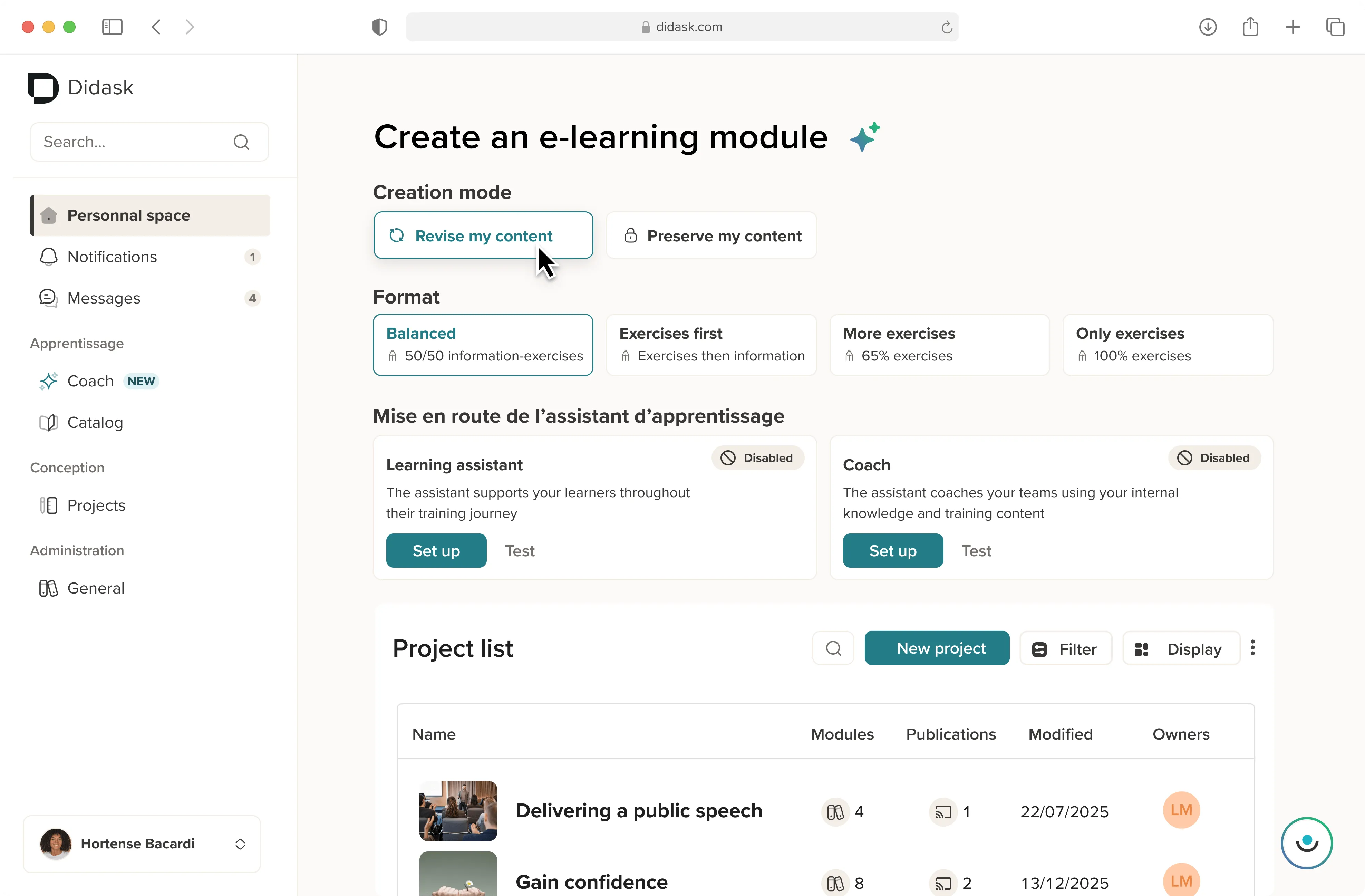
At Didask, we help organizations design SPOCs adapted to their needs thanks to a unique combination of educational innovation and efficient digital tools.
- Our authoring tool solution allows you to quickly create interactive and contextualized modules.
- The Educational AI integrated into our platform guides the design to optimize learner progress.
- Thanks to our LMS tool, you follow the progress of participants and analyze the impact on their knowledge.
- The adaptive learning functionality personalize the courses according to the level and pace of each learner.
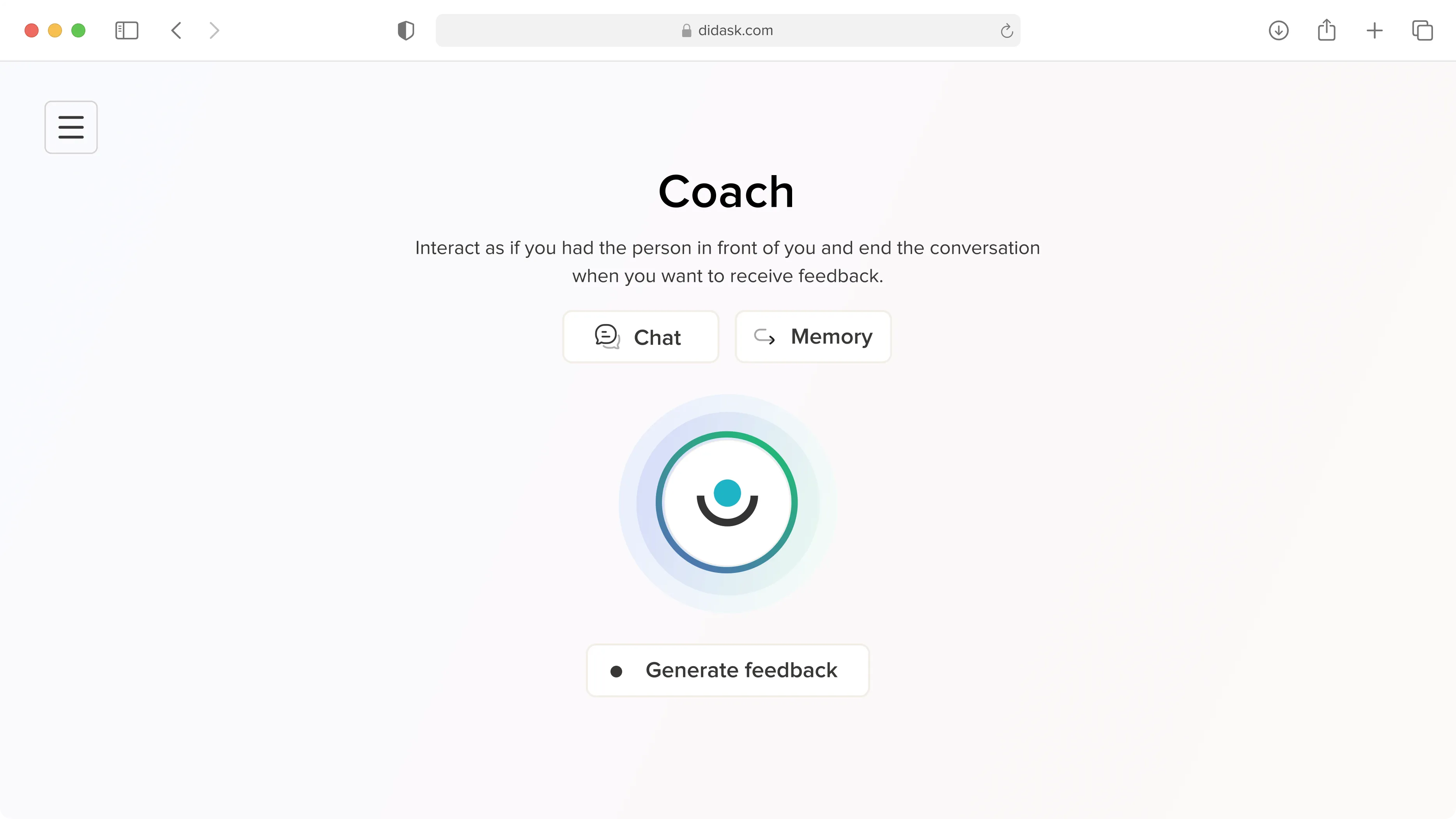
- Finally, our AI assistant facilitates the task of trainers by automating certain monitoring and evaluation tasks.
By combining these digital educational resources and human support, training platform Didask offers an effective, engaging and sustainable SPOC For the companies and training organizations.
The SPOC is emerging as an innovative alternative to mass online training. More targeted, more engaging and more effective in developing the skills of employees, it perfectly meets the current challenges of education and work in companies. With Didask, organizations have all the educational and digital tools to design SPOCs with high added value.
.webp)
.webp)
.webp)

.webp)



.png)