


Choosing between proprietary LMS and Open source LMS represents a strategic challenge for training managers. This decision involves your budgets, your IT resources and educational efficiency, often over several years (1 to 3 years minimum depending on the contracts).
The hidden costs of an open source LMS vary considerably depending on hosting, customization, and support: from a few thousand to over €280,000. A bad choice can lead to schedule slips from several weeks to several months.
Discover the real costs, the decisive choice criteria, the concrete advantages and how to avoid contractual pitfalls.
What is a proprietary LMS?
A proprietary LMS refers to a training management solution developed by a private publisher. Unlike open source solutions, it offers a “turnkey” approach where the publisher keeps the source code and guarantees the evolution of the platform.
The characteristics of a proprietary LMS:
- Closed source code and publisher intellectual property
- SaaS model by monthly or annual subscription
- Maintenance, updates and security provided by the publisher
- Dedicated customer support and technical hotline included
- Predictable costs including hosting and functional changes
What are the differences between a proprietary LMS and an open source LMS?
What is the true cost of a proprietary vs open source LMS?
The apparent free nature of open source LMSs masks considerable hidden costs. Hosting, internal development, maintenance, and technical expertise add up quickly. Proprietary LMSs have transparent pricing:
Observed price ranges:
- Subscription per user: 2 to 3 €/month for the entry level, which may exceed 10€ depending on the features and the SLA
- Annual licenses: 14 to 95 €/user/year by volume and sector
- Customized LMS development: 23,000 to more than 280,000€ depending on the scope, integrations and scalability.
Support and maintenance
- Proprietary LMS: support included, automatic updates, dedicated hotline.
- Open source: total technical autonomy required, with variable external support costs (a few hundred to several thousand euros per month depending on the level of service).
Personalization
- Proprietary LMSs offer advanced APIs and integrations without touching code.
- Open source allows source code to be modified but requires advanced technical skills and generates ongoing development costs.
Deployment
Deployment time varies considerably depending on the complexity of the migration, SSO and HRIS integrations, and the volume of content to be imported.
- A standard proprietary LMS can be up and running in a few days to a few weeks.
- An open source solution may require several weeks to several months, but this difference depends more on the technical scope than on the licensing model.
security
- With a certified SaaS publisher (ISO 27001), the publisher manages the information security management system. However, you remain responsible for data processing (RGPD) as a controller.
- In managed open source, a certified host can cover the operational aspect, but the final GDPR responsibility is also yours.
What are the concrete advantages of a proprietary LMS?
Why does a proprietary LMS save time?
The deployment of a standard proprietary LMS can be completed in a few days to a few weeks depending on the scope. Your teams immediately focus on pedagogy rather than technique. This simplicity eliminates the burden of technical management and frees up time for high added value missions.
How do you get a measurable and predictable ROI?
A fixed subscription offers better budget predictability than a solution developed in-house or open source, although initial implementation costs, additional options and renewals should be included in the TCO (Total Cost of Ownership). This concept integrates license, human time, maintenance and evolutions.
Integrated analytics tools facilitate the management of your training courses: completion rate, learning time, correlations with progression. The precise attribution of ROI However, requires a rigorous protocol (control groups, business indicators) to link training and business performance.
What support do publishers offer?
Access to product experts is a fundamental differentiator between proprietary LMSs. The editor trains your teams, shares best practices and answers your strategic questions. Functional updates are automatically integrated without intervention on your part.
Support in French is a decisive asset for the French-speaking market. Complete documentation, telephone support and personalized support facilitate adoption by all employees. This linguistic and cultural proximity accelerates the development of your teams' skills.
How can you benefit from innovations effortlessly?
LMS editors invest heavily in research and development. The latest technologies automatically become available to all customers: artificial intelligence, Adaptive learning, Mobile learning and gamification are gradually integrated into your platform.
Some proprietary LMSs go beyond simply hosting content. They incorporate educational AI technologies based on cognitive sciences to ensure the real effectiveness of training. This approach turns your LMS into a real engine for increasing skills rather than a simple digital library.
What are the limitations of a proprietary LMS?
What limits can you accept with a proprietary LMS?
Recurring cost: The subscription generates a permanent cost between €14 and €95 per user per year (eLearning Industry) for a minimum of 1 to 3 years. Check renewal terms to avoid unexpected price increases.
Editor dependency: Vendor lock-in complicates future migrations. Choose standard formats (SCORM, xAPI) and carefully check the contractual clauses concerning the export of your data.
Limited customization: It is still impossible to change the source code. You depend on the publisher's product roadmap to get new features. However, rephrase the essential question: “does the solution meet my educational needs?” rather than “can I change the code?” An effective LMS must guarantee real learning and skills development. Technique remains a means, never an end in itself.
How do you choose the right proprietary LMS for your organization?
What are your priority educational goals?
Always start from your expected results, never from technology. Do you want to improve learner engagement, accurately measure skill development, or increase completion rates? One LMS is just a tool for clearly defined business goals.
Develop measurable indicators of success from the start. These criteria will guide your choice of platform and will allow you to objectively assess your investment. The alignment between business objectives and technical functionalities guarantees the relevance of your selection.
Do you have the necessary internal resources?
Honestly assess your internal capabilities. Do you have an IT team? E-learning experts? Experienced digital trainers? A proprietary LMS is particularly suitable for organizations with limited technical resources.
Ask yourself this decisive question: “who will manage the platform on a daily basis?” If no one on your team has the required skills, focus on ease of use and editor support. Technical autonomy cannot be improvised.
What features are really essential?
The number one criterion should be: “does this LMS guarantee educational effectiveness?”. Too many platforms just deliver content without guaranteeing real learning. A simple digital library is not enough to develop sustainable skills.
Look for a cognitive science-based LMS that structures pathways to maximize memory and skill transfer. Adaptive learning, personalized feedback and training in concrete situations make the difference between information consulted and skills acquired.
Key features to assess:
- Intuitive author tool to easily create your content
- Detailed reporting to manage your training
- Mobile learning for on-the-go learning
- HRIS and SSO integrations to streamline the user experience
- Gamification to boost engagement
- GDPR compliance to secure your data
What pricing model fits your budget?
Compare the various economic models available. The LMS pricing per active user starts at around €2 per user per month. Traditional annual licenses range between €14 and €95 per user per year.
Include all associated costs in your calculation. Beyond the pure license, budget for the initial implementation, the training of your teams, any additional modules, and the ability to scale if your organization develops. This global vision avoids budgetary setbacks.
How do I test before buying?
Never buy without actually testing the solution. Always ask for a personalized demonstration and ideally a POC (Proof of Concept) over several weeks. This test phase reveals the real strengths and weaknesses of the platform.
Make sure to involve end users in this assessment. Trainers AND learners must validate ergonomics, intuitiveness and pedagogical relevance. Their field feedback goes beyond commercial promises and guarantees the future adoption of the solution.
Is the customer support up to scratch?
Carefully check the quality of the support offered. What hours of availability? In what language? Is the documentation complete and accessible? Is there an active user community? Is initial training included in the offer?
Demand contractual guarantees via an SLA (Service Level Agreement). Incident response time, platform availability rate and resolution times must be formalized. These commitments protect the continuity of your training courses.
Why is AI transforming proprietary LMSs?
Proprietary LMSs are gradually integrating artificial intelligence, with increasing, although cautious, adoption in the market. This transformation promises to change the learning experience:
4 ways AI is revolutionizing LMS:
- Adaptive learning: automatic personalization of courses via adaptive learning according to the level of each learner (documented positive effects, variable according to contexts)
- Content generation: creation of courses structured according to cognitive sciences from raw resources
- Real-time support: intelligent chatbots that answer learners' questions instantly
- Predictive analytics: identifying gaps before they block, with targeted additional resources
Publishers are investing in these technologies, offering their customers automatic access to innovations without internal development. AI that is really useful in training is pedagogically relevant, rooted in cognitive science, with benefits that depend heavily on the underlying instructional design.
Choosing a proprietary LMS: simplicity, efficiency and measurable ROI
Choosing a proprietary LMS focuses on operational simplicity, speed of deployment and measurable ROI. This option is perfect for organizations that want to focus on their core business: effectively training their employees.
The main thing lies in the ability of the LMS to guarantee a real increase in skills. A platform should not only distribute content but structure learning according to proven teaching methods. Cognitive science offers this scientific framework that is essential for effectiveness.
Technology remains a means at the service of clearly defined business goals. Learner engagement, critical skills development, impact measurement and continuous optimization are the real indicators of success of a training platform.
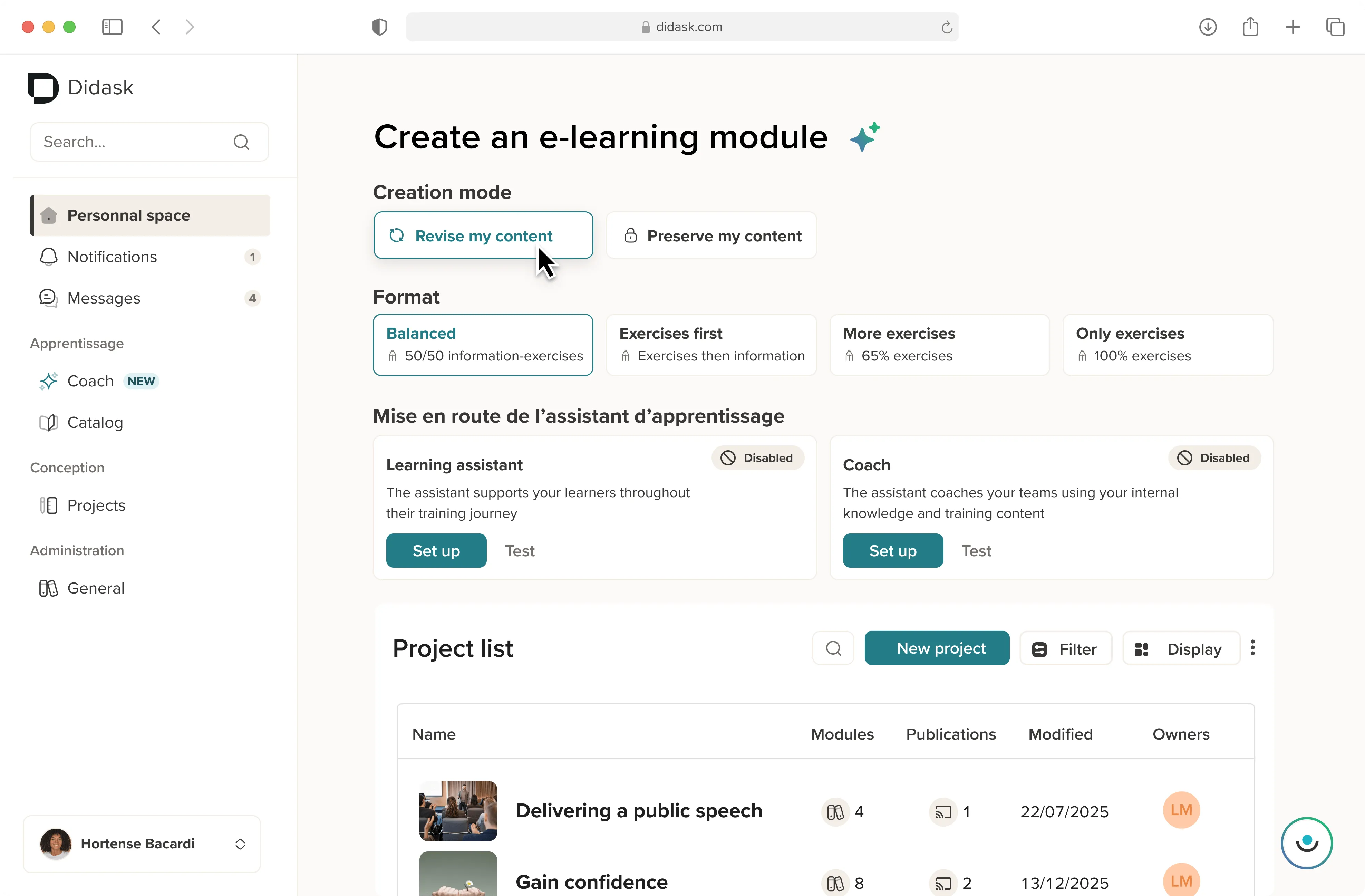
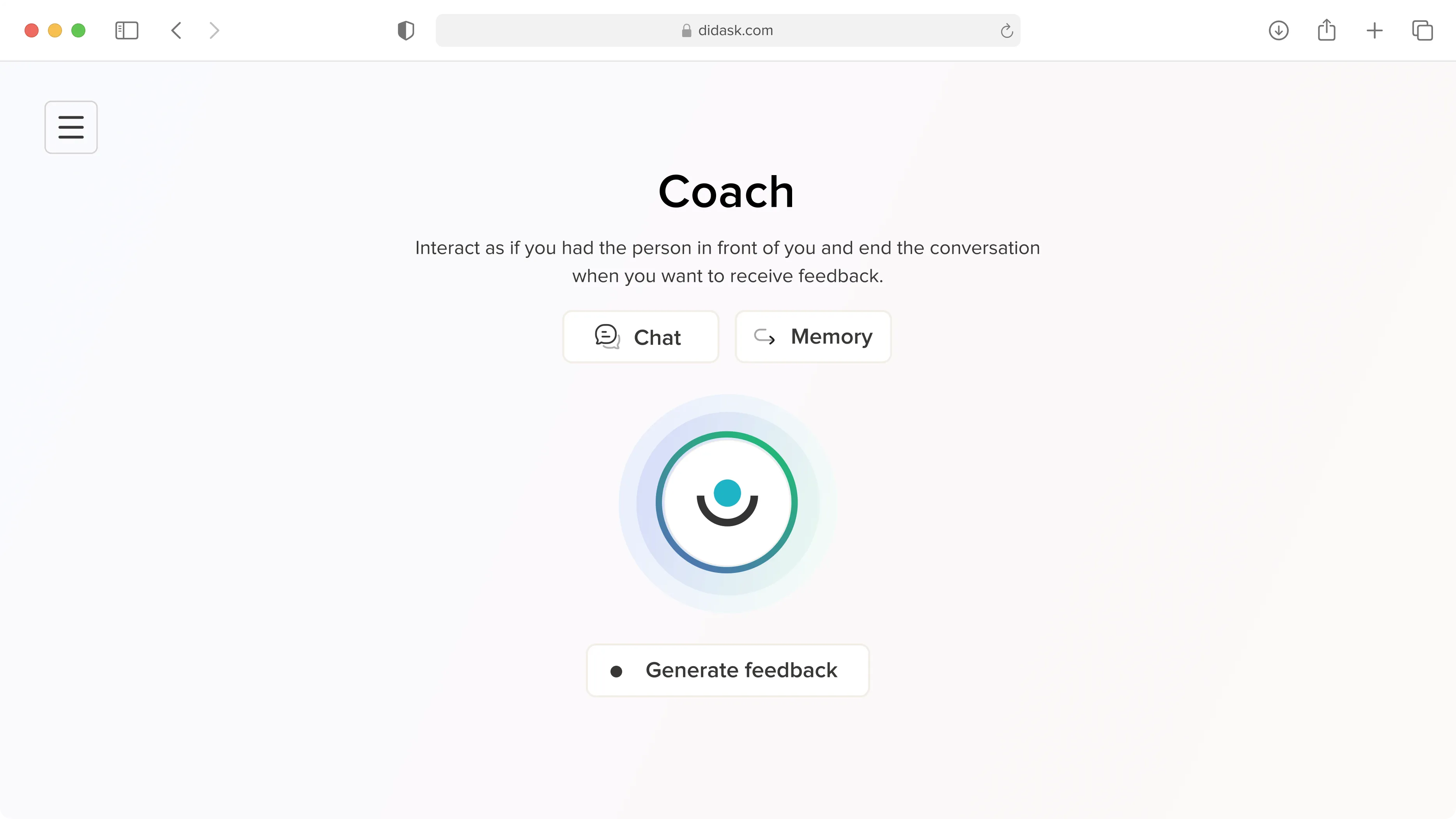
Discover how Didask combines proprietary LMS and educational AI for training whose effectiveness is measured and guaranteed.
.webp)
.webp)
.webp)

.webp)


.png)