


AFEST and LIFOW... Two acronyms for vocational training that may sound a bit jargonous and raise concerns about yet another pedagogical trend that is more ephemeral than revolutionary...
Think again, behind these acronyms, we find here two very serious approaches to apprenticeship in the workplace, which, let's say, is a bit of the lifeblood for businesses today.
What do these two approaches consist of? What are the differences between them? Why is LIFOW on the rise? How to take advantage of it? We will try to answer them in this article.
AFEST: a French innovation for learning in a work situation
No, it's not a festival about pedagogy. We're talking here Workplace Training Action. It is an officially recognized training method (and therefore eligible for OPCO funding, etc.), regulated by law”Professional future“from 2018. It is inspired by the work of David Kolb, an American psychologist and pedagogue, who showed that you don't just learn by doing, but also by thinking about what you do.
Its principle is therefore to allow employees to train directly in their daily professional life, from their workstation, but beware, not just any way! Indeed, AFEST involves the intervention of a coach (we will speak of AFEST trainer or tutor, internal or external to the company) who will come directly on site, alongside the learning collaborator.
Very important also, the AFEST method provides 2 phases, a first of simulation and then, as you will have understood, a second reflexive one, which can be repeated as much as necessary, always with the help of the tutor to guide, transmit, give feedback, encourage reflection.
To summarize, it is therefore a question of learning by working through real cases, but with a real structured and traceable educational intention behind. Moreover, it is from this last point that the main obstacle to the deployment of AFEST in companies arises: administrative and operational complexity. Assembling files, funding, identifying solid and available tutors... a job that is often heavy and time-consuming.
In 2025, the use of AFEST is still emerging in companies according to L'Anact.
LIFOW: learning as you work, the HR trend coming from the USA
Unlike AFEST, LIFOW is not a regulated modality, but an approach, almost a philosophy of learning. Its meaning: Learning In the Flow Of Work.
His concept was popularized by Josh Bersin, a fairly influential American HR consultant whose each concept quickly became a LinkedIn keyword, at the end of the 2010s, with the main objective of reducing the friction between the moment of need and access to knowledge.
Let's say I'm a salesperson and I have an important appointment in 20 minutes. I notice that I am missing something (knowledge or skill) to be effective at this appointment. If I have to enroll in traditional training to fix it, or stop what I am doing to get help I don't know where, it may be a bit late. Do you see the friction?
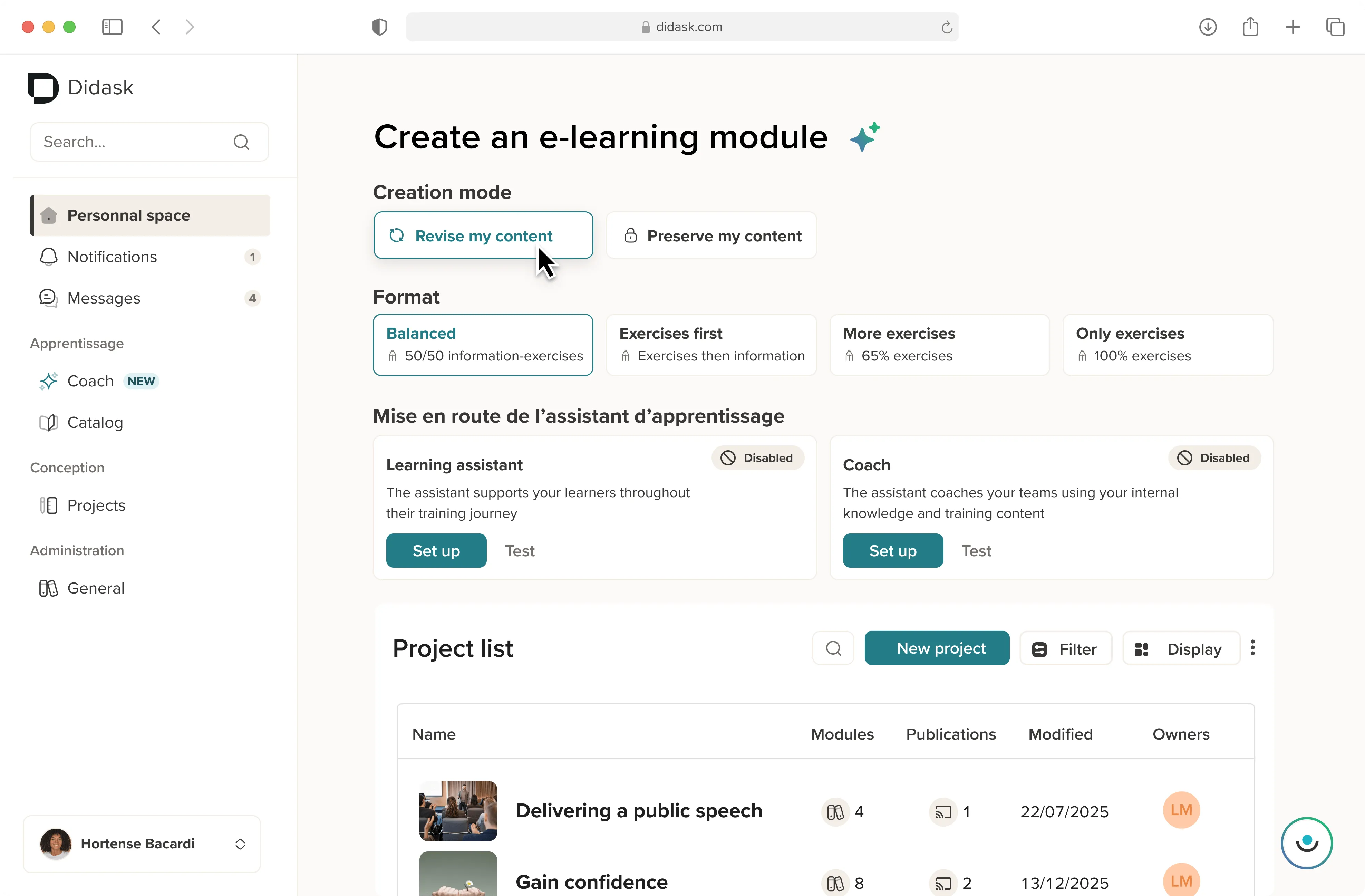
LIFOW therefore aims to learn when you need it, without leaving the workflow, directly in your work environment. In the field, this takes the form of contextual tutorials, mini-videos, mini-videos, FAQs, FAQs, chatbots, or even e-learning micro-modules... accessible in business tools such as its CRM or corporate messaging systems like Slack, as Didask does, in fact, as Didask does by integrating its modules directly into everyday tools. All these micro-apprenticeships are integrated into work, and which are not formalized as training.
AFEST vs LIFOW: enemy brothers of pro training?
As with the war between the Beatles and the Stones, it is a facade battle that hides no serious opposition. In the same way that we can (and the majority of us) like the music of the two groups, AFEST and LIFOW are not incompatible to be used in the majority of businesses.
First of all because, even if they share this desire to learn in the workplace, they are 2 concepts of a different nature, a regulated system and a philosophy.
Where AFEST formalizes and secures skills development (since it is very supervised), LIFOW streamlines and democratizes continuous learning. Where AFEST is a very structured approach, LIFOW is based on a spontaneous culture. Where AFEST is the spine, LIFOW is the nervous system that activates daily life.
Why is LIFOW essential in corporate training?
The first answer is none other than human nature. We all love freedom and autonomy, and this spontaneous LIFOW lends itself much more to it than this more rigid AFEST!
We also often see a certain fatigue with long and formalized courses, in favor of self-learning, short formats and micro-pedagogy. Here too, comrade LIFOW is clearly doing well.
It should also be noted that the speed of change in professions - by this I mean the way in which the same profession evolves - increasingly justifies this “just-in-time learning” (sorry for the anglicism), where LIFOW excels and which reduces the dropout between training and application.
Finally, the explosion of integrated digital tools has considerably increased LIFOW's muscle mass: Slack, Teams, Teams, Notion, Confluence, SharePoint, CRM, AI, collaborative suites such as Google WorkSpace... A growing number of employees spend an increasing number of hours on these platforms, multiplying “frictionless” learning opportunities thanks to the integration of training tools into them, such as Didask.
However, beware of a few limitations, such as the lack of traceability or official recognition. LIFOW does not replace structured training for critical skills.
AI for learning in the flow of work
It is therefore by wisely combining “classical training” and LIFOW that companies will create a complete learning ecosystem, truly rooted in the reality of work, and a guarantee of increased productivity.
That's what Didask makes possible, for all businesses. Its training platform, the only one that combines AI and cognitive sciences, allows not only to design and distribute “classic” courses, but also to push and personalize micro training courses directly in the tools of your employees.
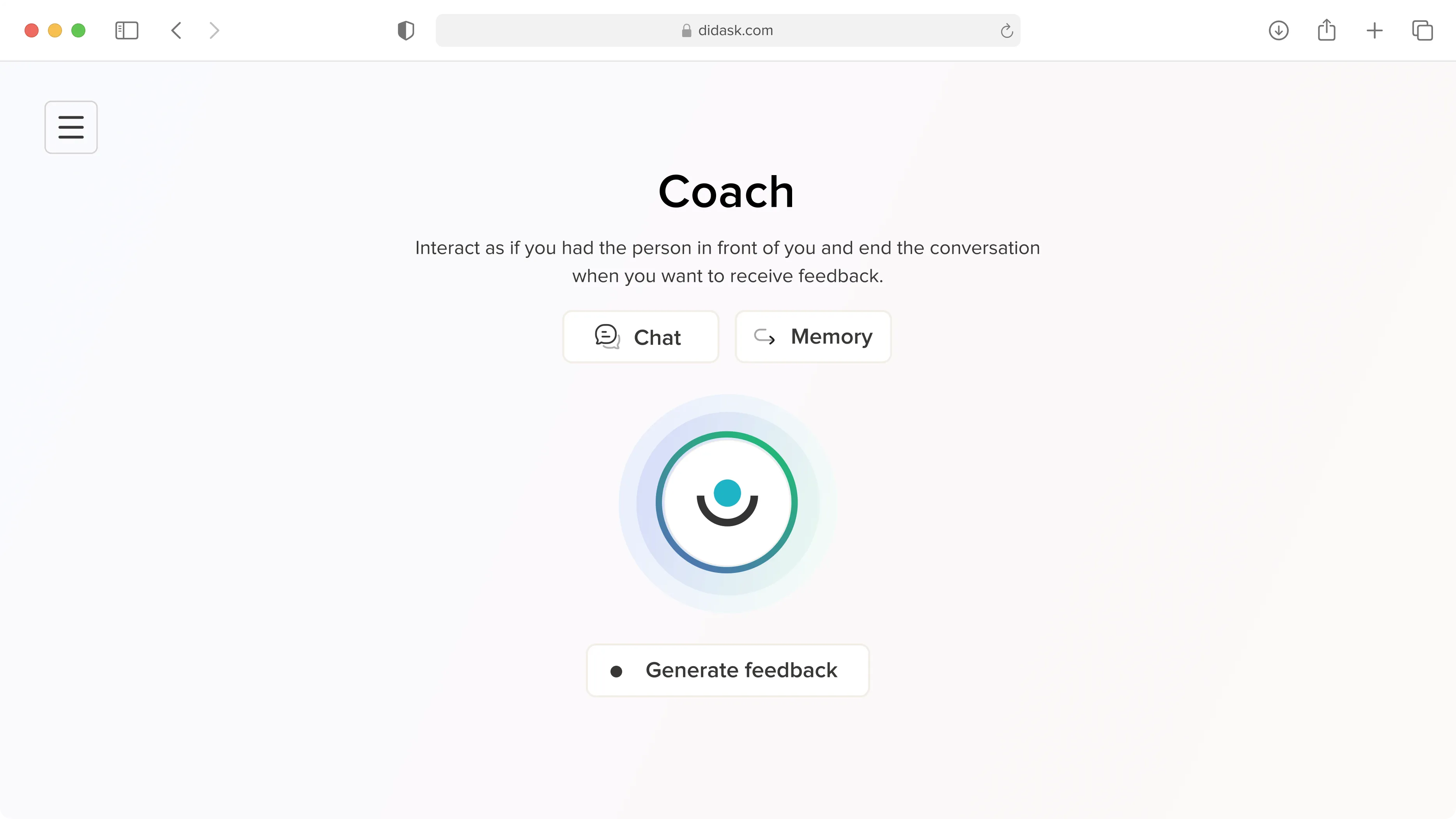
Let's go back to my example of the salesperson who has to get ready for his important appointment in 20 minutes. With Didask, all I have to do is interact with the Didask assistant from Slack. From the mini brief that I give him, he then instantly prepares a training session for me that maximizes my chances of performing at my appointment. All with no backrest to assemble or tutor to disturb — Kolb would have loved it. Want to give it a try?
FAQ: Your questions about AFEST and LIFOW
What is the main difference between AFEST and LIFOW?
AFEST is a regulated training modality that structures work-based learning with a mandatory tutor and a formalized curriculum. LIFOW is a spontaneous learning approach that allows you to train when needed, directly in your work environment, via digital tools and without formal support.
Is AFEST eligible for financing by OPCOs?
Yes, AFEST is a training modality officially recognized since the “Professional Future” law in 2018. It is therefore eligible for OPCO funding, unlike LIFOW, which generally falls under the internal training budget.
Can AFEST and LIFOW be combined in the same training strategy?
Absolutely, these two approaches are complementary. AFEST is ideal for critical skills that require validation and traceability, while LIFOW excels for continuous learning and the development of daily agile skills. Combining them creates a comprehensive learning ecosystem.
What tools can be used to set up LIFOW?
LIFOW relies on the integration of learning tools into the platforms used daily by employees: Slack, Teams, CRM, Notion, Confluence, Confluence, SharePoint or Google Workspace. Solutions like Didask make it possible to directly integrate micro-training courses and an AI assistant into these work environments.
Does LIFOW replace traditional training courses?
No, LIFOW does not replace structured training but complements them. It excels for “just-in-time” learning and ad hoc needs, but has limitations in terms of traceability and official recognition. For critical or certifying skills, structured training courses such as AFEST remain essential.
.webp)
.webp)
.webp)





.png)