


In a context where diversity of profiles and backgrounds is the norm, inclusive pedagogy has become an essential response to guarantee fair and accessible training for everyone. Whether learners have a disability, are retraining or have specific needs, the objective is clear: allow everyone to progress in a learning environment adapted to them, without obstacles.
More than a concept, inclusion is now a strategic issue for training providers and companies alike. In this transformation, digital tools such as the Didask LMS platform offer concrete solutions and make it easier to create personalized training paths.
What is inclusive pedagogy?
Inclusive pedagogy is a teaching approach that aims to meet the needs of all learners, whatever their differences in ability, disability, level, background or prior education. It is not limited to integrating people with disabilities after the fact: it consists in designing accessible, adapted training paths from the start, for every profile.
The objective is to guarantee equal opportunity in learning, remove barriers to accessibility (including digital accessibility) and support everyone's success through a universal vision of teaching.
The pillars of the inclusive approach
Inclusive teaching rests on four major pillars that steer practice toward greater equity and effectiveness.
- Accessibility for all: the point is to design paths that are accessible to everyone from the outset, without having to adapt them afterwards. That means readable materials, content compatible with screen readers and systematically captioned videos.
- Instructional differentiation: to account for diversity, it is essential to vary the instructional modalities: formats, paces, materials and activities. An approach made far easier by tools such as the Didask authoring tool.
- Recognition of diversity: treating differences in background, disability status or prior education as strengths to build on, rather than as impediments.
- Active engagement: offering a stimulating, interactive and personalized context drives involvement. Solutions such as adaptive learning or the Didask AI assistant adapt content to each user's profile in real time.
The 4 main inclusive teaching methods
Several approaches are particularly effective when implementing inclusive pedagogy:
- Explicit instruction: clarify objectives, structure content, spell out expectations. This helps learners find their bearings and understand what is expected of them at each stage.
- Cooperative learning: integrating collaborative activities allows learners to help one another, pool their skills and build a sense of belonging to the group.
- Differentiated instruction: varying materials (text, video, interactive quizzes), paces (asynchronous, self-directed) and forms of support is essential to meet different needs.
- Universal design for learning (UDL): this method consists in anticipating the variety of profiles from the design phase onward. By combining multimodal resources and adaptable paths, it limits obstacles. The Didask platform supports this approach by centralizing every training format and ensuring its accessibility.
Why adopt inclusive pedagogy in your training?
Improving learning quality for everyone
Adapting how knowledge is transmitted benefits every audience, not only people with disabilities. Using varied formats (video, text, audio, interactive quizzes) helps anchor knowledge more effectively.
Driving learner engagement
When learners have several ways to interact with content, assess themselves or progress at their own pace, they feel more autonomous and more motivated. The Didask AI assistant, for instance, provides personalized support that strengthens self-regulation of learning.
Offering several assessment methods
Inclusive learning also means diversifying assessment methods to measure achievement more accurately: simulations, self-assessments, regular feedback. This allows for fairer recognition of the skills acquired, whatever the learner's profile.
Creating an accessible learning environment
An inclusive learning environment must give every learner the optimal conditions to progress, whatever their needs or constraints.
That involves:
- A clear, ergonomic design that makes navigation easier, particularly for people with visual or cognitive disabilities.
- Content accessible to screen readers and assistive technologies.
- Systematically captioned videos and resources accompanied by text descriptions.
- The ability to adapt the pace of training to each person's availability, cognitive load or level of concentration.
A good environment also accounts for cognitive comfort, emotional engagement and clarity of instructions. With its LMS combined with instructional AI, Didask offers an interface designed for diversity that supports everyone's success, whatever their profile. This logic sits squarely within current inclusion requirements for training organizations.
Adapting teaching methods to different disabilities
Inclusive education means adjusting teaching methods to meet the specific needs of learners with motor, visual, hearing, cognitive or psychological disabilities.
Among the effective levers:
- Adding pictograms, voice synthesis or adapted captioning for people with learning or attention disorders.
- Interfaces compatible with alternative keyboards, specific browsers or mouse-free navigation.
- Providing content in easy-read format, which improves accessibility for people with reading or comprehension difficulties.
- Building modular, accessible and interactive sequences that respect each individual's pace.
With its authoring tool, Didask lets trainers create content that is modular, accessible and adapted to every profile. This meets a twofold requirement: guaranteeing fair access to training, while improving the quality of teaching delivered in contexts as varied as schools, companies and universities.
How to implement inclusive pedagogy in your organization
Step 1: understand learner diversity
It starts with identifying everyone's profiles, needs and backgrounds. Gathering their expectations and constraints upfront is essential.
Step 2: identify the obstacles
What are the potential barriers to learning? Whether they relate to content, technical accessibility or the training environment, these barriers need to be anticipated.
Step 3: plan, design, experiment
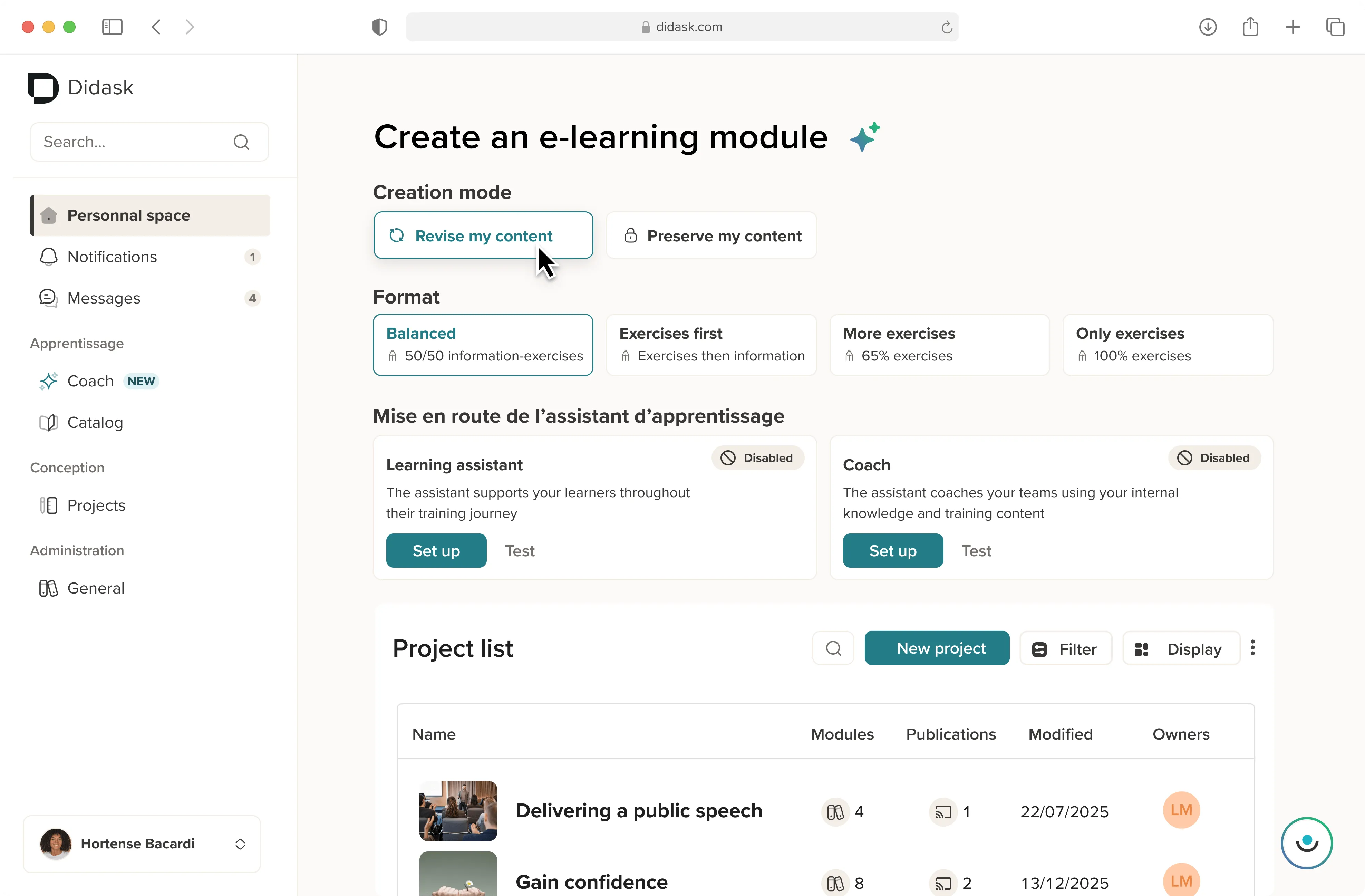
Creating inclusive learning scenarios calls for collaborative, iterative work guided by adaptive learning tools. Didask solutions make it possible to build testable sequences quickly thanks to the built-in AI assistant.
Example of an inclusive sequence
A company designs safety training for its teams, some of whose employees have a hearing disability. With Didask, it selects a customizable module with captioned videos, clear illustrations and visual quizzes.
The result: every employee accesses the same level of information.
Evaluating and adjusting inclusive practices
Running a reflective analysis
Every inclusive training sequence should be subject to critical analysis. Were the objectives met? Were the materials genuinely accessible? Was the support effective?
Taking feedback into account
Learner feedback is essential to improve practice continuously. The assessment module built into the Didask LMS makes it possible to collect usable data quickly.
The obligations of training organizations regarding inclusion
In France, training organizations have legal obligations: accessibility of their training, support for people with disabilities, provision of disability coordinators and adaptation of assessment methods.
These requirements sit within a broader framework of social responsibility, equity and respect for the right to education for all. They apply to instructional methods as much as to the digital tools used. Establishing inclusive learning is therefore not only an ethical or strategic choice: it is also a regulatory requirement for any organization committed to a sustainable educational project.
How Didask helps you integrate inclusive pedagogy
Didask offers a complete ecosystem for designing inclusive training, aligned with the principles of design for all:
- A simple authoring tool to create accessible content
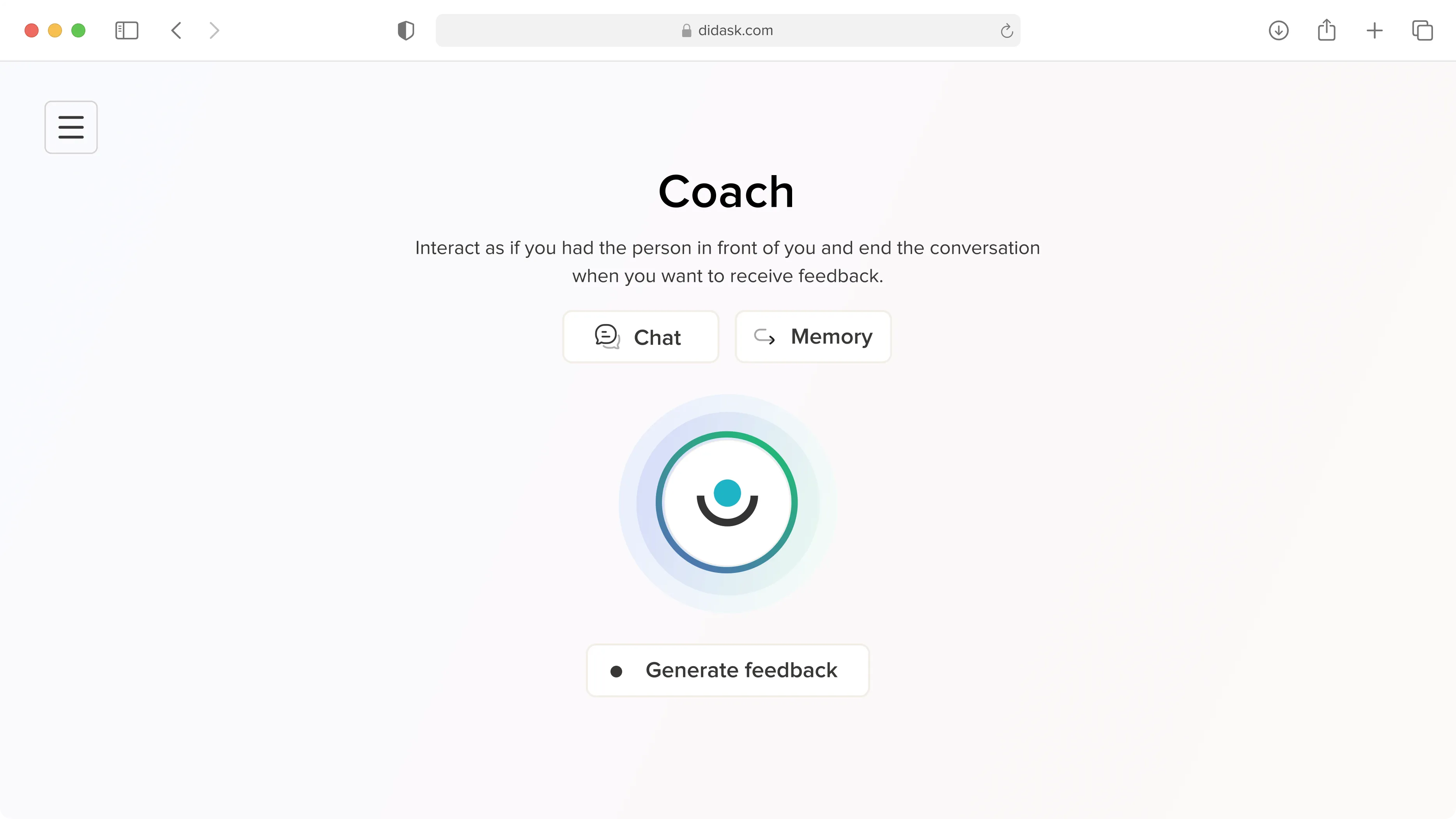
- Instructional AI to support learners along their paths
- Adaptive scenarios through adaptive learning
- A Didask training catalog
- An LMS designed with inclusion in mind
- An AI assistant to guide instructional designers in implementing design-for-all approaches
With Didask, training organizations and companies can offer training that is genuinely accessible to everyone, while guaranteeing equitable, motivating and lasting learning.
Establishing inclusive teaching is not simply a matter of meeting a regulatory obligation. It is an educational, human and strategic approach that answers current challenges around diversity, equity and accessibility.
Thanks to innovative solutions such as those offered by Didask, it is now possible to design, deliver and evaluate inclusive training at scale. A unique opportunity to combine performance, social impact and quality of teaching.
.webp)
.webp)
.webp)

.webp)


.webp)

.png)