


Training market
-
Published on
16.04.2025
Updated on
04.08.2026

LXD: What you need to know about Learning Experience Design

Visual of a woman in front of her PC doing a learning journey
Summary
Gradient avec du bleu rose et beige
Maximize Your Training ROI
Discover proven methods to measure and optimize the business impact of your training programs. Case studies and checklist included.
Download the guide

In a world where digital training is evolving at high speed, traditional approaches are no longer enough to capture learners' attention. That's where LXD (Learning Experience Design) comes in. Inspired by user-centered design, this concept places the learning experience at the heart of instructional design.

But what is LXD, how does it work, and why is it an essential method for creating effective learning paths? We explain everything below.

In brief
Learning Experience Design (LXD) is an instructional design approach inspired by design thinking and centered on the learner's experience:
It rests on 4 pillars: a user-centered approach, an iterative process, multidisciplinarity, and measurable learning objectives
Unlike classical methods, LXD treats training as a fluid, engaging journey rather than a simple sequence of content
It improves engagement, knowledge retention, and the overall pedagogical effectiveness of training
An authoring tool, an LMS and adaptive learning are the essential technology building blocks for deploying an LXD approach at scale.

What is LXD (Learning Experience Design)?

Learning Experience Design, or LXD, is an innovative approach to instructional design based on the principles of design thinking and user research. It is no longer just about transmitting information, but about designing memorable, engaging and personalized learning experiences.

The Learning Design Plan is an integral part of LXD: it helps organize content according to learners' needs, profiles and goals. Far from a simple sequence of modules, an LXD experience is designed as a fluid and stimulating journey.

The key principles of Learning Experience Design

LXD rests on several fundamental pillars:

  • User-centered: the learner is at the heart of the process. Their needs, motivations and blockers are studied just as in any design approach.
  • Iterative approach: as with any design project, you test, adjust and improve. Feedback is an essential element.
  • Multidisciplinarity: LXD draws on skills from digital technology, cognitive psychology, UX design, pedagogy, and even storytelling.
  • Clear learning objectives: each activity is designed to meet a specific, measurable learning objective.

This approach contrasts with classical methods, which are often linear and focused on content rather than on the learner's actual experience.

The benefits of LXD for professional training

LXD (Learning Experience Design) stands out as a strategic approach to instructional design, capable of transforming the learning experience. Here are some of its benefits:

  • Greater learner engagement, through interactive, tailor-made journeys;
  • A fluid user experience, designed around clear navigation logic;
  • Greater pedagogical effectiveness, with targeted and relevant activities;
  • Better knowledge retention, thanks to fluid and logical learning;
  • The ability to continuously adapt to real-world needs, through the analysis of learning data.

In short, LXD makes it possible to create training that is genuinely motivating and aligned with current methods and habits.

How do you set up an LXD approach?

Setting up an LXD approach requires the right tools... and the right philosophy. It is not about reinventing everything, but about reorganizing instructional design around the learner's experience.

Among the elements to build into your approach:

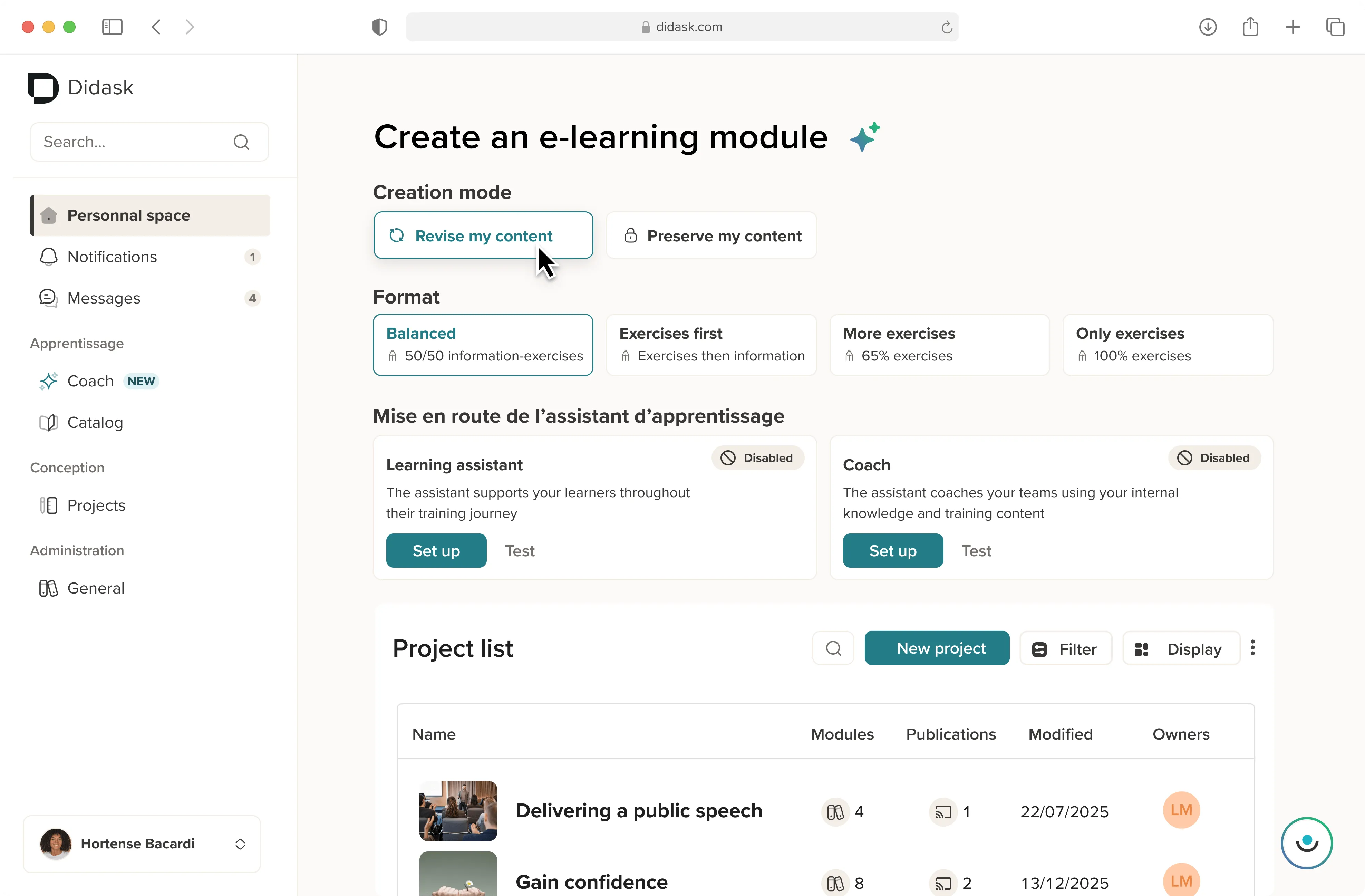
This is where the Didask LMS platform stands out. Built from the ground up around a learner-experience logic, it integrates all the essential building blocks of Learning Experience Design, along with a training catalog. From creating modules to automatic improvement suggestions, everything is designed to help you build engaging learning experiences.

Learning Experience Design is not just a passing trend: it is a strategic approach that is revolutionizing the way we learn and design training. In a world where engagement issues, cognitive overload and low training effectiveness are common, LXD offers a concrete answer grounded in design, user research and instructional intelligence.

With Didask, you have everything you need to set up an effective LXD approach. Ready to take your training to the next level? Learning Experience Design is the ideal way to elevate your instructional projects.

book a demo
What is the difference between LXD and traditional instructional design?
Traditional instructional design focuses on structuring content and learning objectives. LXD adds a user-centered dimension borrowed from design thinking: it accounts for the learner's emotions, motivations, and actual journey, not just the logic of the content being delivered.
What tools are needed to implement LXD?
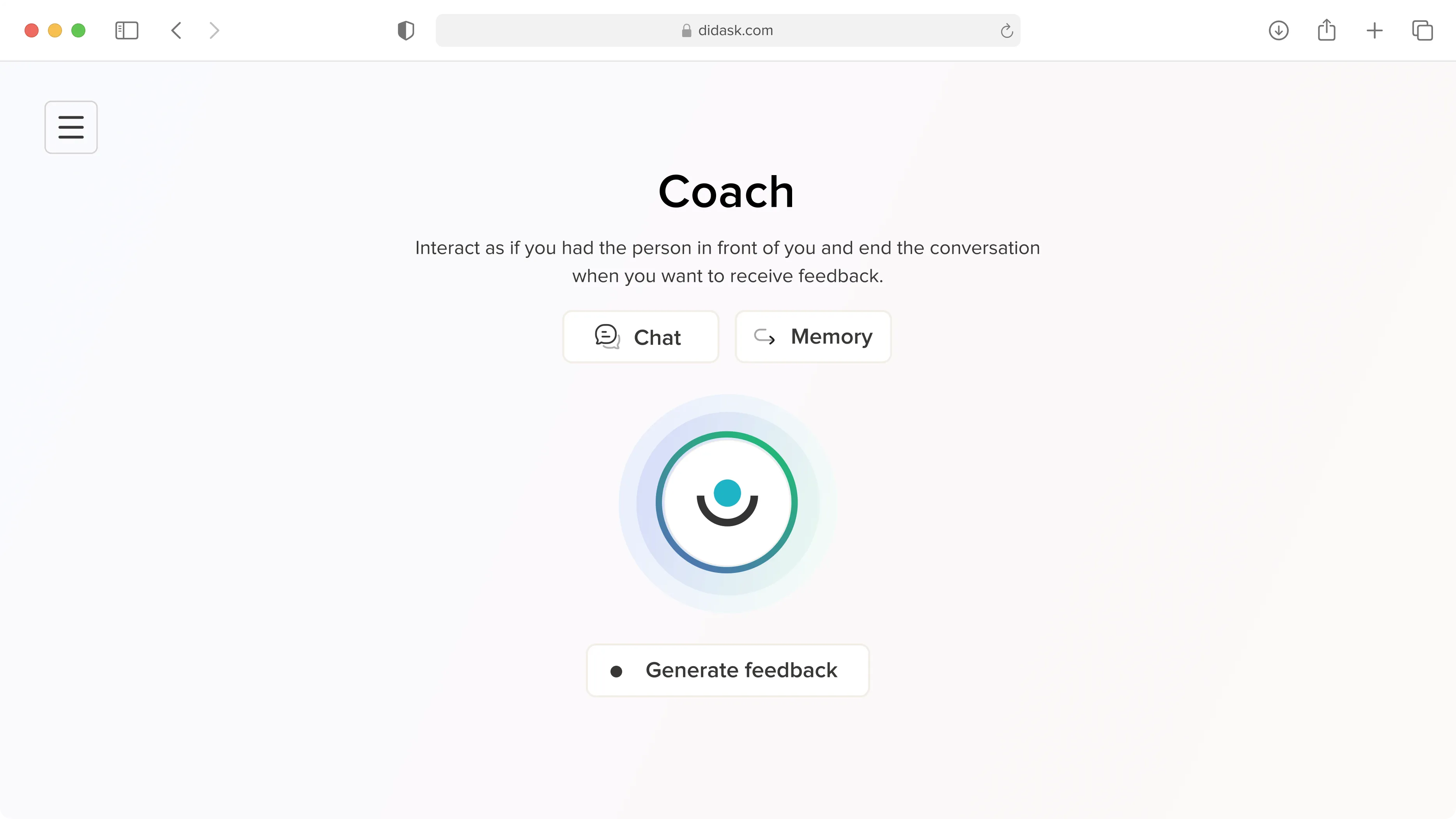
An LXD approach relies on an authoring tool to create tailor-made content, an LMS able to track and adapt learning paths, adaptive learning features to personalize the experience, and ideally a pedagogical AI or AI assistant to analyze data and suggest ongoing improvements.
Does LXD apply to all types of training?
Yes, LXD applies equally to corporate professional training, academic education, and consumer e-learning. Its user-centered approach and iterative principles can be transferred to any context where learner engagement and retention are key concerns.
How do you measure the effectiveness of an LXD approach?
The effectiveness of LXD is measured through several indicators: learner engagement rate, progress through the learning path, knowledge retention over time, and learners' ability to transfer what they've learned into their actual work. LMS tools make it possible to collect this data continuously.
What role does design thinking play in LXD?
Design thinking gives LXD its iterative methodology: understand the user's (here, the learner's) needs, prototype instructional solutions, test them with real learners, then adjust based on feedback. This continuous feedback loop is what sets LXD apart from static instructional approaches.
Icône de plume de stylo dans un cercle blanc.
About the author
The Didask team
Passionate about pedagogy and e-learning, we share the best practices learned in contact with our customers!
Blocs visibles uniquement sur prévisualisation webflow
Icône d'une étoile vide centrée dans un cercle blanc.
This is some text inside of a div block.
ENGIE achieved an overall score of 16.72/20 in the Customer Service of the Year ranking, with scores ranging from 15.21 for chat to 17.61 for social media, confirming the excellence of their customer relations.
In brief
Traditional LMS platforms have7 structural limitationsthat hinder the effectiveness of your training programs:
A 30-minute tour of Didask in action
Traditional LMS platforms have7 structural limitationsthat hinder the effectiveness of your training programs:
Icône d'une étoile vide centrée dans un cercle blanc.
This is some text inside of a div block.
ENGIE achieved an overall score of 16.72/20 in the Customer Service of the Year ranking, with scores ranging from 15.21 for chat to 17.61 for social media, confirming the excellence of their customer relations.
Icône d'information avec un 'i' minuscule dans un cercle.
Note
Generic soft skills training (management, time management, leadership) is most affected. Without grounding in concrete job-specific situations, it generates little measurable impact and a high risk of disengagement.
Step into the 3rd generation of eLearning platforms
Discover how a Learning Transformation Platform redefines the learning experience through cognitive science and AI.
Download the guide
Gradient avec du bleu rose et beige
Give us 30 minutes, your courses will never be the same again.
Discover the all-in-one Didask platform during a personalized and free demonstration, led by an expert.
obtenir une démo
Give us 30min, your courses will never be the same again
book a demo
MEET US

Get a demo!
We’d love to know how to help you

Thank you! Your submission has been received!
Oops! Something went wrong while submitting the form.