

Did you know that 70 to 90% are the skills of your employees acquired... without training? This reality, long neglected, is becoming a major strategic lever for HR managers and training managers.
While we focus on structured learning paths, the main thing comes into play elsewhere: in conversations with colleagues, in observing experts, in solving everyday problems. Cognitive science confirms it: these “informal” learning is more sustainable, more motivating and above all more effective. But how do you optimize them?
What exactly is informal learning?
When you think of “learning”, you are certainly visualizing a room, a trainer, a program... However, informal learning is just the opposite.
UNESCO It is defined as the acquisition of knowledge as part of daily activities, without a structured framework or explicit goals. In short: you learn without realizing it, or almost without realizing it.
Daniel Schugurensky, reference researcher, distinguishes three types:
- Self-directed learning : when your salesperson is actively looking for how to best pitch a difficult prospect
- Incidental learning : when your manager suddenly understands team dynamics during a tense meeting
- Socialization : when a new employee naturally adopts your company's codes
Why is informal learning so effective?
Unlike formal learning, which is sometimes difficult to transpose to the field, informal learning brings together three conditions that create fertile ground for the effective evolution of practices.
Context is everything. When we learn directly in a situation, the brain encodes the information with all the contextual clues. No more the famous “I forgot everything” after a training course: here, knowledge remains attached to its environment of use.
Emotion boosts learning. An urgent problem to solve, a challenge to overcome, a stressful situation... These emotions literally “engrave” the information into the memory. This is why we better remember what we learn “in the field”.
Natural spacing. Unlike intensive training, informal learning is distributed over time. And that's exactly what our brain prefers to consolidate knowledge in the long term.
Formal vs informal learning: the real differences
Stop the cliches! Informal learning is not the “enemy” of the formal. They are two complementary systems, but with different logics.
On the map cognitive, formal and informal learning involve mechanisms that are partly distinct. Formal learning relies more on explicit processes, which strongly engage the prefrontal cortex and promote conscious thinking and conceptual development. Informal learning, on the other hand, more often involves implicit processes, associated with basal ganglia circuits (especially the striatum), which support the progressive acquisition of skills and the automation of behaviors. These two forms of learning are not opposed: they interact constantly and complement each other, because conscious thinking makes it possible to build and reorganize knowledge while automation promotes its sustainable integration and its effectiveness in action.
How can you optimize informal learning in your organization?
Informal learning is great... but how can you make sure it happens effectively? How can you prevent your employees from getting stuck or learning incorrectly? Here are the essential levers.
The challenge of real-time support
Your employees are already learning informally, but often under suboptimal conditions. They're looking for scattered information, reaching out to colleagues at the wrong time, or worse: getting stuck without daring to ask for help.
The problem? Informal learning is based on several assumptions that are rarely met: the employer must know exactly what to look for, know the right person to talk to and that person must be available at the right time.
The 3 pillars of successful informal learning
To meet this challenge, successful informal learning is based on three key elements:
1. Accessibility : help should be available at Moment of need, with no time or location constraints.
2. Contextualization : the answers must be adapted to the specific situation of each employee.
3. Progressiveness : each interaction must advance the learner towards better mastery.
The solution: a smart learning companion
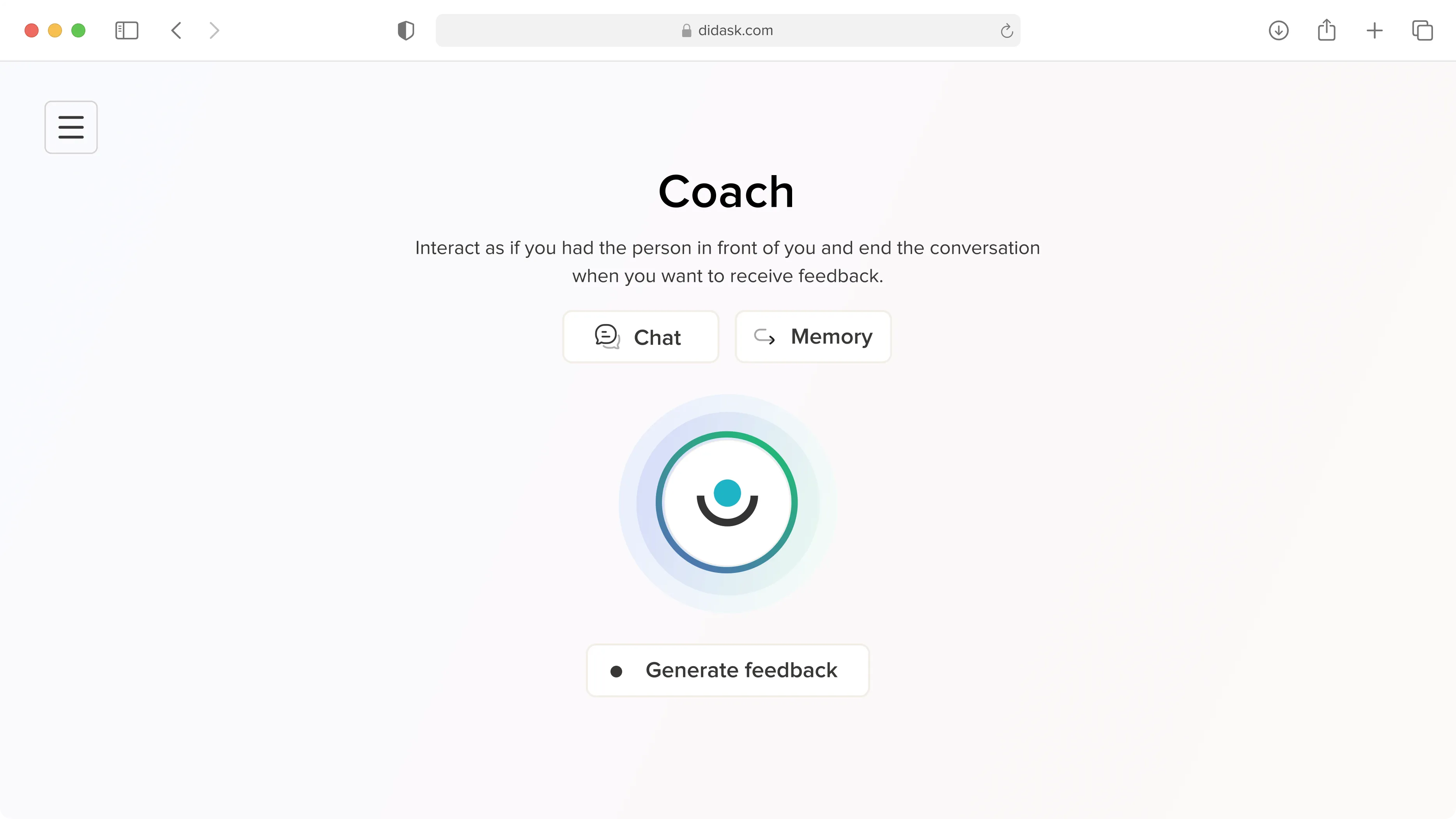
Imagine if your employees had access to a personal coach, available 24 hours a day, who:
- Answers their professional questions instantly
- Offer practical exercises based on their real situation
- Adapts to their level and work context
- Guides them to the right internal resources
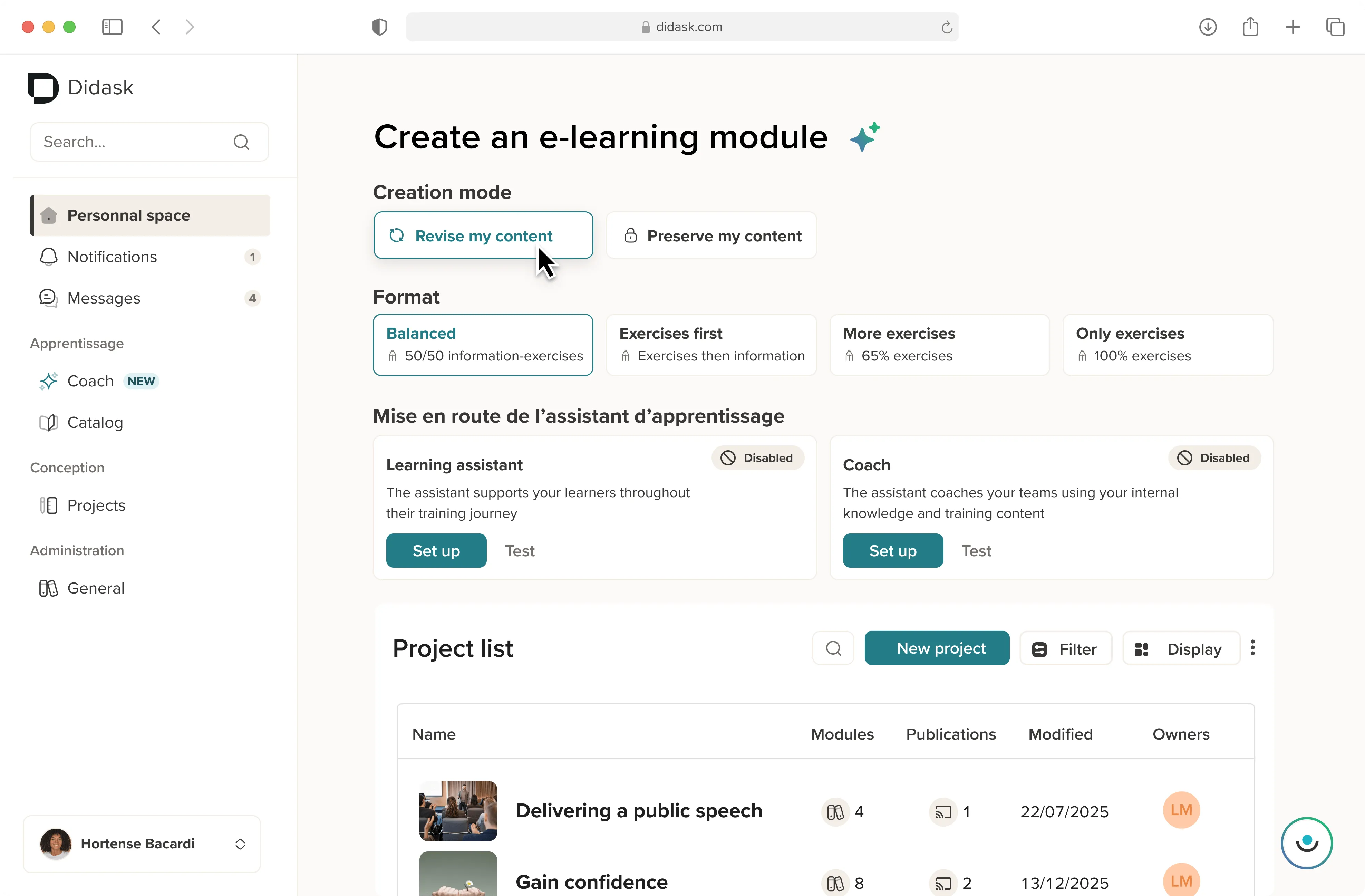
That's exactly what our AI coach at Didask does. More than a simple chatbot, it is a real teaching assistant that turns each question into a learning opportunity.
How to validate skills acquired informally?
This is THE challenge of informal learning: how do you prove that you have learned? CEDEFOP (European Centre for the Development of Vocational Training) proposes a method in 4 steps:
- Identify : to raise awareness of the learning achieved
- Documenting : gather evidence (testimonies, achievements...)
- Evaluate : compare to professional standards
- Certify : officially recognize achievements
Concrete example: A salesperson gradually develops his expertise in complex negotiations. Identification is done through an interview where he realizes his progress. To document, he gathers his customer testimonies, his conversion rates and successful call records. The evaluation compares its results to the company's commercial performance standards. Certification can take the form of an internal “Negotiation Expert” badge or an upgrade.
This structured approach transforms the invisible into the visible, finally giving official recognition to the skills developed on a daily basis.
The future: AI in the service of informal learning
We are entering a new era. Virtual coaches are coming, the market is exploding: 2 billion dollars In 2024.
At Didask, we believe that educational AI can transform informal learning. Our AI coach intervenes at the precise moment when your employees need it, with contextualized answers and personalized exercises. No more “one-size-fits-all” training: make way for tailor-made learning!
The future of adult training ? A clever mix between human and AI, the formal and the informal, structure and spontaneity. The objective remains the same: to increase the skills of your teams, but more effectively.
Ready to optimize informal learning in your organization? Discover our training platform and see how our educational AI can transform the learning experience of your employees.
.webp)
.webp)
.webp)



.webp)
.png)